


 Share
Share

For many children, summers in Vidarbha were not just about school holidays, but about rituals that happened at home. Terraces and verandahs turned into makeshift workspaces, where old sarees and plastic sheets were spread out under the blazing sun. Inside the kitchen, there were large vessels simmering with mixtures, and outside the home, there were rows of papads, kurdais left to dry out in the sun.
What often felt like a seasonal core was, in fact, part of a much older system of food preservation. This process is called valvan, derived from the Marathi word valavne, which means “to dry”. This practice relied entirely on the summer sun to create foods that would last throughout the year. Long before refrigeration became common, the seasonal produce was stored and used months later, thanks to the valvan!
In many Maharashtrian homes, valvan was never a solitary task. Women from the neighbourhood would gather, helping one another prepare large batches of papad, kurdai, and other items. Conversation formed a big part of the work, and what began as a necessity often turned into a seasonal gathering. For children who had their summer vacations ongoing, this task was no less than a summer camp, where they would help their mothers and carry out tasks like spreading the sheets, and of course, tasting the first bite! Today, while these foods continue to find a place on plates, the way they are made and by whom has undergone some change.
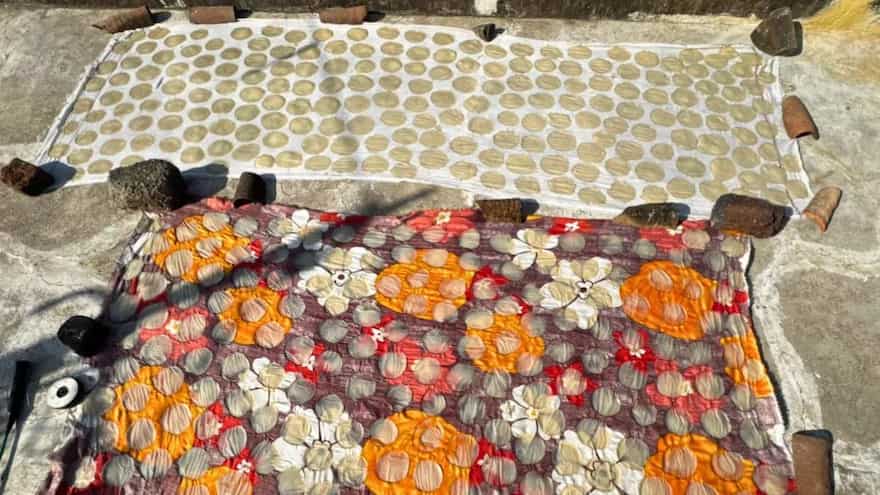
Image Credit: Author
Valvan From Everyday Staples
Valvan items are made from staples like rice, pulses, and cereals, which are meant not only for preservation but also for everyday use.
Papads, often made from urad or moong dal, are rolled thin and sun-dried until they become crisp. Once placed in hot oil, they crackle and puff up within seconds, becoming an essential part of meals. In many homes, no khichdi thali feels complete without them.
Kurdai, made from wheat, jowar, rice, nachni, or sabudana, follow a more detailed process. The flour is cooked into a paste and later shaped into delicate, lace-like patterns on sarees or plastic sheets by hand or with some instruments before being left to dry in the sun. The kurdais are light and crisp, and form an important part of Amba Jevan in Mahrashtrian homes.
Moongvadi, made from ground moong dal paste and dried into small nuggets, are usually added to vegetable dishes. They give both texture and flavour. Similarly, sabudana mixed with potatoes is used to make papads and wafers that are sun-dried and stored, often eaten during fasting periods.
While these foods were once made in large batches at home, many families today prefer to buy them. Meena Burghate, 55, Amravati, says, “I used to make valvan items at home with my mother-in-law initially, but it requires a lot of effort. With work and other responsibilities, it became difficult. Now everything is available from small home-run businesses and at reasonable prices too.”
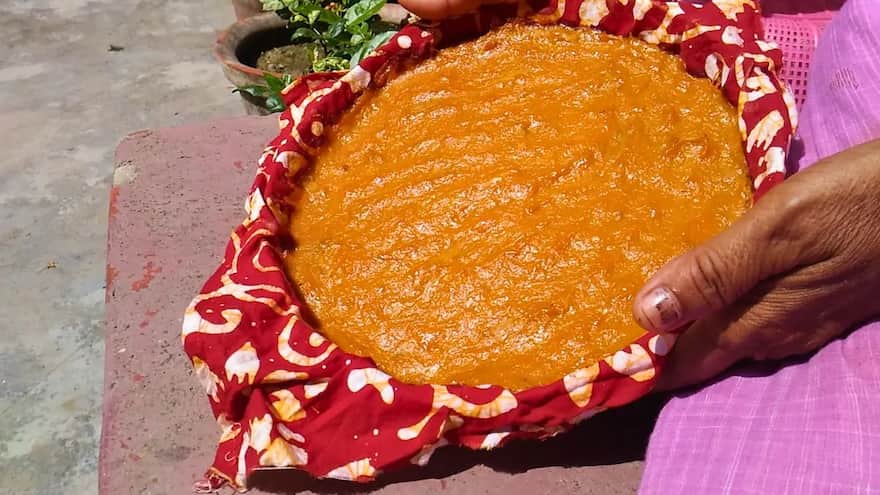
Image Credit: Wikimedia Commons
Preserving Summer Fruits As Valvan
Valvan is not limited only to staples, but seasonal fruits, especially mangoes, are also preserved to capture the taste of summer for later months.
Ripe mango pulp, or aamras, is boiled, spread out in a plate, and dried under the sun to make aam papad or aam poli, which is a sweet, chewy snack that lasts well beyond the season. Sometimes spices are also added to the mixture to give it a slightly tangy flavour. Raw mangoes, on the other hand, are chopped, dried and ground into aamchur, a powder that is used to add sourness to many dishes.
In the Konkan region, similar methods are used for fruits like jackfruit to make fanas poli. These foods across regions reflect a simple idea, which is to make seasonal produce last longer.
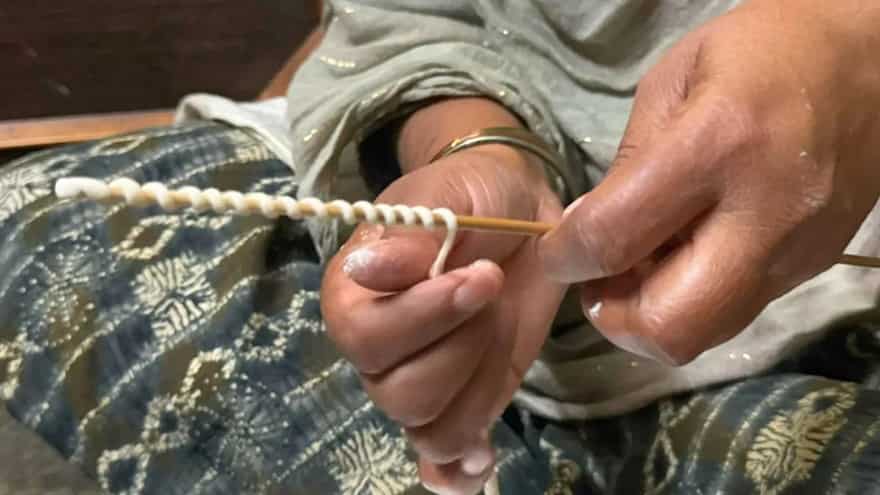
Image Credit: Author
Vidarbha’s Valvan Tale
In Vidarbha, valvan is a part of everyday meals and summer traditions. Among these, Sargunde stands out the most.
To make sargunde, wheat flour and rava are turned into dough, and the dough is rolled into long strands, spiralled around sticks, and dried in the sun. To cook this dish, the strands are boiled like pasta and served with chilled aamras, and often topped with a spoon of sajuk toop. The combination is more than just a dish; it is a sign that the meal is complete.
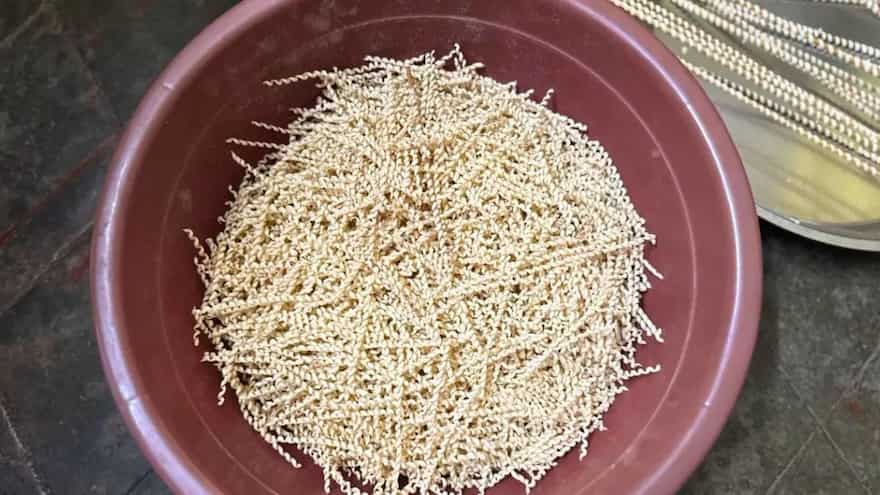
Image Credit: Author
Despite changes in how they are made, their popularity is only growing. Shilpa, 48, who runs a small valvan business, says, “No Maharashtrian aamras thali is complete without kurdai and sargunde.” She adds that even those living outside the region continue to seek them out. “People living abroad miss this food. Last year, several kilos of sargunde and kurdai were taken to the United States by one of my customers,” she says.
Alongside sargunde are shevlya and papda, both common in Vidarbha homes. Shevlya, made from semolina, resembles vermicelli and is often cooked into savoury dishes like sevai upma. Papda is slightly thicker, dried on sheets, broken into pieces and cooked with spices, mustard seeds, and curry leaves. Unlike many other valvan items, these are often eaten as full dishes, especially for breakfast, rather than just accompaniments.
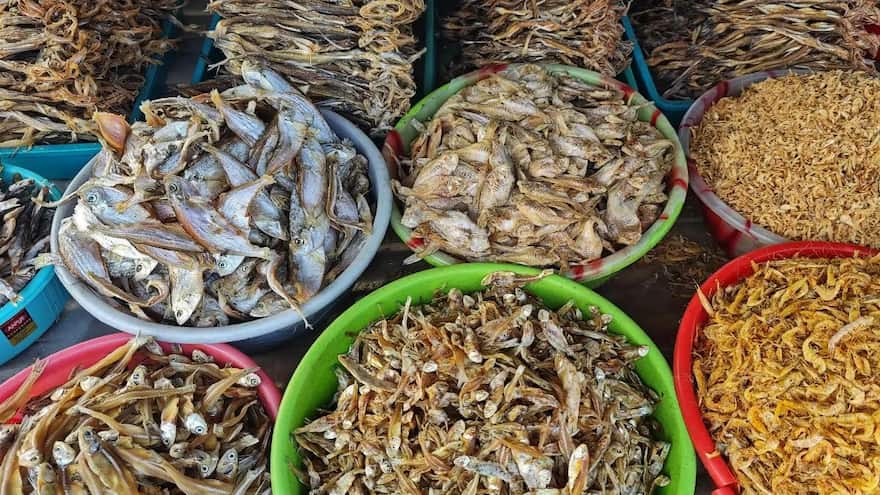
Image Credit: Wikimedia Commons
A Shared Practice Across Regions
While valvan is strongly associated with Maharashtra, similar practices exist across India.
In Gujarat, sun-dried vegetables known as sukavni, which include okra, bitter gourd, and cluster beans, are prepared and later fried. Goa has a tradition of preserving foods for the monsoon, and celebrating it through the Purumentachem Fest, where ingredients such as lentils, spices, and fish are dried and stored. In Rajasthan, moongvadis are popular, along with dishes like panchkuta, which are made entirely from dried ingredients like ker, sangri, and amchur. Across regions, the methods and ingredients might differ, but the idea remains the same: to preserve seasonal food.
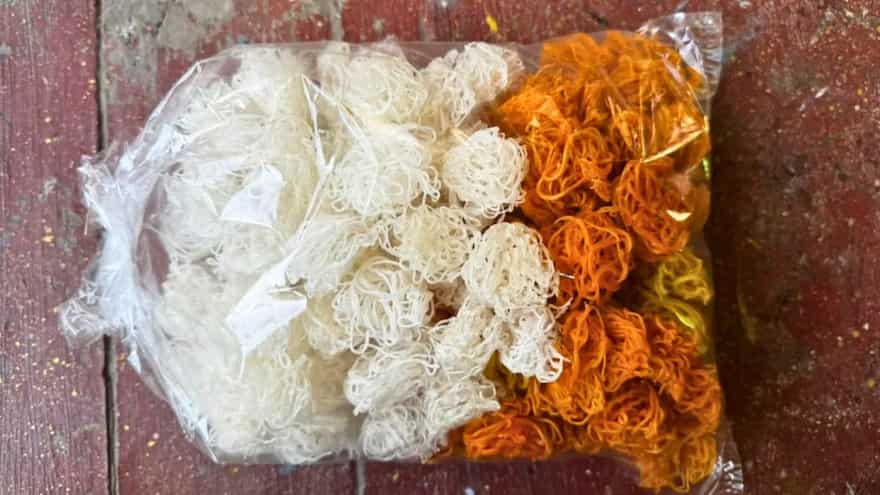
Image Credit: Author
Changing Terraces, Changing Times
Today, however, the terraces are quieter. With smaller homes, busier routines, and nuclear families, fewer households make valvan at home today. Juily Sukalkar, 33, a Pune-based IT professional, says, “I have grown up watching my mother make papads and kurdais in verandahs and backyards during summer, so I naturally have a liking for them. But making them here is not as easy. My job is demanding, and the weather in Pune is unpredictable. I only get enough sunlight in my balcony for a short period, so managing office, home, and this task in that short window becomes difficult.”
To meet this demand, small businesses, often led by women, have stepped in. Sangita Gatfane, 45, who has been making and selling valvan items for the past decade, says she prepares over a quintal each season and the demand for these foods is increasing with each season, “Many people, especially the younger generation are returning to traditional foods. They prefer pure and authentic foods over processed food, and are willing to pay for good quality,” she says.
But these businesses are not without their own challenges. An ongoing shortage of LPG has affected production this season. “Jowar kurdais require a lot of cooking and boiling, and we are short of cylinders now,” Gatfane explains. “I have stopped taking orders for jowar kurdai for now. This is our main business season, and if the rains begin early this summer as well, we won’t be able to continue.”
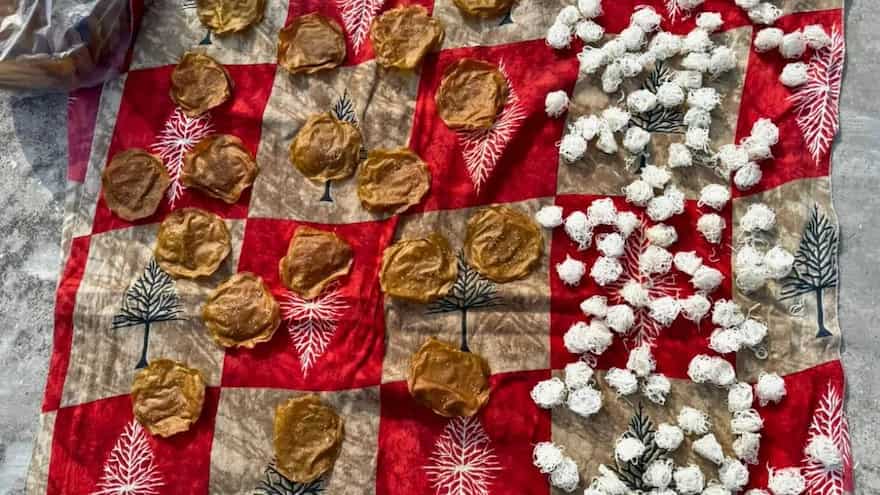
Image Credit: Author
As the process of making valvan has moved from terraces to small businesses, the experience has changed. The rows of drying food, the shared work, and the involvement of children during summer vacations are not common any more. The task, which was once a collective seasonal activity, has slowly shifted towards convenience.
And yet, despite these shifts, the connection to these foods remains strong. The valvan items now travel across cities and even countries, packed into suitcases, sent by families, or ordered from small businesses, carrying with them a taste of home.
The taste of crisp papads, soft strands of sargunde soaked in aamras, or the tangy taste of aamchur are more than just flavours. They carry with them traces of times when terraces were filled with sunlight, shared labour and summers. Valvan, in that sense, is not just about preservation, but about memory, season, and how lives and foods are shaped by the rhythms of the sun.




