


 Share
Share

Ever since its creation, bread has rarely been rejected by humans. For thousands of years, it has been one of the most straightforward ways of turning grain, water, and cooking heat into something filling, tasty, and sustaining. Archaeological evidence from northeast Jordan has pushed the history of bread-making back around 14,400 years, while ancient Egyptian remains show just how deeply bread was woven into everyday life.
This makes New York's latest bread obsession even more fascinating. The object of desire is not a croissant layered with butter or a pastry dusted with actual gold. It is rye bread. More specifically, a 1.5kg loaf of 100% organic rye sourdough from the Austrian bakery Martin Auer, which is selling for $60 at Rye in SoHo. And bread connoisseurs definitely had a lot to say.
A $60 Loaf That Became A New York Talking Point
Rye opened on Lafayette Street in September 2026 as Martin Auer's first US outpost. The concept is strikingly interesting. Instead of filling the shop with baguettes, buns, cakes, pastries, and croissants, the bakery has decided to make one bread the locus of the entire experience - its Austrian-style rye sourdough. The bakery itself describes the loaf as being made of only four ingredients, wittily counting time as one of them. The dough ferments for up to 24 hours, and the bread is made with organic rye flour that has been grown in and flown in from Europe.
But it is the price of the bread that transformed it from a new bakery opening into a food story. At $60, the loaf is priced less like something picked up for breakfast and more like a culinary centrepiece worth ooing and aahing over. Customers can buy half a loaf for $30 or a quarter for $15, but the full loaf is the number that has travelled furthest in every medium. And the bakery has attracted strong interest and repeated sell-outs, despite the steep price.
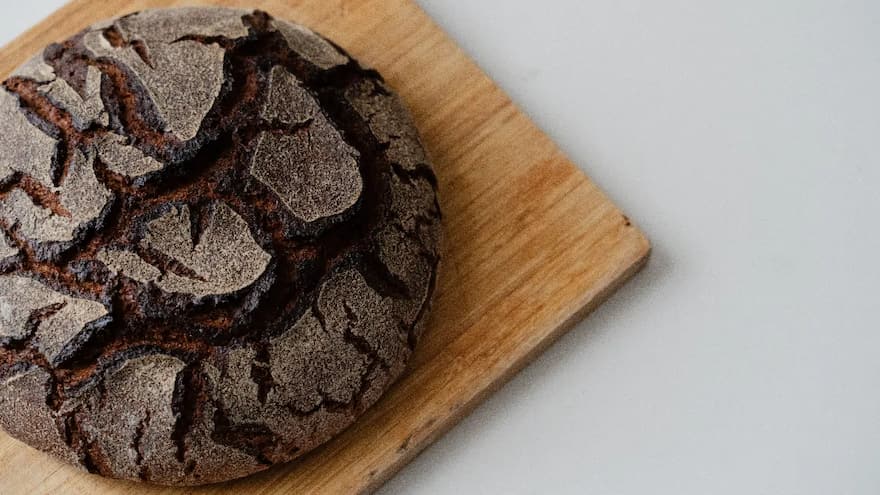
Image credit: Pexels
Now the owner, Martin Auer, explains that the loaf's price is rooted in the realities of their New York operation: imported Austrian flour, labour, the cost of operating in SoHo, as well as the lengthy production process; all of them contribute to the final price. The bakery's own account also gives due credit and places emphasis on its more than five decades of family baking tradition in Graz.
But there is another reason the loaf has caught fire. It is exceptionally easy to identify and interpret as an exotic, luxury product. There is a single loaf, a minimalist shop, a foreign heritage, an elaborate process, and a hefty price tag that invites curiosity before anyone has even taken a bite of the baked deliciousness. That heady combination turns ordinary bread into a luxury experience.
When Bread Stopped Being Merely Bread: Marie Antoinette Would Be Proud
The interesting thing about the Rye phenomenon is that the luxury is not really in the ingredients. There is no truffle, caviar, or rare chocolate involved. In fact, the ingredient list is almost unbelievably modest. Then why the high price? Here, what customers are paying for is the idea surrounding those ingredients: fermentation, provenance, time, technique, along with the baker's skill and instincts.
That is precisely where artisan bread has changed the way bread is perceived nowadays. The modern premium loaf often highlights the tiny nuances that mass-produced bread tends to make invisible and unappreciated - where the grain came from, how it was milled, how long the dough was fermented, what starter was used, and who baked it with love. The US Department of Agriculture noted in 2025 that consumer demand for artisan bread continues to rise, while also pointing to the growing interest of artisan bakeries in locally grown wheat and flour.
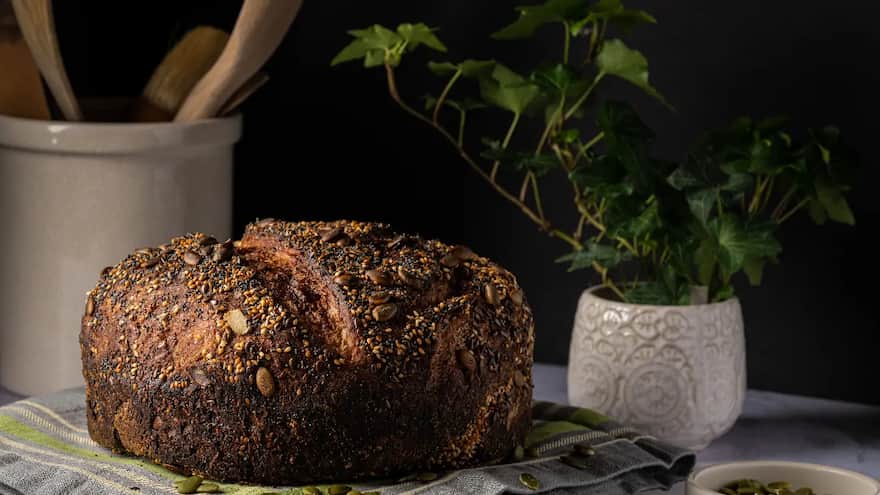
Image credit: Pexels
Now that does not mean consumers have suddenly abandoned ordinary bread. Far from it. Price still remains a major consideration. But the data points towards a more interesting bread landscape: everyday loaves continue to occupy one end of the market while sourdoughs, seeded breads, heritage grains, and slow-fermented loaves increasingly occupy another. And neither are competing for the top spot, as both have their respective niches that are going to take quite some time before intermingling properly.
A Loaf Of Luxury: The New Language Of Indulgence
Luxury food has traditionally been associated with rarity. But bread is doing something slightly different. Its luxury appeal is coming from its roots and craft. A loaf can be premium because the flour has a particular provenance, or the fermentation takes extra time, or maybe the baker makes bread in small, exclusive batches, or simply because the baked product tells a compelling story in every bite.
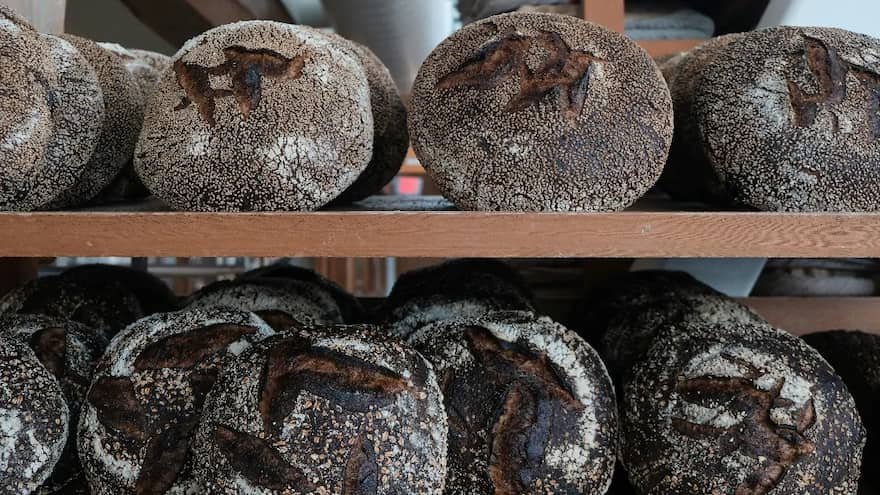
Image credit: Unsplash
That is where the $60 rye becomes more than an expensive loaf. It becomes a neat illustration of how contemporary food culture is changing. The bread itself may be humble, but the experience around it can be designed like luxury retail. And New York is arguably the perfect place for such an experiment. It is a city where everything bagels, giant pizza slices, and overloaded cookies can become a cultural phenomenon as much as something extremely delicious to eat. A luxury loaf of rye sourdough simply takes that familiar phenomenon and applies it to one of the oldest foods imaginable.
Whether $60 becomes a sustainable price point for bread is another question. But the bigger shift is already evident. Bread is no longer being sold as something to accompany a meal or mop up gravies only. Instead, it is being increasingly sold as a gourmet ingredient, something worth noticing and occasionally splurging and truly indulging in. And maybe that is the greatest irony. After thousands of years, bread has not become magical; we humans have simply gotten better at utilising its true potential and appreciating its merits.




