


 Share
Share

IN September 2023, an Indian PhD student at the University of Colorado Boulder reheated his lunch — palak paneer — in a shared departmental microwave. A staff member objected, calling the smell “pungent,” and told him not to use the microwave for his food.
What followed was not a disagreement about etiquette. It was, according to the students involved, a cascade: accusations of making colleagues feel “unsafe,” the sudden loss of a teaching assistant role, and the withholding of earned Master’s degrees. In 2025, the university settled the case for $200,000, conferred the degrees, and barred the couple from future institutional ties.
Online reactions fixated on the wrong questions. Is palak paneer even that smelly? Why not just eat something else? Aren’t shared spaces about consideration?
But those questions miss what this incident quietly exposes: how smell — one of the most intimate and least interrogated senses — can be used to draw boundaries around who belongs, who must adjust, and who is allowed to take up space without explanation.
To understand moments like this, we need better language. Not to escalate conflict — but to recognise when something stops being about politeness and starts becoming something else.

1. When Dislike Turns into Power: Olfactory Racism
At its simplest, olfactory racism describes what happens when smell is used not as a personal preference but as a normative instrument of power.
This isn’t about disliking a scent. It’s about how certain smells — often tied to racialised or migrant cultures — are labelled tainted, backward, or inappropriate, while others are treated as neutral or invisible. Once that judgement is made, the smell becomes a justification: for correction, for discipline, for exclusion.
In the palak paneer case, the issue was not that someone disliked the aroma. It was that the complaint escalated into institutional action — meetings, accusations, professional consequences — turning a subjective sensory response into administrative evidence.
When smell is framed this way, it stops being personal. It becomes political.

2. Why Smell Carries So Much Weight: The Hierarchy of the Senses
Part of smell’s power lies in how it has been historically ranked.
Western philosophical traditions long treated smell as the “lowest” sense — animalistic, bodily, irrational. To be “civilised” was to rise above it. Sight and reason were elevated; scent was something to be controlled, managed, or ignored.
So when a food is dismissed as “smelly,” the judgment rarely stops at the dish. It subtly slides onto the person eating it. The implication isn’t just that the food is unpleasant — but that the eater is less refined, less disciplined, less suited to the space they occupy.
This is why accusations about smell feel so personal, even when they’re framed as neutral observations. They draw on centuries-old ideas about cultivation, control, and superiority.
3. The Invasion Feeling: Why Smell Triggers Disproportionate Reactions
Unlike sight or sound, smell works through sensory penetration. It involves particles entering the body. You can look away from something you don’t like. You can close your eyes. Smell doesn’t offer that choice.
This creates a feeling — often unspoken — of being invaded. And when that invasion is associated with someone perceived as “other,” the reaction can turn hostile very quickly.
This helps explain why food smells are so often described in extreme terms: overpowering, unbearable, offensive. The language signals not inconvenience, but violation.
In institutional settings — universities, offices, housing complexes — that sense of violation can be weaponised, allowing subjective discomfort to be reframed as a legitimate complaint demanding intervention.

4. Living With the Fear of Being “That Smell”
For many immigrants and children of immigrants, there is a moment — often early — when food becomes a liability. The lunchbox that draws comments. The shared kitchen that suddenly feels unsafe. The realisation that what smells like home to you smells like a problem to someone else.
This is sometimes called the “lunchbox moment”: the instant cultural difference becomes sensory and public.
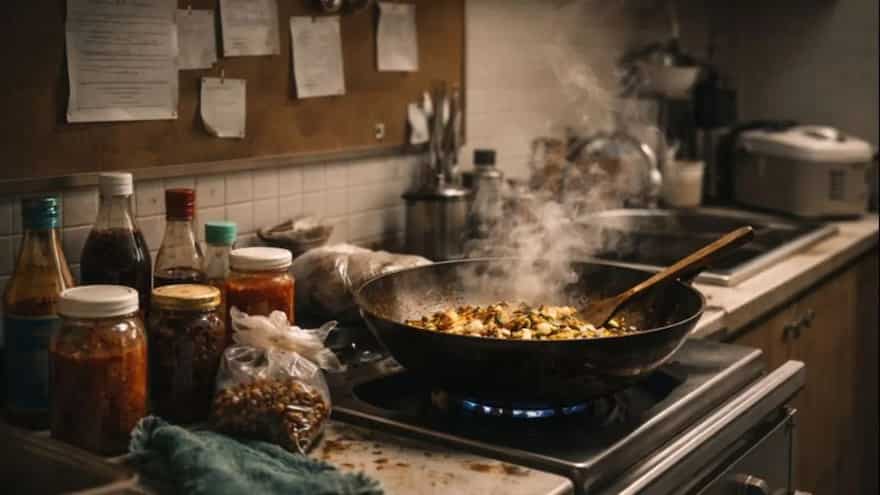
Over time, it produces ethnic shame — a visceral awareness of being out of place. People respond by doing what researchers describe as odour elimination work: cooking only on weekends, opening every window, changing clothes immediately after meals, and avoiding certain dishes entirely.
None of this is written down as a rule. It is learned quietly, through discomfort and repetition.
5. The Limits of Tolerance: Being “Tolerably Ethnic”
Multiculturalism often presents itself as openness — but it has limits.
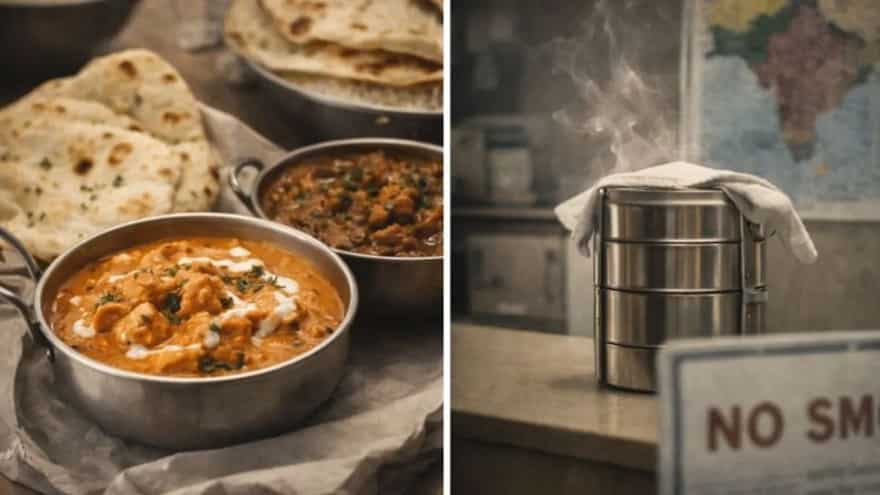
Certain foods are embraced as “tolerably ethnic”: mild, creamy, non-lingering. Butter chicken, for instance, is widely accepted because it doesn’t announce itself too loudly. It doesn’t challenge the sensory norms of dominant spaces.
More pungent, fermented, or spice-forward dishes cross an invisible line. They are treated as excess — something that needs ventilation, management, or restraint.
The message is subtle but consistent: difference is welcome, as long as it stays quiet.
6. When Racism Isn’t the Word: Food Discrimination in the Indian Context
While the language of racism is most often used in Western contexts, similar processes of sensory othering operate within India — through caste, region, and entrenched ideas of purity.
Food hierarchies here are deeply shaped by the logic of ganda — dirty and/or smelly. Upper-caste sensibilities frequently set the standard for what counts as “clean,” “acceptable,” or “neighbour-friendly,” even though Indian cuisine itself is unapologetically aromatic. Certain smells are framed as natural and homely; others are marked as excess.
This plays out in the everyday marginalisation of Northeastern food cultures in cities like Delhi, where students have been advised to avoid cooking fermented foods such as axone or ngari so as not to “upset” neighbours or landlords. The food becomes the problem; the eater learns to adjust.
And this is without even entering the morass of meat — particularly beef — where food stops being merely a site of discrimination and becomes entangled with religion, morality, and violence. That terrain is its own, far graver conversation. What matters here is the shared mechanism: food being used as evidence of who is acceptable, who is suspect, and who must constantly explain themselves.
Different context. Same logic.
7. Why Naming This Matters
None of this means every complaint about smell is malicious. But it does mean that smell is rarely just smell.
When discomfort consistently flows in one direction — when some people are expected to minimise themselves for “consideration,” while others are never asked to account for the space they occupy — it’s worth pausing.
Naming concepts like olfactory racism, sensory imperialism, or systemic bias doesn’t escalate conflict. It clarifies it. It helps explain why a microwaved lunch can spiral into professional punishment, and why calls for politeness so often land unevenly.
Understanding this doesn’t require taking sides. It simply requires recognising that the world many people experience as “odourless” is not neutral — it’s constructed.
And once you can name what’s happening, you can decide what to do with it: push back, seek redress, or — just as importantly — stop yourself from participating in it the next time you wrinkle your nose and call something “offensive.”




