


 Share
Share

With rains acting pricier than Eid ka Chaand, it takes a special kind of effort to step out of the house on a weekend and brace the sweltering heat. Even more so if your destination arrives in the middle of Delhi’s narrowest lanes, where a traffic jam can be caused if enough people walk together.
But on Sunday, June 28, people did just that – not cause a traffic jam, but take an e-rickshaw through the narrow lanes of Sitaram Bazaar, Old Delhi, to revisit India’s history on a plate at the inaugural edition of The Living Table, an immersive cultural and culinary experience that explored the journeys, memories and migrations that have shaped North Indian cuisine.
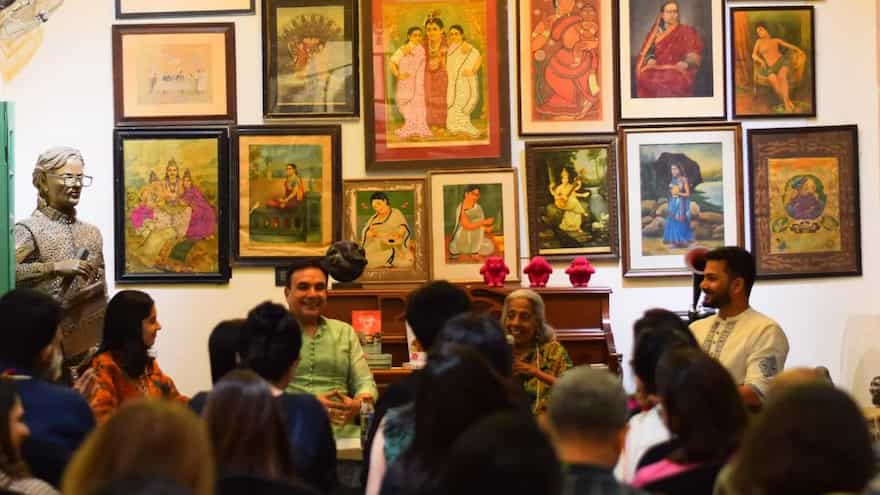
Image Credits: Inkpot
Food: The Mutating Archive Of History
Organised by Inkpot, the evening took place between two venues, the Kathika Cultural Centre and Neem Ki Haveli. The first saw Monish Gujral, Chairman of Moti Mahal, Salma Husain, renowned food historian, Persian scholar and author, and chef, author and food writer Sadaf Hussain discuss how food travels and adapts. The latter became the backdrop for an intimate sit-down dinner, prepared by Moti Mahal.
But why choose food as a medium for history? Because it allows you to pause and savour, says Simar Malhotra, founder of Inkpot.
“Food is one of those ways in which we consume history, but we don’t pay attention to it. Why is it that we’re eating what we’re eating?... If we’re able to pay just a little more attention to what we’re doing, life has more meaning. It’s okay to pause, be in the moment, and see where all the flavours are coming from.”
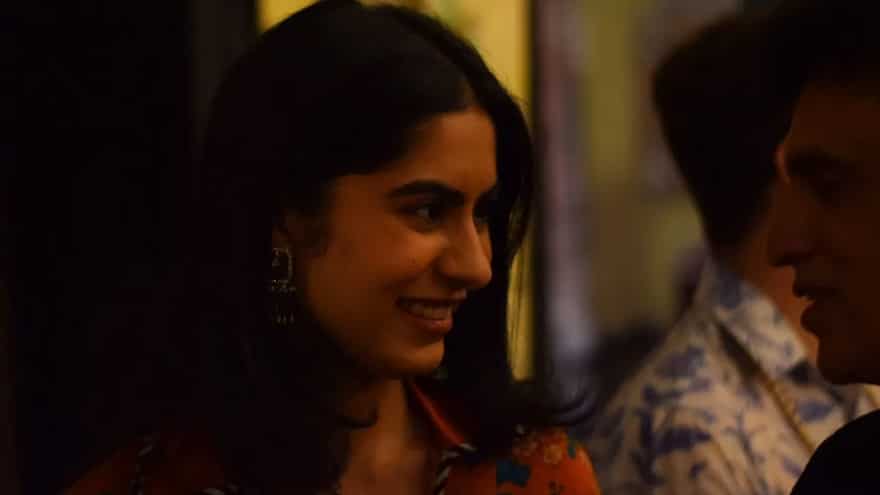
Image Credits: Inkpot
Simar added how a lot of today’s culinary culture is determined, not by ancient history, but by people who lived just a hundred years ago, giving birth to dishes that became the poster child of Indian cuisine across the globe. Like the butter chicken (invented by Kundan Lal Gujral). Or the tandoori chicken that, as per Monish Gujral, not only led to the birth of a new dish but also a new cooking technique.
As the guests sat munching through crispy nankhatai and warm chai, surrounded by decorative tiles and old-age chandeliers, discussions on the original Mughal spice mix, the love for all things spicy in Delhi, the lost snacks (khatlamba, once served with samosa across Delhi, now limited to select shops in Amritsar), and the changing shape (and names) of food, whet the appetite for the meal that was to follow.
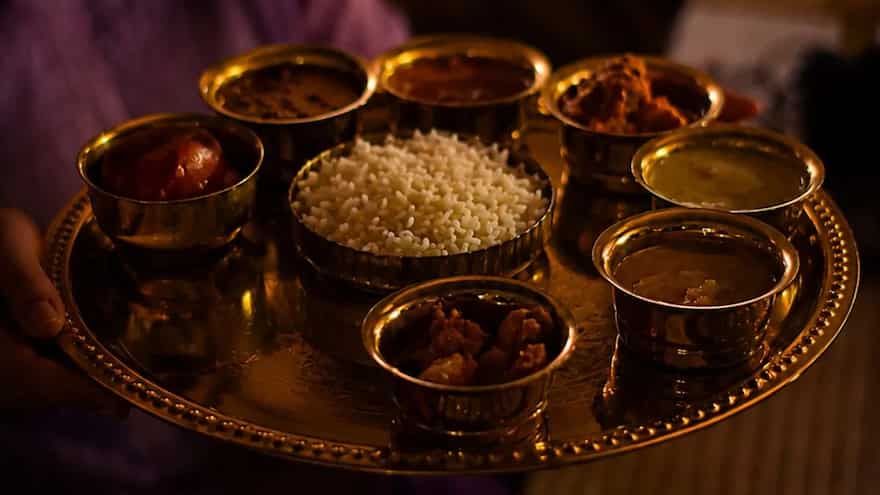
Image Credits: Inkpot
The Menu: Everyday Dishes Alongside Icons
Delhi has never had a shortage of experiences, especially food-related experiences, but what stood out in this menu was the balance between everyday and iconic dishes. Food history usually remembers kings, famous chefs and restaurants. But this was a thali that also made a place for the ordinary kitchens; the ones run by recipes that were inherited, not archived.
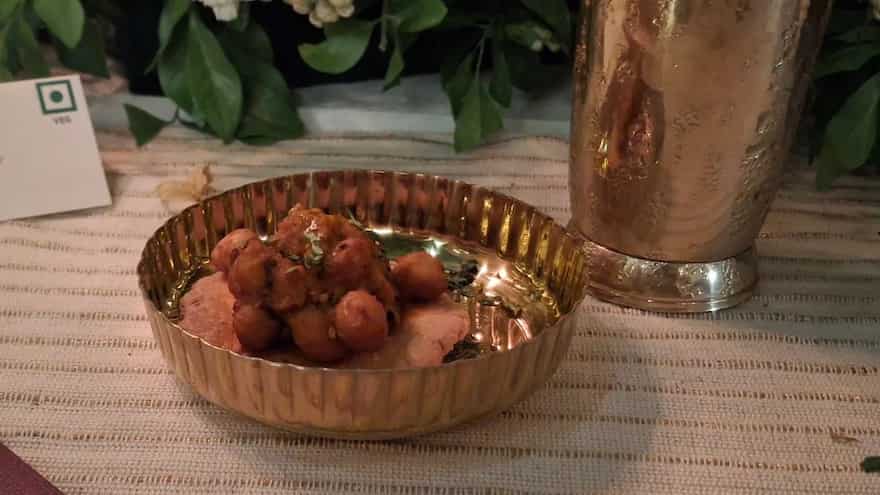
Image Credits: Author
Appetisers
The evening started with three appetisers, paired with a glass of crisp, cold, and refreshing aam panna; a reminder that nothing beats summer better than a seasonal pour. The first one was the mathi chole, where a crispy, crunchy mathi was topped with lightly spiced chickpeas, flavoured with a touch of pickle. The pickle hits your palate unexpectedly and then lingers, a fitting reminder from the streets and homes of undivided Punjab.
It was followed by the chapli kebab (a Peshawari speciality) and dahi kebab. The latter had a crispy, breaded crumb and soft interior. A good bite to start the meal, though it edged on the drier side. At the end was tandoori chicken and paneer tikka. Served with a makhani gravy and mint chutney and inspired by the tandoors that travelled from Peshawar to Delhi, this was crispy on the outside, juicy on the inside, and charred to perfection.
The Main Course (Thali)
The thali featured an impressive spread of curries and sabzis. The dal makhani, arising from the refugee kitchens and taking up a spot at India’s finest restaurants, was rich and creamy, serving comfort (not novelty). Its enduring popularity could only be matched by the butter chicken (or shahi paneer for the vegetarians). After all, is it even a Moti Mahal dinner if butter chicken, created in post-Partition Daryaganj, doesn’t make it to the table?
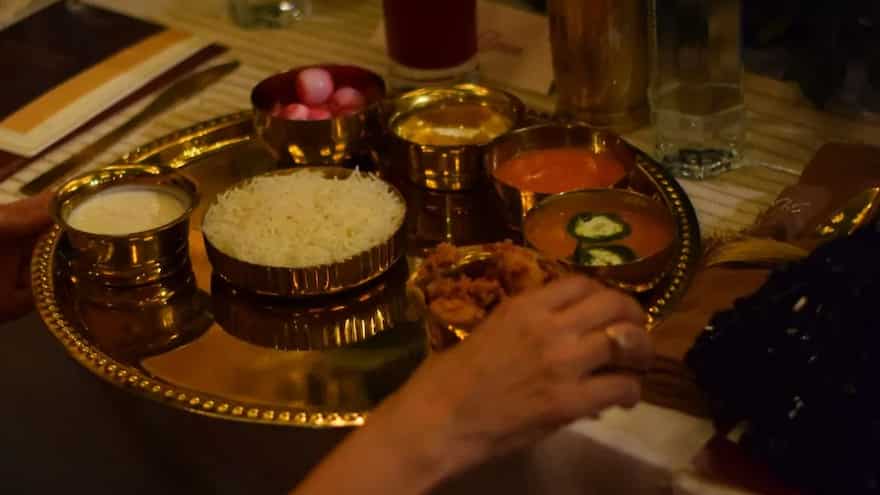
Image Credits: Inkpot
Accompanying the classics were rich gravies like the keema kofta (tender, minced meat shaped into balls (kofta) and simmered in a rich gravy), dhoop chaon (dark green koftas (shaam/chaon) made from palak and stuffed with crumbled paneer (dhoop/savera) and borani kadoo. A favourite from Kabul (Afghani cuisine), the kadoo wasn’t anything like the side served with pooris. Rather, it featured tender, spiced squash served over a cool, creamy yoghurt sauce. It was a symphony of temperatures, tastes, and textures inspired by Persian influences.
However, the real surprise of the evening was the masala arbi. Whether you’re travelling outside of India, coming back to the nation for a visit, or simply hankering for some good old comfort food, butter chicken and dal makhani are likely to be on your order list. But masala arbi, that has a greater probability of being found on your aunt’s dinner table than in a restaurant, remained the night’s quiet winner. The meal ended with a cold bowl of phirni that aced the rich, creamy, and mildly sweet taste with its thick yet velvety texture. Alongside was a pinni, a traditional ladoo, wrapped inside a jute pouch.
Also Read:
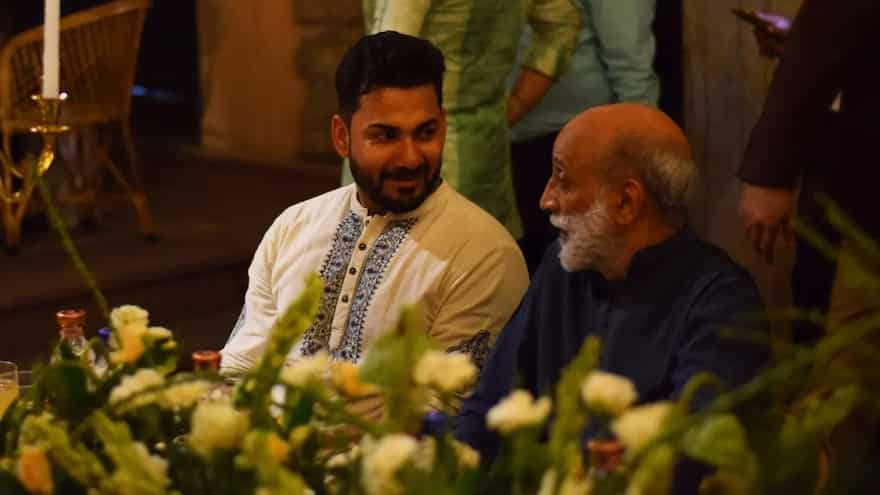
Image Credits: Inkpot
Chef Sadaf Husain, who worked on finding the not-so-obvious dishes on the thali and has been curating food-led experiences for a while, explained the cultural science behind the menu.
“People are moving away from what’s available everywhere. They want uniqueness. If you look at all the restaurants now, they’re moving towards experience. Places like these serve as an experience of the yesteryears. Today, the Indian subcontinent is living in nostalgia… In an age where we’re not as connected (offline), setups like these give that experience of how people were living in the past. Dishes like arbi are not what you find in restaurants but in homes, and the menu was curated, especially, to showcase such dishes.”
Old Settings, New Memories
The Living Table certainly felt like stepping back in time, consuming not only what’s popular but also what’s remembered. As the night came to a close, patrons walked out, with a paan in one hand and a jute pouch carrying a pinni in the other. It was how the dessert had originally travelled, designed to be consumed on long journeys and provide energy. For the guests of the evening, it provided a chance to experience how the new and old coexist. Museums preserve objects behind glass. Recipes survive only if they're cooked, served and shared. And here, the room for adaptation never closes.
In the words of Salma Husain, “Indian cooks are very creative; they make everything their own.”




