


 Share
Share

A Wall of Cassettes
A stack of cassette spines — Metallica, Pearl Jam, Guns N' Roses (twice over), Red Hot Chilli Peppers, Soundgarden, Nirvana — turns out to be a surprisingly precise time capsule. All seven records arrived within about ten weeks of each other in the autumn of 1991, a coincidence tight enough to make you wonder what else was happening in that same narrow window. The honest answer is: almost everything. Between roughly 1990 and 1995, popular music, world and Indian cinema, and the global food economy each went through their own once-a-generation reset, and — this is the part that is easy to miss — the three resets were not independent of each other. They were the same shockwave, arriving in a living room, a theatre, and a kitchen at once. This piece tries to hold all three threads together: what happened in music, film (Hollywood and world cinema, plus Bollywood), and food between 1990 and 1995; why that particular five-year window has such an outsized claim on nostalgia; and how each subsequent five-year stretch, all the way to the present moment in 2026, stacks up against it. The short version is that 1990–95 wasn't lucky so much as it was a hinge — the last moment before a series of technologies (satellite television, the internet, the smartphone, streaming, delivery apps, AI) began fragmenting mass culture into a billion personal feeds. Everything after it has been, in one way or another, a negotiation with that fragmentation.
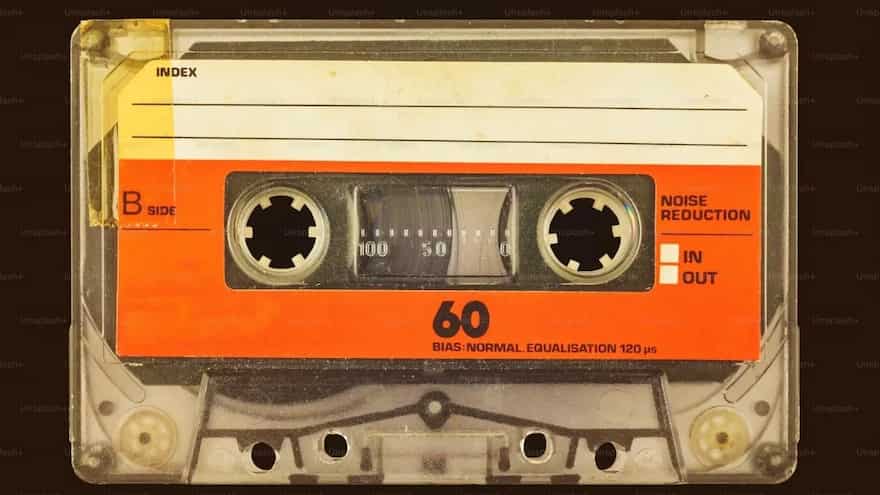
Image Credit: Unsplash
1990–95: Music's Last Monoculture Moment
Start with the cassette wall, because it is the cleanest data point. Metallica's self-titled Black Album arrived in August 1991, followed eighteen days later by Pearl Jam's Ten. Guns N' Roses detonated two albums at once — Use Your Illusion I and II — in mid-September. Nirvana's Nevermind and the Red Hot Chilli Peppers' Blood Sugar Sex Magik both landed on the same day, September 24, 1991, and Soundgarden's Badmotorfinger closed the run in October. Six acts, seven records, one genre-defining autumn. Grunge didn't so much arrive as detonate underneath the collapsing scaffolding of hair metal, and it did so at the exact moment MTV had become a genuine global broadcaster rather than an American cable curiosity — which meant a teenager in Bangalore, Manila, or Manchester could plausibly be watching the same Smells Like Teen Spirit video, in roughly the same week, as one in Seattle. That wasn't the only current running through the era. Hip-hop was living through what is now remembered as its golden age — the early-to-mid Nineties produced Dr Dre's The Chronic, Wu-Tang Clan's debut, and the escalating, ultimately tragic East Coast–West Coast rivalry that would define the genre's mainstream arrival by mid-decade. Britpop was gathering in the UK. And on the pop side, the format itself was still consolidating: the CD had only fully displaced vinyl and cassette as the dominant physical format in the early Nineties, meaning this generation of albums was the first to be engineered, marketed, and consumed as CD-era statements — no more flipping a tape, no more Side A and Side B, just one uninterrupted forty-minute experience. That is a small technical fact with a large cultural consequence: it is part of why so many of these records are remembered as complete artistic statements rather than song collections.
1990–95: World and Indian Cinema Turn a Corner
Hollywood's early Nineties were doing something structurally similar to what music was doing — clearing out an old guard and installing a new one. Goodfellas (1990) and The Silence of the Lambs (1991) redefined what a mainstream American thriller could look and sound like; the latter remains one of only three films in history to sweep the Big Five Academy Awards. Jurassic Park (1993) effectively invented the modern CGI blockbuster. Pulp Fiction (1994) reset independent cinema's relationship with the studio system and made Quentin Tarantino a verb. Forrest Gump, The Shawshank Redemption, Braveheart, and Se7en all arrived within the same stretch, an unusually dense cluster of films that still anchor greatest-of-all-time lists three decades later. This was also the last hurrah of a certain kind of movie-star-driven mid-budget filmmaking, before the industry's economics tilted decisively toward franchises. India's cinema was undergoing an even more consequential shift, because it was happening in lockstep with the country's economic opening. Bollywood in the early Nineties pivoted hard away from the angry, often violent masala template of the Bachchan years and toward the glossy, family-and-diaspora-friendly romance that would define the decade: Sooraj Barjatya's Hum Aapke Hain Koun..! (1994) became the highest-grossing Hindi film of the decade and turned wedding-set melodrama into a genuine cultural template, one still referenced at actual Indian weddings today. Aditya Chopra's directorial debut, Dilwale Dulhania Le Jayenge (1995), went further, building its entire emotional architecture around the non-resident Indian caught between Western freedom and Indian family duty — a story that could only have resonated the way it did in a country that had just spent four years being told to open itself to the world while holding on to who it was. It is still running in a single Mumbai cinema, uninterrupted, three decades on. Mani Ratnam's Roja (1992) brought a new political urgency and a landmark A. R. Rahman score; Shah Rukh Khan's run through Deewana, Baazigar, and Darr established the anti-hero-turned-romantic-lead template that would carry Hindi cinema through the next two decades. None of this happened in a vacuum — it happened in a country that had just been forced, in a single monsoon, to renegotiate its relationship with the outside world.
1990–95: The Year the Kitchen Went Global
Image Credit: Magnific
Which brings us to food, and to the year that arguably matters more than any other in this whole piece: 1991. By the summer of that year, India's foreign exchange reserves could cover barely three weeks of imports; the government physically airlifted gold reserves to London and Zurich to secure emergency loans. On July 24, 1991, Finance Minister Manmohan Singh delivered the budget speech that dismantled the License Raj, and the country's relationship with food changed almost as fast as its relationship with capital. Pepsi, which had spent years fighting for a toehold under a humiliating deal that forced it to sell under the hybrid brand name Lehar Pepsi and cap its ownership at under forty percent, was suddenly free to operate under its own name. Coca-Cola, exiled from India since 1977, walked back in by 1993 with none of those restrictions and within a couple of years had bought out Parle's colas and roughly seventy percent of the domestic market. Kellogg's followed in 1994 with a sixty-five-million-dollar bet on Corn Flakes for a middle class that was, for the first time, being treated as a serious consumer market rather than an afterthought. The rest of the world's food culture was having its own quieter reset. In the United States, the low-fat diet craze that would define Nineties eating hit its stride; McDonald's infamous McLean Deluxe (1991) — a burger padded with seaweed-derived carrageenan — became an instant punchline and a case study in how far the industry was willing to go to chase a health narrative that consumers, it turned out, didn't actually want on their plate. Fine dining in the West was arguably at a genuine high point: critics of the era have called the early-to-mid Nineties one of the great periods for American restaurants, with Le Bernardin, Daniel, and the early Jean-Georges Vongerichten restaurants defining a serious, chef-driven fine-dining culture just as a wave of new food media — the seeds of what would become the Food Network in 1993 — began building the infrastructure to broadcast it. In India, this period is really the origin story for everything that food writers now take for granted: the idea that a global brand, a global cuisine, or a global format could simply show up in an Indian city. Before 1991, that idea required an act of government. After it, it required only capital and appetite. Why 1990–95 Was Genuinely Different It's tempting to write all of this off as nostalgia doing what nostalgia always does — every generation believes its own coming-of-age soundtrack was the last real one. But there is a more specific, less sentimental case to be made for why 1990–95 produced an unusually dense cluster of era-defining work across all three fields at once, and it comes down to four things converging that had never converged before and have not converged since in quite the same way. First, format maturity without format fragmentation. The CD had fully taken over from vinyl and cassette, multiplex and 70mm projection were standardising the theatrical experience worldwide, and satellite television (Star TV launched across Asia in 1991) was reaching a mass audience for the first time — but none of it had yet fragmented into the algorithmic, infinite-choice environment that streaming would later create. Everyone was, in a real sense, watching and listening to the same small menu of things, at scale, for the last time before choice became infinite and therefore diffuse. Second, generational exhaustion meeting genuine innovation. Hair metal, masala-movie excess, and Cold War-era genre filmmaking had all run their course by 1990, creating a vacuum that a new generation — Cobain, Barjatya, Tarantino, Rahman, Aditya Chopra — filled with work that felt genuinely new rather than iterative, because the alternative it was replacing was so exhausted. Third, and specific to India, an entire national audience was unlocked in a single legislative moment. Liberalisation didn't just bring in Pepsi and Kellogg's — it created, almost overnight, a self-consciously modern, aspirational Indian middle class that Bollywood, the soon-to-launch MTV India, and the food industry were all racing to serve at exactly the same time. Fourth, the post–Cold War interregnum. The Berlin Wall had fallen, the Soviet Union dissolved in 1991, and for a strange, brief window — before 9/11, before the internet reorganised attention, before any of the crises that would define the 2000s — there was a genuine sense of the world opening rather than closing. Culture made in that window carries a kind of unguarded optimism (Nevermind's anger notwithstanding) that is hard to manufacture once everyone knows how the next thirty years actually go. Put those four forces together and you get something close to a controlled experiment: a large, newly-attentive global audience, consuming a small number of genuinely novel cultural products, through a small number of shared channels, at the exact historical moment several closed economies — India chief among them, but also China and the former Eastern Bloc — were opening to the outside world for the first time in a generation. That is not a repeatable set of conditions. Every subsequent opening (the internet's arrival in the mid-to-late Nineties, China's WTO accession in 2001, the smartphone's spread through the 2010s) has been faster, messier, and far more fragmented than 1991's, because each one arrived into a media environment already crowded with the last one's leftovers.
Five-Year Snapshots: 1996 to 2026
None of what follows is meant to argue that culture got worse after 1995 — plenty of individually superior work has been made since. The argument is narrower: that 1990–95 was the last stretch in which music, film, and food each experienced a mass, unified, unmistakably generational reset at the same time, and that every five-year block since has been defined by how it responded to the fragmentation that followed.
1996–2000: The Last Party Before the Crash
Music went maximalist and then splintered — the Spice Girls turned pop into a globally exportable product just as Tupac Shakur's murder in 1996 and the Notorious B.I.G.'s the following year exposed hip-hop's mainstream arrival as a genuinely dangerous business. Film produced its own cassette-wall moment in Titanic (1997), still one of the only films to function as a true global monoculture event, while Indian cinema doubled down on the family-romance template with Kuch Kuch Hota Hai (1998) and Hum Saath-Saath Hain (1999). Food's biggest story was infrastructural rather than culinary: the dot-com boom was reshaping how information about restaurants and recipes moved, even before anyone had a name for food media, and in India the first wave of liberalisation-era brands were now mature enough that a Pizza Hut or McDonald's outlet in a metro city had stopped being a novelty. The dominant mood of the period, in hindsight, was the last blowout before Y2K anxiety and the 2000–01 dot-com crash sobered everyone up. It's worth pausing on how much of the decade's texture came from things adjacent to the big releases. 1997 alone gave the world Hong Kong's handover back to China, the death of Princess Diana, the debut of Harry Potter and the Philosopher's Stone, and the launch of Final Fantasy VII — a reminder that gaming was starting to compete for the same attention that music and film had monopolised a few years earlier. DVDs began replacing VHS tapes in this window too, quietly setting up the home-video habits that would define the next decade of film consumption before streaming made the physical disc irrelevant altogether.
Image Credit: Magnific
2001–2005: Fracture and Recompression
This was the decade's true hinge, and it shows in all three fields. Napster (1999) and the iPod (2001) broke the album as the default unit of music consumption years before streaming would finish the job; genres fractured into micro-scenes as file-sharing let listeners route around radio entirely. Film absorbed September 11 in real time — a new seriousness and a new appetite for spectacle-as-escape (the Lord of the Rings and Harry Potter franchises both began in 2001) ran in parallel, while Indian cinema's Lagaan (2001) became the first Indian film nominated for the Best Foreign Language Oscar in decades, a genuine signal that Bollywood's global ambitions had matured past the diaspora-romance formula. Food, meanwhile, entered its first real foodie era: El Bulli's Ferran Adrià was popularising molecular gastronomy in Spain, food blogging was becoming a recognisable genre, and in India the first generation of globally trained chefs — Vineet Bhatia among them — began winning Michelin recognition abroad, planting the flag that a wave of Indian chefs would later follow. This was also the period in which reality television and early social web culture began quietly competing with scripted film and produced music for the same hours of attention — a preview of the fragmentation that streaming and social media would later complete. Cookery television followed the same arc: the Food Network's early-2000s expansion, and the rise of celebrity-chef culture around figures like Jamie Oliver and, in India, Sanjeev Kapoor, marked food's own transition from a print-and-television genre into something closer to lifestyle content — a shift that would accelerate hugely once smartphones put a camera in every diner's hand.
2006–2010: The Smartphone Rewires Everything
The iPhone (2007) is the hinge event of this entire block, and its effects took a few years to fully surface. Music streaming was still nascent (Spotify launched in 2008 but wasn't yet global), so this period is really the last stand of the download-era music industry before subscription streaming rewired listening habits entirely. Film had its own generational moment with the 2008 financial crisis reshaping what studios were willing to greenlight, even as Slumdog Millionaire (2008) — a British-Indian co-production — won Best Picture and put Mumbai's underclass and its music (A. R. Rahman again) in front of a global Oscar audience. Danny Boyle's film, alongside the maturing of Indian multiplex cinema, marked the point where Indian content made for a global audience stopped being a novelty and started being a genre. Food's big story was the recession itself: comfort food, home cooking, and value-conscious eating surged across markets hit hardest by 2008, while in India the fine-dining scene quietly kept building — international cuisines like Japanese and Mediterranean were gaining real traction in metro cities for the first time.

Image Credit: Unsplash
2011–2015: Streaming Becomes the Default
This is the block in which on-demand stopped being a novelty and became the operating assumption for an entire generation. Netflix's pivot to streaming (2007) and then original content (House of Cards, 2013) rewired both film and television distribution; Spotify's global expansion did the same to music, and K-pop's international breakout — Psy's Gangnam Style in 2012 — offered an early hint of the genuinely global, algorithmically distributed pop stardom that would define the next decade. Indian cinema produced its own hint of what was coming with Baahubali: The Beginning (2015), a Telugu-language film whose scale and ambition began quietly rewriting assumptions about which Indian film industry could produce a genuine national — and eventually global — blockbuster. And this was the moment India's food-delivery infrastructure was actually built: Zomato, founded in 2008 as a restaurant-discovery site, and Swiggy, founded in 2014, both began the buildout that would make food delivery a default urban behaviour rather than an occasional indulgence — the plumbing beneath everything Indian food culture would become in the following decade.
Image Credit: Magnific
2016–2020: Algorithms, Then a Global Pause
Streaming completed its takeover of all three fields. Music discovery moved almost entirely onto algorithmic playlists; film and television both restructured around monthly-subscription content logic rather than theatrical windows; and Baahubali 2 (2017) demonstrated that a non-Hindi Indian film could out-gross most Bollywood releases nationally, a genuine reordering of the industry's internal hierarchy. Food delivery in India went from niche to infrastructure — both Zomato and Swiggy scaled into the hundreds of millions of orders, reshaping urban eating habits in a way that arguably did more to change how ordinary Indians actually ate than any single restaurant trend. Then, in March 2020, all of it stopped: theatrical film release essentially paused for a year worldwide, restaurant dining collapsed and delivery apps had to lay off staff even as demand for their core service spiked unpredictably, and music, film, and food all had to answer the same question at once — what does culture look like when it can only be consumed alone, at home, through a screen?
2021–2026: Event Culture and the GLP-1 Kitchen
The post-pandemic period rediscovered the value of shared, in-person cultural events specifically because so much of the preceding two years had been solitary. Barbenheimer — the simultaneous 2023 release of Barbie and Oppenheimer — became a genuine global cultural event precisely because it recreated, however briefly, the communal theatrical experience that Titanic had delivered a quarter-century earlier. RRR (2022) did something similar on a global scale for Indian cinema, becoming a genuine international crossover hit and eventually an Oscar winner for Best Original Song, a moment Indian film had been building toward since Lagaan and Slumdog Millionaire. K-pop, led by BTS and a widening second wave of acts, cemented itself as a genuinely global pop force rather than a regional one. And food's defining story of this half-decade has turned out to be pharmaceutical rather than culinary: the mainstreaming of GLP-1 weight-loss drugs like Ozempic and Wegovy is, as of 2026, measurably reshaping portion sizes, protein demand, and product formulation across the food industry, with major packaged-food companies now building entire product lines around smaller, higher-protein, GLP-1-friendly formats. In India, the parallel story is the maturing of a genuinely world-class fine-dining scene — Indian chefs now hold Michelin stars in Bangkok, London, and Dubai, and in 2025 Trèsind Studio in Dubai became the first Indian restaurant anywhere to be awarded three Michelin stars, the clearest possible signal that the trajectory which began with liberalisation in 1991 has reached something like its logical endpoint: Indian food, once a controlled and politically fraught category, is now simply world food.

Image Credit: Unsplash
Comparison at a Glance
It helps to see the seven blocks side by side, stripped down to a single defining thread in each field, because the shape of the pattern is clearer in miniature than it is in the telling. 1990–95: music found grunge and hip-hop's golden age; film found Pulp Fiction, Jurassic Park, and Bollywood's romantic reinvention; food found Indian liberalisation and the Western low-fat craze. 1996–2000: music found manufactured pop and hip-hop's mainstream tragedy; film found Titanic's global monoculture; food found the first mature liberalisation-era Indian brands. 2001–2005: music found the iPod-driven death of the album; film found post-9/11 seriousness alongside Lagaan's Oscar run; food found molecular gastronomy and the first celebrity-chef television wave. 2006–2010: music found the download era's last stand; film found Slumdog Millionaire's crossover; food found recession comfort-eating and India's early fine-dining maturation. 2011–2015: music and film both found streaming's arrival; food found Zomato and Swiggy building the delivery infrastructure that would define the next decade. 2016–2020: music, film, and food all found algorithmic distribution, followed by a global pandemic pause. And 2021–2026: music and film both found a hunger for shared, in-person events after two years of isolation; food found GLP-1 drugs reshaping appetite itself, even as Indian fine dining reached its first three-Michelin-star restaurant. Read that way, the throughline isn't really about any one field outperforming another — it's about how consistently the three move together, decade after decade, because they are all downstream of the same underlying shifts in technology, economics, and generational appetite. A format war in music tends to arrive alongside a distribution war in film and an infrastructure shift in food, because all three industries are ultimately in the business of getting a cultural product to as many people as possible, as fast as possible, and they tend to adopt the same enabling technology within a year or two of each other. The story of the last thirty-five years, in other words, is not really three separate stories. It's one story about distribution, told three times.
The Throughline
Lay all of this side by side and a pattern emerges that has less to do with quality — plenty of the last decade's music, film, and food is as good as or better than anything from 1990–95 on a purely technical level — and more to do with unity of experience. The early Nineties are remembered so fondly not because Nevermind is objectively superior to anything that followed, but because an entire generation, across multiple countries, experienced it as the same event at roughly the same time. Every technological shift since then — the CD giving way to the download, the download to the stream, the multiplex to the app, the newspaper food column to the delivery-app algorithm — has traded that unity for choice. We have, by any reasonable measure, more good music, more good film, and more good food available to us in 2026 than at any point in human history. What we don't have, and what that cassette wall accidentally captures, is the experience of an entire culture reaching for the same seven records in the same ten weeks. That may simply be the trade we made, and on balance, most people — including, probably, whoever stacked those cassettes in 1991 — would still make it again.




