


 Share
Share

In the bustling city of Kolkata, where every lane has a story to tell, the spring season brings with it a renewed sense of devotion known as Annapurna Puja. While the autumn belongs to Durga, the spring belongs to her form as the provider of food and nourishment. For Santanu Guha Thakurta, a designer who has spent over thirty-five years weaving the cultural fabric of the city through his labels, this puja is a family legacy revived. The deity of Annapurna is often depicted with a golden pot and a ladle, symbolising her role as the one who feeds the universe. In a city that takes its food as seriously as its faith, the celebration of this goddess is a grand affair. The Guha Thakurta household in Salt Lake becomes a sanctuary of heritage during this time, blending the designer’s aesthetic sensibilities with the strict adherence to vedic traditions.
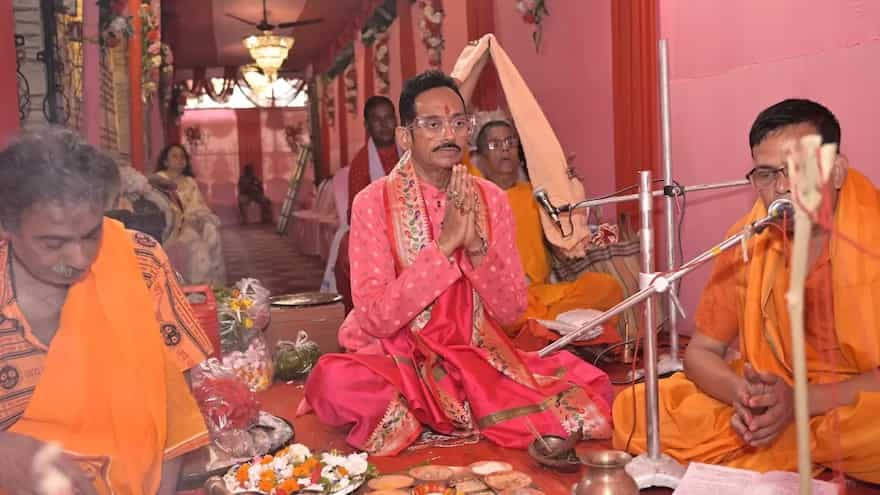
Image credit: Santanu Guha Thakurta
In Conversation With Santanu Guha Thakurta
Can you briefly describe your family’s history with Annapurna Puja? How long has your family been celebrating this Puja?
The idea was conceived thirty eight years back in 1986, but due to various constraints like my father’s illness and my wife’s critical illness, we could not continue the tradition. It was in 2022 that we resumed our pujo in our Salt Lake residence in Kolkata. So, technically it has been three years now, but the age old traditional puja is almost thirty eight years old in its conceptualisation. It represents a journey of resilience and the eventual return of the goddess to our home after a long hiatus.
Where is the Puja being celebrated this year?
The celebration takes place at our Salt Lake residence in Kolkata. It is the house where I reside with my wife, daughter, and granddaughter. Having three generations under one roof during the festivities adds a layer of warmth and continuity to the rituals that we perform.
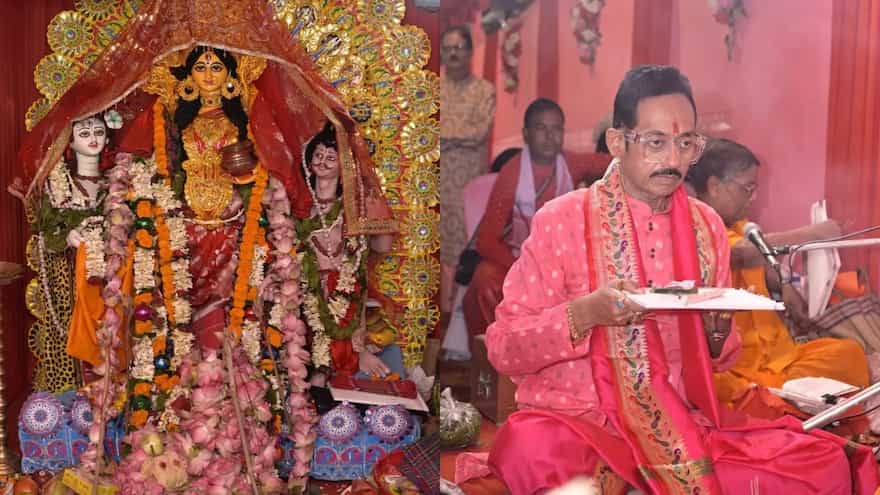
Image credit: Santanu Guha Thakurta
What are the key rituals performed during the Annapurna Puja at your home?
On the first day, we have the Adhibash and Stahphana of the goddess Maa Annapurna. This is the invocation. On the second day, we start with Saptami puja, followed by Ashtami puja, Sondhi puja, Annakut, Navami puja, Bhikhadaan, Yagna and Bhog daan, and we end the day with the mangal arati. On the third day, we conclude the rituals with Dashami puja, dodhikorma, and the final bhog. It is interesting to note that Annapurna puja is the actual Durga puja started by Lord Ram. The only major difference between the autumnal Durga puja and the spring Annapurna puja is that for the latter, all the rituals from Saptami to Nabami occur in a single day. This makes it an incredibly intense and spiritually charged twenty four hours.
How do you prepare for the Puja in the days leading up to it? Are there specific customs or preparations that your family follows?
Preparations begin with finalising the goddess model. I visit the artisan personally because every year a new goddess needs to be crafted from clay. This is followed by her saree and jewellery shopping. As a designer, this part is very close to my heart. These items need to be handed over to the artisan for the final preparation and dressing of the deity. This is followed by shopping for the bhog prasad. On the evening when Maa arrives at home for her adibash, the women of the family and a group of brahmins sit together to make narkel narus, which are traditional coconut sweets.
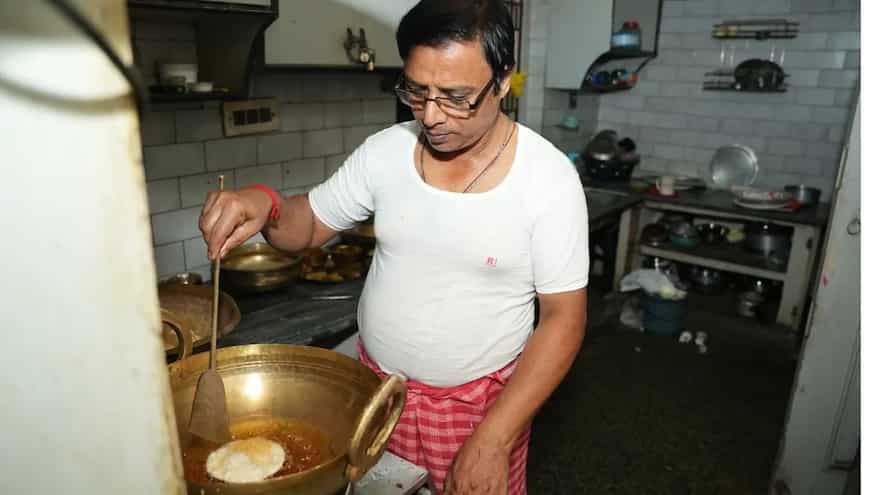
Image credit: Santanu Guha Thakurta
Do you follow any particular customs or special prayers that are unique to your family’s Annapurna Puja?
We do not have anything separate or secret in our customs. We follow the same traditional puja rituals as advised by our family brahmin. We believe in the purity of the established vedic path.
Who typically leads the Puja rituals in your family? Is there a designated priest or family member who performs specific rites?
There is a designated priest who visits every year specifically for this pujo. He is well versed in our family’s specific requirements. As the head of the family, I sit for the main rituals and perform the roles required of the korta or the master of the house.
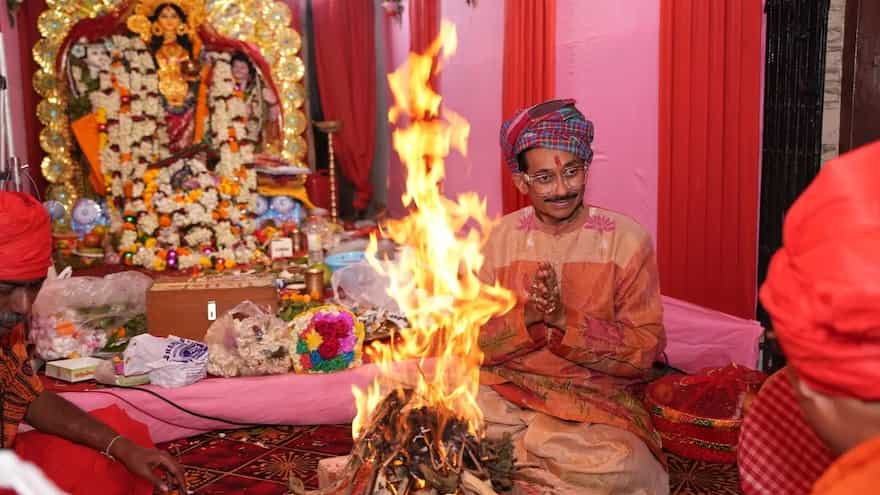
Image credit: Santanu Guha Thakurta
Could you share a list of the traditional Bhog offerings made during Annapurna Puja?
For Annapurna pujo, we have a special ritual of bhog offering called Annakut. This is a spectacular display where a total of thirty six items are prepared and offered to the goddess. The menu includes white rice and various types of bhaja including begun, potol, and kumro. We also offer vegetable curry, sweets, and payesh, to name just a few. This food can be prepared by both the family or the caterer. However, there is a strict rule that whoever prepares this should be wearing new clothes to maintain the sanctity of the offering.
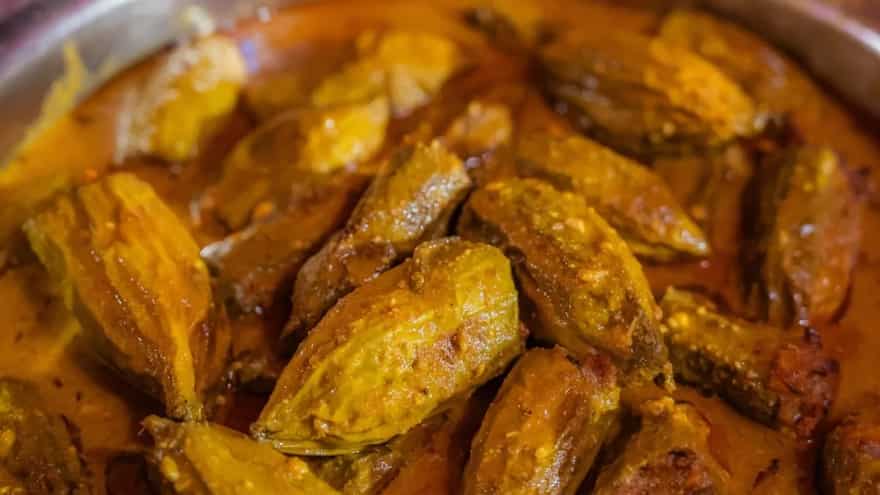
Image credit: Santanu Guha Thakurta
What are the most important dishes in your family’s Annapurna Puja Bhog? Why are these particular dishes chosen?
As per the ritual followed for years, for Annakut puja we always offer white rice. For the main bhog, we have khichdi and yellow pulao, which are all vegetarian. We also serve luchi, which is made from refined flour and fried in oil. These dishes are chosen because they represent the basic and most comforting elements of a Bengali meal, elevated for the goddess.
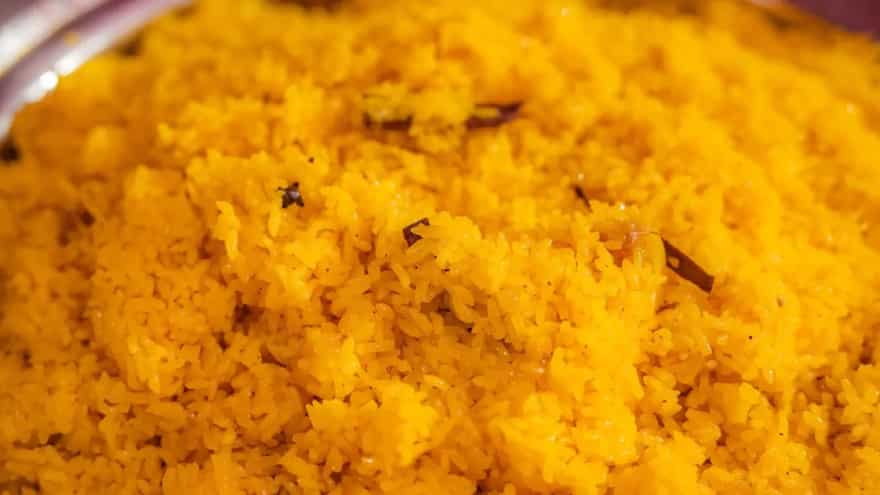
Image credit: Santanu Guha Thakurta
How are the offerings prepared? Is there a specific method or recipe passed down through generations in your family?
The offerings for Maa Annapurna are all prepared at home using a new gas stove and separate utensils that are never used for regular cooking. The pulao and the vegetable curries are all cooked using a traditional recipe. Another interesting point is that the person who cooks the bhog cannot taste the food while it is being prepared. Despite this, it is always perfect when it is served. We have over five hundred guests who come and attend our Guha Thakurta puja, and we prepare some heritage old lost recipes for them. This guest bhog is prepared by the caterer and the menu includes Radhaballavi, Cholar Dal, Chana Aamsotto Chop, Dhokar Dalna, Potoler Dorma, Dum Pulao, Chutney, and Gokul Pithey.
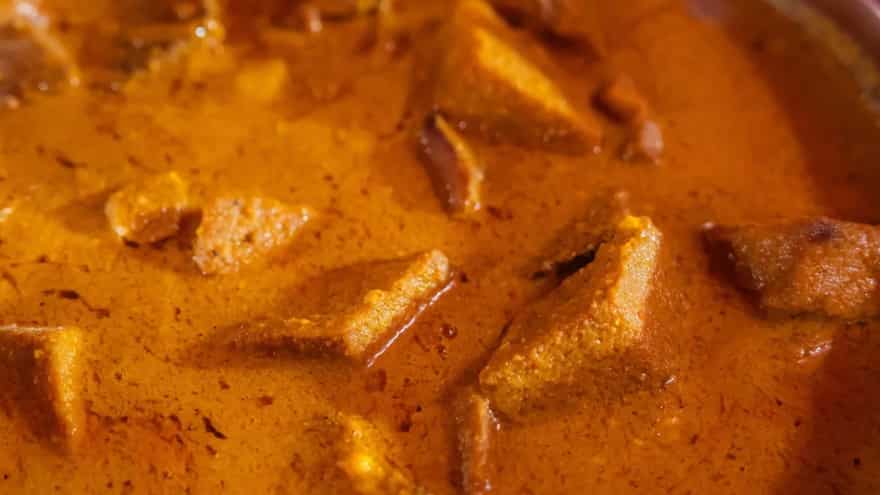
Image credit: Santanu Guha Thakurta
Who prepares the Bhog? Is there a special dish that holds personal or family significance, and why is it important to include it in the Bhog?
The primary bhog is prepared by the women at home. A special dish that holds immense family significance is the fish served for lunch on the third day. This is the farewell lunch for the goddess. The belief is that she was home visiting her parents, and after her two day stay, she leaves for her husband’s home on the third day. As a celebratory farewell, the parents treat her to delicious fish dishes. This year, the menu consisted of Katla fish, Chingri, and a fish head dry dish.
Are there any variations in the Bhog from year to year? For example, do you add new dishes or modify the traditional offerings in any way?
For the main bhog, we mostly stick to the age old family traditional menu. However, at times we may add some new sweet dishes or slightly alter some ingredients to keep the tradition alive yet fresh.
Do you include any special sweets or desserts as part of the Bhog? If yes, could you describe the most beloved sweets prepared during the Puja?
We always include Malpua, Gokul Pithe, and Dorbesh. This year, our guests particularly loved the Gokul Pithey. We plan to bring in something new for the next year as well to surprise our visitors.
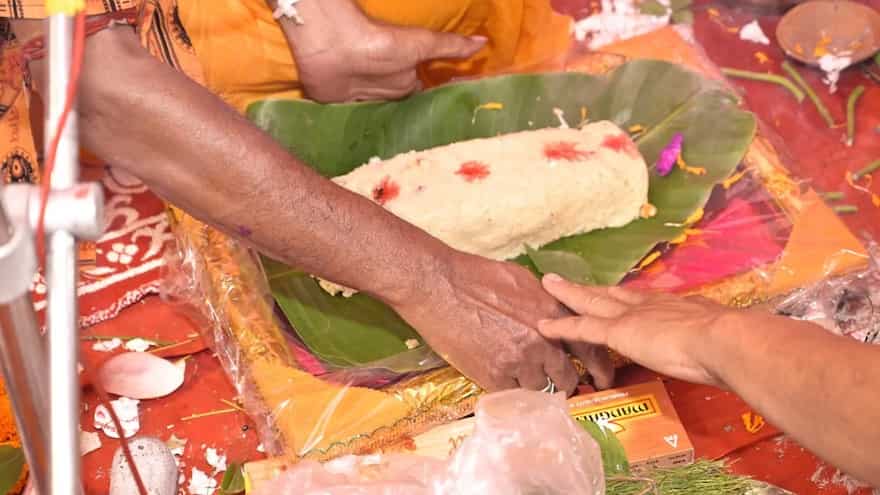
Image credit: Santanu Guha Thakurta
Are there any stories or anecdotes related to food offerings that have been passed down in your family or community during Annapurna Puja?
There is nothing specific in terms of stories, but there is a clear shift in the household atmosphere. Once our daughter, Maa Annapurna, is home, we cleanse the house and kitchen, and only vegetarian dishes are prepared. However, on the day of her visarjan, when she leaves for her husband’s home, we shift to a fish based farewell meal to celebrate her journey.




