


 Share
Share

INDIA loves to argue about biryani. The debates are predictable enough to have become ritual: Hyderabadi versus Lucknowi, kacchi versus pakki, basmati versus everything else. Somewhere between royal kitchens and Instagram reels, biryani acquired a reputation for spectacle, a dish of saffron threads, caramelised onions, sealed pots and inherited recipes whispered across generations.
Bengaluru's Donne Biryani has little patience for any of that.
Served in a bowl fashioned from dried areca leaves — the ‘donne’ that lends the dish its name — it arrives looking almost understated. No dramatic reveal. No jewelled garnish. Just green rice, tender meat and an aroma that leans towards fresh coriander and mint rather than perfume. It is less interested in theatre than in getting lunch onto the table.

That modesty is no accident. Donne Biryani belongs to a very different culinary lineage from the imperial biryanis of northern India. It emerged not from palace kitchens but from Bengaluru's Military Hotels — small, no-frills eateries that fed soldiers, traders, factory workers and office clerks long before the city became India's technology capital. Despite their martial name, these restaurants had little to do with the military itself. Instead, they represented a particular kind of democratic dining: affordable, filling meals where everyone, from labourers to lawyers, might find themselves sharing a table.
The biryani they perfected reflects those priorities. It is built for consistency rather than ceremony.
If Hyderabadi biryani is about layers, Donne Biryani is about integration. Meat, masala and rice cook together until every grain absorbs the same herbaceous intensity. The vivid green colour comes not from food colouring or saffron but from a paste of coriander, mint and green chillies, ingredients that thrive across southern India. The rice itself is another quiet act of regional confidence. Instead of long-grain basmati — the near-universal symbol of "premium" biryani — traditional Donne Biryani uses short-grained seeraga samba or locally favoured jeera rice, prized less for appearance than for its remarkable ability to soak up flavour.
Its spice cabinet is equally local. Marathi moggu, stone flower and black pepper make regular appearances, producing an earthier, woodier fragrance than the sweeter floral notes associated with Awadhi or Mughlai traditions. The result feels unmistakably southern — not louder, simply tuned to a different landscape.

That landscape has always contained more than one biryani. Karnataka alone offers a map of distinct traditions. Along the coast, Bhatkal Biryani bears the imprint of centuries of Arab trade through the Nawayath community. Mangaluru's version owes something to Malabar while remaining unmistakably its own. In Kodagu, pepper and pork often find their way into celebratory rice dishes that blur the boundary between pulao and biryani. The notion of a singular "South Indian biryani" dissolves the moment one begins travelling through the region.
For decades, however, Donne Biryani remained largely a Bengaluru affair — a lunch staple rather than a culinary ambassador. Its rise beyond Karnataka has been relatively recent, propelled by the city's expanding restaurant culture, migration and, inevitably, social media. Today, queues outside legendary Military Hotels are joined by curious visitors, while restaurants in Delhi, Mumbai and even overseas advertise "authentic Donne Biryani" with almost evangelical enthusiasm.
Yet what makes the dish memorable isn't novelty. It is restraint.
Indian food is often flattened into clichés of richness and excess. Donne Biryani quietly resists both. It is aromatic without being perfumed, spicy without overwhelming, generous without ostentation. Even the areca-leaf bowl speaks to an older economy in which practicality and sustainability happened to coexist long before either became marketing language.
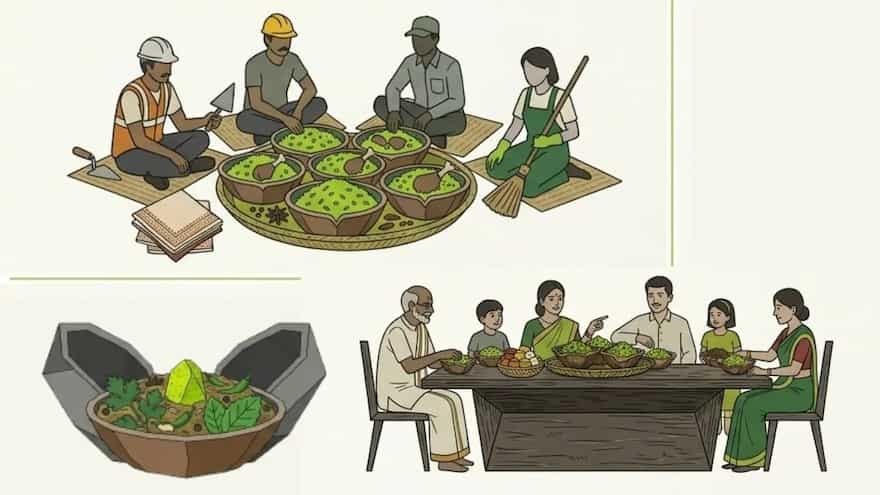
Perhaps that's why Donne Biryani feels so contemporary despite its history. At a moment when diners increasingly seek regional authenticity over generic luxury, this unassuming green biryani offers something many celebrated dishes cannot: a sense of place. Not the imagined grandeur of royal courts, but the lived reality of Bengaluru's streets, its workers, its markets and its everyday appetite.
In the end, Donne Biryani doesn't ask to win India's endless biryani wars. It simply reminds us that some of the country's most enduring food traditions were never created for kings. They were made for everyone else.




