


 Share
Share

EARLIER this month in the United States, federal agents from Immigration and Customs Enforcement ate lunch at a Mexican restaurant. Later that same day, they returned after closing time and detained members of the staff who had served them.
The incident occurred amid a period of intensified immigration enforcement across parts of the US, at a moment when the country remains deeply divided over questions of immigration, legality, and the methods used by federal authorities. Stories of workplace raids and detentions have become part of the background noise of an ongoing national debate.
Nothing about the sequence itself was dramatic. There was no visible escalation. A meal was eaten. A bill was paid. Work resumed.
We are trained to think of the table as neutral ground. Across cultures, sharing food is meant to signal a truce: a pause in hostilities, a recognition of shared humanity. But fiction has long suggested otherwise. In some of the most unsettling stories of the past century, food is not a refuge from power but one of its quietest instruments. It is how systems mark hierarchy, normalise cruelty, and make predation feel routine.
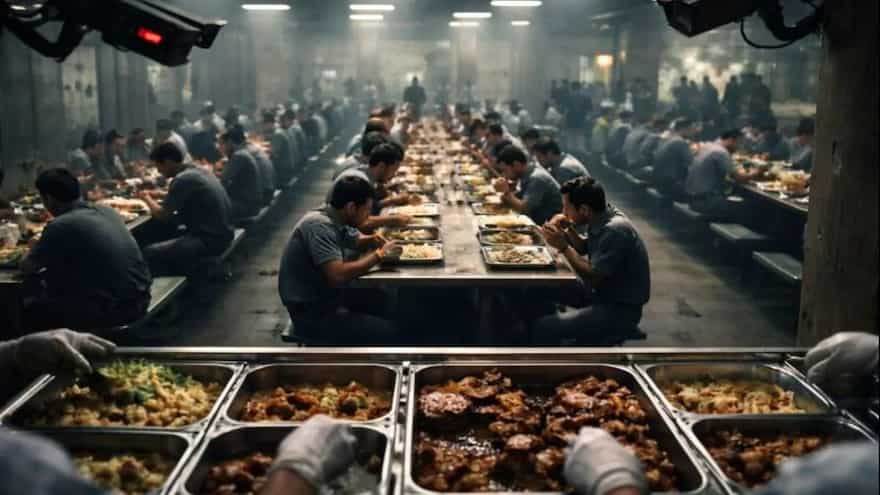
These works are not about poisoned meals or murder mysteries. They are about something colder: the way eating can coexist seamlessly with harm, and how nourishment itself can be folded into bureaucracy, surveillance, and control.
THE ABSURDITY OF THE SYSTEM
In Eli Horowitz’s The Pickle Index, an unnamed authoritarian city runs not on ideology but on fermentation. Fresh food is scarce. Citizens are instructed, regulated, and measured through their pickling habits. The titular “Pickle Index” functions as a bureaucratic metric, a way to assess compliance and civic worth.
The novel is funny in the way absurdism often is: rules are arbitrary, punishments disproportionate, logic circular. But the humour masks a deeper unease. People are not governed solely through force; they are governed through the pantry. Survival is made contingent on following instructions that masquerade as common sense.
The state does not need to brandish weapons. It issues guidelines. It updates indices. It turns food preparation into a civic obligation. The violence lies not in spectacle, but in administration.
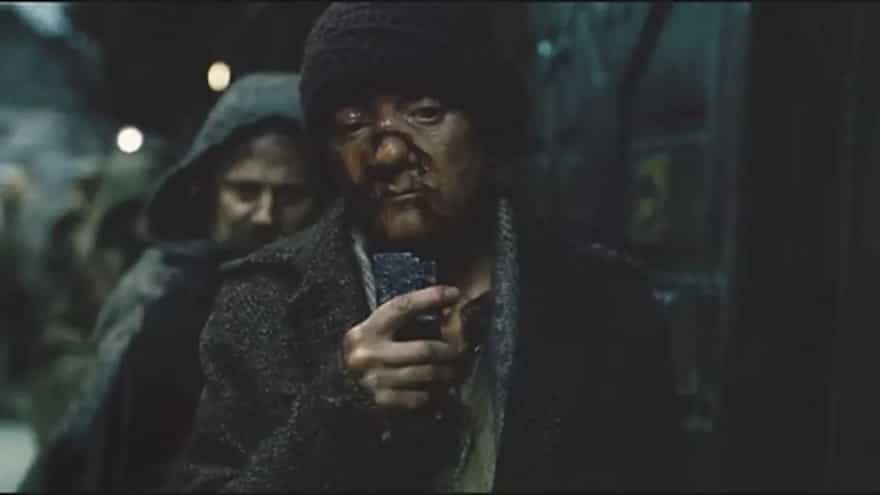
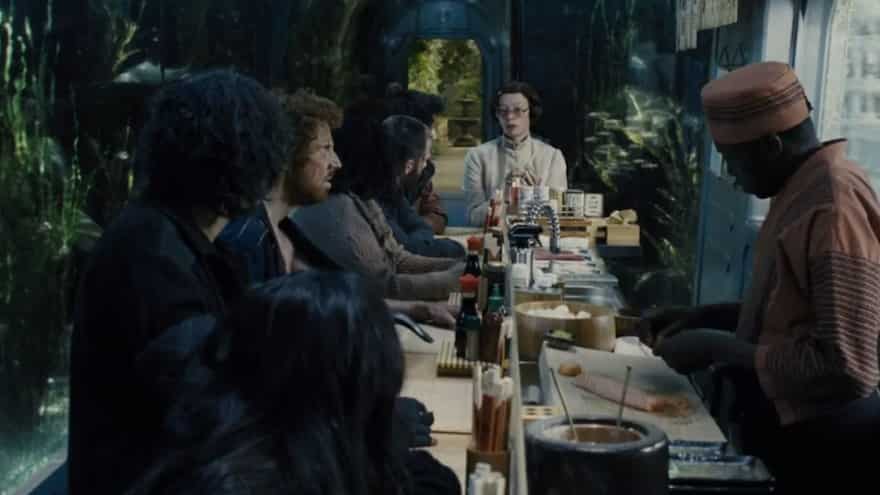
Stills from Snowpiercer
A similar logic governs Bong Joon-ho’s Snowpiercer, set on a perpetually moving train carrying the last remnants of humanity. At the back of the train, the tail-section passengers are fed uniform, gelatinous black protein blocks. At the front, diners enjoy sushi and steak.
The contrast is blunt, but the mechanism is chillingly familiar. Food is how class is made legible. The system decides who eats to survive and who eats to enjoy. When it is later revealed what the protein blocks are made from, the point is not shock value so much as contempt: the poorest passengers are sustained just enough to function, not enough to feel human.
Here, the violence is architectural. The table is not shared; it is stratified. Everyone eats what is placed in front of them.
THE LOGISTICS OF DEHUMANISATION
Augustina Bazterrica’s Tender Is the Flesh shows how atrocity can be laundered through process. In the novel’s world, a virus has rendered animal meat toxic, and governments respond by legalising the breeding and consumption of humans.
The story does not unfold as a thriller. It reads like a workplace drama. The protagonist is a middle manager in a processing plant, navigating inspections, classifications, and paperwork. Euphemisms replace names. Procedures replace ethics.
The horror is not hidden, but sanitised. Violence becomes a matter of compliance and quality control. Food is no longer nourishment; it is a product, stripped of identity by design.
What makes the novel unsettling is precisely how calm it is. There are no villains revelling in cruelty. There are meetings to attend, standards to meet, quotas to fill. The system does not ask its workers to be monsters. It asks them to do their jobs.
THE MUNDANITY OF THE ENFORCER
Sometimes, the most revealing moments are the smallest ones.
In Andor, the Star Wars series, more interested in institutional machinery than mythic heroes, one of its most telling scenes involves a bowl of cereal. Syril Karn, a low-level security officer, sits at his mother’s kitchen table, eating breakfast while being nagged about his stalled career.

Still from Andor.
It is an aggressively ordinary scene. There is no dramatic score, no overt menace. Syril is not a grand villain. He is insecure, frustrated, and deeply invested in procedure. He believes in rules. He believes that someone has to do the unpleasant work.
The series understands that systems are not maintained by monsters, but by people trying to get through the day. They eat cheap cereal. They go to work. They follow protocol.
THE MORAL VOID
Jonathan Glazer’s The Zone of Interest takes this logic to its most devastating conclusion. The film follows the family of the commandant of Auschwitz as they go about their domestic lives: gardening, picnicking, raising children. Meals are eaten in sunlight. The table is laid. Routine persists.
The camp is just beyond the wall.

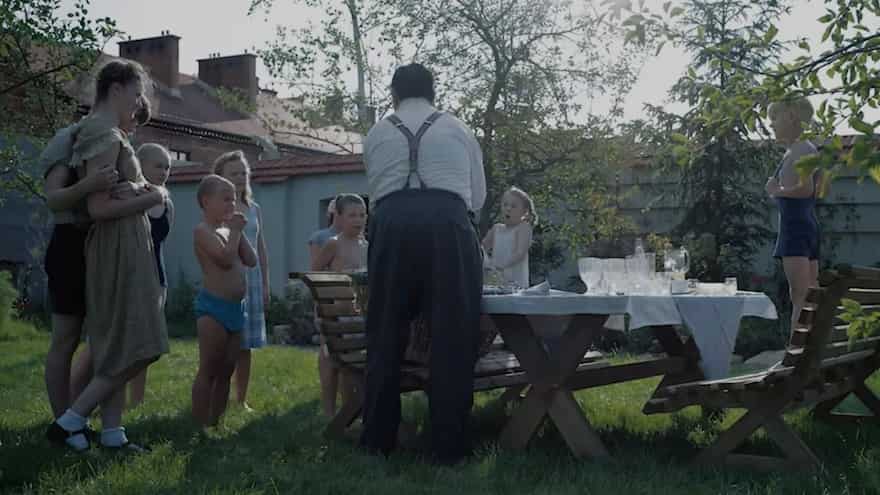
Stills from The Zone of Interest
The horror here is not explicit violence, but indifference. Domestic comfort exists alongside industrialised murder without friction. The system has made this coexistence not just possible, but normal.
This is the banality of predation in its purest form. Harm does not interrupt daily life. It is folded into it.
WHEN THE TABLE IS NOT A TRUCE
What links these stories is not genre, but insight. They recognise that cruelty rarely announces itself. It arrives through schedules, policies, and habits. It sits down to eat.
Food, in these narratives, is never just food. It is how systems count bodies, measure worth, and maintain order. It is how violence is made compatible with routine, how the extraordinary is rendered unremarkable.
That is why these stories linger. They remind us that the most frightening thing about predation is not its ferocity, but its calm. It smiles. It pays the bill. It moves on to the next step.




