Share


Every December, a handful of recipes come out of retirement. They spend the rest of the year in handwritten notebooks, dented tin boxes and the memories of grandmothers, and then, for a few frantic weeks, they take over entire homes. These are the festive dishes of India's Anglo-Indian community, a people of mixed European and Indian ancestry whose cooking has always lived somewhere between an English parlour and a railway colony kitchen. For these families, Christmas is a season rather than a date. It opens weeks ahead with cake mixing and wine making and carries on until the Feast of the Epiphany in January. Fruit is soaked, wine is bottled, cookie moulds are hunted down from the back of cupboards, and the neighbours are put on notice. The community has thinned considerably since 1947, with many families settling in Britain and Australia, yet its holiday table has proved remarkably hard to dislodge. Several of its dishes have even slipped into the wider Indian festive kitchen, which is perhaps the surest sign that they belong here. What follows is a tour of the traditions that survive, where to find them, and why each one is worth the wait.
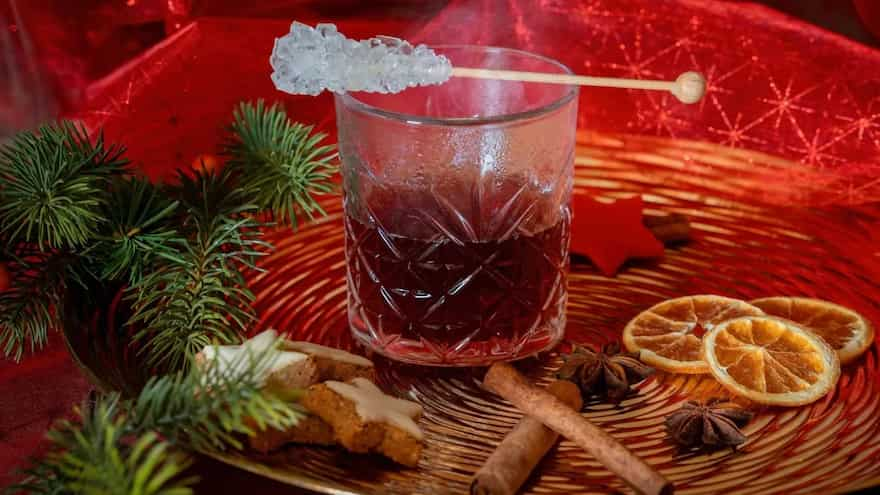
Image credit: Pexels
The Allahabadi Christmas Cake: Petha, Ghee And A Bakery In Civil Lines
Prayagraj changed its name in 2018, but nobody has dared rename its cake. The Allahabadi Christmas cake traces back to 1963 and Bushy's Bakery in Civil Lines, the planned colonial quarter where a sizeable Anglo-Indian community once lived, many of them employed by the railways. As the story goes, a Ms Barnett from the railway colony walked into the bakery run by Mohammad Aslam carrying her own ingredients: petha, murabba, ghee and fennel seeds. She wanted a Christmas cake built around them. Aslam obliged, and a city found its signature bake. Arriving with your own ingredients was standard practice at the time, and a number of India's older bakeries still honour the custom every December.
What sets this cake apart is its unapologetically desi larder. Translucent cubes of petha, the candied ash gourd most of north India knows from Agra, bring colour and a pleasing chew. Ghee stands in for butter and lends a deep, nutty richness that no dairy aisle substitute can match. Murabba and orange marmalade add a bittersweet edge, while rum-soaked dried fruit and nuts keep it firmly in Christmas territory. The spicing is warm and generous, with nutmeg, cinnamon, mace, ginger and that unmistakable hint of fennel.
Not everyone is a convert. Some purists find petha an odd guest in a fruitcake, while others see it as a thoroughly Indian twist on a global template, much as cashews mark the plum cakes of Kerala. The crowds suggest the fans are winning. Tariq, who now runs Bushy's, has said the bakery turns out three to four thousand cakes or more through December, with its bhattis fired round the clock to keep up. That a Muslim baker perfected a Christian festive cake for an Anglo-Indian customer is exactly the kind of Ganga Jamuni story Allahabad loves to tell about itself, and this cake has certainly earned its place in it.
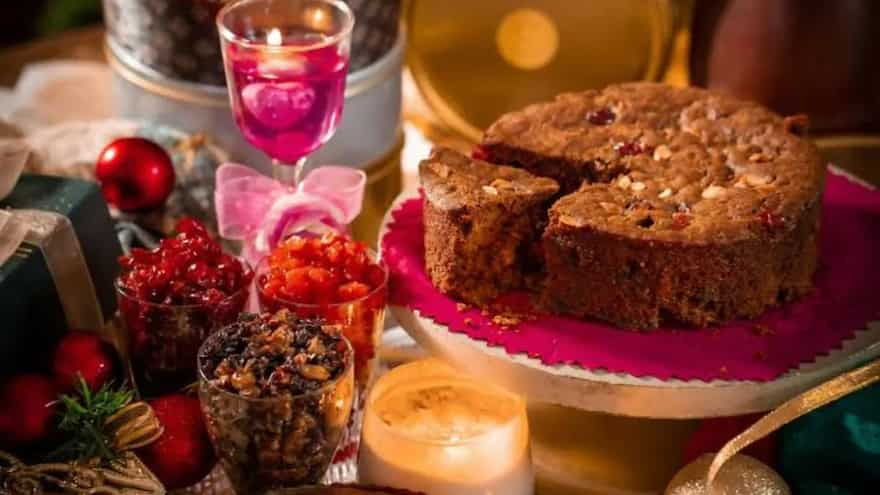 Image credit: Pexels
Kul Kuls And Rose Cookies: The Frying Days Of An Anglo-Indian Christmas
If the cake is the centrepiece, the fried sweets are the conversation. Kul kuls, small curls of sweetened dough rolled against the tines of a fork and then fried until crisp, arrived on the subcontinent with the Portuguese and stayed long after them. Through intermarriage, and through cooks who carried recipes from one household to the next, they found their way into Anglo-Indian homes far from the coast. One family that grew up in the Anglo-Indian enclave of Abu Road in Rajasthan recalls kul kuls being made in every house on the street. Now settled in Faridabad, the same family still gathers before Christmas, children and sisters included, to roll them by the hundred.
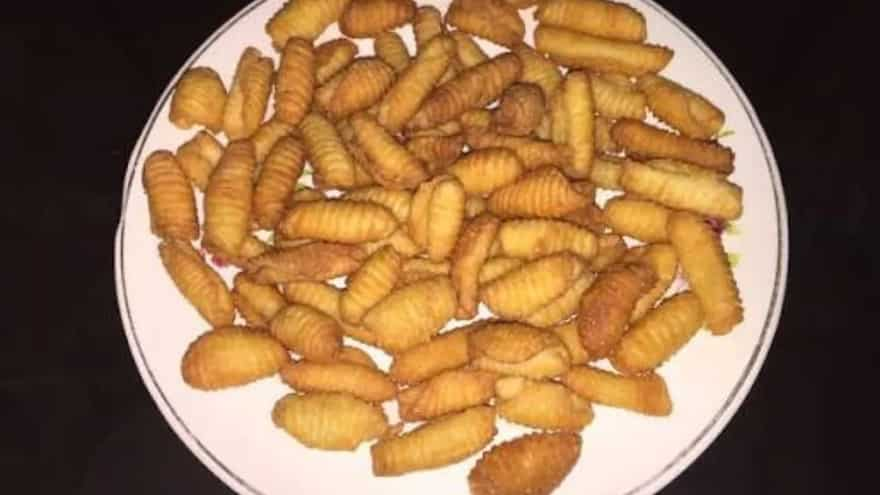 Image credit: Wikimedia Commons
Rose cookies, known in Kerala as achappam, demand a little more nerve. A batter of egg, maida, coconut milk and sugar clings to a heated iron mould shaped like a flower, which is then plunged into hot oil until the lacy rose slides free. They turn up across Kerala, Tamil Nadu and Karnataka through December, often stacked beside the kul kuls in steel dabbas meant for visiting neighbours.
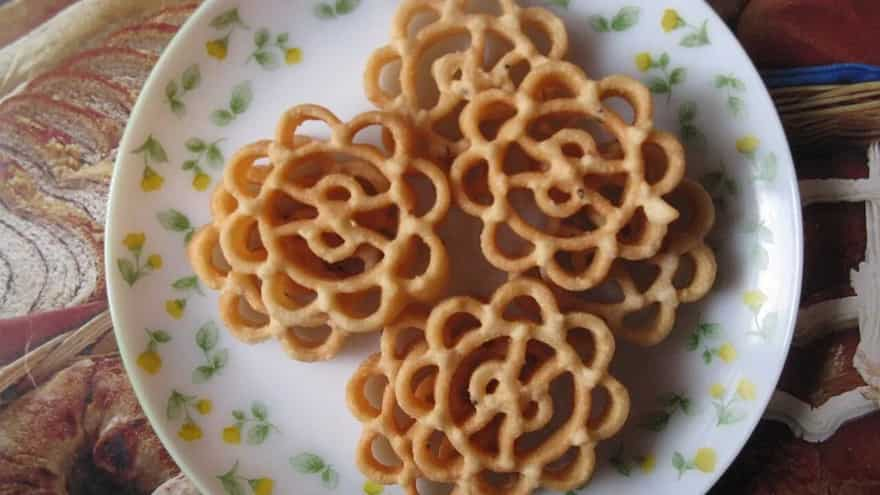 Image credit: Wikimedia Commons
Both are under some pressure. Home cooks in Bengaluru have told reporters that orders for these Indian Christmas sweets have been thinning year on year. One baker made a simple case for keeping them alive: wheat flour, coconut milk and semolina are everywhere in India, so these are the sweets the country is best equipped to make.
Ginger Wine, Grape Wine And The Lanes Of Bow Barracks
No Anglo-Indian Christmas is complete without a glass of something made at home. Grape and ginger wine were once brewed in most households, and older Bengaluru families still describe buying brand new buckets each year simply to crush the grapes by hand. The pulp went into jars with wheat and yeast and was left to work its magic for weeks. Ginger wine is gentler and spicier, closer to a warming cordial than a true wine, and some families slip a dried red chilli into the mulled version for extra warmth. Across Indian Christian homes the repertoire stretches further still, from beetroot and pineapple to jamun and rice.
Nowhere is this tradition more visible than at Bow Barracks in central Kolkata. Built as military quarters during the First World War, these red brick blocks off Chittaranjan Avenue later became home to the city's Anglo-Indian families. Around 132 families live there today, close to 80 per cent of them Anglo-Indian, and in Christmas week the lanes fill with lights, music and the smell of baking. Residents still send their cake batter to a large oven in nearby Colootola and collect the finished cakes by evening. Fruitcake, salted beef, kul kuls, rose cookies and homemade wine are treated as essentials, and many who have moved away make a point of returning. For visitors, a bottle of Bow Barracks ginger or grape wine has become one of the most coveted souvenirs of a Calcutta Christmas.
Dodol, Christmas Pudding And Trifle: The Sweets That Close The Feast
Some Anglo-Indian sweets ask for stamina rather than skill. Dodol, also called dhol dhol, is a dark, glossy halwa of rice flour, coconut milk, jaggery and ghee, stirred for hours until it pulls away from the sides of the pan. It is widely held to be yet another Portuguese inheritance and is traditionally made about a week before Christmas so the flavours have time to settle. In Kerala's Anglo-Indian homes the same sweet is made with puttu rice powder, a neat example of a recipe adapting to whatever the local pantry offered.
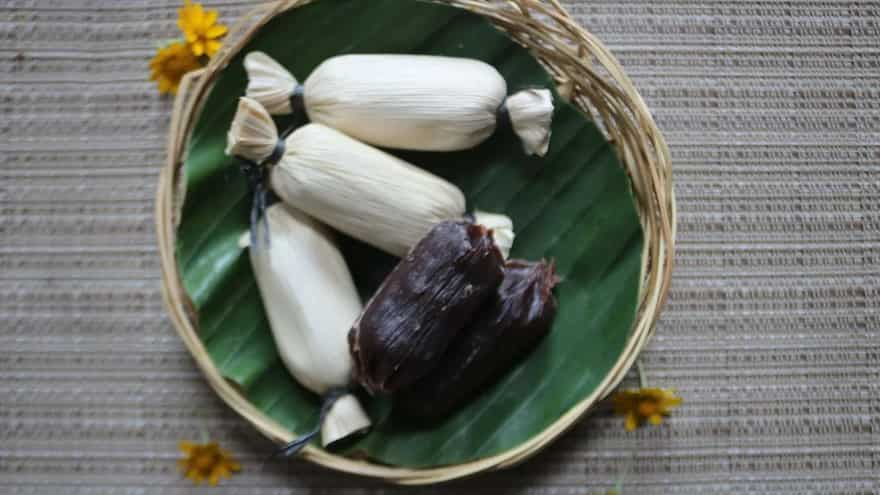
Image credit: Wikimedia Commons
In the old Anglo-Indian homes of Kolar Gold Fields, the Karnataka mining town once nicknamed Little England, the Christmas spread also ran to coconut sweets, marzipan, peanut and cashew fudge and athirasam, the South Indian sweet of jaggery and rice flour. Then come the English set pieces. Christmas pudding, dense with dates and dried fruit and often flamed at the table, remains a point of pride. Trifle, layered with sponge, custard, jelly and fruit, holds its place at the potluck Christmas gatherings of Chennai's Anglo-Indian community, sharing the table with puddings that every family insists on making its own way.
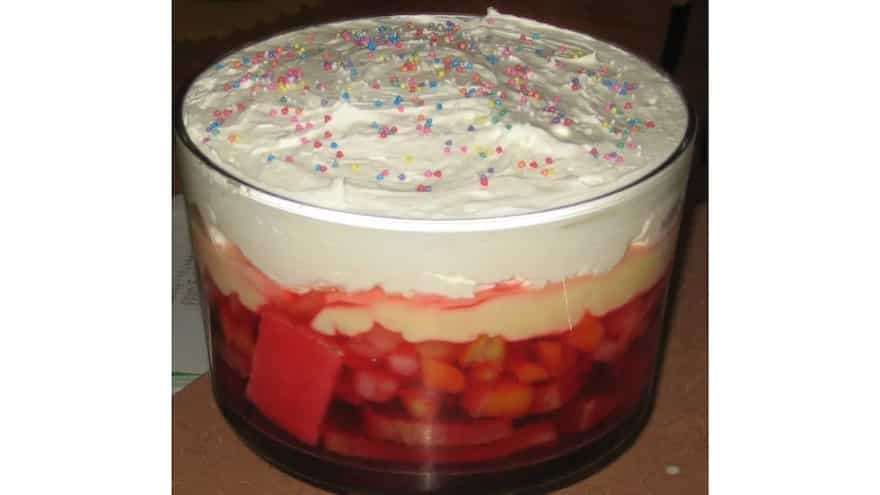 Image credit: Wikimedia Commons
Ball Curry, Yellow Rice And Vindaloo: The Anglo-Indian Christmas Lunch
After midnight mass and a late breakfast, the real business of the day is lunch. The classic Anglo-Indian Christmas spread features coconut rice or a mutton or chicken pilaf, mince ball curry, chicken curry and a duck or pork vindaloo. The ball curry, tender mutton koftas simmered in a mildly spiced coconut gravy, was famously renamed bad word curry by an earlier generation who found the word ball a little too cheeky for the dining table. It arrives with yellow coconut rice, tinted with turmeric, and a fiery red relish known as devil chutney.
The menu shifts with the city. In Kolkata, Bow Barracks resident Dion Alexander lists peas pulao, mutton curry and an assortment of vindaloos as his family's Christmas fare, while salted beef is a seasonal must across the neighbourhood. In Chennai, the potlucks bring out railway mutton curry, a dish that carries the memory of the community's long association with Indian Railways in its very name. This variety is the point. Anglo-Indian cooking was never confined to one state, so ball curry in Kolkata tastes different from ball curry in Bengaluru, Chennai or the Nilgiris. Cultural researchers have warned that dishes like salted beef and kofta curry are becoming hard to find outside a shrinking circle of homes, which makes the Christmas table one of the few places they are still cooked with any regularity.
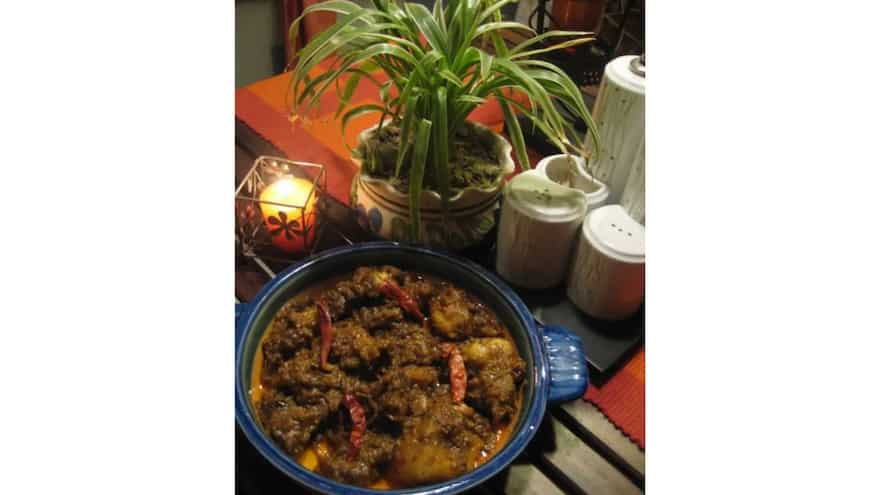 Image credit: Wikimedia Commons
Why These Anglo-Indian Christmas Traditions Still Matter
It would be easy to file all of this under nostalgia, but that undersells it. The Allahabadi cake, the kul kul and the bottle of ginger wine are living records of how India absorbed, adapted and finally claimed a festival that arrived from elsewhere. Petha and ghee in an English fruitcake, coconut milk in a Portuguese fritter, rice flour in a halwa served alongside plum pudding: none of it would make sense anywhere else. The community that built this table is smaller now, yet its recipes keep finding new hands, from bakers in Civil Lines to home cooks in Faridabad and families flying back to Kolkata for one week a year. So this December, skip the generic plum cake. Hunt down a slice of Allahabadi cake, beg a neighbour for a tin of rose cookies, and raise a glass of homemade ginger wine to the cooks who kept these recipes alive.