


 Share
Share

For anyone who has no idea what dosas are, it’s a very thin savoury crepe from South India, made with lentil paste, batter that is fermented or with rice flour paste. The popularity of dosas can be traced back to how it’s traditionally gluten-free, healthy and easy to digest. In South Indian states, dosas are a staple, much like vada pav or pav bhaji in Mumbai, roti in Delhi, rice and fish in Kolkata, chilla in Chhattisgarh and so on. In the South Indian belt, dosas are made in different ways, much like the different cultures, dialects and traditions they have. One particular dosa which we are going to talk about today is the neer dosa. The word ‘neer’ means water. So, neer dosa is a water-based dosa. How is it made? Can water and dosa batter mix well? There is a trick that people who make neer dosa take up, and we are here to share the secrets.
Origin and History
Made primarily of rice, dosa was first mentioned in Tamil Sangam literature in the sixth century. But eventually, to aid in the fermentation process and give the carb-heavy bread additional nutrients, soaked and ground urad dal and other lentil paste were added to the rice paste. That is mentioned in K.T. Achaya's work. The delicacy of neer dosa comes from the coastal Karnataka region, particularly from Mangalore, tucked away between the Arabian Sea to the east and the Western Ghats, a range of highlands that stretch throughout India's western coast. Neer dosas are also thought to have evolved during the Hindu fasting month, also known as Chaaturmasa Vrata, when many communities abstain from eating particular food groups, including green vegetables and lentils, which are high in protein. The creation of these thin rice crepes may have emerged during this season since, unlike conventional dosas, neer dosas are not made with lentils.
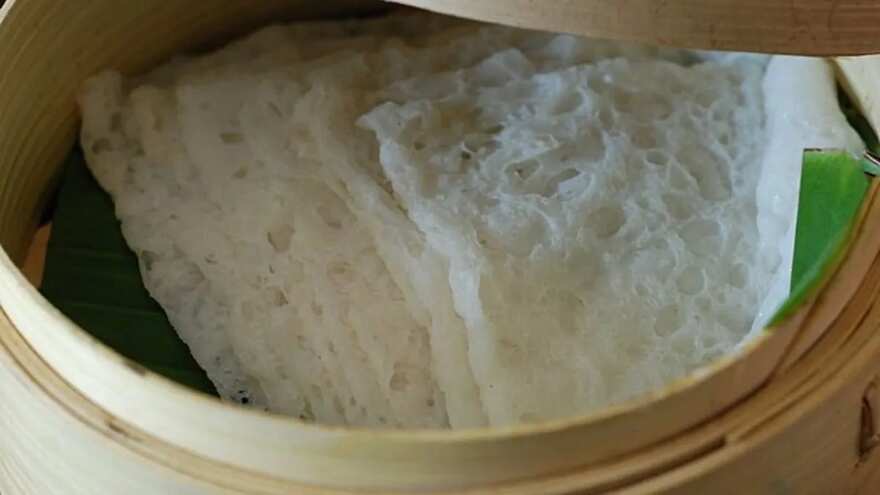
Image Credit: Wikimedia Commons
The batter has more water than usual and does not have the ingredients that make the usual batter ferment and add sourness. Neer dosas have a thin, white, lace-like look since the batter does not contain lentils. They typically come with non-vegetarian choices such as fish or chicken curry or coconut chutney. Neer dosas have a devoted fan base. Due to the popularity of seafood, these white crepes are served with acidic and spicy non-veg curries. They make a great mix and balance the taste of the gravy, which is why they taste so good. After soaking until it becomes soft, the rice must be pounded to the batter's desired consistency.
Making Neer Dosas
Neer dosa pairs well with a lot of curries, irrespective of the dish. As the name suggests, the batter for this dosa is essentially fairly watery. It has a milk-like consistency. Take a cup of rice, soak it for 4-5 hours and grind it down to a paste. Get on to chopping a bowl full of coconut pieces that you need to turn into a paste as well. Next, you can set aside 3 cups of combined coconut water and regular water. Here comes the tricky part, and you need to be really careful with the process of making the batter. Take the rice paste and coconut paste in a big bowl and gently mix it. Add some salt to taste and slowly pour the water and coconut water mix into the batter. Keep mixing until the batter reaches a runny consistency.
Switch on your heat, place a tawa on top, spread some ghee, oil or butter on it and use a ladle in circular motions to spread the batter onto the tawa evenly. Do not cook it for over 1 minute, then it’s overcooked. The moment you see the edges of the mixture starting to curl forward, remove it from the tawa and set it aside. Your neer dosa is ready, and now you can make as many neer dosas as you want. You can also store the batter for use later.
5 Dishes To Pair With Neer Dosa
With just rice as its main ingredient, this dish's simplicity makes it a quick and nutritious breakfast choice. With a delicious side dish of your choosing, this dosa is a great option to carry in school lunchboxes, for office lunches as well, because it keeps its soft, fluffy, and moist texture for a long time. You can basically never go wrong with neer dosa.
Egg Curry
Eggs and neer dosa are probably the easiest combination to exist. Instead of having bread for breakfast with soft-boiled eggs and omelette, a bowl of egg curry sounds perfect. There are different types of egg curries, but the South Indian egg curry has notes of curry leaves, coconut and tamarind, which pair very well with neer dosa. It is cooked in coconut milk to bring that thick and creamy element into the dish. Mustard seeds, green and black cardamom, cinnamon sticks, chopped ginger, garlic, pepper, turmeric, coriander, chilli powder, together make up the base of the egg curry. The spices can be added as per your taste.

Image Credit: Wikimedia Commons
Kori Gassi Or Chicken Curry
There are a few South Indian chicken curry dishes that go well with neer dosa. You have your kori gassi, which has roasted chillies, spices, and coconut milk. It is a Mangalorean chicken curry. Usually, Byadgi chillies, a type of chilli that is widespread in the Karnataka region, are use,d but many replace them with Kashmiri dried chillies that are so easily accessible. ‘Kori’ means chicken in Tulu, and ‘gassi,’ is a German word which translates to a thick and creamy coconut curry. Kori gassi is exactly that. The use of chilis like Byadgi or Kashmiri red chillis in the dish is mainly because the people of Mangalore love their spice and the redness it adds to the gravy.
Vegetable Stew
The Kerala vegetable stew is ideally the one you should have your neer dosa with. This stew is very comforting and has a homely aroma. It has very few spices, cooked in coconut milk with cinnamon, cloves, cardamom and pepper. The ginger, garlic, green chillies and sliced onions are first sauteed in a separate pan. Then everything is put into one pan until it mixes well. Lastly, you add the curry leaves. The choice of vegetables is up to you. It can range from potatoes, carrots, peas, to eggplant, mushrooms and shredded cabbage leaves.
Jaggery And Milk
Due to its low-fat content, gluten-free status, ease of digestion, and potential as a good source of energy-boosting carbohydrates, neer dosa is regarded as one of the healthiest meals. It can be eaten as a light dinner or as a healthy breakfast, especially when combined with wholesome sides. If you have a sweet tooth, neer dosas can also be eaten with jaggery and coconut milk. All you have to do is mix the two together and dip the neer dosa into it and pop it in your mouth. Another way is to have neer dosa stuffed with jaggery and fruits and have it as a sweet roll. This is called Madke Tellav, which is basically coconut dry fruits and pieces of regular jaggery crushed and then wrapped in neer dosa.
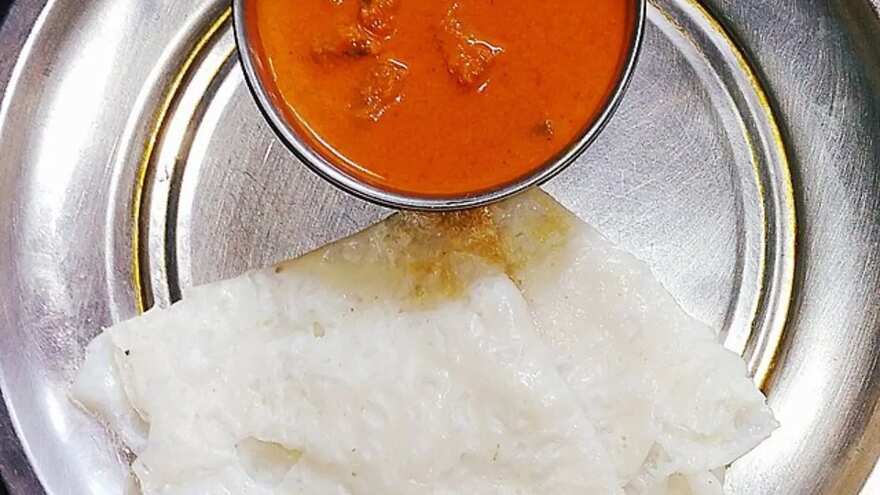
Image Credit: Wikimedia Commons
Dishes like Neer Dosa serve as a reminder of the diverse culinary traditions found around the world as it grows more interconnected. By serving these classic dishes, we not only get to savour their mouthwatering flavours but also contribute to the preservation of the cultural legacy they embody. More than just a dish, neer dosa continues to appeal to people all over the world.




