


 Share
Share

At Yokocho, Chef Auroni begins by letting you know, “Food here is a sort of language diplomacy, where the objective is to create something that instantly connects rather than overwhelming people with innovation or unfamiliar methods.” This is because people in a city like Kolkata are not easily swayed by novelty alone; instead, they respond to what feels authentic and rooted. Because of this, the emphasis at Yokocho subtly shifts to simplicity, not out of a lack of ambition, but as a deliberate decision because it's often overlooked that one of the most difficult things to do well is to execute something simple, making it taste balanced without hiding behind complexity.
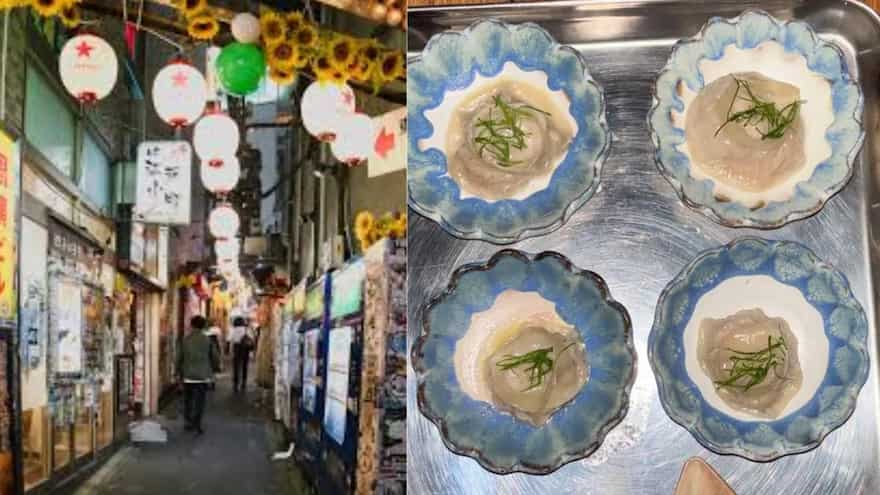
Image Credit: Pexels & Rajlakshmi Dastidar
Drinking alleyways, or yokocho, can be found all across Japan, especially in Tokyo and Osaka. In addition to eating a variety of foods and beverages from store to store, visiting a yokocho allows you to get a personal look at traditional Japanese culture. If you ask Chef Auroni what truly inspired Yokocho, he won't tell you some grandiose chef-like origin narrative; instead, it's much more grounded; it's just people, his personal encounters with them, and the kind of relationship he has with his team that gradually evolved into this place. And smack in the middle of the Park Street stretch is a brand-new space that was created by Auroni Mukherjee, Abhimanyu Maheshwari, and Ramesh Kumar Aggarwal, three very different voices driving the city’s constantly changing food and beverage sector. They serve delicious meals and umami-rich beverages in a setting that can only be found in an independent film with warm, low lighting.
Many members of the team have actually experienced the whole alleyway food life, the kind you see in Yokochos, where everything feels intimate, a little chaotic, but incredibly alive. He's really into that energy, the way conversations flow between tables, the way chefs are part of the vibe rather than distant figures, the way an old uncle or random mashi on the street can start talking to you like they've known you forever, or even something as basic as your mother cooking in the kitchen. He believes that people, not just the food, are what truly make a place. The bar has no hidden corners; it's a display area. In fact, guests can even walk behind it to reach the smoking room.
The Art Of Small Spaces With Yokocho In Kolkata
Plastic stools, cold beverages, grilled cuisine, and the democratic delight of sharing a meal and drink. Yokocho borrows from this shared Asian memory while speaking fluently in the language of Calcutta’s own khau-galli culture. An open grill bar is a must since fire and charcoal form the centre of the area. Guests may watch their meals being cooked in real time from the high chairs lining the area. Yokocho is fundamentally an Eastern pub and barbecue.
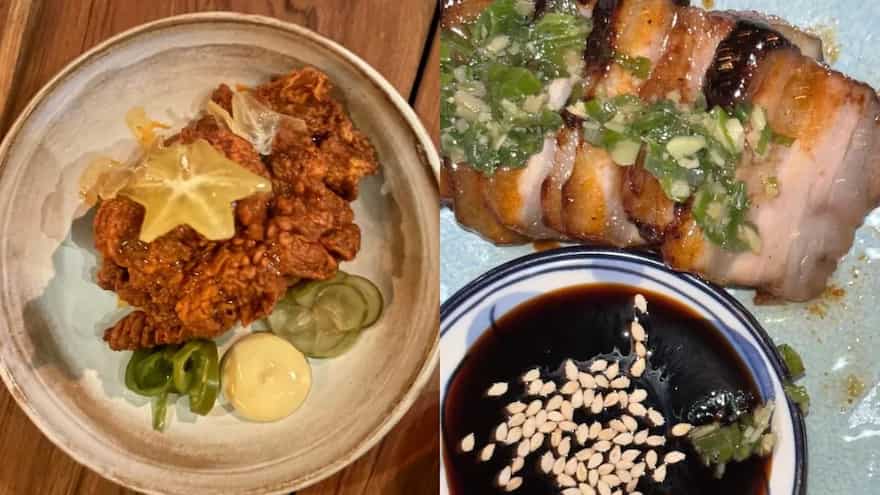
Image Credit: Rajlakshmi Dastidar
That wording is important. This is not a restaurant where cocktails play second fiddle, nor a bar where food exists merely as accompaniment. The philosophy is borrowed from the streets of East Asia, where drinking and eating are inseparable acts. Yokocho's cuisine doesn't really attempt to make clear comparisons, but if you dig deeper, you'll find an intriguing perspective from Chef Auroni, particularly when it comes to comfort in other cuisines.
Restraint and respect for produce, technique, and the diner are the cornerstones of food philosophy. Chef Auroni, who is well-known for promoting Bengal's culinary legacy, utilises Yokocho to extend that discussion eastward. Although the sourcing, sensibility, and instinct are still very much local, the menu incorporates methods and culinary cues from China, Korea, Japan, and Southeast Asia. Pickles are fermented in-house, greens are sourced from wet markets, and chickens are raised on a single free-range farm.
Deconstructing The Yokocho Cuisine By Chef Auroni
Start with little bowls of banchan, which are Korean ferments and pickles produced from seasonal fruit found in Kolkata's wet marketplaces. A fresh texture and layer are added to the palate by sheem (broad beans), white and green eggplant, pui matuli (Malabar spinach fruit), kachki and mourola maach shutki (sun-dried Gangetic river sprats and mola carplet), and young mulo (radish).
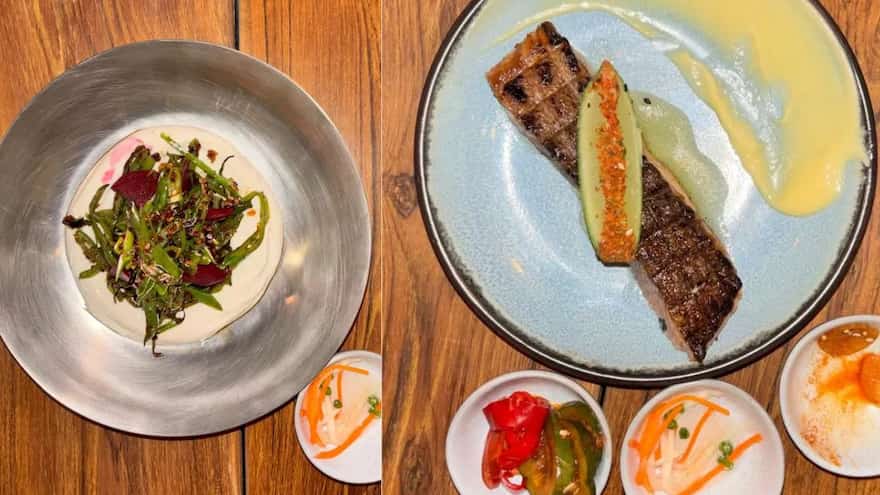
Image Credit: Rajlakshmi Dastidar
The salty, sour, and sharp aromas are ideal for cocktails and serve as palate cleansers in between meals. They’re complementary and always a good start to any meal. It's divided between little and large plates, but in reality, everything is supposed to land on the table, remain there for a while, and be transferred around slowly as discussions continue.
The Chicken Dashi Soup Dumplings arrive early, practically setting the tone since when Slurrp went, the weather has dipped due to the rains, and it truly was a chef’s kiss! Then there's the Smoky Market Greens, which sounds straightforward but isn't attempting to be. It takes the well-known tofu-and-greens concept found in Chinese home kitchens or even in simpler, monastic-style cooking and slightly modifies it. Fiddlehead ferns, moringa, mustard greens, and whipped tofu at the base, which is soft and almost creamy, hold up stalks and stems that typically don't receive this kind of attention, all of which are kissed by grill smoke. It's concluded with pickles and chilli crisp, which cut through everything just enough. Suddenly, it's more than simply greens; it's about texture, contrast, and striking the right balance between comfort and something a bit out of the ordinary without ever going overboard.
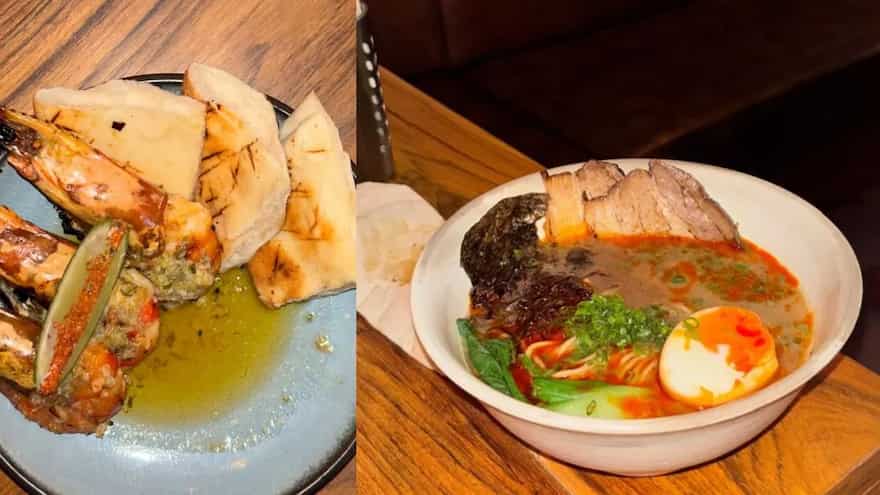
Image Credit: Rajlakshmi Dastidar
Then comes the Grilled Bagda Chingri off the charcoal grills. An emulsion of butter, garlic, and acid lime from Bengal is used to grill large tiger prawns, giving them a zesty, citrussy scent. The sauce was quickly removed when it was served with flatbread. The core of this concept is charcoal. Fire at Yokocho is not concealed behind kitchen doors, much like the street grills that characterise alleyway dining throughout Asia. It is fundamental, visceral, and visible. Naturally, Yokocho also offers ramen, with all of the ingredients—including the noodles—made in-house. As a result, the freshly prepared Creamy Paitan Style Ramen with your choice of Chicken or Pork Chashu quickly becomes a favourite.
How Yokocho And Indian Food Speak The Same Language
Simplicity is treated as a discipline, which is equally significant. Every plate requires accuracy because there are no thick sauces or other garnishes to cover it up. Ramen is deeply technical, like you don’t just “make” it, states Chef Auroni. “You build it over days, the noodles themselves take time, the broth needs hours of slow simmering, every topping has its own process, and even something as specific as the tare or the aromatic fat has a method to it that you can’t skip or rush, but then he draws a really interesting parallel, not in flavour, but in process. He says, “Because if you think about it, something like Kolkata biryani sits in that same space of quiet complexity, where it might look like comfort food on the surface, but the steps behind it are just as layered, from preparing the rice just right to working with the korma-style masala, balancing the aromatics, and then finally bringing it all together through that careful layering before it cooks.”
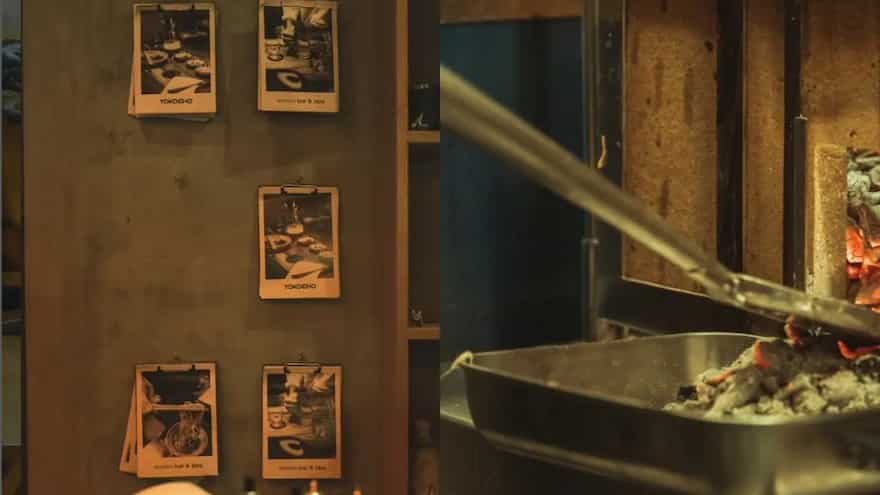
Image Credit: Yokocho, Park Street, Kolkata
Slurrp loved the inventive spins on Calcutta-East foods like BBQ Begun and Butternut and Shaak Gyoza. With nearly every dish, Mookerjee presents Asian food as it should be, avoiding theatrics that would have been the simplest thing to do with barbecue cooking and maintaining a certain restraint that lets the flavours shine through. It all stems from his childhood in Delhi, where winters meant leisurely evenings spent in backyards or small gardens, where everyone gathered around a fire to grill whatever they had. He didn't really call it anything fancy, just a ritual that felt natural, and that memory stuck with him as he travelled throughout Southeast Asia, where charcoal grills lined the streets, and food felt alive in the open.
Ice, Water, And Control In The Cocktails
The bar initiative, which is run by Pankaj Balachandran of Countertop India, is also a subtle homage to East Asia's modest drinking customs. Spring Water Highball, for more than two days, the water used for this drink is treated and carbonated in earthen pots, producing a straightforward go-to beverage that reaches high levels. Temperature, dilution, carbonation, ice, and glassware are the main topics of discussion. For example, making a basic whisky soda takes over two days. The ice is hand-carved to maintain fizz and regulate dilution, the water is softened in earthen clay pots, and the soda is carbonated in-house at nearly twice the pressure of commercial versions.
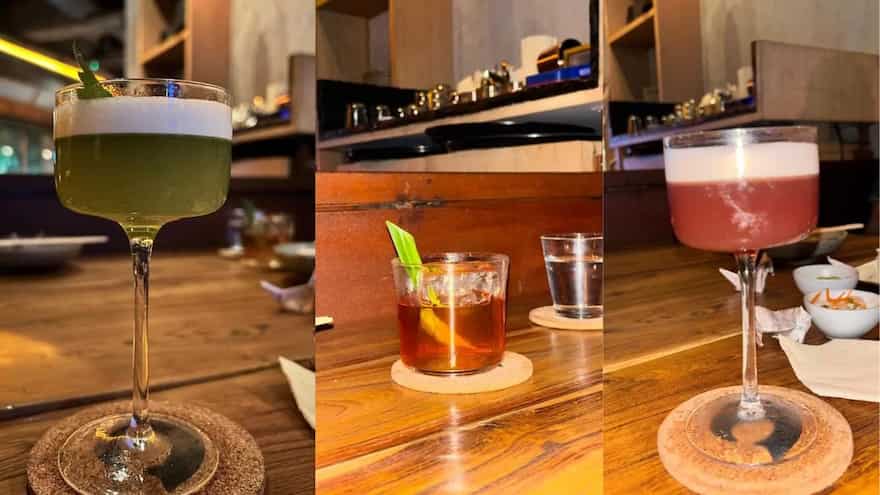
Image Credit: Rajlakshmi Dastidar
The walking bar area, created by Anirudh Singhal's SpeedX Bars, pays homage to yokochos, where you may have to squeeze yourself through the small passageways. Old Fashioned, New is a flowery yet smoky cocktail that combines the standard Angostura and bourbon bitters with date jaggery and pandan leaf. Instead of a whole makeover, classic cocktails are reinvented with a single, clever change. Brown butter and soy sauce add a velvety, savoury dimension to a Manhattan. Pandan leaves give an Old Fashioned a toasty, almost nostalgic scent. Bitterness might come not from Campari, but from bitter melon, nodding to Asian palates without alienating familiar forms. Enjoyed Blood and Smoke, a reimagining of the forgotten classic Blood and Sand that combines mezcal with sweet vermouth, orange juice, and dark cherry liqueur, leaving a combination of delicious and earthy aromas to relish. But Slurrp’s favourite? The Bond Walked Into is a Yokocho beverage that combines gin, sake, olive oil, gondhoraj and dry vermouth. It comes with a complimentary licence to tantalise the taste buds.
The Last Bite That Leaves An Impression
Sticky rice and fried rice came together to create the cosy dish known as hangover rice, which comes in duck and mushroom varieties. The long-smoked mushrooms provide a rich texture, while the rice absorbs depth from the stock. Coconut Pandan Pudding: This dish combines smoky puffed rice with creamy coconut and pandan pudding. It is drizzled with dark, nutty nolen gur and topped with a lime peel for scent. After only one taste, we were unable to stop.
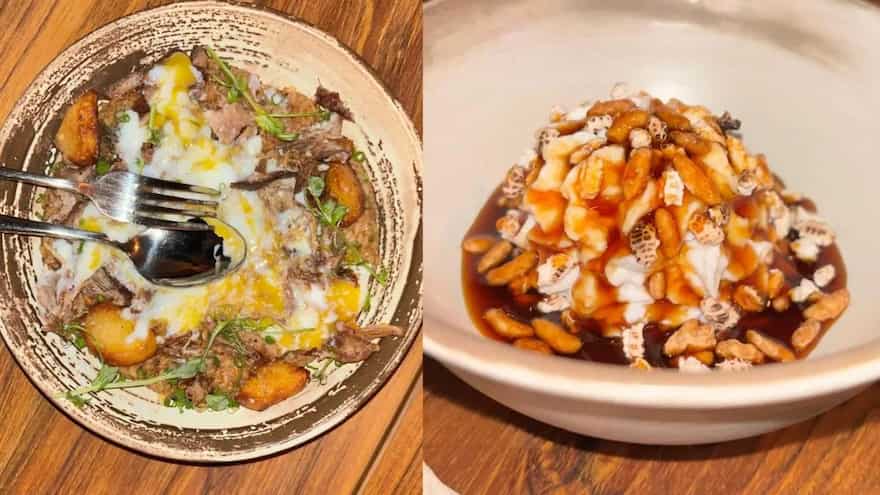
Image Credit: Rajlakshmi Dastidar
Even the smallest details matter, like how they work with ice and water, cutting ice in specific ways or softening water to match certain flavour profiles, because for them, a cocktail isn’t just about the spirit, it’s about everything that quietly shapes how it finally tastes. He wants people to understand that Yokocho is more than simply a restaurant; it's a bar first, a place where his passion for food and his interest in drinks collide, where tiny plates and cocktails are made to flow together, almost like a dialogue.




