Share


Step into almost any progressive dining room today, and you will notice an unfamiliar shimmer in the glassware. Alongside crisp Sauvignon Blancs and structured Cabernet Sauvignons sits a wine glowing with hues of burnt amber, copper and deep saffron. Often listed under skin-contact or amber wines, orange wine has become one of the most talked-about pours in contemporary hospitality. Yet despite its sudden prominence on curated beverage menus, this style is anything but a passing trend. Sommeliers are turning toward it because it bridges a crucial culinary gap, offering the refreshing acidity of a white wine alongside the structural grip and complexity of a red.
What Is Orange Wine?
At its simplest, orange wine is a white wine made like a red wine. It is produced entirely from white grape varieties, such as Pinot Grigio, Chardonnay, Rkatsiteli or Chenin Blanc, rather than citrus fruit. The defining difference lies in how the grape juice interacts with the solid parts of the fruit during fermentation. While conventional white wines are pressed immediately so the juice has almost no contact with the grape skins, orange wines are fermented with their skins, seeds and sometimes stems left intact. Over days, weeks or even months, natural pigments, phenolic compounds and tannins leach out of the skins into the fermenting liquid. The resulting wine takes on a striking spectrum of colours ranging from pale gold and apricot to deep mahogany.
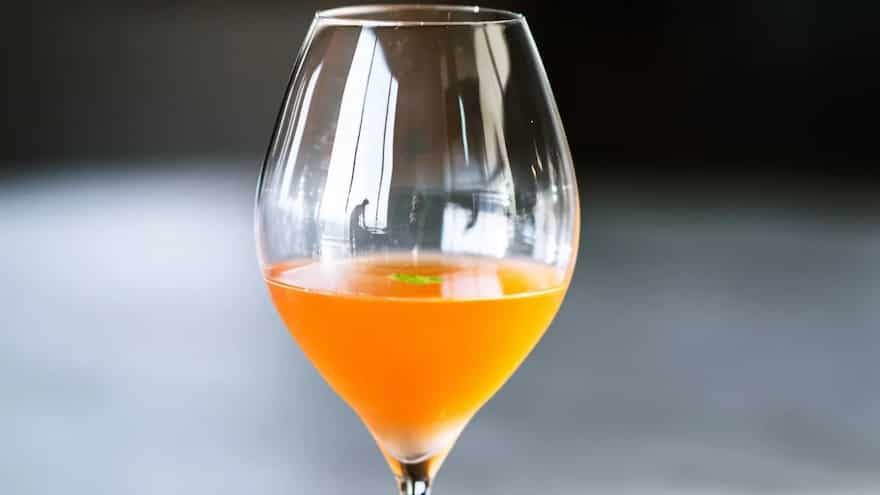 Image credit: Pexels
How Orange Wine Is Made
Traditional white winemaking is an exercise in protection and precision. Winemakers crush white grapes, separate the clear juice right away and ferment it in temperature-controlled stainless steel tanks to preserve delicate floral and orchard fruit aromas. Orange winemaking flips that philosophy on its head. After harvesting and crushing the white grapes, the winemaker leaves the juice, skins and seeds together in a fermentation vessel.
During this maceration phase, native yeasts present on the grape skins often initiate fermentation naturally. Because the skins remain submerged in the liquid, the wine extracts textural compounds that never appear in standard white wines. Many producers choose neutral vessels such as concrete eggs, large used oak casks or traditional buried clay amphorae rather than new oak barrels, ensuring that wood flavours do not mask the pure expression of the grape skins. Once maceration finishes, the wine is pressed off the solids and aged before bottling, frequently without fining or heavy filtration.
 Image credit: Pexels
Eight Thousand Years Of Winemaking History
Although the term orange wine was coined in 2004 by British wine importer David Harvey, the technique itself represents the earliest known method of commercial winemaking. Archaeological evidence from the South Caucasus, specifically modern-day Georgia, shows that vintners were fermenting white grapes on their skins as far back as 6000 BCE. Using large beeswax-lined clay vessels called qvevri buried underground to maintain natural temperature stability, Georgian winemakers developed a process that survived for millennia and remains recognized by UNESCO as an intangible cultural heritage.
In the late twentieth century, a handful of visionary winemakers in northeastern Italy and Slovenia, most notably Josko Gravner and Stanko Radikon in the Friuli-Venezia Giulia region, looked back to these Caucasian traditions. Frustrated by overly industrial, uniform white wines, they began fermenting indigenous white grapes in clay amphorae with extended skin maceration. Their bold experiments sparked a global movement that soon inspired natural and minimal-intervention producers across France, Austria, Australia, South Africa and beyond.
 Image credit: Pexels
Orange Wine Versus Orange Fruit Wine Versus Rosé Wine
One of the most frequent misconceptions among newcomers is assuming that orange wine is fermented from sweet citrus oranges. In reality, the two beverages share nothing beyond a name and a similar colour palette. True orange wine is always a grape wine crafted exclusively from Vitis vinifera white wine grapes, acquiring its amber tint naturally from grape skin polyphenols. Orange fruit wine, by contrast, is a country wine made by fermenting the juice and pulp of sweet or bitter oranges with added sugar and yeast. While citrus fruit wines tend to be sweet, overtly zesty and closer in character to a liqueur or aperitif, grape-based orange wine is almost always bone dry, savoury and structured like fine table wine.
Another common point of confusion lies in comparing orange wine to rosé, especially when deeper salmon-toned rosés sit beside pale amber pours on a wine list. The distinction comes down to opposite winemaking methods and grape colours. Rosé is crafted from red wine grapes whose juice spends only a brief window, often just a few hours, resting on the dark skins before being drained away to finish fermenting like a white wine. Orange wine flips that equation entirely, taking white wine grapes and leaving them in prolonged contact with their skins for weeks or months. As a result, rosé typically remains light, crisp and berry-driven with negligible tannin, whereas orange wine develops noticeable grip, savoury depth and earthy complexity.
 Image credit: Pexels
Flavour Profile And Tasting Notes
Pouring a glass of orange wine challenges expectations shaped by conventional white wines. On the nose, expect bruised apple, dried apricot, candied orange peel, roasted hazelnuts, honeycomb and dried chamomile rather than fresh lemon or green pear. Depending on the length of skin contact and the grape variety used, subtle notes of sourdough, beeswax, bruised quince and warm baking spices often emerge as the wine opens in the glass. On the palate, orange wine delivers a tactile, full-bodied mouthfeel. Because grape skins impart genuine tannins, the wine creates a pleasant, gentle dryness along the gums similar to sipping steeped black tea. Bright natural acidity keeps the texture lively and prevents the richness from feeling heavy, leading into a long, nutty and distinctly savoury finish.
 Image credit: Pexels
Pairing Orange Wine With Food
For sommeliers, the true magic of orange wine reveals itself at the dining table. Classic white wines can feel too delicate beside rich, spiced or umami-heavy dishes, while full-bodied red wines often clash with fiery heat or tangy marinades due to their high alcohol and assertive tannins. Orange wine occupies the sweet spot right between the two. Its brisk acidity cuts cleanly through rich gravies, ghee-roasted vegetables and creamy cheeses, while its gentle tannins stand up effortlessly to grilled meats, charred mushrooms and fermented ingredients. Across Indian dining tables, skin-contact wines prove remarkably versatile. A lightly macerated Pinot Grigio pairs beautifully with tandoori prawns, crispy okra or coastal coconut curries, whereas a deeply structured Georgian Rkatsiteli complements spiced lamb chops, jackfruit biryani, aged cheddar or nutty tahini-based mezze. Serving orange wine slightly warmer than a chilled white, around twelve to fourteen degrees Celsius, allows its aromatic complexity and supple tannins to shine at their best.