


 Share
Share

ROALD DAHL spun stories with candy threads, gingerbread crumbs and spoonfuls of sugar. Born in 1916, the British wordsmith remains one of the most beloved children’s fiction writers in English even a century later. (Bengalis, such as this writer, nurture an indomitable passion for their very own Sukumar Ray, so much so, that they find it almost impossible to call any other children’s writer their favourite. Dahl comes dangerously close to securing the title of second favourite. But we digress.)
His novels were Willy Wonka's golden ticket that promised to take a few fortunate ones — his loyal readers — on a journey of a lifetime, with toffee apple trees, rivers overflowing with melted chocolate and soda fountains. Where adults read about existential crises and how to win friends over, children gleefully dig their sticky fingers in Dahl’s infinitely larger than life, candy-coloured cosmos. There were no rules in his world; the characters could eat as much as they wanted, stuff their mouths with as many caramel lollipops as their heart desired without having to worry about real life consequences — those rude stomach aches that creep up on you at the most unexpected hour, or the shooting toothache from a long-ignored cavity.
Take for example his cult classic, Charlie and the Chocolate Factory, which narrates the extraordinary tale of the aforementioned Mister Wonka, an eccentric chocolate maker dedicated to a life of creating weird and wonderful candies. From everlasting gobstoppers, cows producing chocolate milk, marshmallow pillows to peppermint flavoured grass and lickable nursery wallpaper, everything inside the Wonka’s factory is not just edible, it is our collective childhood fantasies, the sickeningly sweet daydreams of floating away in fizzy drink swimming pools, come to life.
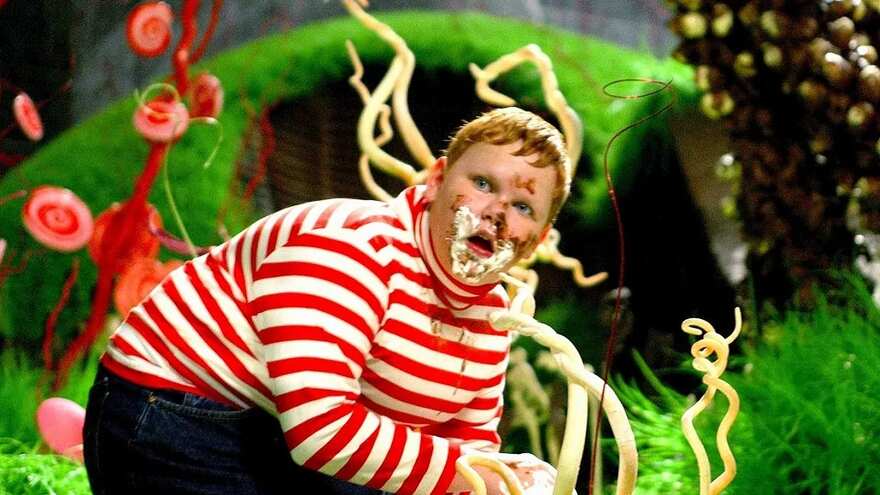
Dahl's extravagant food descriptions represent his moments of imaginative brilliance. When Charlie Bucket drinks Wonka’s decadently creamy chocolate milk for the first time, “his whole body from head to toe began to tingle with pleasure, and a feeling of intense happiness spread over him.” In this very moment, Charlie is no longer a character etched in ink and graphite, but every child (and adult) who has ever experienced the joy of chugging hot chocolate on a Christmas morning. For children, Charlie is aspirational. For grownups, Charlie is an embodiment of half-forgotten happy times — the distant memories of spending month-long summer vacations at our grandparents’ where no mango pickle or storybook was out of bounds.
With his evocative writing, Dahl effectively illustrated the gamut of emotions one experiences while partaking in the activity of eating. He reminds his readers what a pleasurable sensation it is to tuck yourself inside comfortable woollens and dig into hearty soups in winter.
“There is something about very cold weather that gives one an enormous appetite. Most of us find ourselves beginning to crave rich steaming stews and hot apple pies and all kinds of delicious warming dishes; and because we are all a great deal luckier than we realise, we usually get what we want — or near enough.”
In a single swoop, Dahl also reminds them that Wonka’s sugar-laced fever dream of a factory stands in sharp contrast to the reality of young Charlie Bucket and his family’s life of depravity. Surviving on cabbage soup that gets thinner every passing day, Charlie and his family are desperately impoverished. Only once a year, on his birthday, Charlie is given a bar of chocolate, as opposed to the garish overabundance of both treats and tricks in Wonka’s factory.
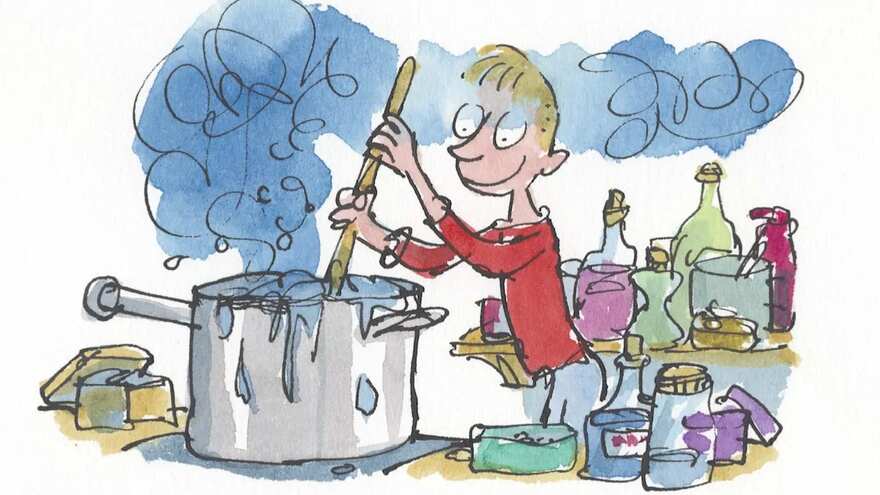
Incidentally, like most children’s writers, Dahl employs food to craft a cautionary tale — in this case, about greed. Thus, the most whimsical treats come with miseries for those who can't control themselves. If you go overboard and, say, take a sip from the off-limits chocolate river, you'll find yourself in a sticky situation like poor Augustus Gloop heading straight for the fudge boiler. Dahl's wild food fantasies are balanced with inventive punishments for those who overindulge, like Bruno Jenkins and Augustus Gloop.
Danger lurks around food in many of Dahl's stories. There's that eerie dinner gathering in Taste, one of Dahl's unsettling adult short stories, where the host makes a bet with his food-loving guest involving a mystery wine, with the prize being his own daughter. Likewise, the juicy peach from James and the Giant Peach ends up causing harm to James' awful aunts. Dahl lures his readers with enticing food scenarios but then shows us the grim outcomes if we give in: ridicule, loss of control over our bodies, or even death.
Dahl’s raucously imaginative story may have been published in 1964, his association with chocolate goes much farther. Stuck in his boarding school in the 1930s, for young Dahl, the only semblance of happiness came inside unassuming cardboard boxes. The boxes were sent over by the nearby Cadbury factory for children to taste-test their new varieties of chocolates. A chocolate connoisseur in his head, Dahl took upon the tasting duties rather seriously, providing feedback like “too subtle for the common palate.” His school became his candy land of dreams, where he would imagine himself to be a master chocolatier, crafting new flavours and revelling in the joy of being an inventor.
He loved food, and letting his boundless imagination run wild. He even dedicated a chapter of his early childhood memoir, Boy, to a candy store in Wales he would stare at and daydream.
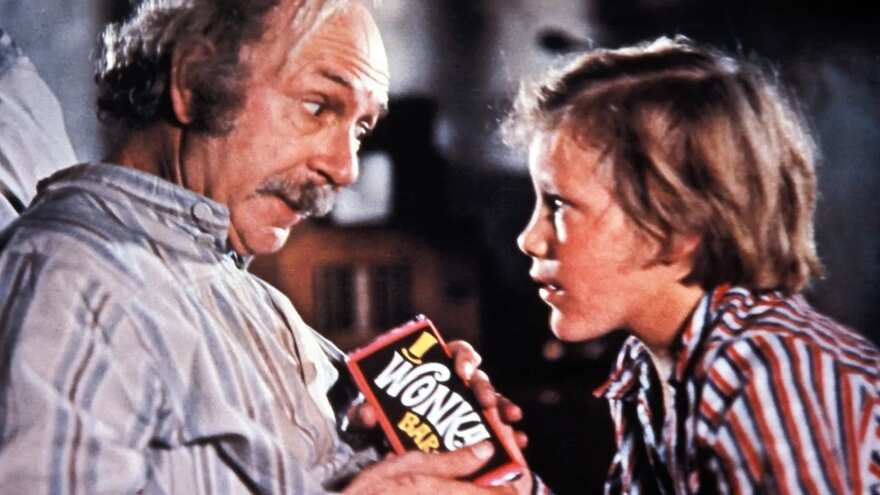
Evidently then, food wasn’t just a part of the author’s literary life. His daughter Lucy recalled Dahl’s eccentric upbringing in an interview, where she opened up about the impromptu midnight feasts their father would host inside the family car, with hot chocolate, cookies and a drive up the idyllic English countryside. The indulgent father would also make daughters Lucy and Ophelia a concoction of canned peach or pears blended with milk and a drop of food colouring, a drink he called the witches’ potion, every night, as he narrated to them the wicked and wonderful bedtime stories of the BFG.
Personal biases aside, Dahl’s influence over children’s literature is arguably monumental. After all, his most-loved made-up terms — ala scrumdiddlyumptious, eatable and human bean — were added to the Oxford English Dictionary as official words in 2016, on the British author’s 100th birth anniversary. That’s some swashboggling wondercrump for one lifetime.
A Brief Glossary Of Roald Dahl-Designed Food
1. Whipple-Scrumptious Fudgemallow Delight: From Charlie and the Chocolate Factory. A delicious and fantastical chocolate bar created by Willy Wonka, containing flavours such as whipped cream, toffee, nougat and almonds.
2. Everlasting Gobstopper: From Charlie and the Chocolate Factory. Colourful, jawbreaker-like candies that never get smaller or lose their flavour. They are one of Willy Wonka's famous creations.
3. Snozzberries: From Charlie and the Chocolate Factory. A mysterious fruit mentioned by Mr Wonka.
4. Lickable Wallpaper: From Charlie and the Chocolate Factory. Wallpaper in the Fizzy Lifting Drinks room that is actually flavoured. You can lick it to taste different fruit flavours.
5. Frobscottle: From The BFG (The Big Friendly Giant). A fizzy, green and frothy beverage that bubbles downwards instead of upwards. It's famous for its side-effect, Whizzpoppers (burping).
6. Snozzcumber: From The BFG. A disgusting cucumber-like vegetable that is one of the BFG's least favorite foods. It's filled with disgusting, snozzcumbersquiffling, frobscottle-like snozzcumberish vegetables.
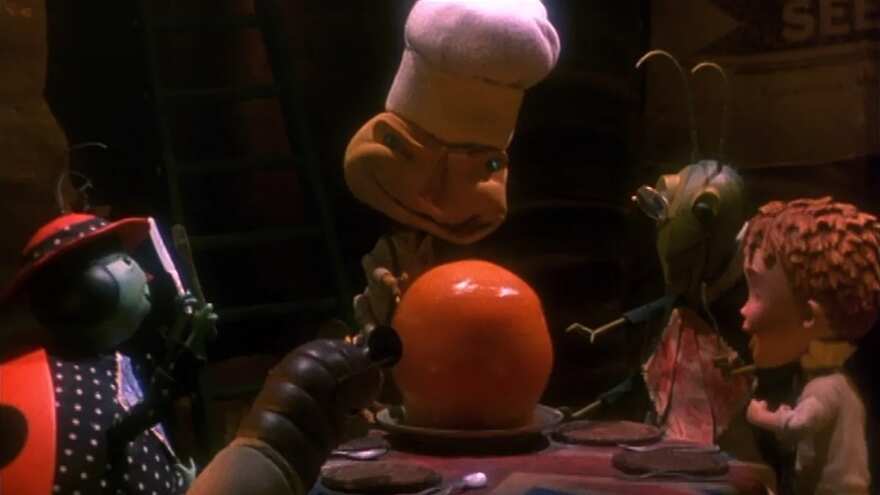
7. Peach: From James and the Giant Peach. A magical, giant peach that James and his friends escape on. The peach is inhabited by talking insects and provides them with sustenance.
8. Fried Worms: From James and the Giant Peach. While not exactly a delicacy, the characters in the story eat fried worms while they're stranded on the giant peach.
9. The Best Chocolate Cake: From Matilda. Bruce Bogtrotter is punished to eat an entire gooey chocolate cake by Ms Trunchbull as punishment for swiping a slice previously. Bruce triumphs.
10. Fizzy Lifting Drinks: From Charlie and the Chocolate Factory. Carbonated beverages in Willy Wonka's factory that cause people to float in the air if they're not burping.




