


 Share
Share

Red carrots appear in Indian markets once winter sets in, and the crop has been traced through agricultural studies that link its colour to higher concentrations of beta carotene and lycopene. These nutrients deepen as temperatures drop, which is why red carrots arrive mainly between December and early February. Many cooks associate the vegetable with halwa, yet regional traditions show a wide range of preparations that use the carrot in forms that go beyond sweets. Street vendors in Punjab shave red carrots into pickles, winter thali meals often include lightly spiced carrot sides and many home kitchens use the vegetable in parathas, stir-cooked dishes, salads and chutneys. This creates space for experimentation without requiring elaborate methods. The ideas ahead follow that line of thinking and bring together thoughtful, practical dishes that fit easily into the Indian kitchen.
Red Carrot Parathas With Crushed Spices And Green Chillies
Red carrot parathas remain one of the most attainable winter dishes across North Indian households. Grated carrot can be mixed directly into whole wheat flour with chopped coriander, green chillies, carom seeds and salt. The dough needs slow kneading with a little warm water so the carrots release moisture and bind the mixture. The parathas cook well on a hot tawa with a spoon of ghee brushed on each side. The grated carrot softens inside the dough and lends a faint sweetness that works beautifully at breakfast or dinner. This preparation continues to be popular in Punjab and Delhi during winter, and several community kitchens recommend this method because it uses the full flavour of seasonal produce without any waste.
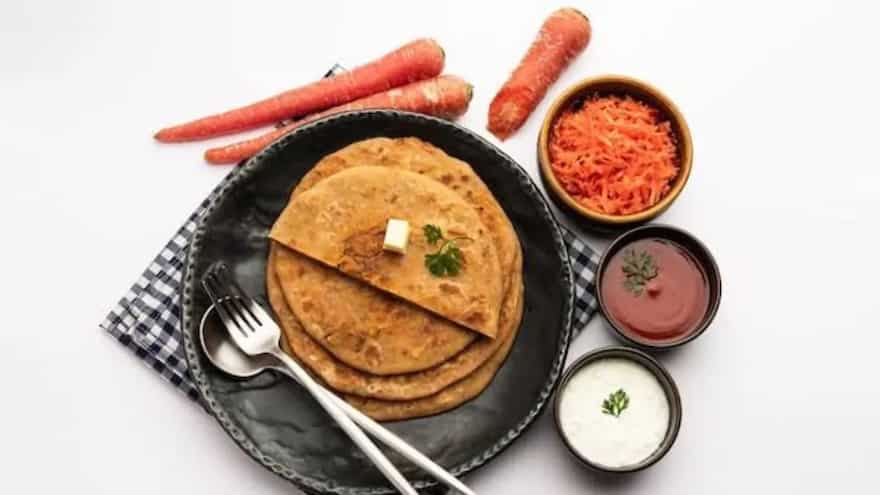
Image credit: Freepik
Red Carrot And Peanut Winter Salad With Lime And Chaat Masala
Winter markets in North India often feature small stalls selling sliced red carrots mixed with roasted peanuts, coriander, green chillies and lime. This combination forms a refreshing salad that relies on clean ingredients and quick assembly. Thinly sliced carrots can be tossed with the peanuts and a pinch of chaat masala. Lime juice ties the flavours, and a small amount of crushed pepper adds heat. This salad appears in several urban and rural markets during the season because it highlights fresh produce without heavy dressing or complex techniques.
Punjabi-Style Gajar Achaar With Mustard And Fennel
Many families prepare a quick winter pickle using red carrots, and this method reflects long-standing Punjabi techniques. Carrots cut into long sticks can be sun-dried briefly to remove excess moisture. A mixture of powdered mustard, fennel seeds, turmeric and salt is warmed lightly in mustard oil until fragrant. The carrot pieces absorb the aromatic oil over a few hours, and the jar continues to mature over several days. The pickle suits dal-roti meals and winter thalis. This preparation has been documented in several regional food surveys because it requires only pantry spices and produces a flavour that feels rooted in local traditions.
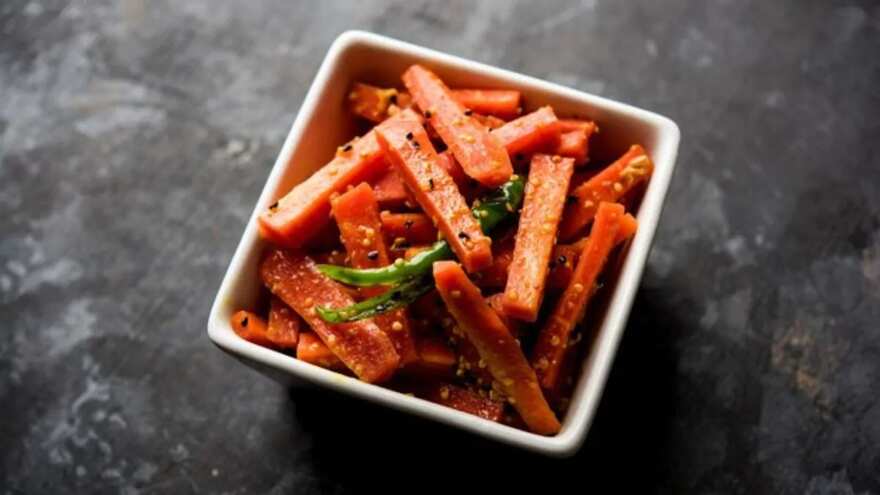
Image credit: Freepik
Red Carrot Poriyal With Coconut And Curry Leaves
Although red carrots are strongly associated with North Indian winters, they also appear in South Indian preparations when the produce travels through regional markets. A simple poriyal can be made by cooking finely chopped red carrots with mustard seeds, urad dal, green chillies and curry leaves. The dish finishes with grated coconut, which settles naturally into the soft carrot pieces. This is a weekday-friendly idea because it cooks quickly and pairs well with rasam, rice or rotis. It also provides a way to use red carrots in a preparation that stays light and effortless.
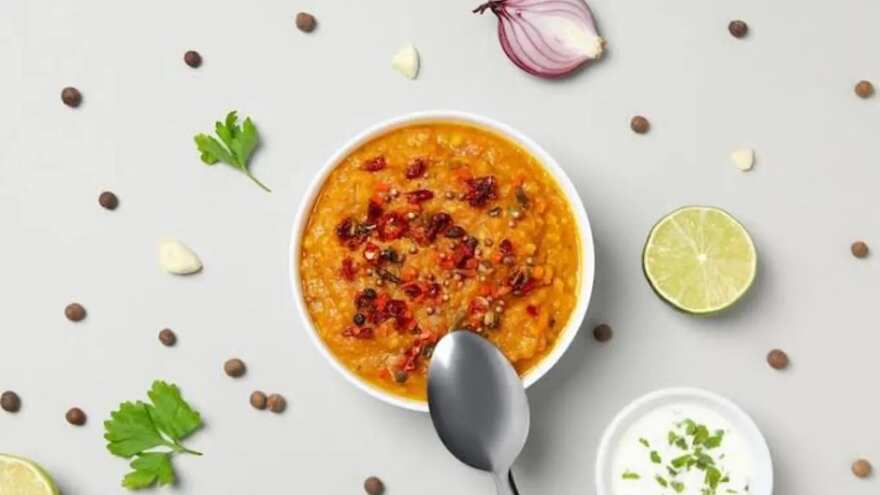
Image credit: Freepik
Gajar Ki Barfi With Reduced Milk And Cardamom
Barfi made from red carrots offers an alternative dessert for those who want something seasonal but different from halwa. Grated red carrots cook slowly in reduced milk until the mixture thickens and the colour deepens. A small pinch of cardamom can be added once the milk has absorbed. A little sugar helps the mixture set, and the warm mass can be pressed into a greased tray and allowed to firm up. Once cooled, it can be cut into small squares. This barfi appears in several community recipe collections because it uses the same base ingredients as halwa but results in a firmer, more portable sweet that keeps well.
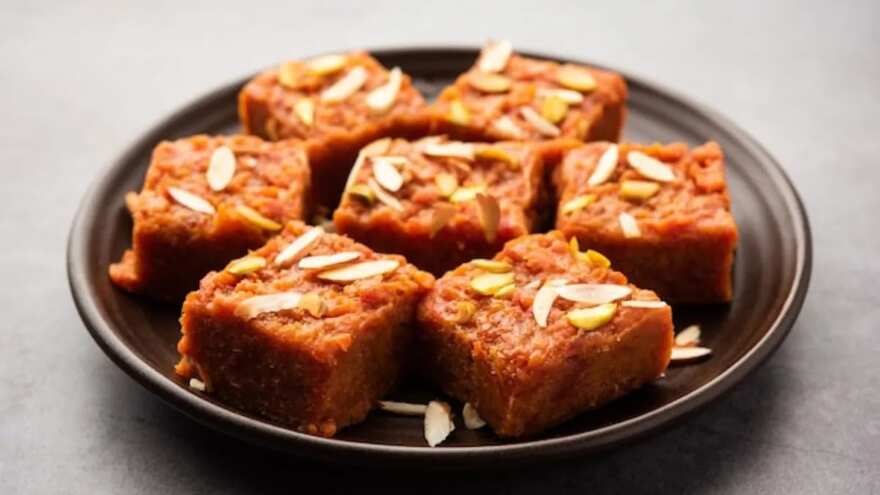
Image credit: Freepik
Red Carrot Kheer With Basmati And Saffron
Kheer made with red carrots takes its cues from traditional rice kheer, and it appears in several winter menus in Uttar Pradesh and Haryana. Finely grated carrot can be sautéed briefly in ghee before being added to simmering milk with a handful of washed basmati. The mixture thickens slowly, and the rice helps stabilise the texture while the carrot blends seamlessly into the milk. A few strands of saffron steeped in warm milk can be added near the end. The kheer develops a soft golden-pink shade and carries a gentle sweetness that feels distinct from halwa. The preparation is straightforward, and the result appears frequently in winter gatherings because it works well as a dessert that does not demand extended attention.
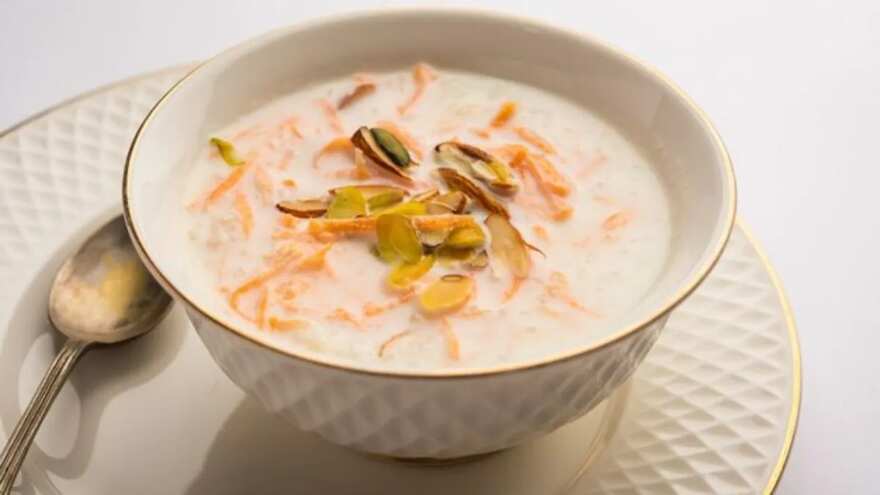
Image credit: Freepik
Red Carrot Pulao With Whole Spices And Raisins
Pulao made with red carrots reflects the way many households introduce the vegetable into daily meals. Sliced carrot can be added to rice spiced with cardamom, cloves and cinnamon. The carrot softens as the rice cooks and releases a quiet sweetness that spreads across the pot. A small handful of raisins can be added to bring gentle contrast. This pulao suits home kitchens because it needs simple ingredients and cooks in one pot.
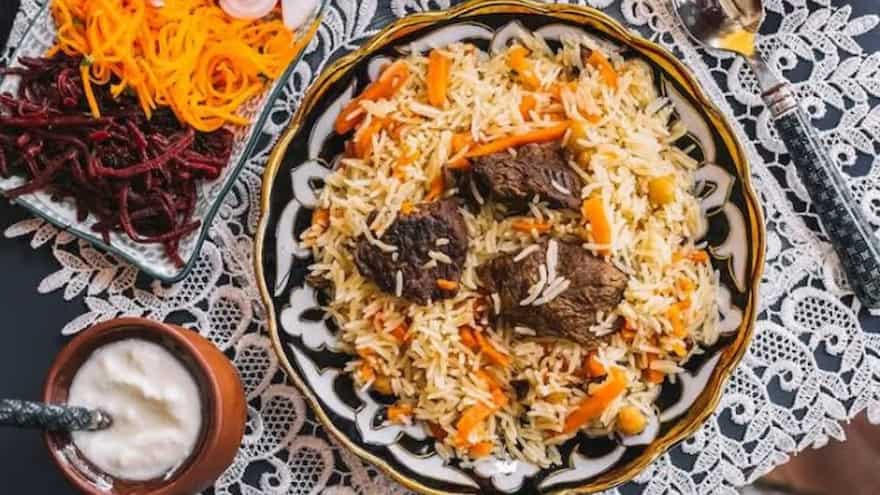
Image credit: Freepik
Gajar Malpua With Jaggery Syrup
Malpua prepared with grated red carrot has started appearing in small sweet shops in Rajasthan and Haryana during peak winter. A batter of flour, mashed banana and grated carrot can be whisked with a little milk and left to rest. Small ladlefuls can be fried in shallow ghee until the edges curl slightly. The warm discs can be dipped in light jaggery syrup flavoured with sesame seeds. The carrot adds colour and aroma, and the malpua develops a seasonal character that appeals to those who enjoy winter sweets beyond halwa.




