


 Share
Share

Offering traditional sweets during the Rath Yatra festivities is a deeply cherished practice, and khaja holds a particularly special place on the Mahaprasad plate. This intricate sweet relies entirely on a technique of layering dough and fat to create hundreds of paper thin flakes that shatter instantly when you take a bite. Many home cooks shy away from making it from scratch because achieving that perfect expansion traditionally requires deep frying the delicate pastries in large amounts of hot ghee. Moving the entire process to an Usha OTG completely transforms how you prepare this festive staple. The appliance uses powerful heating elements and internal fans to circulate dry hot air evenly across your baking tray. This intense ambient heat melts the layers of fat trapped inside the rolled dough rapidly, causing the thin sheets of flour to separate and puff up beautifully. You get the exact same authentic crunchy texture and golden colour but with significantly less effort and a much lighter finish.
Preparing The Layered Dough
The foundation of a perfect khaja is a stiff dough that can hold its shape while expanding in the heat. Start by rubbing a generous spoonful of melted ghee into refined plain flour until the mixture resembles coarse wet sand. Slowly bind this together with just enough cold water to form a tight, firm ball of dough and let it rest under a damp cloth for at least twenty minutes. This resting period relaxes the gluten strands, making the dough much easier to roll out later without it shrinking back or tearing.
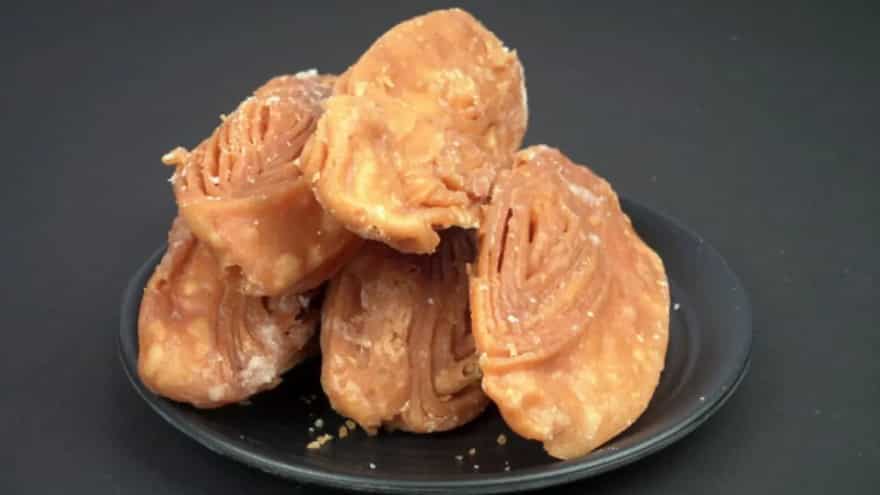
Image credit: Adobe Stock
If you don’t have Usha’s OTG, Shop Now 
Lamination For Flaky Layers
Creating those signature shatteringly crisp layers requires a simple but precise lamination technique. Roll your rested dough into a large, very thin rectangle on a clean kitchen counter. Brush the entire surface evenly with a thick paste made from melted ghee and a little bit of dry flour. Starting from one of the longer edges, roll the dough sheet up extremely tightly into a long, firm log. Use a sharp knife to slice this log into equal one inch pieces, then gently flatten each piece slightly with a rolling pin to expose the beautiful concentric circles of fat and flour.
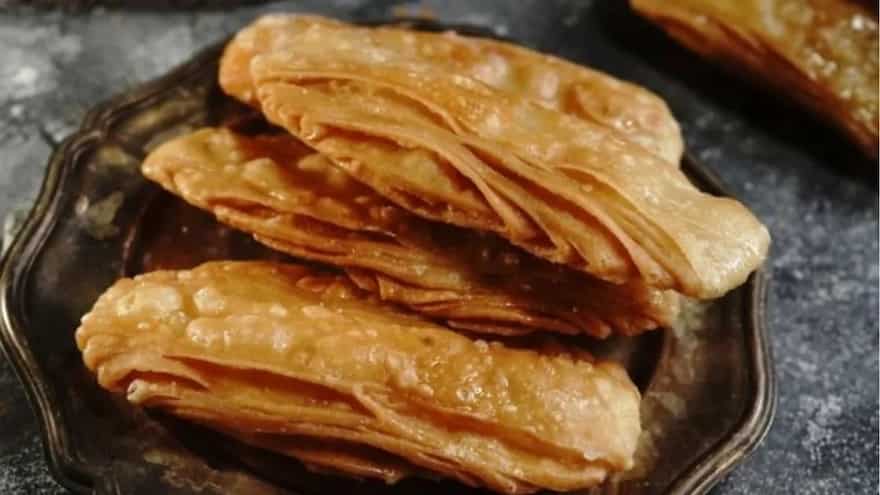
Image credit: Adobe Stock
Baking In The OTG
Baking laminated dough requires a consistent blast of heat to ensure the layers puff up before the fat just melts away into the pan. Preheat your OTG to a high temperature using both the top and bottom heating elements. Arrange your flattened dough pieces on a lined baking tray, leaving a little space between each one to allow for expansion. Slide the tray onto the middle rack and let the dry circulating heat do the work. The pastries will expand rapidly, separating into distinct, crisp flakes as they turn a beautiful pale golden colour over fifteen to twenty minutes.
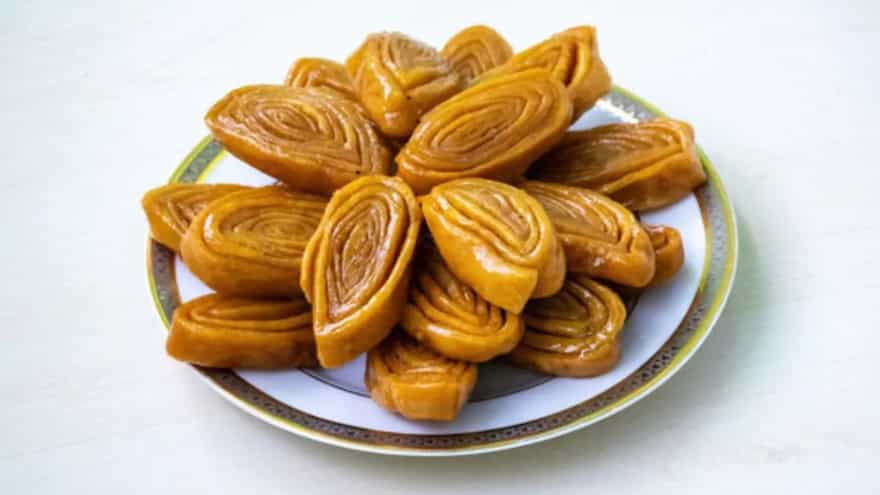
Image credit: Adobe Stock
Preparing The Sugar Syrup
While your pastries are crisping up in the oven, you need to prepare the sticky syrup that gives this sweet its final traditional touch. In a wide saucepan, combine equal parts white sugar and water with a few crushed green cardamom pods. Boil the mixture down steadily over a medium heat until it reaches a one string consistency. This specific thickness is absolutely crucial. If the syrup is too thin, it will make the baked pastries completely soggy, and if it is too thick, it will crystallise into a hard white crust immediately upon cooling.
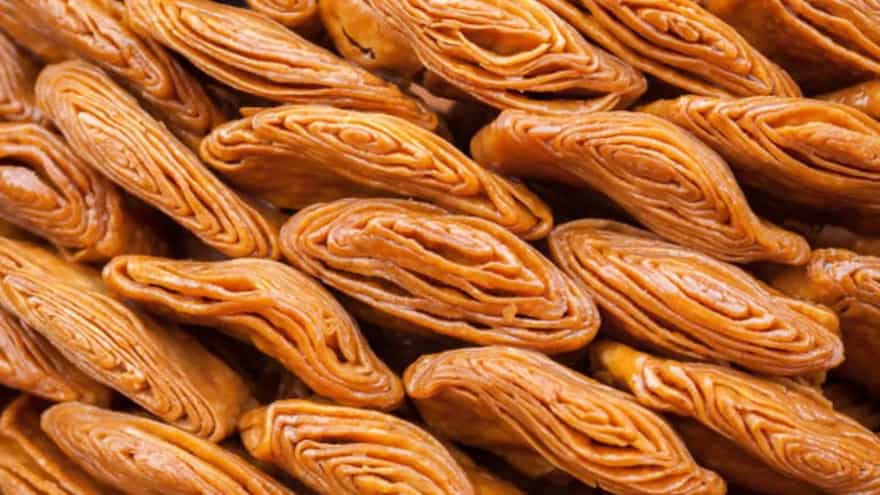
Image credit: Adobe Stock
Soaking And Serving
Timing is everything when combining the hot pastries with the sweet syrup to ensure they stay completely crisp. Take the tray of golden khaja out of the countertop oven and let the pieces cool down for just a couple of minutes until they are safe to handle but still very warm. Drop them directly into the warm cardamom syrup, turning them over once so the sticky liquid coats every single flaky layer. Remove them quickly with a slotted spoon and arrange them on a wire rack so any excess syrup can drip away before serving them as part of your festive offering.




