


 Share
Share

Kolkata’s innovative yet authentic street dishes are famous for their flavours as well as textures. The ever nostalgic luchi and kochouri are sure always on mind, but when looking for something more extravagant, Mughlai paratha is one of the best choices.
One of the most interesting parts of making this street food is watching the egg being poured over the tiny slit inside the paratha while it is frying. The hot oil helps it cook instantly and blend into the layers.
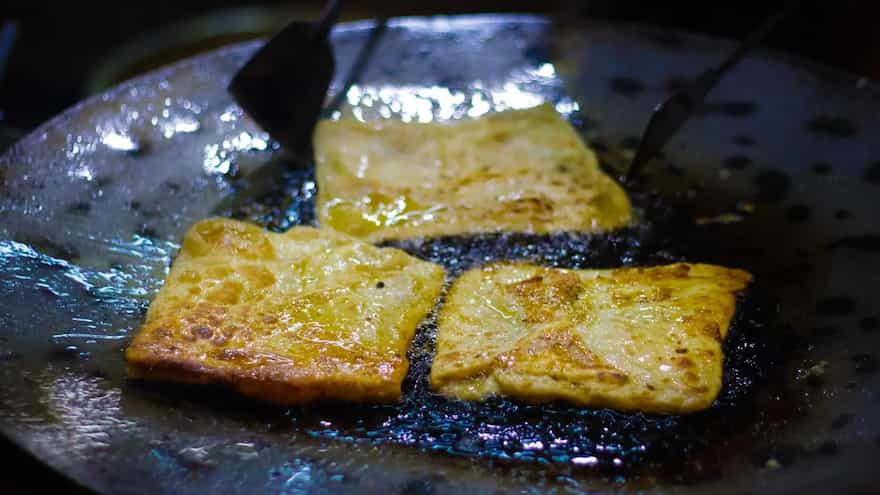
Mughlai paratha looks simple on the outside, yet it is one of the more technical street-style breads to prepare correctly. The difficulty lies in handling multiple elements at once. The dough must be soft enough to stretch thin without tearing, yet strong enough to hold a rich filling.
The egg and minced meat mixture inside must be balanced so it cooks fully without making the paratha soggy. If the pan is too hot, the outside browns before the filling sets. If too low, the bread absorbs excess oil and turns heavy.
Different Styles of Mughlai Paratha Across Regions
Chicken Mughlai Paratha
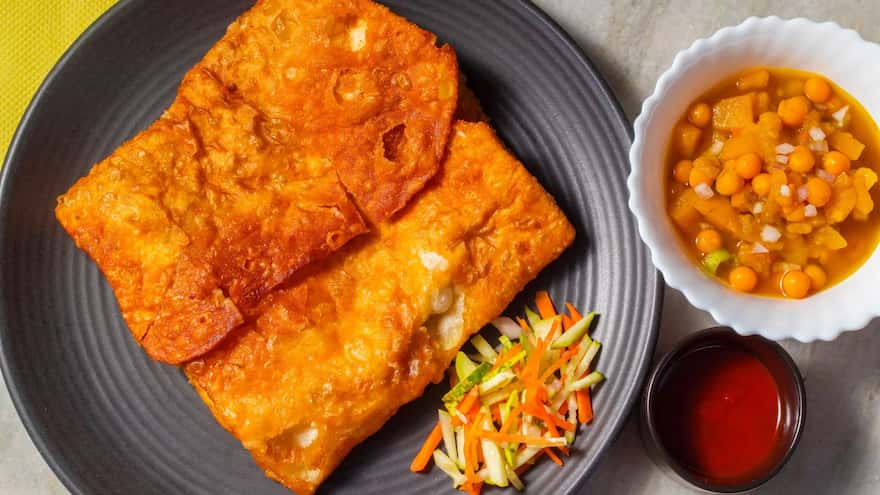
Chicken Mughlai paratha evolved as a lighter alternative to fish or mutton. Instead of raw filling, some cooks use pre-cooked shredded chicken mixed with egg and mild spices. This method reduces the risk of undercooked centres and makes preparation easier at scale. It differs from the Kolkata street version because the chicken is often drier and less fatty, giving a slightly firmer bite. It is commonly served in restaurants with mint chutney and sliced onions.
Double Egg Mughlai Paratha
Double egg Mughlai paratha is known for its extra richness. Vendors add a generous amount of beaten egg to create a thicker, custard-like interior. The dough remains the same, but the filling feels softer and more indulgent. It is less known outside Kolkata because it is highly filling and often considered heavy. This version is sliced into large squares and served with potato curry or salad.
Mutton Mughlai Paratha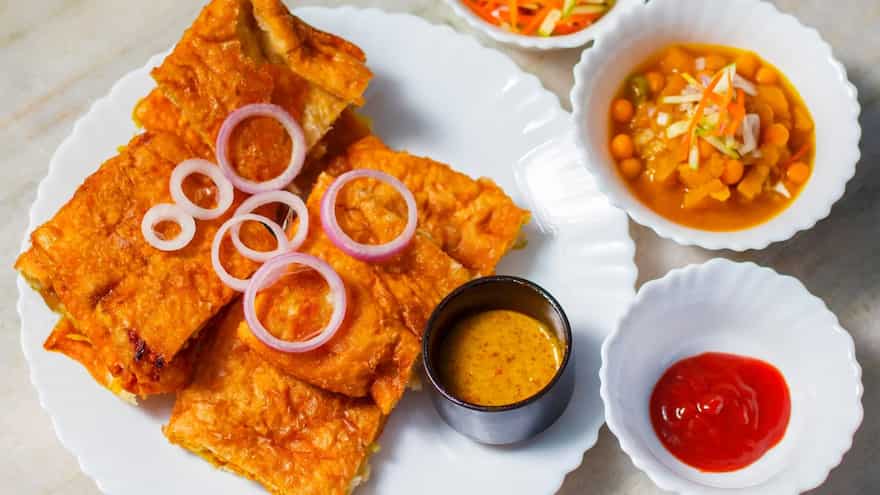
Mutton Mughlai paratha takes the traditional keema version further by using finely minced mutton instead of mixed or lighter meats. The flavour is noticeably deeper because mutton carries stronger fat and aroma. The mince is usually sautéed lightly with ginger, garlic, and mild garam masala before being mixed with beaten egg. Pre-cooking the mutton prevents excess moisture from leaking into the dough while frying. This version is less commonly seen outside specialist eateries because it requires careful balancing; mutton can overpower the bread if not seasoned properly. It is typically served with sliced onions, green chilli, and sometimes a thin potato curry to cut through the richness.
Fish Keema Mughlai Paratha
Fish Mughlai paratha is a lesser-seen coastal adaptation where finely minced boneless fish replaces meat. Firm varieties like bhetki are preferred because they hold structure after cooking. The fish is lightly sautéed first with ginger, green chilli, and a touch of turmeric to remove the raw aroma. It is then mixed with beaten egg before being folded into thin dough. This version is uncommon because fish releases moisture quickly, making it harder to control the texture inside the sealed paratha. It is usually served with kasundi and sliced onions rather than heavy curry.
Shahi Mughlai Paratha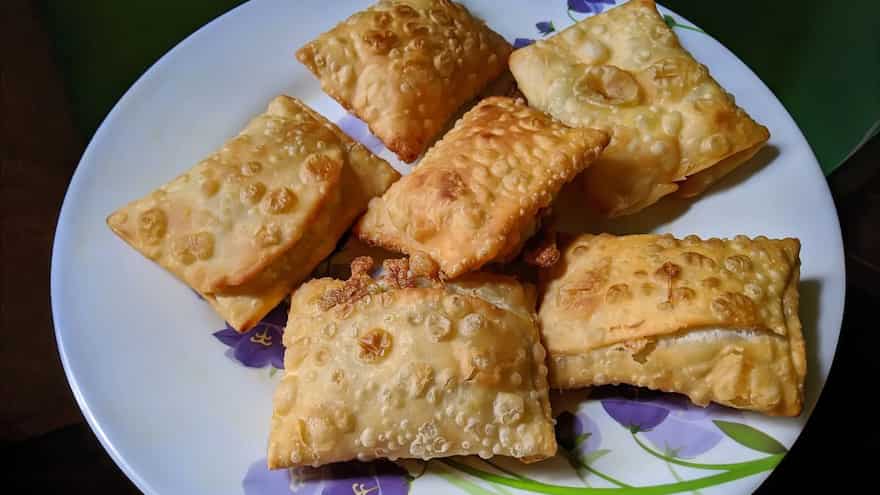
Shahi Mughlai Paratha may look similar to other versions at first glance, yet its filling sets it apart. It combines both mutton and chicken keema with beaten egg, creating a richer and more layered interior. The addition of finely chopped dry fruits such as cashews or raisins brings slight sweetness and texture contrast. Unlike simpler street-style variations, this version is heavier and more indulgent. The dough is stretched thin, sealed carefully, and cooked slowly so the dense filling heats through evenly. Each bite carries savoury depth balanced by subtle nutty notes, giving it a distinctly royal character.




