


 Share
Share

Oysters are another ancient food, as seen in fossils dating to the Triassic Era, 200 million years ago. Evidence of fossilised oysters is found on every major land mass, and there is evidence of Indigenous oyster fisheries in North America and Australia that dates to the Holocene period, about 12,000 years ago.
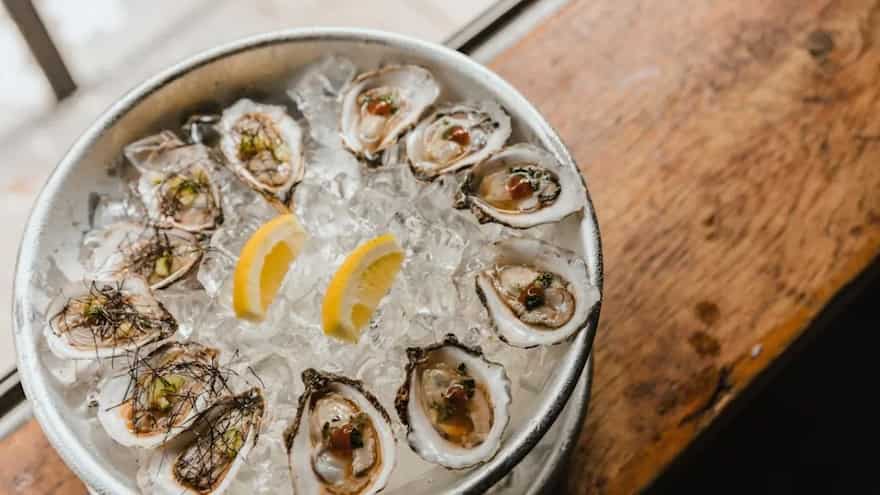
Image Credit: Pexels
There are references in classical Greek texts to what are probably oysters, by authors like Aristotle and Homer. Oyster shells found at Troy confirm they were a favoured food. Before we get into all the shucking activities of oysters and what they are, let’s learn how oysters rose to popularity.
History & Origin Of Oysters
Traditionally served as a first course at banquets in Ancient Greece, they were often cooked, sometimes with exotic spices. Pliny the Elder refers to oysters as a Roman delicacy. He recorded the methods of the pioneer of Roman oyster farming, Sergius Orata, who brought the best specimens from across the Empire to sell to elite customers.
Mediaeval coastal dwellers gathered oysters at low tide, while wealthy inland consumers would have paid a premium for shellfish, a perishable luxury, transported to their castles. French nobles in 1390 preferred cooked oysters, roasted over coals or poached in broths, perhaps as a measure to prevent food poisoning. As late as the 17th century, authors cautioned: "But if they be eaten raw, they require good wine…to aid digestion".
Popularity Of Oysters
By the 18th century, small oysters were a popular pub snack, and larger ones were added as meat to the stew pot. In that century, it is believed that as many as 100,000 oysters were eaten each day in Edinburgh, and the shells from the tavern in the basement filled in gaps in the brickwork at Gladstone’s Land in Edinburgh’s Royal Mile.
Scottish oyster farms in the Firth of Forth, an inlet of the North Sea, produced 30 million oysters in 1790, but continual over-harvesting took its toll. By 1883, only 6,000 oysters were landed, and the population was declared extinct in 1957.
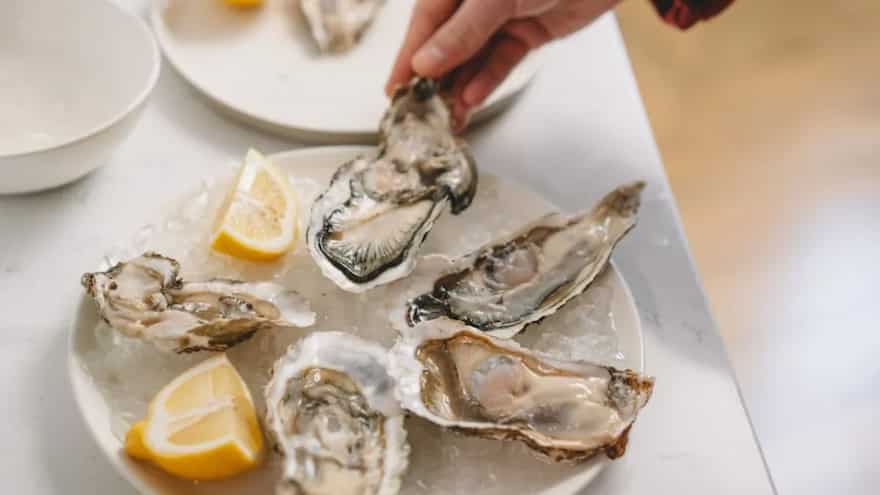
Image Credit: Pexels
As wild oyster stocks dwindled, large oyster farms developed in cities like New York in the 19th century. Initially successful, they were polluted and infected by typhoid from sewage. An outbreak in 1924 killed 150 people, the deadliest food poisoning in United States history.
The Decline Of Oysters
Far from the overabundance of oysters you once had, over-fishing, pollution, and invasive species all threaten oyster populations worldwide today. Due to this scarcity of wild oysters and the resources required to safely farm environmentally sustainable oysters, they are now a premium product. Scarcity made oysters a luxury, and a Tsar’s approval elevated snails to gourmet status. Could insects become the next status food? Ancient Romans ate beetles and grasshoppers, and cultures around the world consume insects, but not (yet) as luxury products. Maybe the right influencer can make honey-roasted locust the next species to jump from paddock to plate.
Oysters In The New Era
In recent years, oysters have had a significant resurgence, regaining their position as a popular and beloved delicacy. Thanks in large part to social media, what was once considered outdated is suddenly trendy once more. Oysters are frequently seen being slurped, adorned with elaborate toppings, or freshly shucked on video in culinary vlogs and Instagram reels, which contributes to their revived appeal.
There are now festivities in the real world as a result of this expanding fascination. Oyster shucking festivals are now held annually in many coastal areas, bringing together chefs, farmers, and foodies to celebrate the mollusc. Oysters are transformed from a dish on a plate into a full-fledged experience at these events, which feature everything from shucking competitions and sampling sessions to live music and local seafood culture.
What Is Shucking Oysters?
Galway, a coastal city in Ireland, hosts the annual Oyster Opening Championships, a prestigious event that showcases the skill and speed of professional oyster shuckers. Participants strive to open a set number of oysters in the fastest time possible, exhibiting their dexterity and precision. The champion of the competition not only receives a trophy but is also rewarded with a generous supply of fresh Galway oysters, allowing them to relish the briny delights of their victory.
To put it simply, shucking is the act of opening an oyster. Oysters cannot be opened by hand due to their hard, securely packed shell. Shucking is the process of carefully prying apart the shell, cutting the muscle that keeps it closed, and exposing the fresh oyster inside using a specialised oyster knife.
How To Shuck Oysters Safely
To keep the oyster fresh, juicy, and full of its inherent briny flavour, it is typically done right before serving. Because the oyster shells are sharp and the knife takes controlled power, shucking oysters can be dangerous if you're not careful. Remember these specific tips and tricks while opening oysters at home to stay safe:
Have Oyster Knives
An oyster knife is perfect for prying apart shells since it is short, sturdy, and has a slightly blunt tip. Because a typical kitchen knife isn't made to withstand the pressure required for shucking, using one raises the risk of slipping and severe cuts.
Protect Your Hands
The most fragile hand is the one clutching the oyster. To protect your palm and fingers from sharp shells or unintentional knife slips, wrap the oyster in a thick kitchen towel or put on a cut-resistant glove.
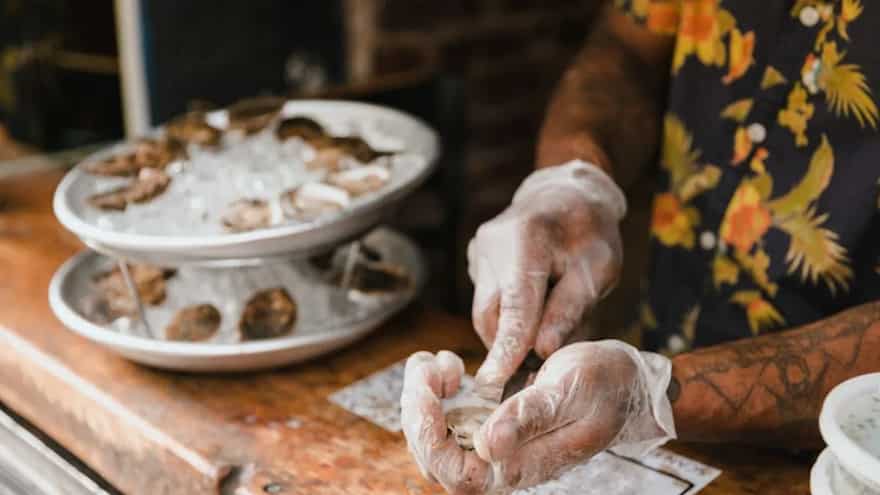
Image Credit: Pexels
Position Oysters Correctly
With the hinge oriented in your direction and the cupped side facing down, place the oyster on a level, non-slip surface. This steady stance helps you apply pressure in a controlled manner and keeps the oyster from wobbling.
Do Not Force The Knife Into Oysters
To open the shell, carefully insert the knife into the hinge and slowly twist. Knives are most likely to slip and injure people when you stab someone or apply sudden force.
Timing Is Key
It takes patience to shuck. Accidents can result from multitasking or hurrying the process. To guarantee both safety and hygienic outcomes, work quietly, pay attention to your grip and motions, and carefully open each oyster.




