


 Share
Share

Puri’s Shri Jagganath temple in Odisha, known for its eco-friendly cooking practices such as repurposing wood from the chariots of the presiding deities in their kitchens, will make the switch to using organic rice in the Rath Yatra event scheduled to take place next year. The initiative which was put into motion by the state government, aims to spotlight organic farmers and their sustainable farming practices by ensuring that the rice is used for cooking the Kotha Bhog—prepared exclusively for the Jagannath, Balabhadra and Subhadra deities, as well as the Abadha Mahaprasad distributed to the devotees. The temple, which has joined forces with the Odisha Balabhadra Jaibika Chasa Mission which promotes organic farming across Odisha, will incorporate chemical-free rice into bhog delicacies such as kanika (sweet rice), khechudi (rice cooked with lentils) as well as pitha preparations like Hansapuli and Mathapuli.
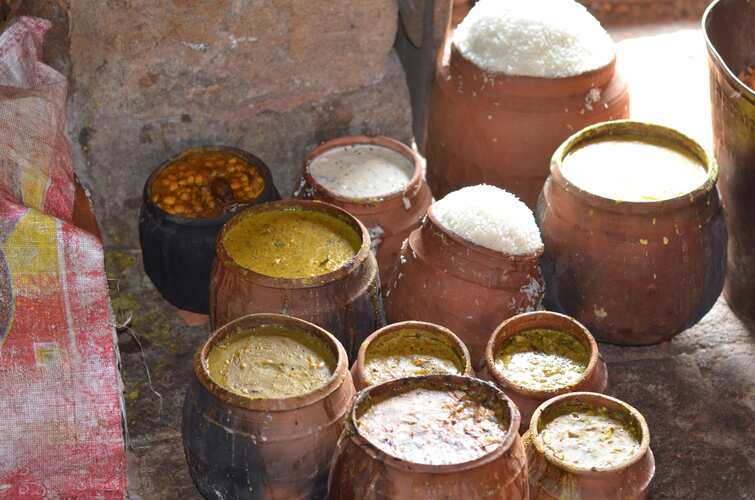
Image Credits: Wikimedia Commons
The first kharif harvest of the grains, which have taken place, will include varieties such as the GI-tagged Kalajeera, Pimpudibasa and Jubaraja—all of which will find their way into mahaprasad offerings, along with organic vegetable preparations. The announcement made by the Shri Jagganath Temple Administration’s (SJTA) Chief Administrator and principle secretary of the state agricultural department, Arbindha Padhee on Friday stated that farmers from Niali in Cuttack, 110 farmers in Jeypore, Borigumma and Kotpad in Koraput as well as Bargarh in Padmapur are already in the process of cultivating rice under the Shree Anna Abhiyan initiative. The Jaibika Chasa Mission which has undertaken financial and technical support to the select farmers, is expected to create a steady stream of income for the cultivators while furthering the agricultural movement within the state.
Also Read:

Image Credits: Wikimedia Commons
60 hectares of land have been dedicated in Koraput for the cultivation of the aromatic Basna rice along with 20 hectares reserved for the Kalajeera variety. The Kankadahad block in Dhenkanal which spans 21 panchayats has emerged as the hub for aromatic varieties—with 1,500 farmers growing popular paddy varieties such as Badshah Bhog, Geetanjali, Ketaki Joha, Kalajeera, Tila Kasturi and Indrani across 1,100 hectares of land. Following a visit to the farmlands and engaging with the farmers involved in the project, Padhee also stated that, “The use of organic rice for Kotha Bhoga and Mahaprasad reflects our collective effort to blend devotion with sustainability.”
It is also believed that utilising organic rice in the rituals as well as food distribution could enhance the purity of the offerings and enhance the sanctity of temple traditions. Known for its eco-friendly practices since its establishment in the 12th century, the Srimandir’s Ananda Bazaar kitchen is famed for having 600 cooks and 400 helpers dishing out meals throughout the day sans electricity or steel utensils, following age-old methods that have been inherited over the course of many generations. In addition to this, the technique of stacking earthen pots over firewood is predominantly used to churn out food for over 50,000 devotees on a daily basis and twice the number, during the Rath Yatra festival, in one of the largest kitchens worldwide. Following the harvest from 700 hectares supplied to the temple last year, the incorporation of organic rice will occur in subsequent phases—first with the kotha bhog and then a portion of the mahaprasad on a trial basis.




