


 Share
Share

If you are sitting down to have an Onam sadya for the first time, the number of dishes served can feel a little overwhelming. Sadya is Kerala’s classic vegetarian meal that is served as a celebratory lunch on a vibrant green banana leaf. It is particularly associated with the festival of Onam, with the Onasadya traditionally relished on Thiruvonam, the most important day of the festival. The spread includes rice, parippu, sambar, avial, thoran, olan, pickles, chips, pappadam and various types of payasams.
But a sadya is not a buffet where you can just pile up everything onto your plate all at once. There is a rhythm to the meal, from how the banana leaf is placed to when rice, curries and payasam are served. Knowing a few basics can make the experience even more enjoyable, and much more sumptuous.
Check Which Way The Banana Leaf Goes
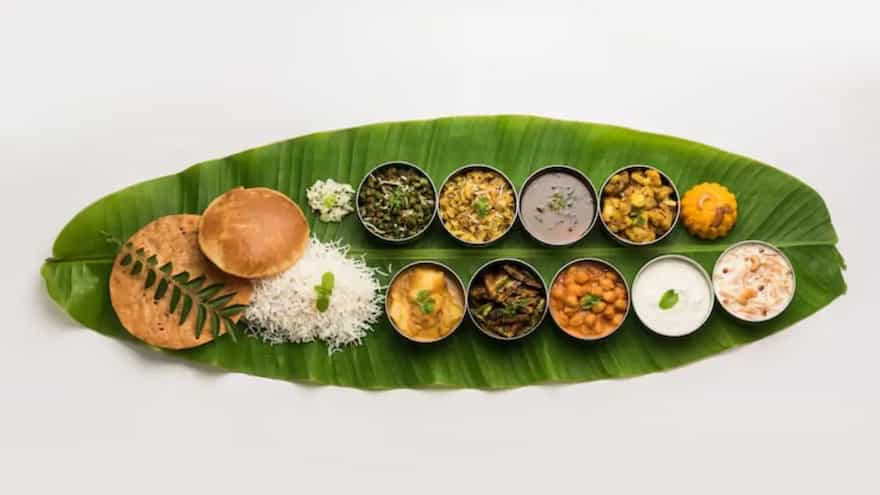
Before anything is served, look at the leaf. Traditionally, the tapering end points to your left, whereas the broader cut end is placed on your right. The placement is not only for decorative purposes, but the dishes have traditionally been placed in certain areas of the leaf.
You will also notice that the rice is not served immediately. The smaller accompaniments, like chips, pickles, pachadi, kichadi and vegetable preparations, are placed first. So if you are wondering why your leaf gets filled up before the main rice arrives, that is part of the classic serving sequence.
(Image credit: Freepik)
Don't Mix Everything The Moment It Arrives
One of the most common mistakes as a first-timer for sadya is mixing every curry. A sadya is designed to let you enjoy different combinations throughout the meal.
Rice is traditionally paired first with parippu and ghee, then followed by sambar and other curries as the meal goes on. However, the sequence can vary by region, but the progression is an essential part of the experience.
So take smaller portions of rice and then try it with every curry served. You will notice how the mild olan, coconut-rich avial, tangy pickles and spicy preparations taste totally different when they are paired individually.
Don't Ignore The Small Sides
The little portions around the top of the leaf can be mistaken for garnishes, but in fact, they are not. Banana chips, sharkara varatti, pappadam, pickles, inji curry, pachadi and kichadi each add a different taste and texture to the meal.
Try the chips and pappadam with some rice, use the pickles sparingly for the acidity and pair the creamy pachadi with a spicier curry. Inji curry, which is made with ginger, can add an especially sharp sweet-sour-spicy taste. You do not need a large spoon of every side, and these are flavour accents meant to change the bite.
Save Room For Payasam
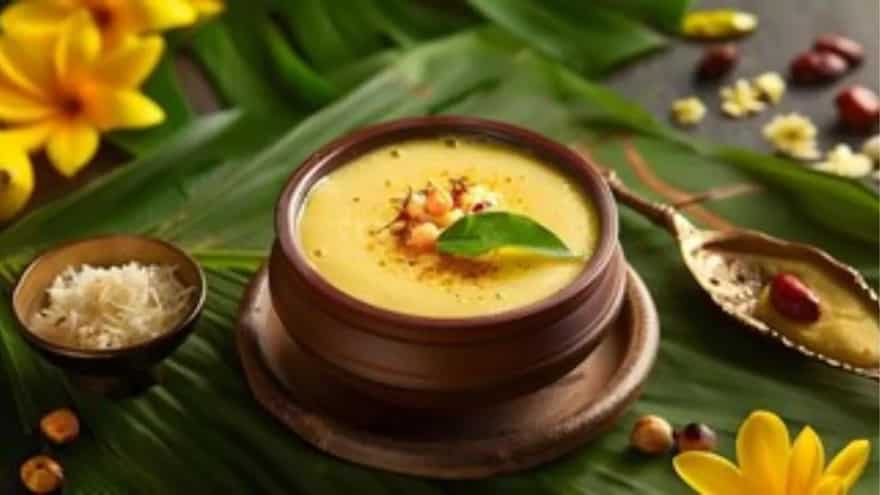
The biggest mistake you can make while enjoying sadya is getting full too early. Payasam is a main part of the feast, and there is always more than one type. Ada pradhaman, palada, semiya payasam and parippu payasam are among the versions that you may come across.
Depending on the venue and area, payasam can be served in a small portion on the leaf or can also be served separately. Some traditions also pair it with ripe banana or the boli. Since the desserts can be rich and sweet, you do not need to take a large serving of each one all at once. Taste first and then ask for more depending on what your favourite is.
(Image credit: Freepik)
Expect The Meal To Keep Changing
A sadya is not one big serving followed by dessert. Different phases of the meal add different flavours. After rice and parippu, sambar generally follows. Thereafter, preparations like pulissery, rasam or buttermilk can appear.
This is why it is worth speeding yourself. You may think you are almost finished after the first round of rice, only to discover another curry, payasam or final rice course coming next. If you are eating at a traditional feast, follow the servers rather than thinking the meal is over when the first few curries get finished.
Use Your Bare Hand To Enjoy Thoroughly
Sadya is traditionally eaten by hand, which lets rice and curries be mixed in small quantities and eaten together. Combine a little rice with the curry, keeping the mixture manageable to eat rather than trying to mix the entire curries on the leaf, which will turn too runny.
If you are more comfortable with a spoon, follow the rules of the venue. The point is to relish the food, not spend the whole meal worrying about whether you are eating it “perfectly.”
Don't Assume Every Sadya Looks The Same
There is no single specified sadya menu across Kerala. The dishes can vary according to area, family ritual and occasion. For example, that kootu curry is especially associated with parts of central and northern Kerala, whereas kichadi and different types of kalan or pulissery have regional interpretations.
So if you come across a dish you have never heard of, ask what it is rather than assuming it is an interpretation of something you have already eaten. Even the sambar and payasam can vary from one place or region to another. That variety is part of what makes a sadya even more enjoyable.




