


 Share
Share

The sight of a pookkalam taking shape outside a home is one of the first signs that Onam has arrived, but for many Malayalis, the festival truly comes to life when a banana leaf is placed before them and starts filling up with colourful, nostalgic dishes. Onam is deeply rooted in Kerala's cultural identity. It brings together mythology, harvest traditions, and community celebrations along with a remarkable culinary heritage. For Malayalis across Kerala and around the world, Onam is not simply a single festive day. It is a celebration deeply woven into the cultural fabric of the state, and at its centre is Onasadya, the elaborate vegetarian feast served on a banana leaf, where dishes are carefully arranged and eaten together to create an extraordinary combination of textures, memories, and flavours.
Onam 2026: Date And Thiruvonam Timing
Onam is celebrated over a span of ten days, starting with Atham and ending with Thiruvonam. Each day has its own importance and rituals. But the highlight of the festival lies in the first day (First Onam) and the final day (Thiruvonam). Atham marks the start of Onam festivities, when people begin decorating with pookkalam (floral rangoli) and prepare for celebrations. While Thiruvonam is the last as well as the most auspicious day when people welcome King Mahabali, perform grand rituals, prepare feasts, and engage in cultural festivities.
In 2026, Atham is on Sunday, August 16, while Thiruvonam falls on Wednesday, August 26. While the festival stretches across several days, Thiruvonam is the day most strongly associated with the grand Onasadya feast. Families dress in traditional clothes, decorate their homes, participate in celebrations, and gather around to savour a festive meal together.
And if there is one thing that makes Onam particularly delicious, it is the fact that the feast is not built around a main course. Instead, dozens of preparations work together. So, the film does not have a single star dish but an entire ensemble cast of culinary characters.
Why And How Is Onam Celebrated?
At the heart of Onam lies the beloved story of King Bali, or Mahabali, the legendary ruler and Daitya king. Mahabali was a generous and powerful king, a descendant of Prahlad himself, whose popularity among his people eventually became a concern for the Devas, particularly their king, Indra. This story is closely associated with Vamana, an incarnation of Lord Vishnu.
In his Vamana avatar, Lord Vishnu appeared as a dwarf Brahmin and asked Mahabali for as much land as he could cover in three steps. The amused king agreed. Vamana then assumed a gigantic form and covered Patal Lok and Heaven in two strides. With no space left for the third but earth, Mahabali offered his own head.
He was subsequently sent to the underworld, but was granted permission to visit his people once every year. Onam celebrates his annual homecoming, with homes being decorated and families gathering to welcome the legendary king. This is where the pookalam, the elaborate floral carpet created outside homes, enters the picture.
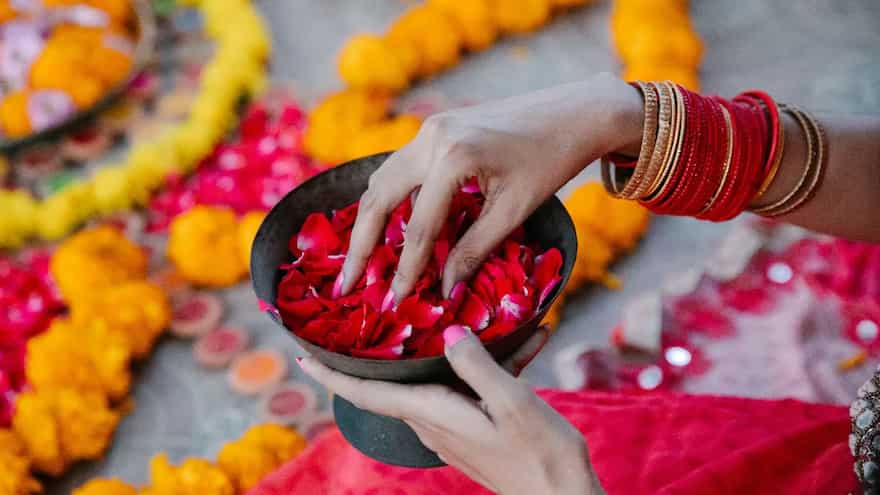
Image credit: Pexels
Fresh flowers are arranged in increasingly intricate patterns during the festival, traditionally symbolising a warm welcome for Mahabali himself. Onam celebrations extend well beyond the dining table, with Vallamkali, or snake boat races, traditional performances, Pulikali and other cultural events adding colour and energy to the festive season.
The Heart Of Onam: The Grand Sadya
Onam Sadya is one of Kerala's most spectacular expressions of festive cooking. Traditionally served on a plantain leaf, the meal usually features more than 20 different dishes, with larger festive spreads containing considerably more variety. Parippu, sambar, avial, thoran, olan, erissery, kaalan, pachadi, kichadi, pickles, chips, pappadam, and payasam are among the common preparations associated with an Onasadya.
The arrangement is not random either. Different dishes occupy specific areas of the banana leaf, while rice is served towards the lower portion. The meal progresses through different combinations of curries, rice, desserts, and other accompaniments. The result is less like an ordinary lunch and more like a carefully choreographed tasting menu, except it is traditional, homely, eaten by hand, surrounded by family, and served generously.
6 Must-Try Festive Foods For Your Onam Menu
Avial
Made with a mixture of vegetables cooked with coconut and green chillies, avial has a thick, rustic texture and a gentle sourness from yoghurt in many traditional preparations. Coconut oil and fresh curry leaves provide their unmistakable finishing aroma. But what makes avial especially festive is its ability to bring several vegetables harmoniously together in a single dish.
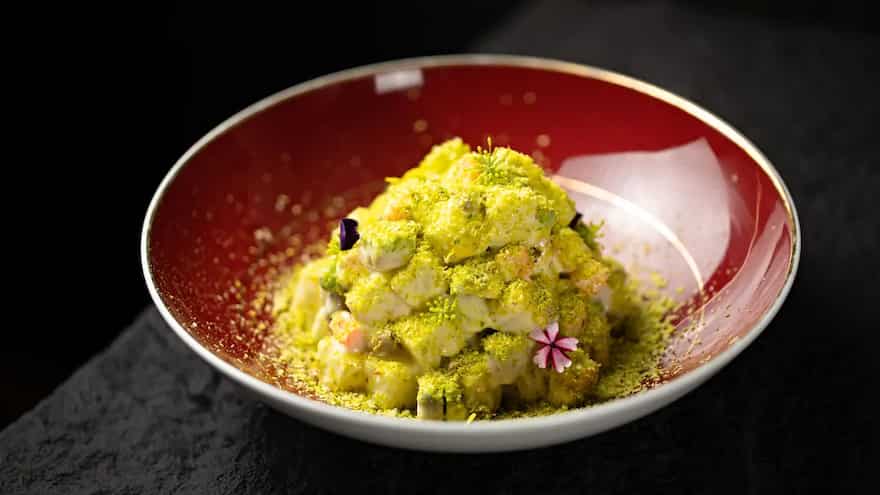
Image credit: Pexels
Raw banana, yams, drumsticks, carrots, beans, and gourds can all find their way into regional versions. It is creamy without being too heavy, coconutty without being overtly sweet, and substantial enough to hold its own beside rice.
Olan
Olan is the soft-spoken member of the feast, traditionally made by combining ash gourd or pumpkin with red cowpeas and coconut milk. The seasoning is deliberately restrained, allowing the gentle sweetness of the vegetables and creamy coconut milk to come through. That mildness is precisely what makes Olan so important. In a meal containing pickles, peppery rasam, tangy curries, and spicy sambar, it provides a soothing pause. A drizzle of coconut oil just before serving brings the dish together with a wonderfully fragrant finish.
Thoran
Thoran is another Sadya essential, but its charm lies in its simplicity. Finely chopped vegetables such as cabbage, beans, radish or seasonal greens are cooked with grated coconut, turmeric and chillies. Unlike the wetter curries on the banana leaf, thoran remains relatively dry, giving the feast an entirely different texture.
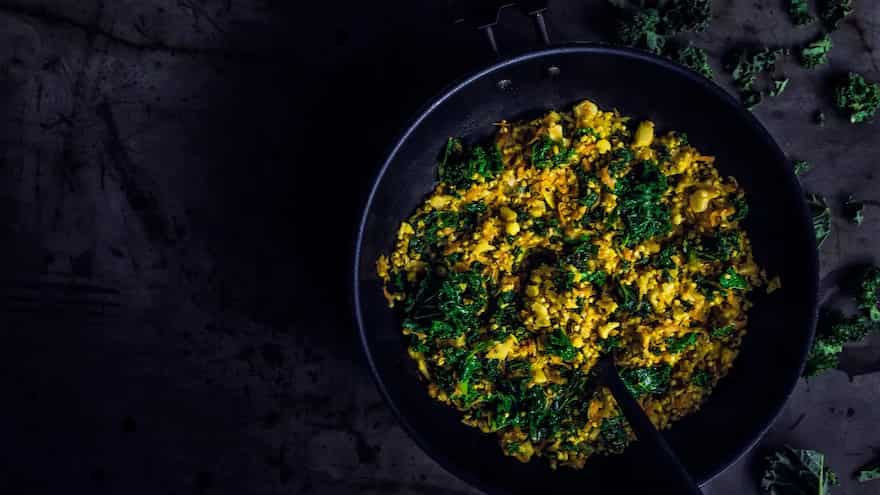
Image credit: Pexels
The coconut is toasted just enough to become aromatic while still retaining its freshness. While a handful of curry leaves and a drizzle of coconut oil can make the entire kitchen smell like your Malayali grandmother’s cooking. For an Onam menu, cabbage thoran is perhaps the most familiar version, but beans, carrots, and other vegetables can also be used.
Kaalan
For foodies who enjoy sour, creamy flavours, kaalan is one of the most interesting dishes to try on the leaf. Traditionally made with yoghurt and vegetables such as raw banana or yam, kaalan is thick rather than soupy, with a distinctly tangy flavour profile. It is mainly associated with northern Kerala Sadya traditions, although versions vary between regions and households. The combination of yoghurt, coconut and cooked vegetables makes the dish feel rich without requiring any heavy cream usage. Kaalan is also an excellent example of the balance built into a Sadya meal. While Olan brings mellow coconutty sweetness, kaalan brings acidity and depth to the feast.
Parippu With Rice And Ghee
A Sadya is not complete without parippu, particularly when served with a little ghee over rice. The preparation is relatively simple, generally using a lentil such as moong dal or pigeon pea, but its position in the meal gives it particular significance. Parippu is usually the first curry served after rice, followed by sambar. And for good reason. There is something wonderfully comforting about the combination: hot rice, soft dal curry and fragrant ghee. It is also the moment when the meal shifts from the collection of side dishes into its main rice-and-curry courses.
Ada Pradhaman
And then comes the dish everyone has been quietly waiting for. Ada Pradhaman is among Kerala's most celebrated payasams and is particularly associated with festive Sadya feasting.
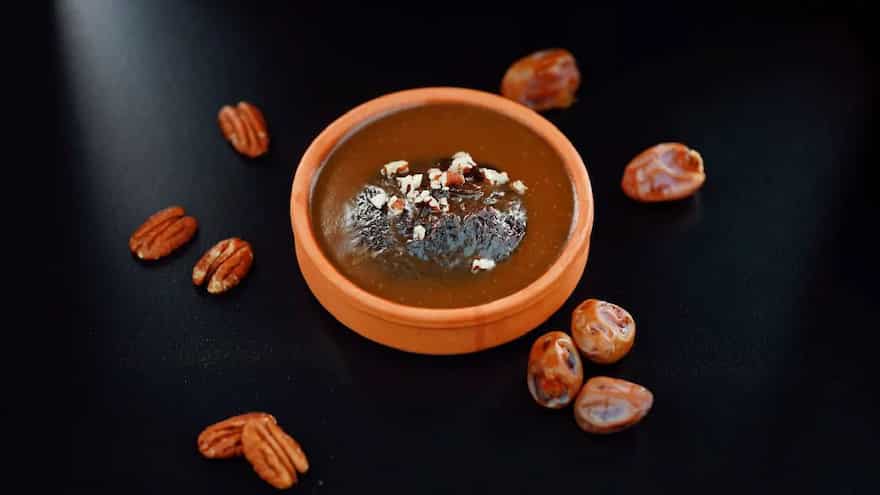
Image credit: Pexels
Made with rice ada, jaggery, and coconut milk, it is rich, fragrant, and deeply caramel-like, with cardamom and roasted nuts often contributing additional aroma, flavour, and texture. Other varieties, including Palada Payasam, Parippu Pradhaman, and Semiya Payasam, may also appear depending on the household and region.




