


 Share
Share

Navratri is unfolding across Gujarat the way it always does, and yet it feels slightly different this year. We are now past the midpoint of the nine nights, with Vijayadashami arriving on 20 October, and this is the stage when feet are tiring, voices are growing hoarse and appetites are at their most imaginative. Dusk is settling over the city, chaniya cholis are catching the lamplight, and thousands of people are circling in widening rings until well after midnight. What is changing, quietly and deliciously, is the hour after the dancing stops. Garba is no longer ending at the gate. It is spilling into street corners, food trucks, café counters and brightly lit stalls that stay open until the early hours, where the hunger of a dancer meets the curiosity of a generation that treats trying something new as part of the outing. Old loyalties are holding firm: butter-slicked snacks, crisp farsan, jalebi at dawn. Beside them, a few newcomers are making themselves at home, most visibly a purple yam from the Philippines. This is a city by city look at what Gujarat is putting on its plate this Navratri, drawn from food coverage, café openings and the creator videos that are shaping where people head next.
Eating in Gujarat during these nine nights has two halves. One is devotional: many families are observing a vrat, eating sattvic, fasting-friendly food prepared with rock salt and without onion or garlic. The other is celebratory: dancers are heading out after midnight for something hot, rich and shareable. Often these are the same people, which is why Navratri menus are so unusually inventive. A café may be selling a rajgira dessert and a cheese-laden sandwich at the same counter, and nobody finds that odd.
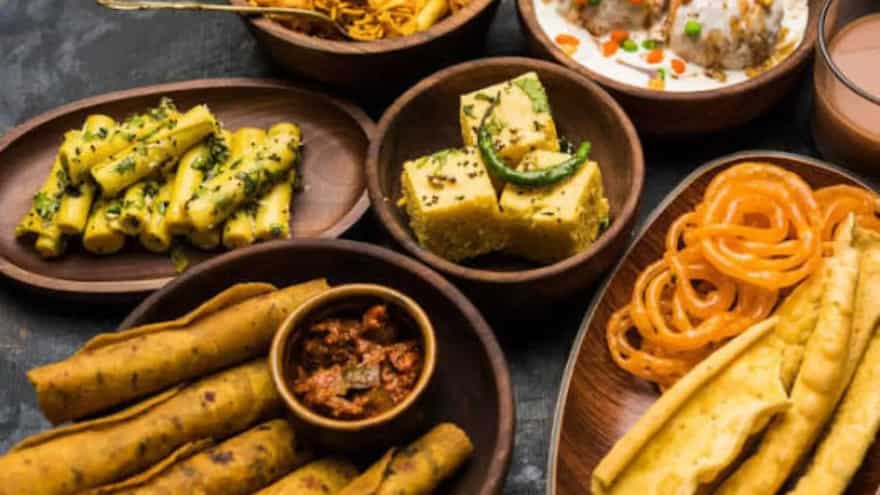
Image credit: Adobe Stock
Vadodara: Sev Usal, Papdi No Lot, Cheese And The Late Night Snack Run
Vadodara, the spiritual home of traditional Garba, is also where the street snack is being dressed up most lavishly. Local food creators are filming double cheese tadka Maggi, late night pani puri and garlic papdi no lot, a soft, savoury, spice-laden preparation that gives Baroda a flavour identity quite apart from the wider Gujarati farsan family. Stalls and food trucks are turning instant noodles into a made to order affair, with butter, grated cheese and a hot tempering of mustard seeds and chillies spluttering in the pan. Sandwiches are getting the same treatment, with masala toast, grilled cheese and loaded fillings feeding the post-garba crowd.
No Baroda food conversation is complete without Jay Mahakali Sev Usal, the institution near Kirti Stambh on Palace Road. Sev usal is a humble, deeply local dish of boiled green peas in a thin curry, crowned with gram flour sev, and it is served with pav, chopped onion, lemon and a fiery chutney. Mahakali is a roughly 35-year-old eatery that serves only sev usal in its many varieties, and that singular focus is exactly its charm. The menu is a study in how Vadodara likes its comfort: butter sev usal, cheese sev usal and combinations of the two, with regulars recommending the cheese sev tari for those who enjoy heat. Even a long-loved street habit is leaning into butter and cheese, the same instinct driving the city's Maggi and sandwich stalls. The sev here is also a thinner cousin of gathia that keeps its crunch even after soaking in the usal, a small textural detail that diners tend to remember.
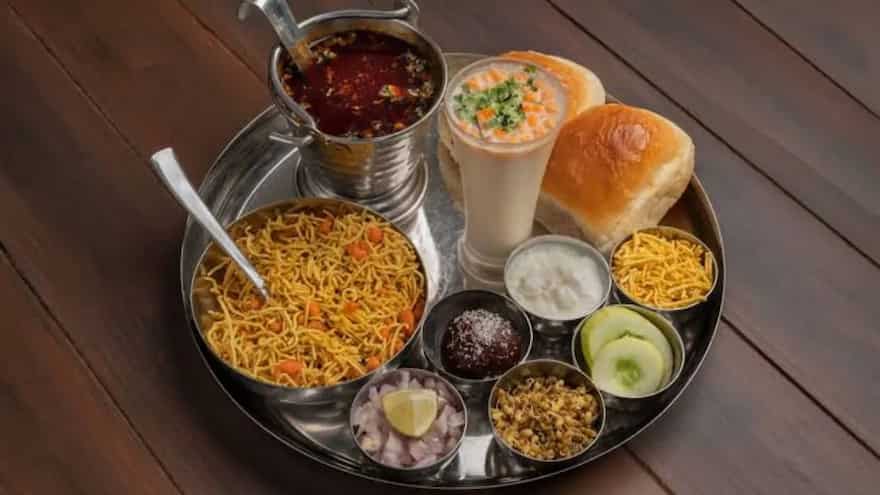
Image credit: Pexels
Geography matters here. Evening guides point visitors to Sayajigunj and Alkapuri for street food, and to Kotecha Chowk, known for its joints and the famous Rasraj Panipuri. Ratri Bazaar is also an option, though it is not the most hygienic of the lot and can easily be avoided in favour of the busier, better kept stalls.
What is happening here is less about novelty than generosity. Portions are heavy, toppings are lavish, and the food arrives hot, which matters enormously at one in the morning. Creator videos measure attention rather than sales, so no single dish can be crowned the city's favourite. But the pattern is unmistakable: Vadodara wants its comfort food loud, cheesy and freshly made.
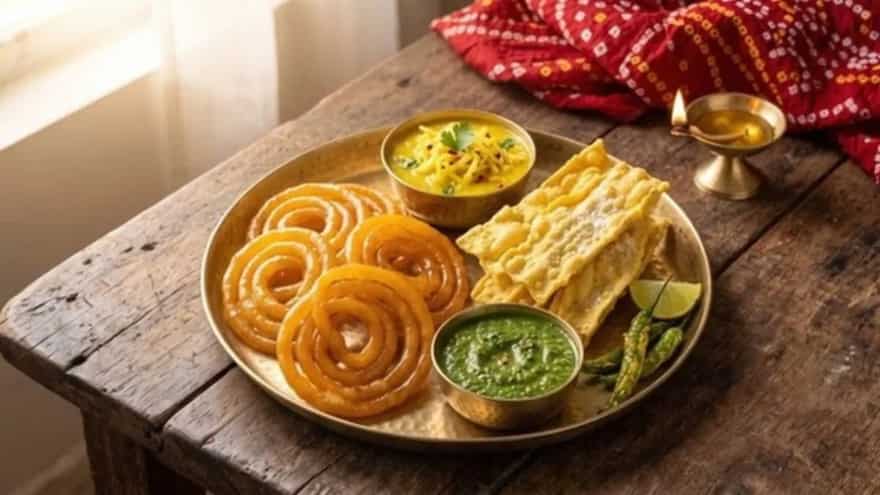
Image credit: Adobe Stock
Surat: Butter Locho, Khausa And Cold Coco
Surat is perhaps the most rewarding city to eat in right now, because its signature dishes are being rediscovered rather than replaced. This is a city that brings a contemporary edge to Navratri, with younger crowds, and its food is keeping pace. Surti locho, the soft, steamed, lentil-flour delight, is being served with generous butter and a dusting of sev, and food tour videos are sending visitors to vendors such as Jaani Locho for the butter locho and idada. Beside it on the same tours are tameta puri, ghari, bhusu, aloo puri and the beloved cold coco, a chocolate-forward drink that remains a Surti original.
Then there is khausa, a noodle and curry bowl finished with crunchy toppings and tangy condiments, sitting somewhere between a snack and a full meal. Each vendor guards a slightly different version, so it pays to ask what goes on top before ordering. For market hunting, Surat's Old Bombay Market and Sahara Darwaja are the names that come up for street food.
The newer layer is playful. Cheese pop balls, mozzarella rolls and Banarasi chaat are appearing on the menus of viral outlets, and one vendor is even bringing Vadodara's masala bun to Surat. Tradition is staying recognisable, while butter, cheese and larger portions are giving it a second life on screens.
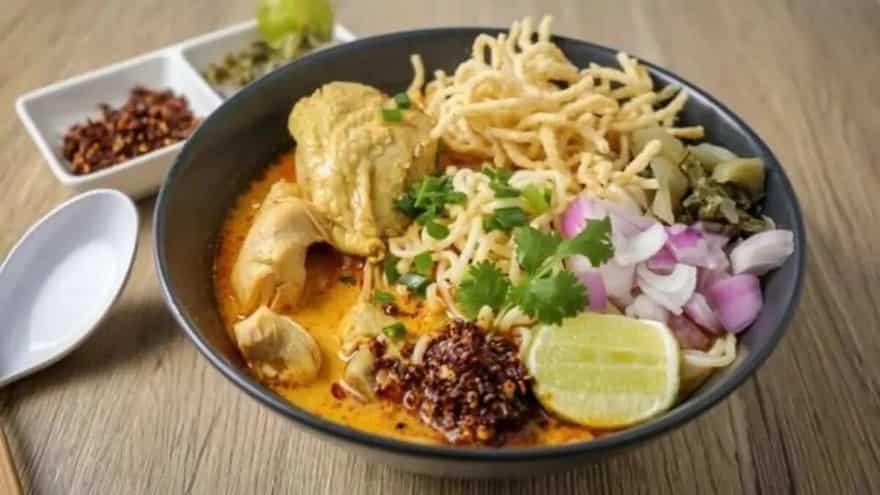
Image credit: Adobe Stock
Rajkot: Fafda Jalebi, Dabeli And Oversized Indulgence
In Rajkot, the day belongs to fafda jalebi. Often linked with Dussehra, which arrives on 20 October, it is in truth a year-round habit: a crisp gram flour strip, seasoned with carom seeds and black pepper, paired with syrup-soaked spirals of jalebi and eaten at breakfast, at dusk or at the end of a long night. Locals are trading tips on where to find the freshest batches, and shops such as Jalaram Gathiya House are being named as reliable stops. With Dussehra only days away, expect queues to lengthen.
Dabeli is holding the evening, with its sweet, tangy and spicy masala tucked into a buttered pav and finished with peanuts and pomegranate. Meanwhile, the younger crowd is drifting towards bigger, bolder formats. GJ-5 Sandwich and Pizza is serving cheese-heavy loaded sandwiches, and Chef Fatso is plating creative café food designed as much for the table as for the camera. Rajkot offers a lovely contrast between foods people return to out of habit and foods designed to be shared, photographed and talked about, and both are finding their place on the same crowded evenings.
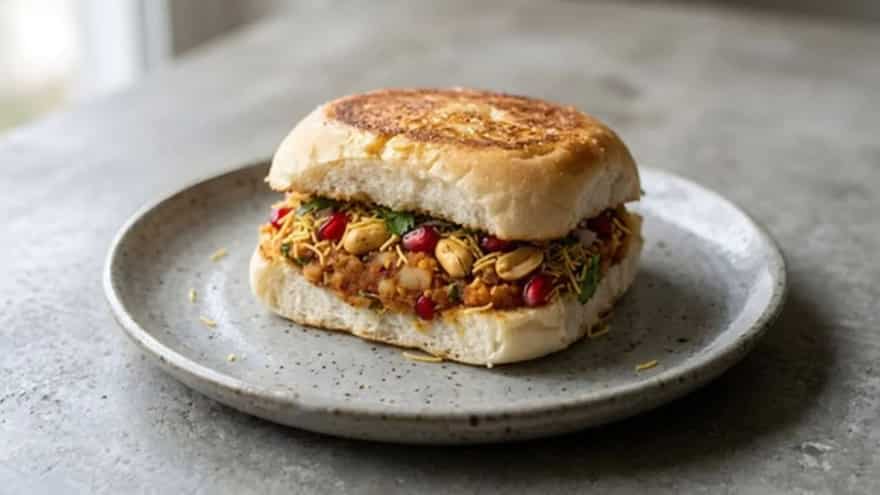
Image credit: Magnific
Ahmedabad: Café Culture Beyond Manek Chowk
Manek Chowk is still doing what it has always done, turning a jewellery market into a food lane after dark, and street fare such as fafda jalebi, khaman, dabeli and chaat remains the city's everyday comfort. But Ahmedabad is also the most experimental of the four cities, and its newer cafés are broadening the idea of an evening out.
Walking Beans is bringing a coffee window format, with Vietnamese cold brew, iced matcha and a signature Introvert Mojito. Tan Coffee is pairing speciality coffee with cheesecake and croissants, a coffee and dessert outing rather than a full meal. Dough and Doppio is putting Neapolitan pizza beside a cardamom latte, an almond praline espresso shot and a cascara-infused cold brew, a pairing that feels curated rather than accidental. Dellure is treating dessert as the main event, with handcrafted sweets, signature shakes and seasonal desserts, while O'Vanta and Vyanj are reaching further, one with an immersive dining experience of projection, sound and aroma, the other with reimagined vegetarian Indian food cooked over open fire.
Taken together, these openings describe a city that is moving beyond the standard coffee and sandwich formula and towards specialisation: speciality coffee, dessert studios, global comfort food, modern vegetarian dining and social drinks such as matcha and mocktails. It would be unwise to say every category is growing equally, but as a map of what newer cafés are offering during a festival that keeps people out late, it is a useful one.
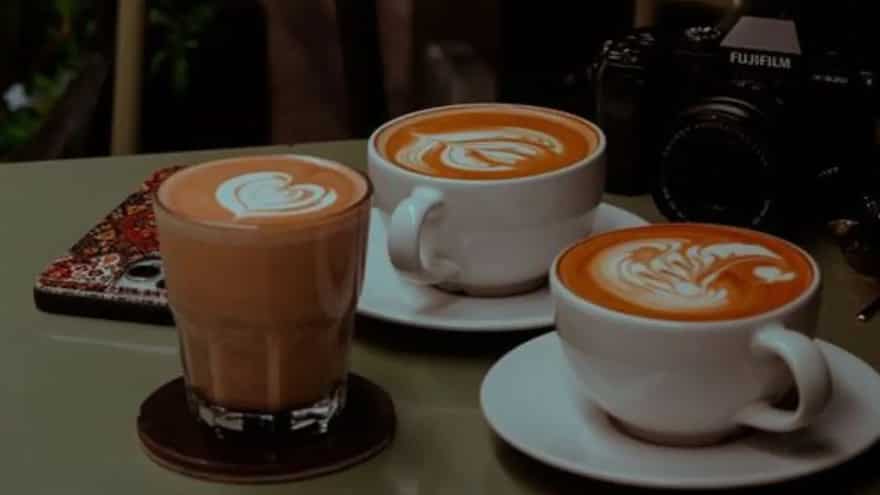 Image credit: Pexels
The Ube Wave: Purple, Plant Based And Vrat Friendly
If one flavour is quietly stealing attention, it is ube. Indian searches for the purple yam began climbing in April and reached an all-time high in August, according to The Economic Times on 4 October, with Gujarat among the states showing strong interest between June and August. Cafés are turning it into lattes, coconut drinks, cheesecakes and gelato, and Starbucks introduced an Ube Coconut Latte and an Ube Coconut Iced Shaken Espresso in India in August.
The appeal at Navratri feels almost self-evident. This is a festival of mirror work, bandhani and colour-coordinated outfits, and a violet drink fits that visual language beautifully, particularly for a café stop before or after garba. It is also a gentle adventure. An ube latte still reads as a milky, familiar coffee, and an ube coconut shake is easy to understand at a glance. The colour is new, the format is safe
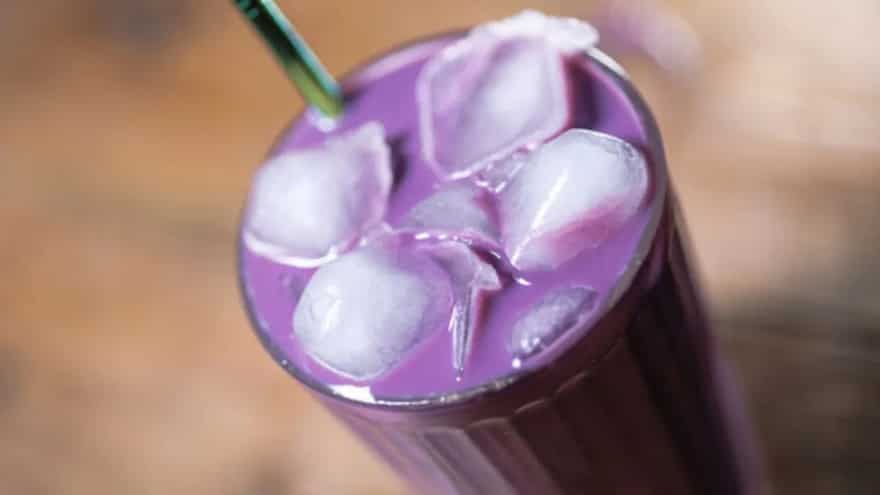 Image credit: Adobe Stock
There is a second, quieter reason it suits this particular week: ube is vrat friendly in spirit. Yam, including purple yam, is among the vegetables traditionally permitted during a Navratri fast, and Gujarati kitchens already know the tuber well, through farali ratalu, a spiced purple yam and peanut stir fry made with rock salt, and the ratalu that finds its way into undhiyu. Ube belongs to the same yam family, which makes a purple drink or dessert feel less like a departure and more like a familiar ingredient in a new outfit. For someone observing a vrat who still wants to join friends at a café, it offers something that looks celebratory and sits comfortably within the spirit of the fast.
A fair caveat is needed. Fasting rules vary across communities, and what is in the glass matters as much as the yam. Many café versions are made with flavoured syrups or powders rather than real ube, and these often taste closer to vanilla than to the yam itself, with real ube being mildly sweet, earthy and nutty. So the interesting question is whether Gujarat is embracing ube as an ingredient or simply the promise of a pretty purple glass, and anyone fasting strictly should ask what goes into the drink.
Farali Plates: Fasting Food That Refuses to Be Plain
Not everyone is eating cheese-laden noodles at midnight, of course. Many are fasting, and farali kitchens are being wonderfully inventive. Amaranth flour, barnyard millet flour and rock salt form the base of much of the fasting pantry, and sabudana, buckwheat flour, water chestnut flour and makhana are turning up as vadas, pooris, halwas and puddings. Gujarati menus are adding their own flourishes: sabudana vada, makhana chaat, sweet potato chaat, rajgira tikki, singhara flour chila and the faraali pattice that is a favourite during the festival. Shakarkandi bateta nu shaak, a sweet potato and potato curry, is another home favourite for the nine days.
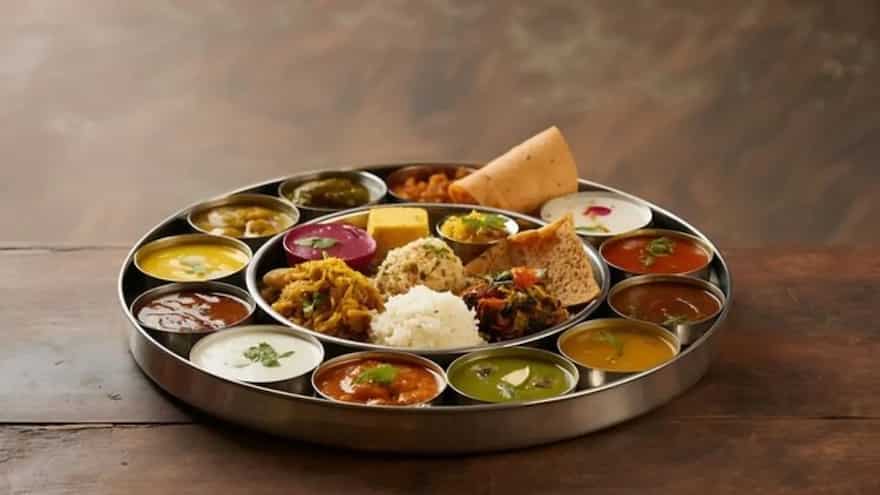
Image credit: Adobe Stock
Cafés and stalls are adapting quickly, since the person fasting by day is often the same person dancing by night. Some restaurants now invite diners to specify their vrat dietary instructions while ordering, a small detail that speaks volumes about how Gujarat is serving this festival: devoutly, inventively and with an eye on every kind of appetite.




