


 Share
Share

On the fifth day of Navratri, devotees worship Goddess Kushmanda, who is regarded as the form of Durga responsible for creating the universe with her divine smile. She is believed to radiate warmth and strength, and her worship is associated with health, vitality, and inner light. The symbolic colour of this day is green, representing growth, renewal, and balance.
Preparing bhog in her honour is an important ritual, and families place great emphasis on making dishes that are sattvic, meaning pure, light, and free from onion, garlic, and heavy spices. The offerings are prepared with devotion and simplicity, using fresh and seasonal ingredients. Green vegetables, herbs, and fruits play an essential role in the dishes, while sweets prepared with green garnishes or natural colours are also considered auspicious. After the offering, the bhog is shared as prasad among family members and devotees, which brings the community together in celebration.
On this day, savoury dishes bring nourishment, and sweets add joy, completing the bhog in a balanced manner. Below are five recipe ideas that reflect the symbolic use of green and are suitable as offerings to Goddess Kushmanda.
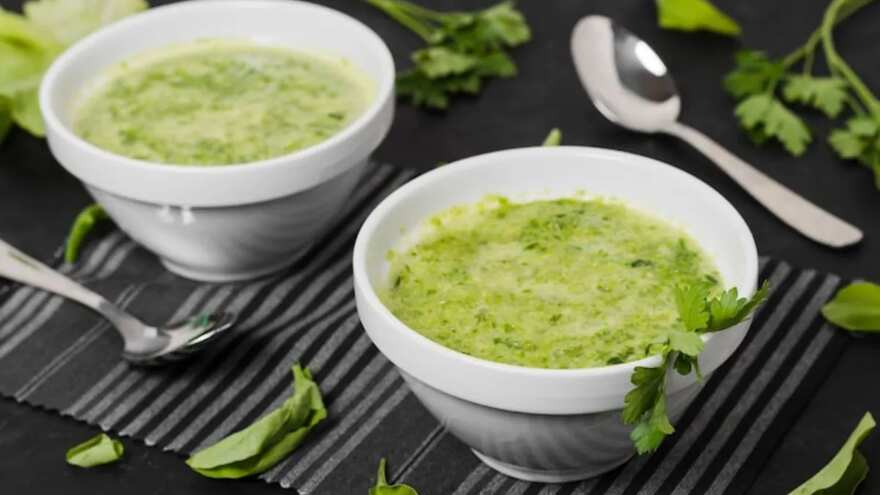
1. Palak Khichdi (Sattvic Style)
Palak khichdi is a wholesome dish prepared with rice, spinach puree, and a small portion of yellow moong dal. The spinach lends a bright green colour, while the rice and dal create a light, filling texture. A gentle tempering of cumin seeds in ghee enhances the flavour, and rock salt is used instead of regular salt to follow fasting traditions. The dish is sattvic, nourishing, and symbolic of vitality, making it an ideal green bhog offering.

2. Pista Barfi
Pista barfi is a festive sweet that fits well with the green theme of this day. Finely ground pistachios are cooked with milk, sugar, and a touch of ghee until they form a smooth mixture, which is then set into squares or diamonds. The barfi has a natural green shade from the pistachios, making it visually appealing and symbolic. Garnishing with silver varq or additional sliced pistachios enhances its festive look. Offering pista barfi as part of the bhog signifies prosperity and auspiciousness, while also delighting devotees when shared as prasad.

3. Green Coconut Chutney With Sama Rice Idli
Sama rice idlis are light and commonly prepared during fasting periods, and when paired with fresh green coconut chutney they form a sattvic dish for the offering. The chutney is made from grated coconut blended with coriander leaves, roasted peanuts, and a hint of green chilli, all seasoned with rock salt. This chutney brings the essential green element to the plate. When served with fluffy millet idlis, it creates a wholesome and festive offering that balances taste, nutrition, and tradition.
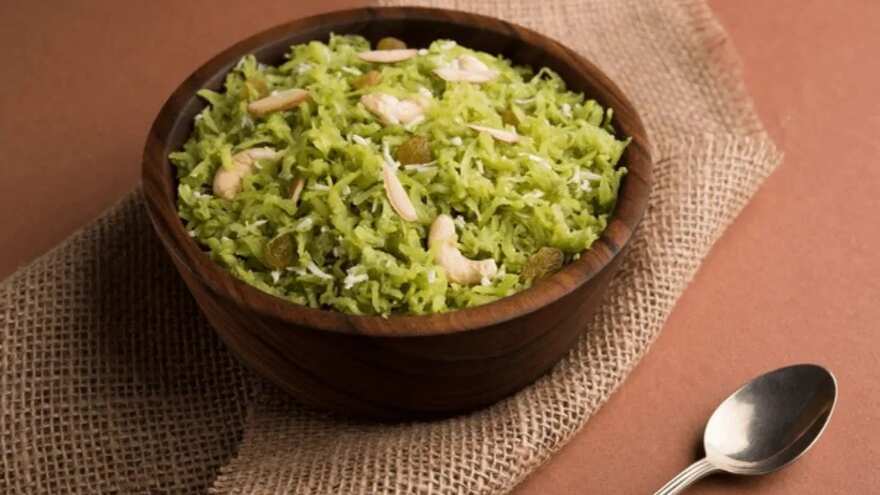
4. Lauki Halwa With Pistachio Garnish
Lauki halwa is a traditional sweet that suits Navratri bhog perfectly. Grated bottle gourd is cooked slowly in milk until tender, then sweetened with sugar or jaggery and finished with ghee. Chopped pistachios are added on top, giving a fresh green garnish that matches the day’s significance. The halwa carries a natural pale green shade from the lauki itself and becomes richer with the nuts. It is often offered as the main sweet dish of the bhog, representing gratitude and devotion.
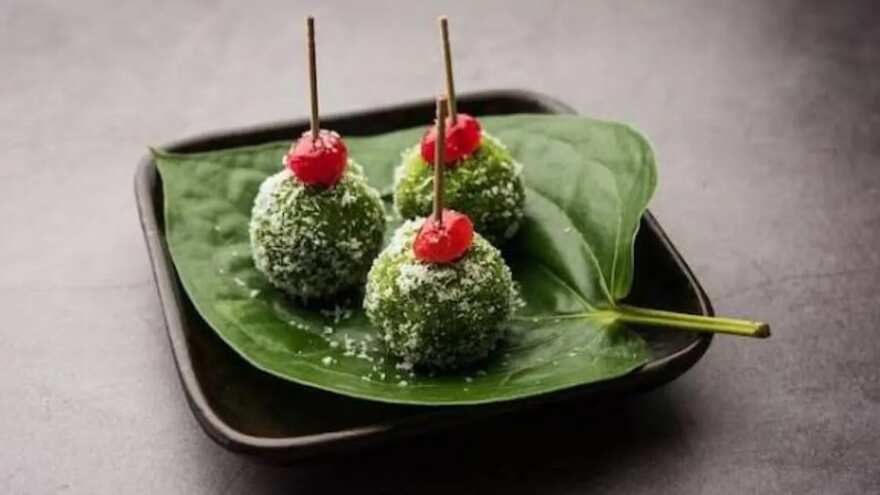
5. Paan Ladoo
For a unique sweet preparation, paan ladoos are both symbolic and festive. Fresh betel leaves are ground into a paste and combined with desiccated coconut, condensed milk, and cardamom. The mixture is shaped into small ladoos and rolled in finely chopped pistachios. The green colour of the paan makes these ladoos visually aligned with the bhog of the day. Their refreshing taste and festive appearance make them a creative addition to the offerings while staying sattvic and suitable for worship.




