


 Share
Share

Food in India often carries meaning far beyond nutrition, shaped by traditions, rituals, and cosmic timings. This becomes particularly visible when a solar or lunar eclipse coincides with religious festivals. An eclipse creates restrictions around what can be eaten, what must be avoided, and how food should be handled, while Navratri fasting opens a different set of guidelines where certain ingredients, previously set aside, take centre stage. Both practices are shaped by a blend of religious scriptures, astrological beliefs, and cultural continuity that has been carried forward for generations. The contrast between foods considered inauspicious during an eclipse and those regarded as pure for Navratri fasting shows how India’s relationship with food is deeply connected to time, place, and cosmic alignment.
Foods Avoided During An Eclipse
Traditional Hindu belief regards an eclipse as a period of impurity, with foods exposed during the eclipse considered unsafe to consume. Ancient texts such as the Manusmriti and Dharmaśāstras mention that food kept out during the eclipse absorbs negative energy. For this reason, people cover cooked meals, store raw ingredients, and even discard perishable items prepared before the eclipse. Staples like rice, pulses, milk, and cooked vegetables are generally avoided once exposed to the eclipse’s duration. To protect food, a few drops of tulsi leaves or darbha grass are placed in water, milk, and cooked dishes, as these are believed to counter harmful influences. Scientific reasoning has also shaped practice, since an eclipse involves long hours without sunlight, which accelerates bacterial growth in perishable food. The belief system combines both spiritual caution and practical preservation, leading families to fast or prepare fresh meals only after the eclipse ends.

Foods Prepared After An Eclipse
Once the eclipse concludes, kitchens often come alive with fresh preparations. Traditional households prefer cooking new meals rather than reheating earlier food. Freshly boiled rice, hot chapatis, vegetable curries, and simple dals are prepared and shared as a way of marking renewal after the cosmic event. Ritual cleansing is also common, where utensils are washed thoroughly before cooking resumes. Fruits cut after the eclipse, milk boiled afresh, and clarified butter purified with tulsi leaves are consumed as a sign of purification. The belief that food made after the eclipse is spiritually clean has continued into modern kitchens as well, showing how ritual and hygiene together guide practice. In many communities, families break their eclipse fast with light foods, often khichdi, fruit, or milk-based dishes that are simple to digest after long hours of abstinence.
Foods For Navratri Fasting
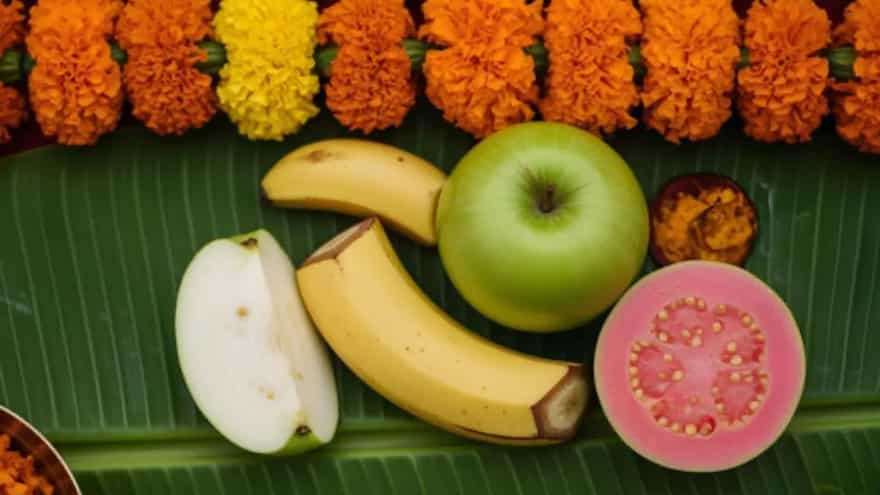
Navratri brings a very different set of food rules. While certain staples like rice and wheat are avoided, alternatives take their place, creating an entire menu designed for fasting yet still nourishing. Ingredients such as buckwheat flour, water chestnut flour, and amaranth flour replace wheat for rotis and pooris. Sabudana, or sago pearls, become central in dishes like khichdi, kheer, or vadas. Potatoes, sweet potatoes, arbi, and raw bananas are common vegetable bases, often shallow fried or cooked in ghee. Milk and milk products like paneer and curd are considered pure and are frequently used in fasting meals. Rock salt substitutes regular iodised salt, aligning meals with the guidelines of ritual purity. Unlike eclipse restrictions, which discourage eating, Navratri fasting encourages disciplined consumption of carefully chosen foods.
Cultural Overlap And Contrast
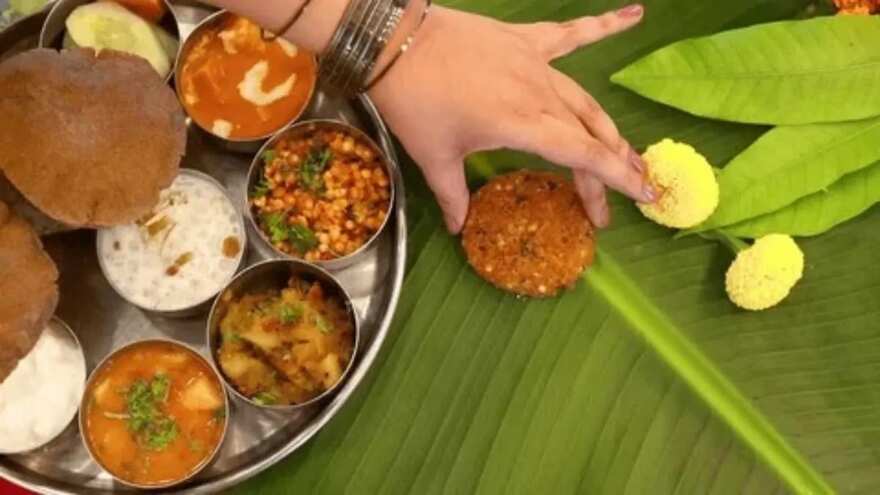
The difference between eclipse foods and Navratri foods reflects more than dietary regulation. The eclipse emphasises caution and restraint, encouraging households to pause cooking and avoid what is seen as spiritually or physically unsafe. Navratri, however, celebrates devotion through controlled indulgence, where fasting foods are prepared with creativity and shared as part of daily worship. One highlights avoidance and discarding, while the other highlights substitution and renewal. Interestingly, both practices share the theme of purification, since in both cases food is believed to connect directly with the cosmic order and the body’s inner state. The idea that meals are influenced by celestial alignments runs across both traditions, showing how strongly time and season guide the Indian kitchen.
Modern Practice And Continuity
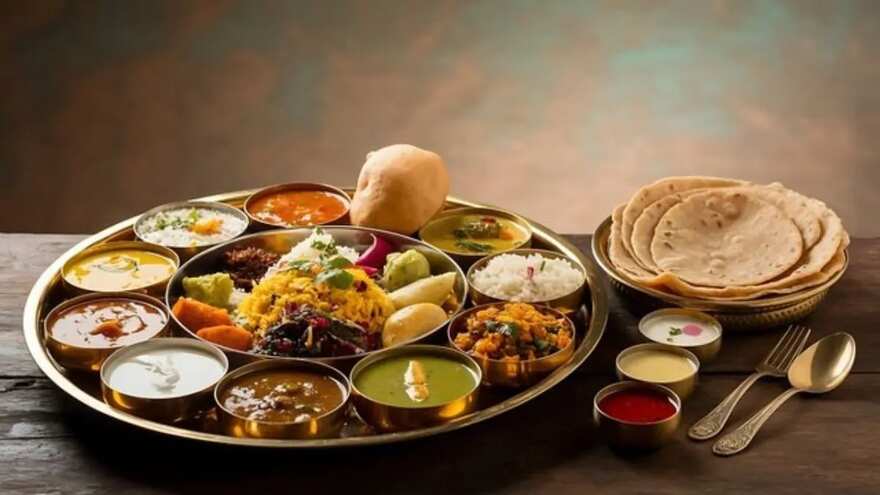
Today, many urban households continue to follow these customs, even while adjusting to modern lifestyles. Families may not discard every ingredient after an eclipse, yet many still avoid eating during its duration. Similarly, Navratri fasting menus have expanded in restaurants and packaged foods, offering ready mixes for sabudana khichdi or kuttu flour snacks, keeping tradition alive in new forms. Scientists have often explained eclipse restrictions as practices rooted in hygiene, while Navratri food rules are linked with seasonal produce that supports digestion during the change from monsoon to autumn. These explanations have not replaced the ritual importance, but instead coexist with it, keeping both science and spirituality present in the way people eat. The continuity of these traditions reflects how food practices in India are less about individual choice and more about collective culture shaped by faith, environment, and time.




