


 Share
Share

Amongst the many naivedyams or offerings that are made to goddess Durga during the nine days of Navratri across Tamil Nadu, the kesari occupies a special place - much like the sundal - due to its multiple variations. Typically made using semolina, sugar, ghee, dry fruits and scented with cardamom - the kesari is similar in composition to the North Indian halwa or Maharashtrian sheera. Eaten as dessert after a meal or as a snack alongside fritters during tea time, the kesari is one of the few sweet offerings that is also reserved for special occasions and festivities.
Kesari Bath
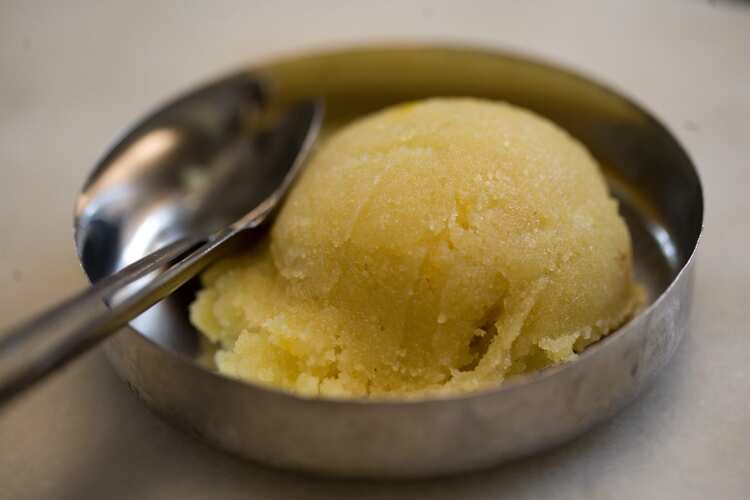
Image Credits: Flickr
A popular variation originating in the state of Karnataka, the kesari bath is made using chiroti rava - known for its delicate texture, finer grain and slightly nuttier flavour than regular semolina. Yellow in colour and studded with halved, toasted cashews, the delicacy is served in the form of a small scoop, deriving its key flavour from the use of saffron instead of cardamom or other dry, whole spices.
Paal Kesari
Unlike the bright yellow of the kesari bath, paal kesari uses a foundation of milk instead of water for the semolina to cook in - resulting in a creamier, richer texture and less granulation. Some versions of the recipe also add a small amount of condensed milk to enrich the dairy flavour, which is further highlighted with a pinch of crushed cardamom as well as a few strands of saffron.
Aval Kesari
A popular prasadam option in temples, the aval kesari replaces semolina altogether and uses beaten rice or poha as its key ingredient, along with jaggery as the primary sweetener. The consistency of this version is much thicker and drier than its semolina variants, making it easy to hold and eat while also making it portable in the palms of hands. The caramelised flavour derived from the jaggery also adds depth of flavour to the preparation, which is also finished with a pinch of clove powder or infused with whole cloves.
Also Read:
Semiya Kesari
Wheat strands or semiya - also known as seviyan to most, do not require too much sugar or ghee when cooked in the form of this delicacy. The bright orange hue for the sweet is obtained from using edible food colouring, and is one of the more underrated versions of the prasadam to be served during the festival. The texture of the semiya kesari retains the slight chew of the vermicelli, giving the noodles a softness that is different in comparison to when it is cooked with milk.
Thenga Kesari
A delicious amalgamation of semolina with freshly grated coconut, this kesari variety swaps the classic cashews with slivered almonds and raisins fried in ghee, until plump. For a dry ingredient like semolina, the fresh coconut provides not just flavour but also slight hydration due to the release of its natural juices while cooking. The thenga kesari is usually served with a sprinkle of fresh coconut on top and aromatised with cardamom sometimes, for a layered profile.
Pineapple Kesari
 Image Credits: Freepik
One of the most popular variations and celebrated delicacy, the pineapple kesari usually contains chunks of fresh or canned pineapple, bottled essence as well as the use of edible yellow food colouring for enhanced aesthetic appeal. Unlike the perception that fruit turns soggy when cooked, the chunks of pineapple retain their snap throughout the process while also adding a mellow tartness to an otherwise one-dimensional dessert.




