


 Share
Share

Nasranis of Kerala—more commonly known as Syrian Christians—are in essence the descendants of those baptised by St. Thomas the apostle. The traditional fare belonging to the community which blends local flavours with global culinary influences, is a product of India’s colonial history as well as cultural exchanges that took place as a result of trade. A significant aspect of the culinary landscape of the state, the distinct flavours of the food as well as preparation styles are distinctly native to the micro-cuisine. Predominantly occupying the central and southern parts of Kerala, Nasrani cuisine focusses on a variety of meats, fish, poultry as well as signature ingredients which make up for the vegetarian delicacies that are consumed during the period of abstinence or Lent.
Distinct Characteristics Of Nasrani Cuisine
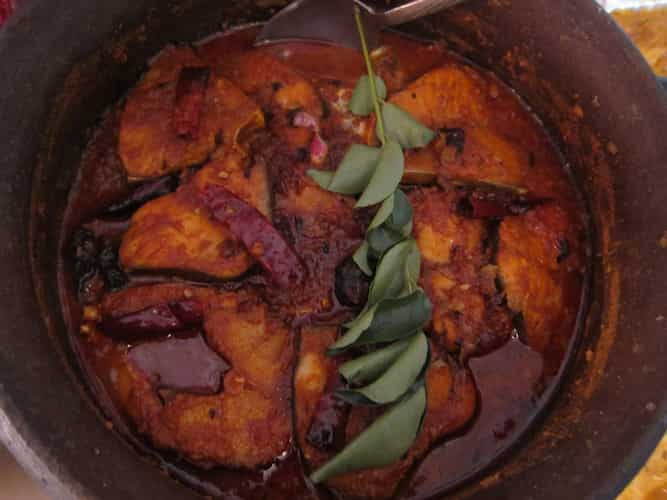
Image Credits: Wikimedia Commons
Similar to Goan food—that draws its influences from a plethora of colonisers—Nasrani cuisine blends slow-cooking techniques borrowed from these cultures and replaces certain elements with ingredients that are available in abundance, locally. For example, the dairy and cream heavy European stews transformed into coconut milk-forward curries due to the plentifulness of coconuts available within Kerala. Interweaving faith and culture across their preparations, the Nasranis celebrate the concept of a sadhya with their distinct non-vegetarian offerings while preserving the legacy of Hindu temple customs through the meatless dishes made specifically to offer in churches. Similarly, the utilisation of whole spices like cloves, cardamom, cinnamon and pepper is prevalent throughout their sweet and savoury preparations.
What also makes Nasrani cuisine interesting is how certain preparations dictate the mood of the occasion—vegetarian food is largely associated with mourning, whereas meat-heavy dishes symbolise celebratory moments. Although no ingredient is off limits to the community, the low availability of b**f meant that the consumption of the red meat wasn’t given as much importance or weightage. The rice-heavy preparations extended beyond simply boiling the grain to pair with curries, and became the foundation for a variety of appams, kozhukattas and pidis prepared for different instances. While banana leaf meals are commonplace across the state, Syrian Christians also prefer serving their meals on brass plates and cooking in bell metal pots.
Also Read:
Traditional Dishes Of Nasrani Cuisine
Appam
Considered to be one of the specialities of Syrian Christian cuisine—traditional appams are prepared in a dozen different variations. The kalappam—a circular pancake made using a fermented matta rice batter and coconut milk, has a spongy texture and slightly sweet flavour—making it ideal to pair with coconut-milk based stews or meaty curries. Lacy palappams—which are distinctly associated with the state’s cuisine, are a popular breakfast offering that is eating with a mild vegetable stew or egg roast. The Lent period observed by the Nasranis sees the preparation of the kalathappam or Pesaha appam, to mark Maundy Thursday, which is flavoured with fried shallots and baked or roasted to be eaten with a jaggery and coconut milk mixture.
Pidi
A popular offering of southern Kerala—pidi or rice balls are made using a local red rice variety which is crushed to make avalose podi. The podi—a mixture of ground roasted rice, cumin seeds, coconut, salt and sugar—is kneaded into a dough from which tiny balls are rolled and steamed. The pidi is best described as then pasta equivalent for the Nasrani community, and is mixed with chicken curry to be relished as a meal. The delicacy is usually served during Easter or Christmas as a special addition to the table along with other delicacies such as mango seed halwa, ela ada and idi erachi.
Marunnu Kanji/Kozhi Marunnu
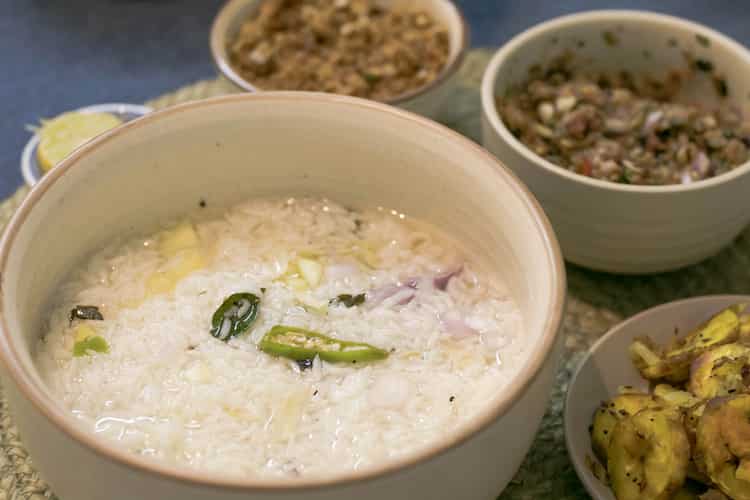
Image Credits: Wikimedia Commons
Consumed during the karkidakka period of the monsoon season, the rice gruel preparation flavoured with fenugreek seeds was consumed with the idea of fortifying the body’s immunity. The leg of goat or oxtail are usually used to enrich the broth, which is then flavoured with ghee and onions—considered to be a great meal option for new mothers in post-natal care. The black country chicken variety or naatu kozhi is also boiled with a concoction of medicinal herbs as a way of making the preparation gut-friendly for months when digestion might be slow.
Chemmeen Peera Pattichathu
What makes this prawn stir fry preparation distinct is the use of kokum as its key souring agent—unlike tamarind—which most South Indian cuisines utilise liberally. Tiny prawns are stir fried with pearl onions, ginger-garlic and green chillies before being given a tangy flavour boost from the mauve petals as well as a generous sprinkling of fresh coconut and curry leaves. The dry preparation, which serves as an accompaniment to meals cooked in a Syrian Christian household, is then rested for 20-30 minutes for the flavours to intermingle, before it is relished. The juxtaposition of sweet coconut with the tart kokum or kodampuli makes the preparation one that is staple.
Uppumanga Chammanthi
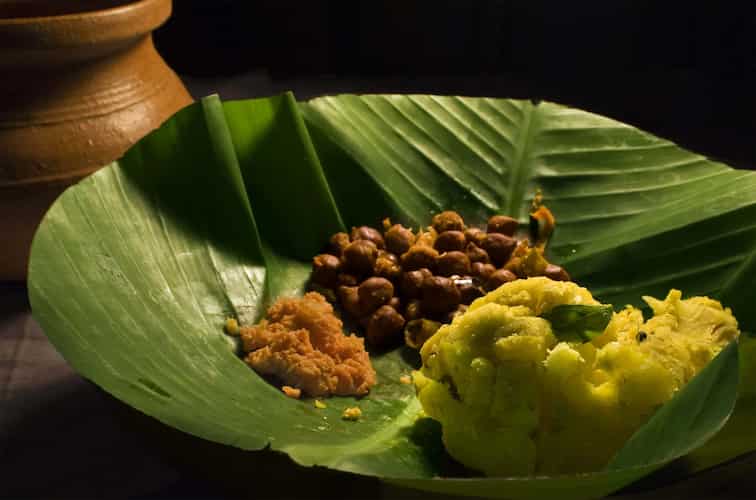
Image Credits: Wikimedia Commons
As is the case with most micro-cuisines that have their signature condiments, the uppumanga chammanthi or mango and coconut chutney uses brined raw mangoes to introduce a pronounced sourness to the preparation. Typically eaten with rice, the chammanthi is usually made as a replacement to curries, flavoured with ginger, shallots, uppilitta kanthari or pickled bird’s eye chillies and curry leaves. Unlike chutneys that are eaten with breakfast delicacies like idlis or dosas, the chammanthi does not require a tempering of mustard seeds and red chillies, due to its robust yet well-rounded flavours.




