


 Share
Share

Nag Panchami is celebrated on the Panchami tithi of the Shukla Paksha in the Hindu month of Sawan. This year, it falls on August 17, 2026. The festival is devoted to the worship of the nag devta and is associated with prayers for protection, prosperity and the well-being of the family. It also has a close association with Lord Shiva, who is traditionally pictured with a serpent around his neck.
Food or bhog prepared is an integral part of the day, but the offerings made are not the same across India. Different regions have their own sweets and preparations that are part of the naivedya or bhog. In Maharashtra, for example, Patholi and Khantoli are linked with Nag Panchami, whereas in Bengal, Raskadam is part of the bhog. These foods are enjoyable not because they are part of the bhog thali, but because their ingredients and cooking processes showcase the local food traditions at their best.
Patholi, Maharashtra
Patholi is a classic steamed sweet that is prepared in Maharashtra on the occasion of Nag Panchami. Patholi is basically prepared with a rice flour batter that is spread over fresh turmeric leaves and then filled with a mixture prepared of grated coconut, jaggery and cardamom. The leaves are then folded and cooked by steaming until the outer layer turns soft.
Patholi has a mild sweetness, with coconut giving it texture and the turmeric leaf adding a light earthy fragrance. More than just a festive sweet, it showcases Maharashtra’s approach of using seasonal ingredients and leaves in traditional cooking.
Tambittu, Karnataka
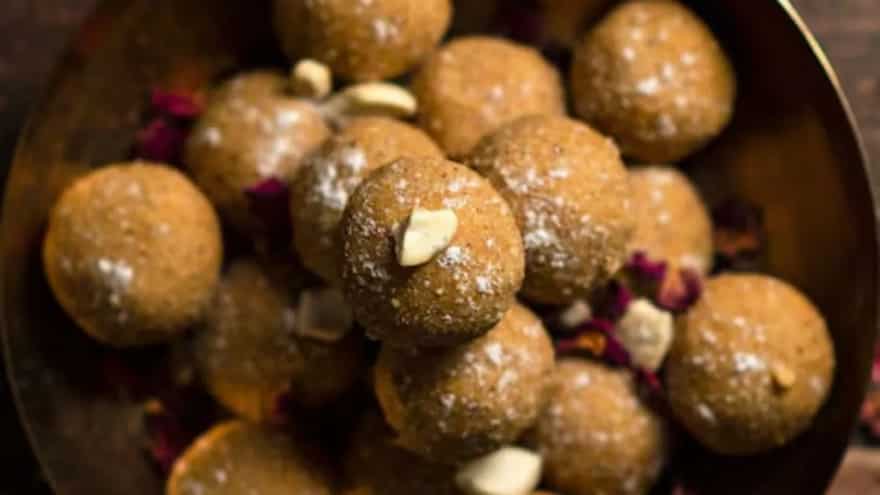
Tambittu is a traditional sweet dish prepared from roasted gram or besan and wheat flour, jaggery and ghee, with cardamom that is generally added for aroma. The ingredients are first roasted and blended with melted jaggery and ghee, and then shaped into small portions like ladoo.
It has a thick, a bit crumbly texture with a deep caramel-like sweetness from the jaggery and a nutty roasted flavour. Unlike the milk-based sweets, Tambittu is sturdy and holds its shape nicely. Apart from Nag Panchami, it is also prepared for many Hindu festivals and is associated with festive food traditions in Karnataka, where roasting the flour is key to creating its characteristic flavour.
(Credit: Freepik)
Raskadam, West Bengal
In West Bengal, Nag Panchami rituals are closely linked with Goddess Manasa, the serpent deity worshipped in many parts of the state. Raskadam is prepared using chhena and khoya, the two loved ingredients in Bengali sweet-making. The soft chhena adds a fresh, milky texture, whereas khoya gives richness and body to the sweet.
The sweet is completed with a coating that gives it its unique appearance and an additional layer of texture. Raskadam is especially impressive as it shows how regional confectionery traditions can evolve as a part of festival food, with the preparation deeply rooted in the long-standing expertise in fresh-cheese-based sweets.
Tilkut, Bihar
Tilkut is a classic Bihari sweet that is primarily made with roasted sesame seeds and sugar or jaggery. The sesame is carefully roasted, then ground and then combined with sugar or jaggery and pressed or shaped into small pieces. Its taste is dominated by the warm, nutty taste of sesame, whereas the sweetener gives it a deep, caramel-like taste.
Depending on how it is made, Tilkut can range from firm and a bit crunchy to more crumbly. Its charm lies in its simple preparation and intense sesame flavour, resulting in a sweet you cannot stop at just one bite.
Malpua, Uttar Pradesh
Malpua is a popular North Indian festive sweet across Uttar Pradesh and nearby regions. A batter prepared from refined flour and dairy ingredients is poured into hot ghee and then fried until the edges turn golden and the centre remains soft and cooked. It is then soaked in sugar syrup for a glossy, sweet finish.
The contrast in texture is what makes Malpua appealing: crisp, caramelised edges with a soft and rich centre. It is often served warm and is also paired with rabri for a more decadent experience. Its presence in festive offerings also showcases the broader North Indian custom of making fresh sweets for religious occasions and gatherings.




