


 Share
Share

Long before refrigerators and ready-to-eat meals became household staples, Indian kitchens thrived on sustainable, long-lasting food items. One such gem was moong dal vadi or mangodi, found in nearly every household across regions. These sun-dried nuggets, made from yellow moong lentils, could effortlessly transform a simple meal into a protein-packed delight.
Thanks to their long shelf life, moong dal vadis can last for a year or even longer if they are sun-dried properly from time to time. They are particularly handy during the monsoon season when people often avoid eating non-vegetarian foods or leafy greens. It is high time we revisited the wisdom of our ancestors, bringing back these forgotten treasures to make healthy, sustainable living a reality.
Why Were Moong Dal Vadis Made?
Moong dal vadis were typically prepared in arid and semi-arid regions like Rajasthan, Punjab, Haryana, and even in the drier parts of Maharashtra, such as Vidarbha and Marathwada. In these areas, extreme weather conditions often made it difficult to access fresh vegetables, and storing them without spoilage posed another challenge.
To overcome this, women would soak yellow moong dal, grind it into a thick paste, season it with spices, and shape it into small pieces. These would then be left out in the sun for several days to dry thoroughly. Summers were the ideal time for preparing large batches of vadis as the intense heat ensured proper drying.
This process was more than just a kitchen chore; it became a community activity. Women would gather to make huge quantities, exchange recipes, and often share their homemade batches, strengthening social bonds while ensuring food security for their families.
How Is Moong Dal Vadi Made?
Making Moong Dal Vadis at home is simple and requires just a few steps:
- Soak: Wash and soak split yellow moong dal for 4–6 hours until soft.
- Grind: Drain the water and grind the dal into a thick, smooth paste.
- Season: Mix in salt, asafoetida (hing), crushed cumin seeds, and a pinch of turmeric or chilli powder for added flavour.
- Shape: Using your fingers or a spoon, drop small lumps of the paste onto a clean cloth, steel plate, or tray.
- Dry: Leave them under strong sunlight for 2–3 days, turning occasionally, until completely dry and hard.
- Store: Once fully dried, store them in an airtight container in a cool, dry place. Properly dried vadis can last for months, even up to two years, with occasional sun exposure.
Also Read: Traditional Indian Moong Dal Ladoo Recipe To Try At Home
Recipes To Try With Moong Dal Vadi
Moong Dal Vadi Curry
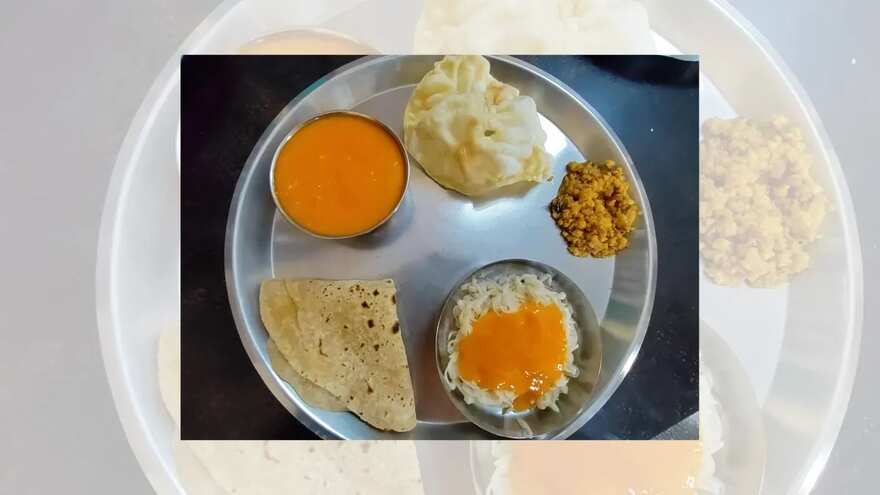
This classic North Indian dish features fried vadis simmered in a spiced onion-tomato gravy until they absorb the rich flavours. A Maharashtrian twist involves crushing the vadis before adding them to the curry, resulting in a textured, flavourful gravy. This is paired with aamras in Maharashtra.
Vade-Vange Tomato Curry
A traditional Maharashtrian recipe where crushed vadis are added to a brinjal curry. Cooked in an onion-tomato base, the vadis complement the brinjals perfectly, making the dish hearty and nutritious. This curry is ideal when there are just a few brinjals left in the kitchen.
Vadi Stir-Fry
For a quick snack, roast the vadis in a pan until crisp. Toss them with chopped onions, green chillies, chaat masala, and a squeeze of lemon juice for a crunchy and wholesome evening bite.
Moong Dal Vadi Pulao
Crush and boil vadis until slightly softened, then cook them with basmati rice, ghee, vegetables, and spices. These add a delightful crunch and a protein boost to your pulao, much like soya chunks do.
Health Benefits of Moong Dal Vadi
- A Protein Powerhouse: Moong dal is perfect for vegetarians and vegans seeking to increase their protein intake naturally.
- Rich in Fibre: It supports healthy digestion and helps manage cholesterol levels.
- Packed with Iron and Magnesium: It boosts energy production and promotes heart health.
- Low-Calorie and Nutrient-Dense: Moong dal is ideal for weight management while providing essential nutrients.
- Sustainable and Long-Lasting: This is a zero-waste food that stays good for years when stored properly.




