


 Share
Share

Across the Middle East, desserts have been shaped by centuries of culinary exchange, evolving through palace kitchens, bustling city bakeries, and household traditions. Many of the sweets known today draw from methods refined gradually over generations, with cooks incorporating slow heat, patient stirring, and careful handling of delicate ingredients such as semolina, clarified butter, floral waters, nuts, and cheese. These dishes travelled across regions through trade routes and cultural movement, acquiring small variations while maintaining their essential identities. Winter festivities often call for desserts that feel generous, thoughtfully crafted, and indulgent enough to sit on a celebratory table. Middle Eastern sweets align naturally with these needs. Their textures vary from crisp to creamy, from syrup-soaked to delicately set, introducing a sense of variety to a festive spread. Their longer and more deliberate methods of preparation suit the more slower pace of holiday cooking, and their presentation lends a sense of ceremony. The following seven desserts reflect long-standing culinary traditions and offer approachable ways for you to recreate them in your own kitchens.
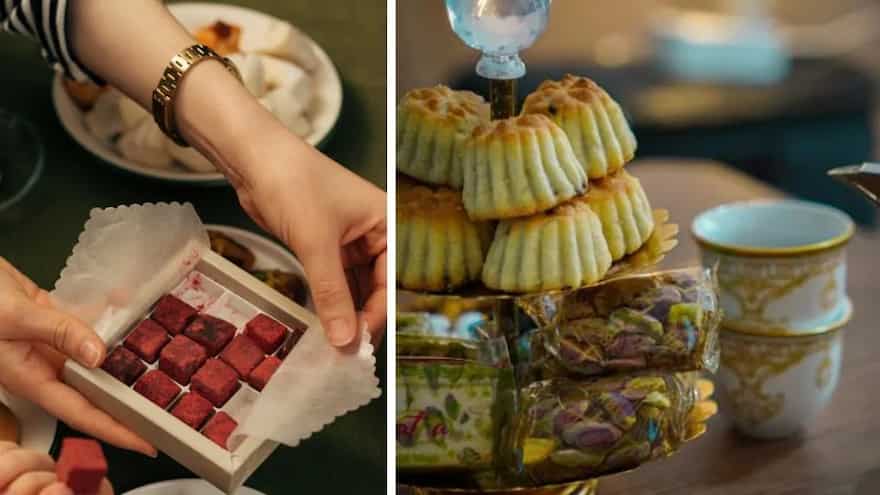
Image credit: Pexels
1. Turkish Delight (Lokum)
Turkish delight is a confection made by cooking sugar syrup with starch until it transforms into a firm, elastic mixture that sets into a smooth block. Classic versions are scented with rosewater, citrus, mastic, or pomegranate, and some contain nuts folded into the mixture before it sets. Making it at home requires careful attention to the thickening stage: sugar, water, and a little lemon juice are simmered until fully dissolved. Separately, cornflour is mixed with water to create a smooth slurry, which is then whisked gradually into the hot syrup. The mixture must cook long enough to become glossy and dense, pulling away slightly from the pan as it thickens. Rosewater or another flavouring is added at the end. It is poured into a lined tin, left to set completely, and then cut into cubes that are lightly coated with icing sugar mixed with cornflour so the pieces remain separate. The result is a soft, structured sweet that fits neatly onto a festive dessert tray.
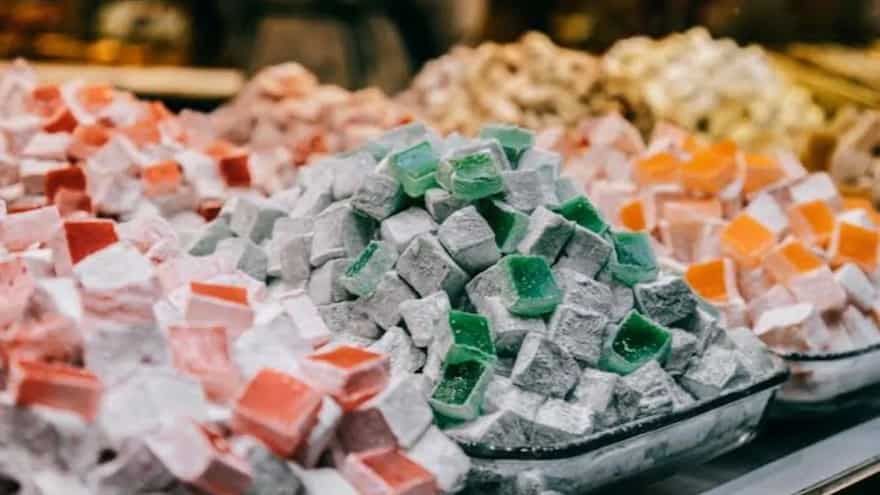
Image credit: Pexels
2. Baklava
Baklava is known for its layers of very thin phyllo pastry combined with clarified butter and chopped nuts. Pistachios or walnuts are most common, and the syrup poured over the baked pastry contributes both sweetness and moisture. To prepare baklava at home, ready-made phyllo sheets are stacked in a tray, each sheet brushed gently with melted butter to prevent tearing and ensure even browning. After several layers, a mixture of finely chopped nuts and sugar is spread evenly before more pastry layers are added. The entire stack is cut into diamonds or squares before baking so the syrup can penetrate easily later. Once the pastry turns golden and crisp, a warm syrup made from sugar, water, and lemon peel, or a small measure of orange blossom water, is poured over the hot tray. The syrup seeps through the cuts and settles between the layers. After resting, the pieces lift cleanly and hold their shape during serving.
3. Basbousa (Semolina Cake)
Basbousa is a semolina-based cake that appears in many parts of the Middle East, known for its moist, even texture and simple preparation. It is made by mixing coarse semolina with sugar, yoghurt, melted ghee or butter, and a small amount of baking powder. The mixture is spread into a baking tin, scored into squares or diamonds, and topped with almonds. Once baked, basbousa is firm enough to cut cleanly yet soft enough to absorb syrup. To make it at home, the semolina batter should rest briefly after mixing to allow the grains to take in some of the yoghurt and butter. After baking to a light golden colour, warm sugar syrup is poured over the hot cake so it absorbs gradually without becoming overly soft. The pieces are left in the tray until they cool, allowing the syrup to distribute evenly. Basbousa holds well for long evenings and adds a calm counterpoint to pastries with more layered textures.
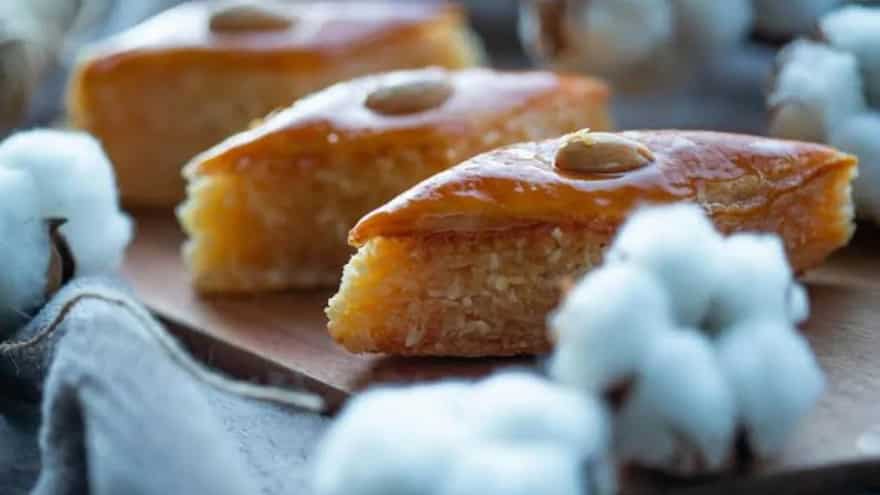
Image credit: Pexels
4. Kunafa (Knafeh)
Kunafa uses fine, hair-like strands of kataifi pastry arranged around a cheese or cream filling. Several traditional cheeses are used across the region, though the ideal choice is one that softens without turning runny. To prepare kunafa at home, the kataifi pastry is first pulled apart gently to loosen the strands. Melted butter is worked through the pastry so it becomes evenly coated and crisp during baking. Half of the pastry is pressed into the base of a pan, followed by a layer of cheese or a thick cream mixture. The remaining pastry is placed on top and pressed lightly. During baking, the top turns golden and crisp while the filling softens. A warm syrup is poured over the kunafa immediately after it leaves the oven so it anchors the flavour without saturating the pastry. Crushed pistachios are added for texture and colour. Kunafa is served warm, and the contrast between the crisp pastry and soft centre makes it a fitting addition to a winter table.
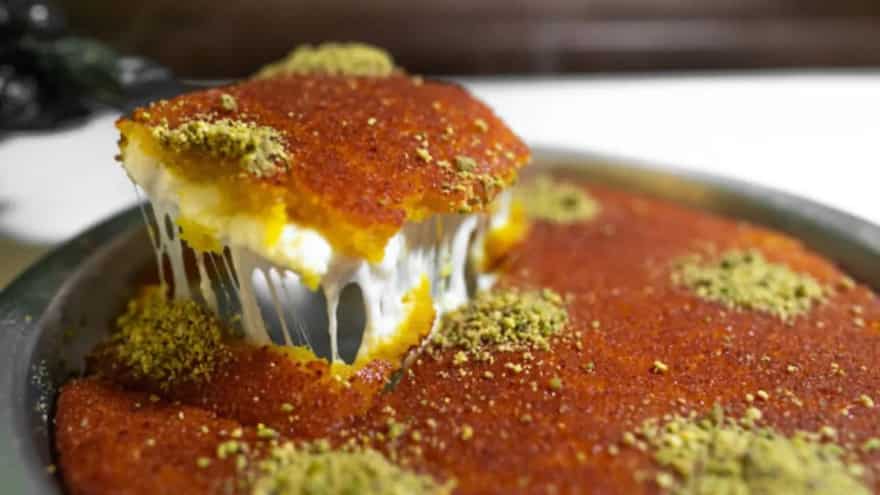
Image credit: Adobe Stock
5. Muhallebi (Milk Pudding)
Muhallebi is a long-standing milk pudding made by heating milk with sugar and thickening it with a starch slurry until it becomes smooth and spoonable. It holds its shape once cooled but remains delicate in texture. To prepare muhallebi at home, milk is warmed slowly in a pan. Cornflour is mixed with a little cold milk to create a smooth paste and whisked into the warm milk. The mixture is stirred continuously over gentle heat until it thickens evenly without lumps. At this stage, rosewater or orange blossom water may be added. The pudding is poured into bowls and allowed to cool fully. Once set, it can be topped with ground pistachios or a thin layer of syrup. Its calm flavour offers balance to richer desserts in a festive spread.
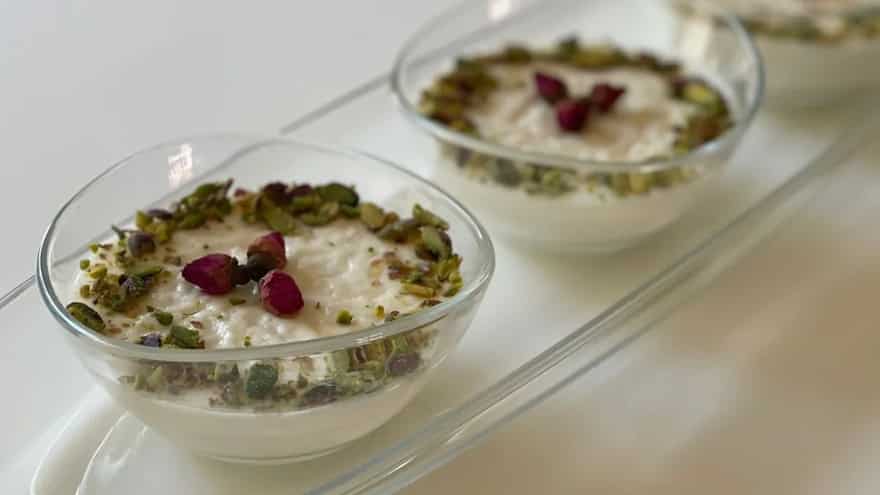
Image credit: Wikimedia Commons
6. Ma’amoul
Ma’amoul are filled biscuits associated with traditional celebrations across the Middle East. The dough is made from semolina or flour mixed with butter or ghee and sometimes a small amount of sugar or aromatic water for cohesion. The fillings usually consist of date paste or crushed nuts combined with sugar. To prepare them at home, the dough must be kneaded lightly so it stays soft and workable. Small portions of dough are flattened, filled with date paste or nut mixture, and sealed carefully. Traditional wooden moulds are used to shape and emboss each biscuit, though shaping by hand also works well. The biscuits are baked until firm but not deeply coloured. Once cooled, they can be dusted with icing sugar if desired. Ma’amoul hold their texture for several days, making them convenient during busy winter gatherings.
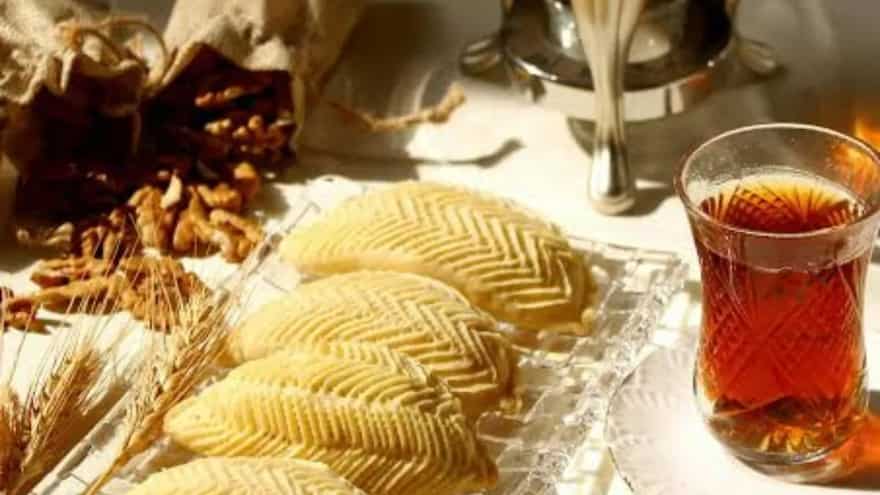
Image credit: Pexels
7. Ashta With Pistachios
Ashta is a thick cream preparation used widely across Middle Eastern desserts. Older methods involved collecting the cream skin that formed on slowly heated milk, while many current kitchens prepare it by simmering milk and cream together and thickening the mixture gently. For a home version, milk and cream are combined in a pan and brought to a slow simmer. A small amount of cornflour mixed with cold milk is whisked in to help the mixture thicken evenly. The cream is stirred until it becomes dense enough to hold soft peaks. Once cooled slightly, it is spooned into serving dishes and topped with crushed pistachios. Some cooks add a light drizzle of syrup to complement the cream’s richness. Ashta’s smooth texture makes it a fitting, understated choice for a winter dessert table.




