


 Share
Share

Introduction
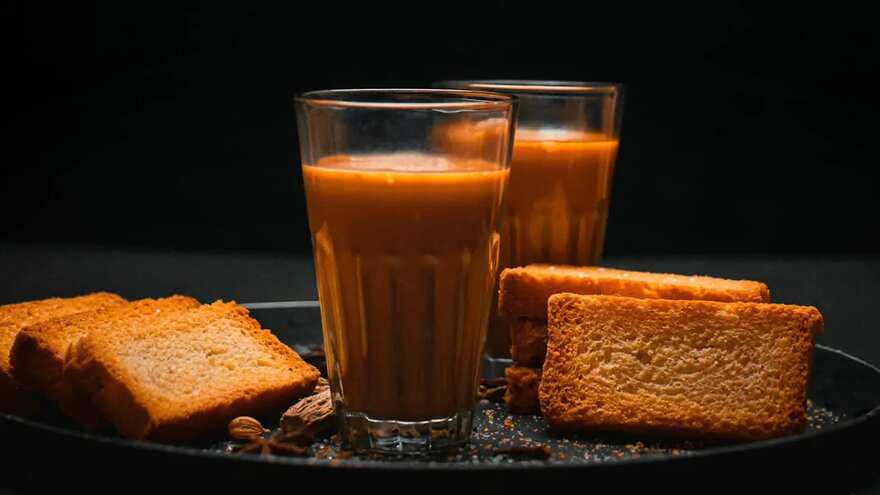
When it begins to rain, something stirs indoors before the first drop even lands. The breeze shifts, the scent of dust turns earthy, and almost automatically, someone puts water on the stove. Tea is made, usually the spiced kind, strong with ginger, cardamom, cloves or pepper, depending on who is making it. However, chai is rarely ever served without food. Gujaratis like something to go with their tea, especially during the monsoon. These are not elaborate dishes, nor are they made from complicated recipes. Here are a few favourites that appear again and again during the rainy season in Gujarati kitchens.
1. Bhajiya
Hot oil, a big bowl of besan batter and whatever vegetables happen to be lying around, this is how bhajiyas begin. Sliced potatoes, onions, green chillies, sometimes even fenugreek leaves or banana, are dipped in the batter and gently dropped into bubbling oil. The first ones always go too fast, barely cooled before being eaten. A plate of bhajiyas with a mildly sweet chutney and a large cup of masala chai is so common during monsoon evenings that most people don’t even think of it as a dish. It is simply what you eat when it rains.
2. Gaathiya with Fried Chillies and Sambharo
Gaathiya does not need much effort, and that may be part of why it is so loved. Made from chickpea flour, it is soft, pale and mildly spiced. What completes the experience are the sides, crisp fried chillies sprinkled with salt and sambharo, which is a lightly stir-fried mix of grated raw papaya, mustard seeds, turmeric and green chilli.
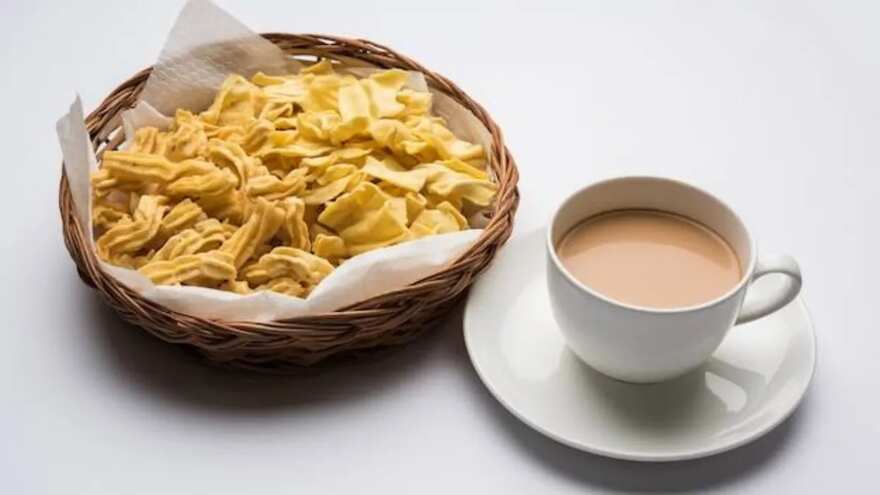 People eat this combination leaning over plates, sometimes while standing, sipping their chai in between bites. There is nothing delicate about it, but it brings a quiet kind of comfort, especially when the wind is wet and cool outside.
3. Methi Na Gota
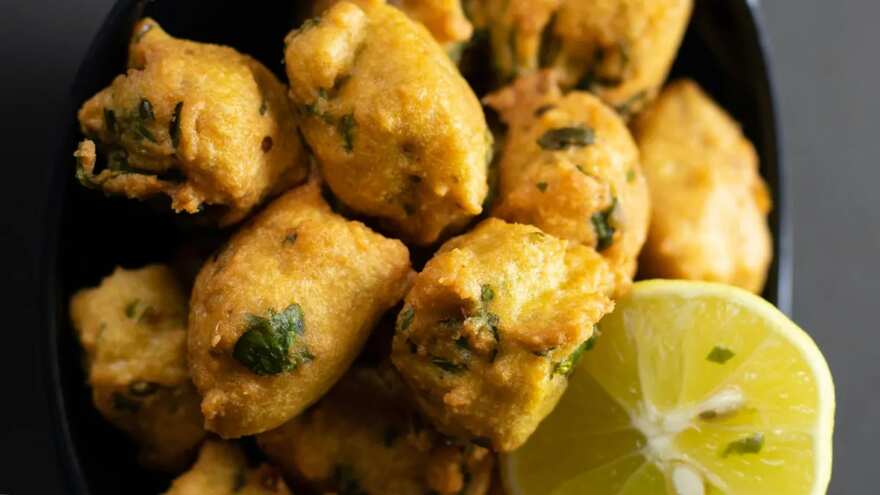
Small, round and golden, methi na gota are made from fenugreek leaves mixed into a seasoned gram flour batter. They puff up while frying and remain soft inside, especially when eaten straight from the pan.
A bit of sweet chutney or green coriander dip adds flavour, but most people will not wait for the accompaniments. A strong cup of tea alongside helps cut through the slight bitterness of the fenugreek, and somehow, even that bitterness feels warming when the rain is falling steadily outside.
4. Thepla with Pickle
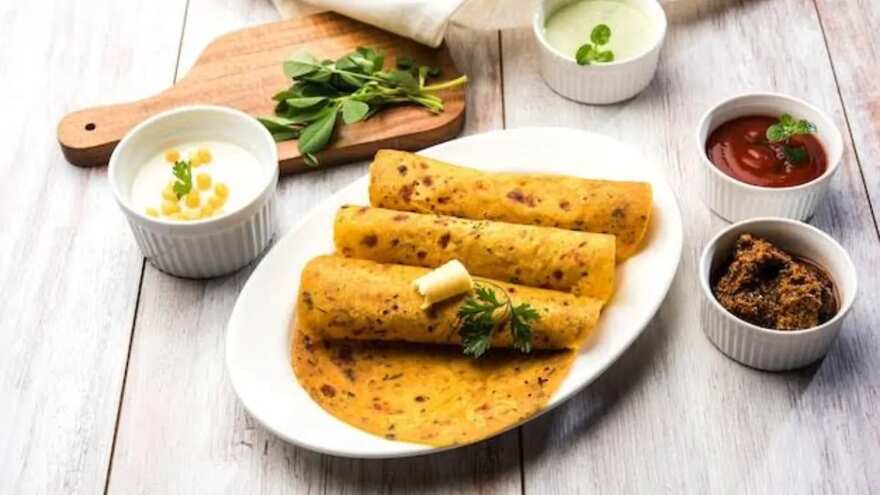
Not everything during the monsoon has to be deep-fried. Thepla, made with wheat flour, yoghurt, turmeric, chilli and fenugreek, is a staple in most Gujarati homes. Many keep it ready in the fridge, and on days when cooking seems like too much work, it is quickly reheated on a tawa.
Served with mango pickle or sweet lemon achar, thepla becomes more than just flatbread. It is dry enough to be eaten easily, without fuss, and masala chai brings warmth to its otherwise mild and earthy flavour. This combination is perfect for the evenings when people want something homely and filling but not too heavy.
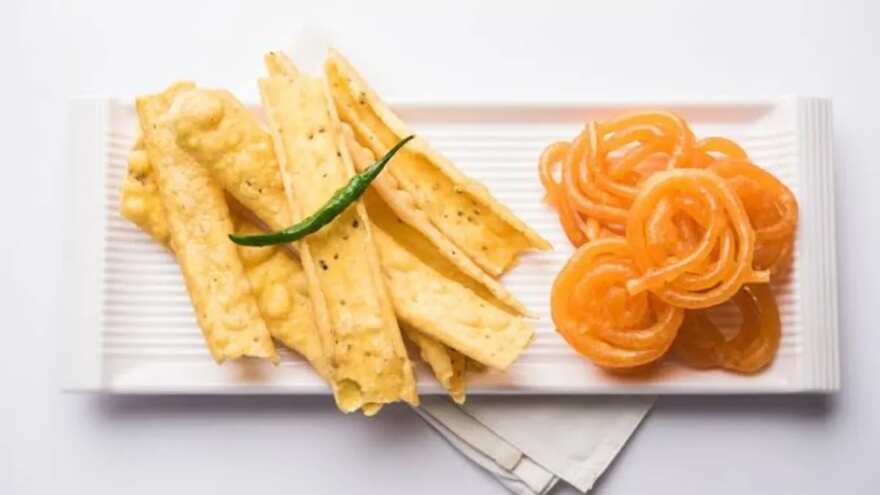
5. Fafda and Jalebi
Although traditionally eaten for Sunday breakfast, fafda and jalebi occasionally show up on rainy evenings too. Fafda is thin, crunchy and salty, made from besan with a hint of carom seed. Jalebi is, of course, the complete opposite, syrupy, sticky and sweet.
Surprisingly, the contrast works very well. Tea in this case helps balance everything out. The hot liquid cuts through the sugar of the jalebi and complements the crispiness of the fafda. For some, this pairing brings a sense of nostalgia. For others, it simply makes sense during the kind of downpour that keeps you indoors longer than expected.
6. Batata Poha
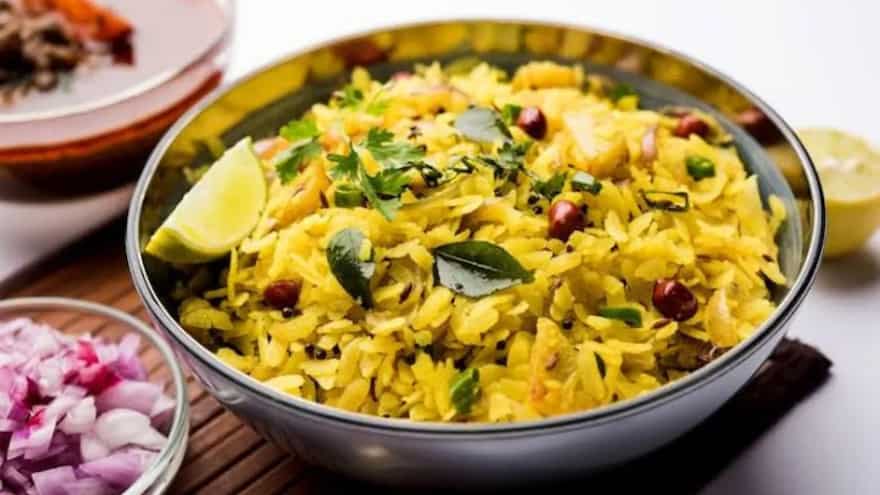
Poha is not specific to Gujarat, but the Gujarati version often includes diced boiled potatoes, roasted peanuts, mustard seeds and a squeeze of lemon towards the end.
During monsoon, people tend to spice it differently, adding cloves or cinnamon, perhaps even black pepper, to give it warmth. Chai pairs beautifully with this slightly spiced version. When served hot and soft, poha does not try to compete with the tea. Instead, it complements it quietly, especially for those who want something light and gentle on days when heavier food feels too much.
7. Tam Tam
Not every monsoon snack is freshly made at home. Sometimes it’s as simple as opening a big yellow tin or tearing open a paper packet from the corner store. Tam Tam, that spicy namkeen mix full of crunchy surprises, is something many Gujaratis grew up eating straight out of their grandparents’ tins.
There’s nothing fancy about it, just a mix of sev, gathiya, tiny fried sticks and maybe a cashew or two if you’re lucky. It’s dry, a little fiery, and perfect with tea that has extra milk and strong masala to balance the spice.
Conclusion
In Gujarat, masala chai is more than just something hot to drink. It is a rhythm, a pause, a way of sharing time and food with others. The snacks that go with it are not random. They come from practice, memory and a certain understanding of what makes a rainy day feel better.
When the skies turn grey and the smell of the first rain rises from the ground, the first thought is often of chai. And once the chai is made, the rest happens almost without thinking, someone fries something, someone warms the thepla, someone passes the pickle. There is talking, there is eating and somewhere in the background, the rain keeps falling.




