


 Share
Share

Makar Sankranti will be celebrated on January 14, 2026. The festival arrives with longer days, gentle sunlight, and kitchens that are filled with the aroma of melting jaggery. In this festival, gud or jaggery does not play a supporting role, but it takes centre stage. From the gud ladoos to bubbling jaggery syrups stirring slowly on the stove, Sankranti is a celebration of sweetness in its most natural form. Unlike refined sugar, jaggery has depth, earthy, smoky, and comforting, making it ideal for winter cooking. Gud warms up the body, helps in digestion, and pairs beautifully with sesame, lentils, wheat, or ghee and transforms into multiple festive dishes.
What makes Sankranti unique is how creatively jaggery is used: set in crisp chikkis, added on soft polis, simmered into shiras, or mixed into fillings. Every preparation is a reflection of regional wisdom and seasonal balance. More than just a sweetener, jaggery represents abundance, warmth, and the belief that life ahead is like gud, remains rich, healthy, and sweet.
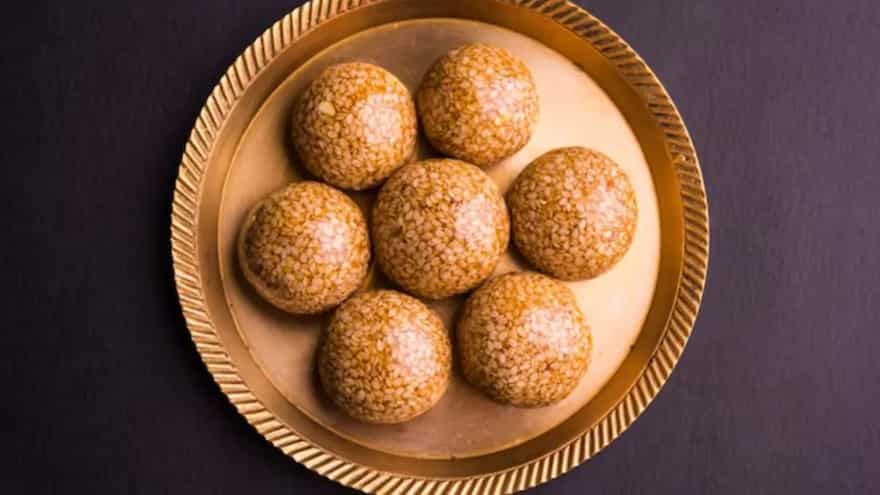
Til Gud Ladoo
Til gud ladoos are the heart and soul of Makar Sankranti, which represents warmth, sweetness, and togetherness. Sesame seeds maintain heat in the body, whereas jaggery perfectly maintains the winter dryness, exactly what the harvest festival honours. To prepare til gud, simply roast some white sesame seeds until aromatic, then mix them with some melted jaggery flavoured up with ghee and cardamom. While the mixture is still warm, roll out to make soft ladoos. Their nutty crunch and caramel-like sweetness make them a comforting and energising bite-sized sweet, perfect to be shared with your loved ones.
(Image credit: Freepik)
Gud Poli
Gud poli is a must-have in many Maharashtrian homes, delivering sweetness covered in warmth. Unlike many sugar-based desserts, jaggery gives a richer flavour and slow-releasing energy, which is ideal for winter. The filling is prepared by cooking grated jaggery with a little wheat flour and ghee until it gets a thick consistency, then flavoured with nutmeg or cardamom powder. This mixture is stuffed into the wheat dough, rolled out gently, and then cooked on a hot, sizzling tawa with ghee. The result is a thin, soft paratha or poli having molten jaggery in the centre that feels pleasing as well as nourishing.
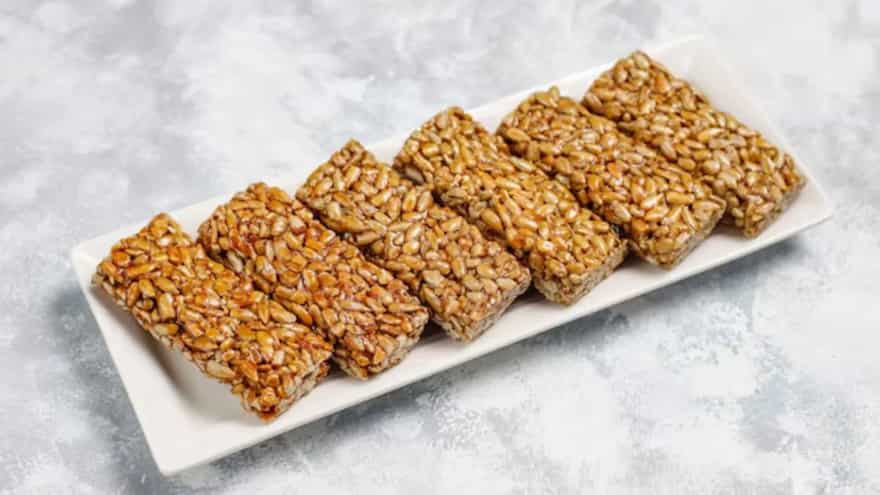
Tilachi Chikki
Til chikki prepared with gud is crispy and deeply rooted in Sankranti traditions. It represents the harvest season and the transition toward longer, sunnier days. Jaggery is melted slowly until it turns frothy, then roasted sesame seeds are mixed in quickly, and then the mixture is spread thinly. Once the mixture is set, it is cut into square pieces. The contrast of crunchy sesame and sticky jaggery makes every bite pleasurable. Filled with calcium and iron, tilachi chikki is not just a sweet delight but a winter snack that is shared during the kite-flying frenzy.
(Image credit: Freepik)
Gud Shira
Gud shira substitutes sugar with jaggery to make a dessert that feels both festive and wholesome. During the festival of Sankranti, warm, ghee-rich dishes are preferred, and this sweet dish fits in perfectly. Semolina or suji is roasted slowly in ghee until it turns nutty, then cooked with water or milk and sweetened with jaggery, adding depth to it instead of sharp sweet notes. Garnish it with cardamom, nuts, and gud shira is soft, comforting, and fragrant. It’s often served as prasad, representing abundance, warmth, and the sweetness desired for the coming season.
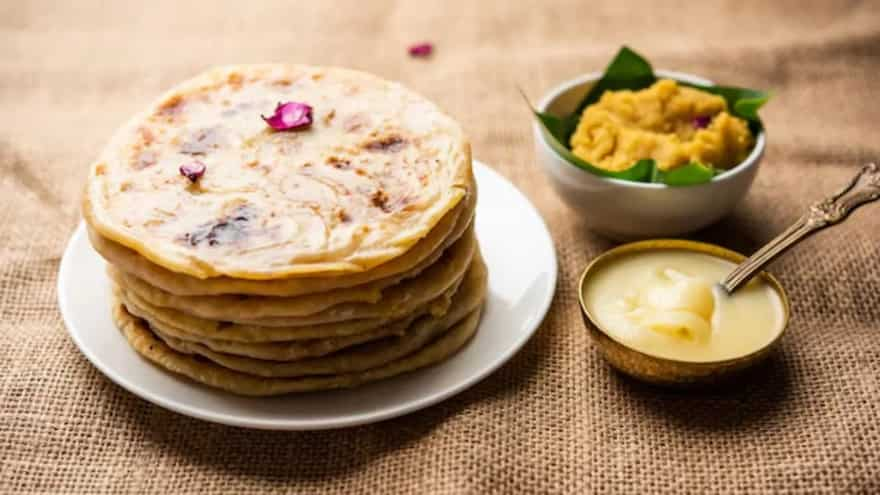
Puran With Gud
Puran prepared with jaggery is a Sankranti favourite in many regions, which celebrates harvest grains as well as natural sweetness. Chana dal is cooked until it turns soft, mashed, and sweetened with gud in place of sugar, then seasoned gently with cardamom as well as nutmeg. This filling can also be used for puran poli or can be enjoyed on its own. Jaggery enhances the taste of lentils, making the dish extremely satisfying as well as warming. High in protein and iron, this gud-based puran depicts Sankranti’s true meaning of nourishment, tradition, aandcelebration.
(Image credit: Freepik)




