


 Share
Share

Mahashivratri is one of the most sacred festivals in the Hindu religion. On this day, devotees pray to Lord Shiva for good health, fortune and prosperity. Indian Kitchens on this day smell different too, with lighter and calmer food being prepared not for indulgence but for keeping the body and mind in balance. For many households, Mahashivratri is less about following the strict rules and more about preference: eating mindfully, keeping the body relaxed, and staying awake with meaning as the night unfolds.
Recipes that are cooked on this day are picked carefully, are gentle on the stomach, nourishing enough to support long fasting hours, and deeply connected to the tradition. Whether you keep a day-long fast or follow a simple vrat meal, the food of Mahashivratri displays the spirit of the occasion, which is simple, thoughtful, and extremely comforting.
Mahashivratri 2026: Date And Significance
This year, Mahashivratri 2026 will be celebrated on February 13, 2026. Shivratri means the night that is dedicated to Lord Shiva, representing inner peace, spiritual awakening, and self-discipline. Unlike other festivals that are celebrated during the day, Mahashivratri is celebrated especially at night. Devotees have a belief that this is when the celestial energies are at their peak, making meditation, fasting, and devotion particularly powerful. Many people also observe a day-long fast, whereas others pursue a fruit-and-milk-based vrat, concentrating on simplicity, purity, and mindful eating.
Vrat Rituals Followed On Mahashivratri
Keeping fast on Mahashivratri is often seen as an act of purification, i.e. physical as well as mental. Devotees often begin the day with taking an early bath, followed by prayers. Some people observe nirjala vrat (without water), while others have fruits, milk, nuts, and also some vrat-friendly dishes. Key to the Mahashivratri ritual is the Rudrabhisek of the Shivling with milk, water, honey, and bel leaves. Staying awake at night and chanting “Om Namah Shivaya,” and eating light sattvic food help in maintaining the energy without breaking the spiritual discipline observed during the day.
Traditional Mahashivratri Vrat Recipes
Given below are the traditional vrat recipes you can try for Mahashivrati if you are observing fast on this day:
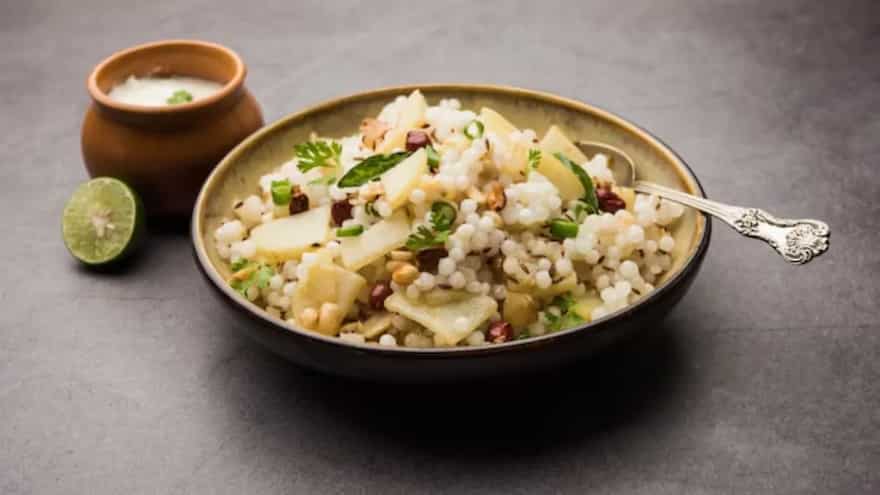
1. Sabudana Khichdi
Ingredients:
1 cup sabudana
½ cup roasted peanuts, crushed
1 boiled potato, diced
1 tbsp ghee
1 tsp cumin seeds
Green chillies, salt, lemon juice
Steps:
Step 1
Soak sabudana overnight or about 4–5 hours until it turns soft and fluffy, but not mushy. Drain it thoroughly to avoid any stickiness during cooking.
Step 2
In a pan, heat ghee, add cumin seeds, and let them crackle gently. Do not keep the flame very high, as it can burn.
Step 3
Once the cumin seeds have been crackled gently, add green chillies and sliced potatoes to it. Sauté everything lightly until the potatoes get coated with ghee.
Step 4
Add the soaked sabudana and crushed peanuts to this and stir gently on a low flame.
Step 5
Add the rock salt to this and cook until the pearls turn translucent and get separated and are not clinging onto each other.
Step 6
In the end, finish it with lemon juice and serve hot for a fasting-friendly, satisfying meal.
(Image credit: Freepik)
2. Kuttu Ki Poori
Ingredients:
1 cup kuttu flour
1 boiled potato, mashed
Rock salt, water
Oil for frying
Step 1
In a mixing bowl, add kuttu flour, mashed potato, salt, and water to make a soft but firm dough.
Step 2
Divide the dough into small equal portions and roll it gently with the help of a rolling pin. Do not press too hard, as the dough will be soft and it might break in between.
Step 3
In a pan, heat oil on medium flame. Check by putting a pinch of dough from above to check if the oil is ready enough to fry the pooris.
Step 4
Once the oil is sufficiently hot, slide the poori carefully into the oil. Fry until it turns crisp and golden on both sides.
Step 5
Flip and cook from both sides until the pooris puff up slightly.
Step 6
Drain on tissue paper and serve hot with vrat aloo sabzi and curd to make a proper vrat wali thali.
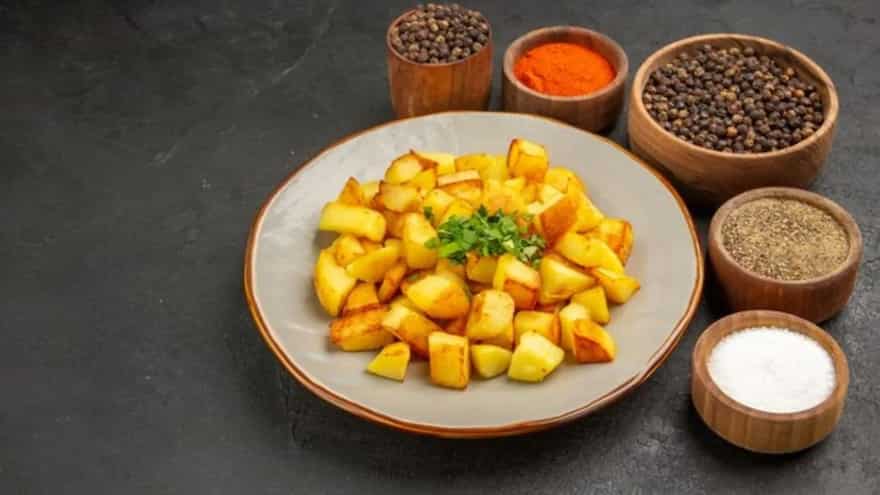
3. Vrat Wale Aloo
Ingredients:
2 boiled potatoes, cubed
1 tbsp ghee
1 tsp cumin seeds
Black pepper, rock salt
Lemon juice
Step 1
In a pan, heat ghee and add cumin seeds to it. Let them crackle gently. Make sure it does not get burned or brown.
Step 2
To the crackled cumin seeds, add sliced boiled potato cubes and toss them gently.
Step 3
Sprinkle rock salt and black pepper from the top and mix everything gently so that the cubed potatoes get covered with masala evenly.
Step 4
Cook it on a low flame until the edges turn crisp.
Step 5
Stir everything occasionally in 4-5 minutes, but gently to avoid breaking potatoes.
Step 6
In the end, garnish with some lemon juice, coriander leaves and serve warm.
(Image credit: Freepik)
4. Lauki Halwa
Ingredients:
2 cups grated lauki
2 tbsp ghee
½ cup milk
3 tbsp sugar
Cardamom powder
Step 1:
In a heavy-bottomed pan, heat the ghee and add the grated lauki to it. Sauté it gently on a low heat so that it does not burn.
Step 2
Cook until the moisture fades away and the lauki turns soft but not mushy.
Step 3
Add milk to this mixture and simmer on a low flame.
Step 4
Stir continuously so that it does not stick to the bottom of the pan.
Step 5
Add sugar and cardamom powder to this and stir constantly, while keeping the flame low.
Step 6
Cook until the mixture starts leaving the pan and turns glossy and fragrant.
Step 7
Garnish with chopped dry fruits and serve hot.
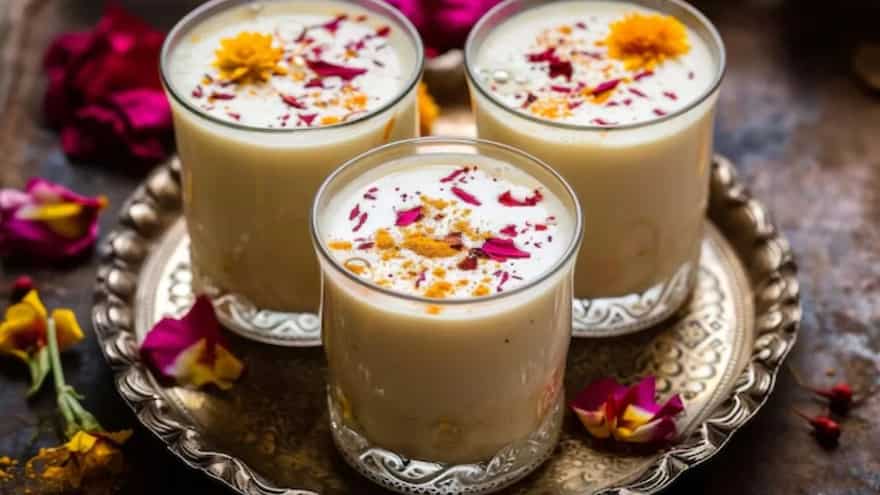
5. Thandai (Without Bhang)
Ingredients:
2 cups chilled milk
10 almonds, soaked
5 peppercorns
Fennel seeds, sugar
Step 1:
In a blender, grind the soaked almonds, peppercorns, and fennel to make a smooth paste. The consistency of the paste should be thick and not runny.
Step 2
In a pan, warm the milk slightly and add the paste to it. Keep the flame low.
Step 3
Add sugar to it and mix everything well. Simmer on low heat for about 30 mins until it appears to be aromatic.
Step 4
Let it cool down completely before serving.
Step 5
Keep it in the refrigerator for about an hour to let it chill perfectly.
Step 6
Offer the refreshing thandai as prasad during the mahashivratrti prayers.
(Image credit: Freepik)




