


 Share
Share

Chinese desserts are gaining wider attention as global diners begin exploring flavours other than conventional Western sweets. What stands out in this trend is the focus on texture rather than intense sweetness. With Lunar New Year ahead on the 17th February, 2026, treats like rice cakes, silky tofu puddings, sesame-filled buns, and layered jelly desserts offer contrast that is balanced with the joy of the celebration. Many of these sweets rely on ingredients such as red bean paste, black sesame, taro, lotus seed, and glutinous rice flour, which create depth without overwhelming sugar.
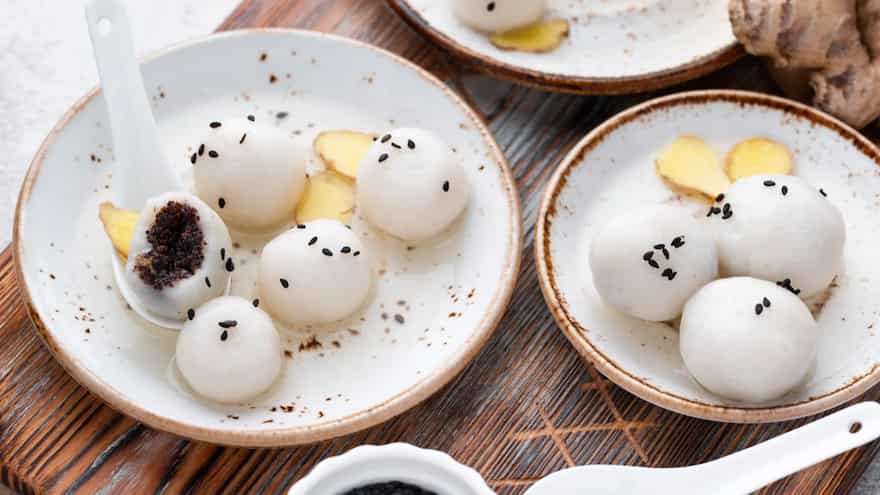
Another reason for their popularity is visual simplicity paired with cultural meaning. Desserts shaped like peaches or filled dumplings often carry symbolic references to longevity, unity, or prosperity. Social media has amplified interest in items like snow skin mooncakes and milk tea–inspired puddings. Unlike heavily frosted cakes, Chinese sweets tend to be lighter and less buttery, making them appealing to those who prefer subtlety.
Authentic Chinese Dessert Variations To Explore For Chinese New Year
Red Bean Tangyuan
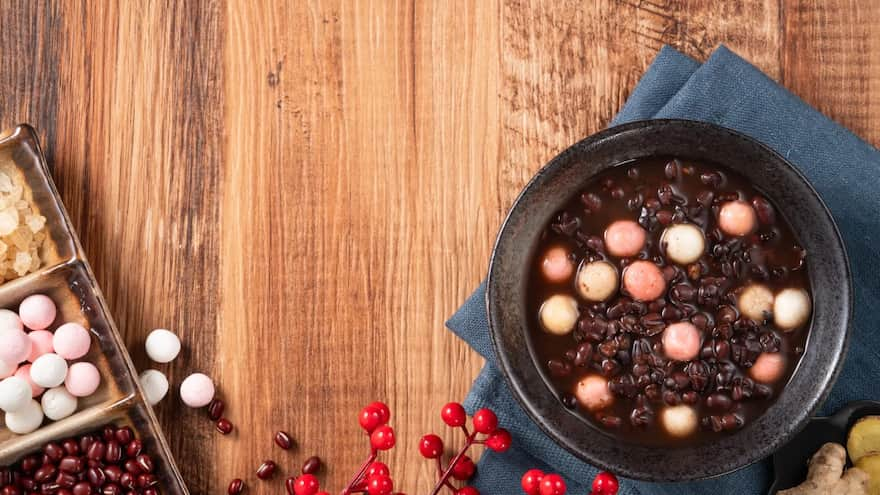 Red bean tangyuan is a traditional dessert made from glutinous rice flour shaped into soft dumplings and filled with smooth red bean paste. These dumplings are gently boiled and served in warm syrup, often during the Lantern Festival to symbolise togetherness and unity.
The outer layer is chewy yet tender, while the filling is mildly sweet and earthy rather than sugary. Tangyuan reflects the Chinese preference for balance and symbolism in desserts.
Sesame Seed Balls (Jian Dui)
Sesame seed balls are deep-fried pastries coated in white sesame seeds and filled with sweet red bean paste. The outer layer turns crisp while the inside remains slightly chewy due to glutinous rice flour. As they fry, the balls expand, creating a hollow interior that contrasts with the dense filling.
The sesame coating adds nuttiness and crunch, balancing the sweetness within. Often found during Lunar New Year celebrations, these treats symbolise prosperity because of their round, golden appearance.
Mango Sago Pudding
Mango sago pudding is a modern Cantonese dessert that combines fresh mango puree, coconut milk, and small tapioca pearls. The texture is creamy yet slightly bouncy because of the sago pearls suspended throughout.
It is typically served chilled, offering relief in warmer climates. The sweetness comes mainly from ripe mangoes rather than added sugar, keeping the flavour fresh and bright. This dessert became widely popular in Hong Kong-style cafes and later gained international attention.
Douhua (Silken Tofu Pudding)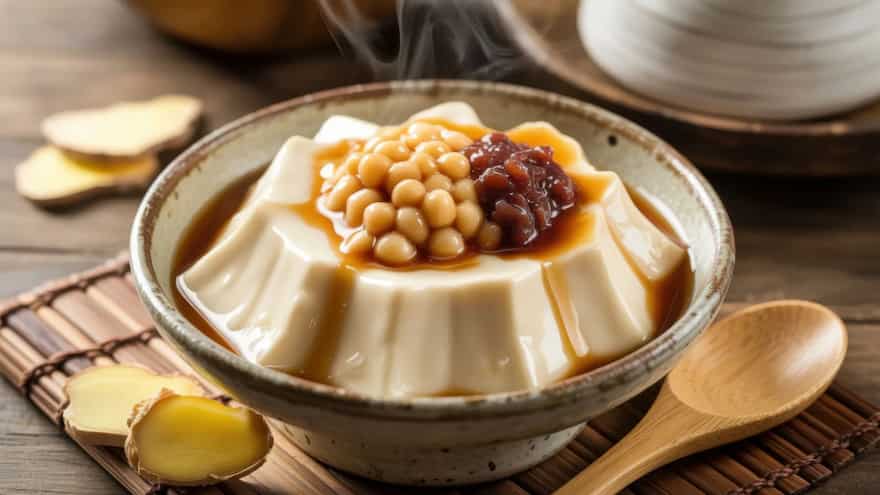
Douhua is a soft tofu pudding served with lightly sweetened syrup or savoury toppings, depending on the region. The tofu is set gently so it remains extremely delicate, almost custard-like. In sweet versions, warm ginger syrup is poured over the surface, adding fragrance without overpowering the soy flavour.
The simplicity of douhua allows texture to take centre stage. Unlike cakes or pastries, this dessert does not rely on butter or flour. Douhua represents minimalism in dessert form, where careful preparation creates softness and balance rather than visual extravagance.
Lotus Seed Paste Mooncakes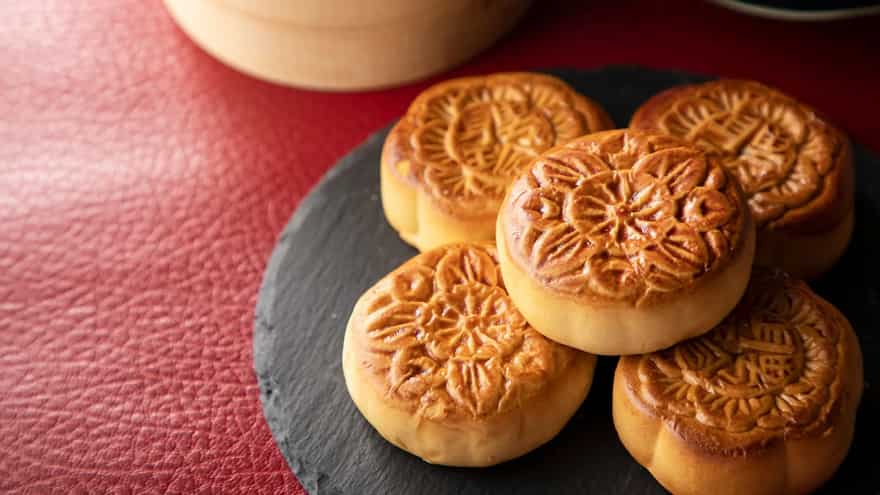
Lotus seed paste mooncakes are traditionally prepared during the Mid-Autumn Festival and carry deep cultural symbolism. The pastry shell encases a dense filling made from finely ground lotus seeds, sweetened carefully. Often, a salted egg yolk is added in the centre, representing the full moon.
The pastry exterior is thin yet structured, providing contrast. Mooncakes are usually sliced into small wedges and shared, emphasising community as well as celebration. Their flavour is subtle and layered rather than bold.




