


 Share
Share

As the monsoon season arrives, Indian markets get filled with seasonal vegetables that happen to appear only for a few months every year. Among the seasonal goodness is kantola, also known as spiny gourd, kakoda, kakrol, or teasel gourd, across India, that does not get as much spotlight as it deserves. Its prickly green cover may not appear to be very inviting, but this simple vegetable has been treasured in Indian kitchens and also in traditional food practices for a long time. As it is a seasonal vegetable, it tastes best during the rainy season.
Not only this, but Kantola is affluent in dietary fibre, vitamin C, vitamin A, antioxidants, and important minerals such as iron and magnesium. While it should not be considered a treatment for the seasonal flu, its nutrient-rich profile can help overall immune health and deliver more balanced nutrition during the changing weather.
Why Kantola Is A Seasonal Favourite During The Monsoon
Kantola flourishes naturally in warm, humid weather, which makes the monsoon the best growing season for this. Unlike some vegetables that are available throughout the year, fresh kantola has a short window, making it even more remarkable. It has a light earthy taste and a pleasant crunchy texture, making it an adaptable ingredient for both stir-fries and to use in curries.
Apart from this, kantola is a wholesome vegetable that fits perfectly into seasonal eating. It delivers dietary fibre that helps digestion, vitamin C that helps to normalise the immune function, and antioxidants that help guard cells from oxidative stress.
Kantola is also naturally low in calories, making it an enjoyable vegetable to have in everyday meals. Traditional Indian food wisdom has long promoted eating seasonal produce, and kantola is one of the most special examples of this practice. Beyond just the nutritional value, Kantola also shines through a variety of regional recipes that honour its earthy taste and crisp texture.
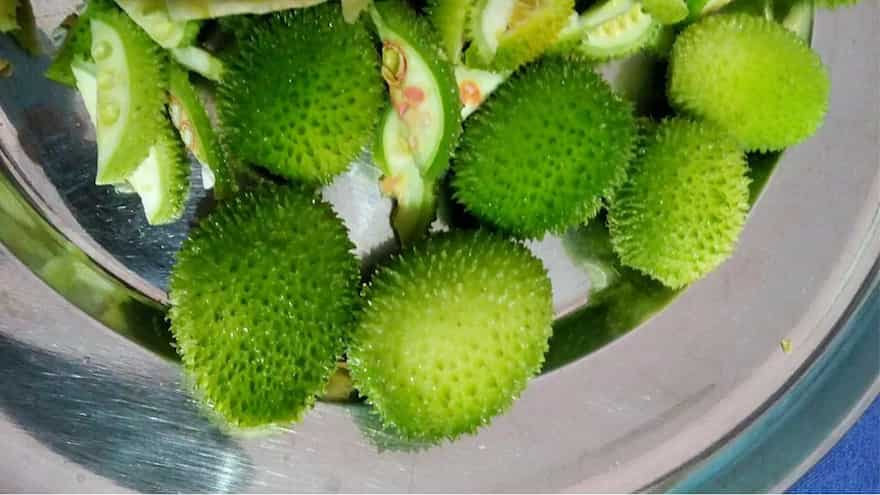
(Image credit: Wikimedia Commons)
Bharwa Kantola, Gujarat
In Gujarat, bharwa kantola is one of the most special preparations where whole spiny gourds are slit through and stuffed with an aromatic mixture prepared by blending roasted gram flour, crushed peanuts, sesame seeds, coriander powder, turmeric, red chilli, jaggery, and a little lemon juice.
The stuffed vegetable is then slow-cooked until it turns soft and tender, absorbing the vegetables' natural juices thoroughly. The outcome is a lightly sweet, nutty, and spicy dish that has a delightful contrast between the crisp outer skin and soft stuffing. It is commonly enjoyed with phulkas, bajra rotla, or even simple dal-rice.
Kakrol Bhaja, West Bengal
In West Bengal, kantola is called kakrol, and has the simplest yet most enjoyable preparations, which are Kakrol Bhaja. The vegetable is sliced lengthwise, seasoned lightly with turmeric and salt, then shallow-fried in mustard oil until the edges turn crisp and golden.
To get some extra crunch, some people also dust the slices with rice flour. This type of preparation highlights the natural taste of kantola rather than hiding it with heavy spices. Kakrol bhaja is traditionally enjoyed with steamed rice, dal, and a squeeze of fresh lime from the top, making it a comforting everyday meal without any prolonged preparation.
Kakoda Ki Sabzi, Rajasthan
Across Rajasthan, kantola is called kakoda. It is changed into a simple but flavourful dry sabzi that pairs beautifully with simple wheat or bajra roti. The vegetable is chopped and then sautéed with onions, tomatoes, garlic and basic spices such as cumin, coriander powder, turmeric, red chilli and then cooked slowly until soft.
To elevate the flavour, a sprinkling of gram flour absorbs moisture and enhances the texture. The a bit bitter, earthy notes of kakoda balance perfectly with warming spices, making it a delightful dish to enjoy during rainy evenings.
Kantola Besan Sabzi
Maharashtrian kitchens often make kantola besan aabzi, where sliced spiny gourd is first stir-fried with mustard seeds, cumin, garlic, green chillies, and turmeric and then sautéed in roasted gram flour. The besan lightly sticks to the vegetable, creating a nutty crunch that enhances every bite.
Fresh coriander and a squeeze of lemon further brighten the flavours. This simple sabzi is commonly enjoyed with chapati, bhakri, or varan bhaat, letting the seasonal vegetable remain the star of the meal without excessive spices.
Tips To Cook With Kantola For The Best Flavour
Kantola naturally has a crisp texture and light earthy taste that pairs nicely with Indian spices. However, if you have any doubts, these simple tips will help you make the most of this seasonal vegetable.
- While buying, pick small to medium-sized kantolas that have bright green skin and soft spines. They are less bitter, get cooked faster, and have fewer ripe seeds compared to the larger ones.
- Kantola tastes most pleasing when it has a slight crunch. Cook it over medium flame just until they turn tender to maintain its texture and natural taste.
- Adding roasted peanuts, sesame seeds, poppy seeds, or gram flour complements kantola pleasingly. These ingredients give richness and balance its light earthy taste.
- Kantola works perfectly in dry sabzis that have turmeric, coriander, cumin, garlic, and green chillies. Light seasoning lets the vegetable's fresh monsoon taste shine.
- As kantola is a seasonal vegetable, always buy it fresh and cook within a day or two. Fresh kantola has the best texture, taste, and also the nutritional value, with fewer big seeds.




