


 Share
Share

JANE AUSTEN turns 250 today, and more than two centuries since Pride and Prejudice was published, her novels remain endlessly readable — not just for their romances and razor-sharp social observation, but for the ordinary, domestic details that anchor them. Among these: food. Rarely the star of the scene, it is nevertheless always present, quietly doing narrative work in the background. What is served, who eats it, who refuses it, and who worries about its effects often tells us more about a character’s class, temperament, or moral fibre than pages of description ever could.
To mark Austen’s birthday, we’ve laid out a full Regency-era “service” — from breakfast to supper, from ballroom negus to invalid gruel — drawing only from the meals, snacks, and drinks that appear in her novels and letters. Consider this not a recipe collection, but a literary tasting menu: one that reveals how Austen used food as a social language, speaking volumes without ever raising its voice.
I. BREAKFAST
Hot Chocolate (Cocoa)
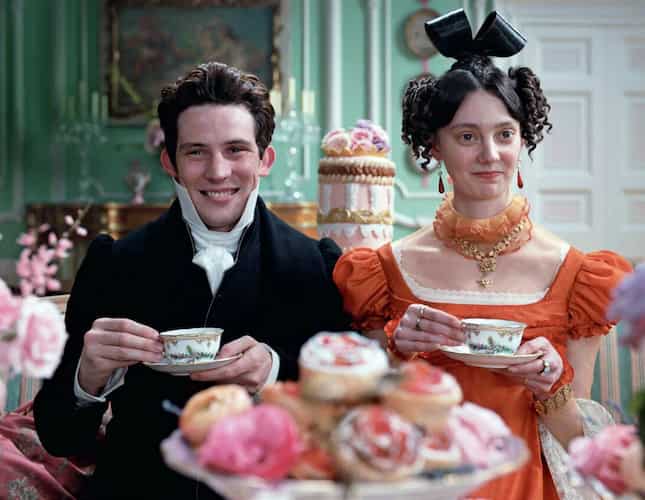
In Northanger Abbey, General Tilney drinks cocoa; in Sanditon, Arthur Parker indulges in it. Breakfasts in the Regency period were typically light affairs, taken between 9 and 10 am, partly to save on candles during the winter months. Yet General Tilney weaponises the morning meal, overwhelming Catherine Morland with continual solicitations to eat, despite a table laid with a “variety” she had never beheld before. The richness of cocoa here becomes part of his performance of control and intimidation.
Muffins & Toast
Referenced in Northanger Abbey — where Catherine’s mother worries her daughter might grow into a “sad, heedless young housekeeper” who burns the toast — and again in Emma, toasted bread sits at the intersection of domestic competence and moral judgement. Austen rarely shows her heroines cooking, but the mere ability to manage such basics was seen as a marker of readiness for household management. Continental visitors, incidentally, often praised British toast as a national speciality.
Soft-Boiled Eggs
In Emma, Mr Woodhouse urges his guests to “venture on an egg”, assuring them it has been boiled “very soft” and is therefore “not unwholesome”. The emphasis on softness and smallness speaks less to the egg itself than to Woodhouse’s hypochondria. Food, for him, is never nourishment alone; it is something to be negotiated, feared, and carefully managed.
II. THE 'MEAL WITH NO NAME’ (Nuncheon / Snacks)
Cold Meat, Cake, and Fruit
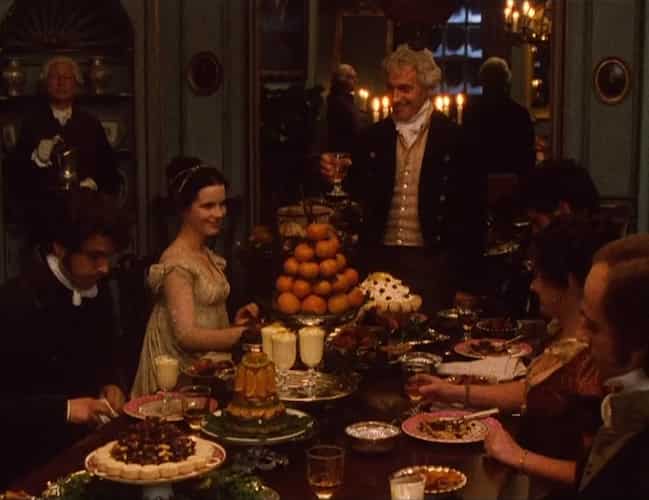
Served at Pemberley in Pride and Prejudice to thaw social awkwardness between the Bennet and Bingley ladies, this informal spread occupies the long gap between breakfast and dinner, which could be as late as 6:30 pm. The pairing of meat and fruit was considered practical: contemporary medical theory suggested the acidity of fruit counteracted the “alkaline” heaviness of meat. The term “luncheon” was still rare; Austen uses “nuncheon” just once.
Toasted Cheese
Mentioned in Austen’s letters, toasted cheese was a private comfort she welcomed while living in lodgings. Simple cheese melted over bread, it stands in quiet contrast to the refined appetites of many of her heroines, hinting that Austen herself enjoyed heartier, plainer pleasures than her fictional creations.
‘Blue’ Milk
In Mansfield Park, Fanny Price struggles to drink the milk at her family’s Portsmouth home, described as “a mixture of motes floating in thin blue”. “Blue” milk was skimmed or diluted, and in cities like Portsmouth, often dirty, sold from open pails. Its presence marks urban poverty and squalor, sharply contrasting with the rich dairy of country estates such as Mansfield Park.
III. THE FIRST COURSE (Soups & Starters)
White Soup
In Pride and Prejudice, Mr Bingley names white soup as a prerequisite for his ball. Made from veal or chicken stock thickened with almonds and cream, it was labour-intensive and expensive, a standard restorative served at ball suppers. Its mention signals readiness for social display and hospitality at scale.
Pease Soup
Referenced in Austen’s letters as a humble dinner option, pease soup was a thick, filling dish made from dried peas, common winter fare and far less refined than the clear soups preferred by the upper gentry. Its presence reminds us that Austen’s world was not all glittering assemblies and polished silver.
IV. THE MAIN COURSE (Dinner)
The ‘Plain Dish’ vs. Ragout
In Pride and Prejudice, Mr Hurst — who “lived only to eat” — loses interest in Elizabeth Bennet when she declares a preference for a plain dish over a ragout. A ragout, rich and French-influenced, signals pretension and excess; a plain dish, typically undressed roast meat, signals English simplicity. Elizabeth’s choice marks her lack of affectation, while Mr Hurst’s disappointment exposes his gluttony. Practically speaking, refusing the ragout also denies him the chance to ladle extra sauce onto his own plate while serving her.
Venison
Mrs Bennet boasts of serving a “fat haunch” of venison to Bingley and Darcy in Pride and Prejudice. Venison was elite meat, indicating ownership of a deer park or powerful connections. Here, it becomes social currency, deployed to prove the Bennet family’s worthiness.
Leg of Pork / Hind-Quarter
In Emma, a gift of pork is sent to the impoverished Bateses. It is neighbourly and generous, though Mr Woodhouse frets that it is too rich, insisting it be “nicely fried” to remove excess grease. Pork was common fare for country gentry who kept livestock, and gifting it signalled care as much as abundance.
Cold Ham and Fowls
In the juvenile story Lesley Castle, Charlotte and her mother embark on a “Devouring Plan” when a wedding is interrupted, sensibly consuming cold meats rather than letting them go to waste. Austen contrasts this practicality with the sensitive heroine, too distressed to eat. Cold meats, designed to last days, represent household sense triumphing over romantic excess.
Boiled Fowls vs. Veal Cutlets
In Sense and Sensibility, Mrs Jennings laments that she cannot choose dinner for Elinor and Marianne at an inn, agonising over salmon versus cod, fowls versus cutlets. Her concern with menus becomes a substitute for the emotional intimacy she cannot offer the grieving sisters. At Regency inns, wealthy travellers could order specific dishes, though quality varied.
Brawn
In Persuasion, the Musgroves’ Christmas table bends under the weight of “brawn and cold pies”. Made from a pig’s head set into a terrine, brawn signals riotous, old-fashioned hospitality — hearty, excessive, and warm — standing in stark contrast to the cold restraint of the Elliot family.
Pigeon Pie
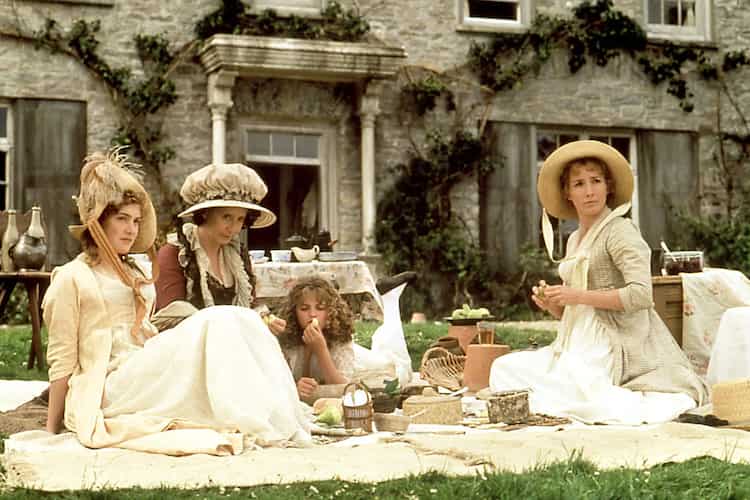
Appearing in Emma (for the picnic) and Lesley Castle (where Eloisa cannot eat “even a pidgeon-pye”), pigeon pie was a practical savoury dish. Estate dovecotes existed largely to supply households with pigeons for such pies, making them both common and revealing of land ownership.

V. VEGETABLES & SIDES
Asparagus
Mentioned in Emma alongside sweetbreads, and in Austen’s letters, asparagus was a seasonal delicacy, typically served with melted butter or sauce, marking refinement without ostentation.
Salad and Cucumber
Ordered by Lydia and Kitty in Pride and Prejudice, salad and cucumber signalled fashionably light eating. Cucumbers were sliced thin and dressed simply with oil and vinegar, a refreshing contrast to heavier fare.
VI. SWEETS, DESSERTS & TEA
Pyramids of Fruit
At Pemberley in Pride and Prejudice, grapes, nectarines, and peaches are displayed as “the finest fruits in season”. These expensive hothouse fruits advertise Darcy’s immense wealth and advanced gardening operations, piled into pyramids for visual impact once the dinner cloth was removed.
Apricot Marmalade
In Sense and Sensibility, Lady Middleton attempts to bribe her screaming child with apricot marmalade. The preserve’s sweetness underscores her ineffective parenting more than her generosity.
Whipt Syllabub
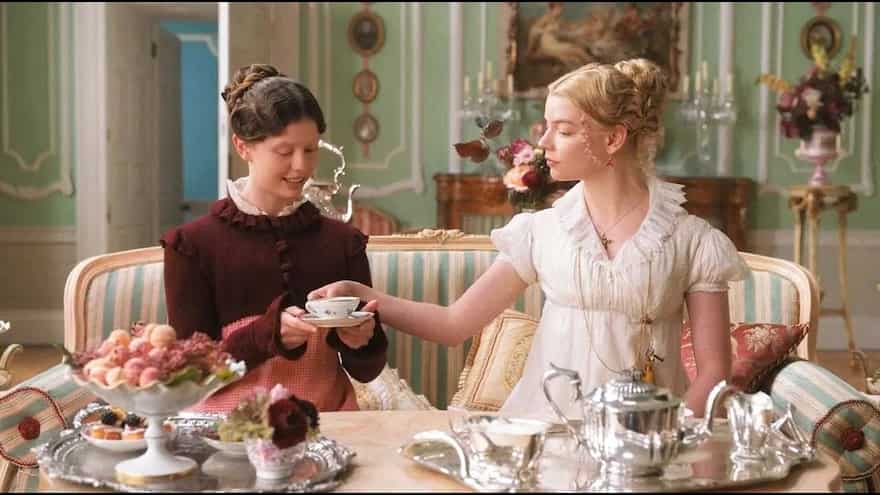
In Lesley Castle, a character turns “white as a whipt syllabub” from shock. Made from cream whipped over wine, sugar, and lemon, syllabub was light, frothy, and fashionable — as much metaphor as dessert.
Mince Pies
Mrs Bennet sneers in Pride and Prejudice that the Lucas girls might be “wanted about the mince pies”, implying a lack of servants. Mince pies were labour-intensive Christmas treats, originally containing meat alongside fruit and suet, and their production was a marker of household status.
Apple Tart & Custard
In Emma, Emma serves apple tart to Miss Bates, while Mr Woodhouse warns against the accompanying custard as “too rich”. The tart is safe; the custard, suspect. Comfort food, filtered through anxiety.
Rout Cakes
Criticised by Mrs Elton in Emma, rout cakes were rich finger food served at large evening parties. Her judgment of others’ “poor attempts” reveals more about her own pretensions than their baking.
Sponge Cake
In her letters, Austen admits, “You know how interesting the purchase of a sponge-cake is to me”. Light, airy, and widely beloved, sponge cake occupies a rare space of uncomplicated pleasure.
Mulberries
Mrs Jennings recalls “stuffing” herself with mulberries in Sense and Sensibility. Highly staining and eaten fresh, they represent sensual enjoyment, unapologetically indulged by Austen’s comic characters.
Sweetmeats, Olives, & Dried Cherries
Offered by Mrs Jennings to console Marianne, these treats were considered restorative — small luxuries meant to mend emotional wounds, even when they failed.
VII. INVALID & COMFORT FOOD
Gruel
In Emma, Mr Woodhouse and his daughter conduct a full “discourse in praise of gruel”. Made from oatmeal, water, milk, and salt, gruel was standard invalid fare, served warm in a basin. For Woodhouse, it represents ultimate wholesomeness; its consumption signals the evening’s end and his retreat to safety.
VIII. BEVERAGES
Constantia Wine
In Sense and Sensibility, Mrs Jennings recommends Constantia wine for Marianne’s broken heart. Imported from South Africa and considered medicinal, it is sipped politely by Elinor, whose acceptance signals sense and social grace rather than indulgence.
Negus
Served at the ball in Mansfield Park, negus — port wine mixed with hot water, sugar, and spices — was designed to revive dancers, bridging hospitality and health.
Spruce Beer
Supplied by Mr Knightley in Emma, spruce beer was a low-alcohol fermented drink flavoured with spruce, considered refreshing and wholesome, closer to “small beer” than strong drink.
Food in Jane Austen’s novels works much like a character actor in a film. It rarely takes the lead — except, perhaps, in the mind of Mr Woodhouse — but it is always present, quietly shaping the scene. Venison and hothouse fruit signal wealth; ragouts suggest pretension; gifts of pork and apples reveal good hearts; white soup and negus keep the social season moving. Austen never tells us these things outright. She simply sets the table — and lets the meal speak for itself.




