


 Share
Share

Aromatics or aromatic vegetables constitute the flavour base of a dish, working in the background to provide depth to soups, stews, curries, sauces, stir frys, roasts and even braises. Usually a combination of three or more ingredients, aromatics are meant to form a cohesive foundation which amalgamates ingredients to produce a signature taste that is associated with specific cuisines or dishes from a particular region. Typically, the absence of aromatics is a noticeable factor which drastically affects the final smell and taste of a preparation due to which ‘blooming’ them in a fat such as oil or butter becomes crucial to activate their natural oils. When added directly to water or a liquid, their impact might be mellow or even subtle, without a pronounced effect on the final dish—risking a lack of flavour or underwhelming results, which then must be further boosted using other elements.
Essential Aromatic Ingredients
While onions and garlic are the most commonly used aromatic ingredients across various cuisines worldwide, Indian cuisine predominantly prefers to add ginger and tomatoes to curry bases which are either ground into a paste or consumed in their chunky form, for texture. Similarly, the French mirepoix uses a trio of onions, celery and carrots as a base for dishes like the bolognese or the pasta fagioli while Chinese aromatic bases traditionally constitute ginger, garlic and spring onions. On the other hand, the Italian sofrito utilises onions, garlic, tomatoes and peppers—bell or cubanelle—as well as a generous amount of cilantro for herbal complexity. The vibrancy of Thai preparations is mainly derived from a combination of shallots, garlic, bird’s eye chillies, lemongrass and galangal while Spanish cuisine—similar to Italian cuisine—uses onions, garlic, peppers and tomatoes. Cajun and Creole cuisines which are rooted in America, use what is known as the ‘holy trinity’ of onions, garlic and bell peppers as a starter for dishes like the gumbo.
Also Read:
Aromatic ingredients also constitute ingredients like leeks, yellow or white onions, green garlic and anything that falls within the scope of the allium family. In addition to this, various peppers, with varying degrees of heat, are also used as part of infusing the fat with aroma and flavour; this could range from green or red chillies, bell peppers, chilli flakes and chilli paste. Fennel, celery and celery root are equally popular choices when building the foundation of stocks, soups and sauces along with roots like ginger or galangal. Although, fresh or dried herbs like bay leaves, curry leaves, oregano, thyme, black pepper aren’t considered aromatics per se, their function in dishes mirror those of aromatics which contribute to the smell and taste of a preparation.
How To Use Aromatics
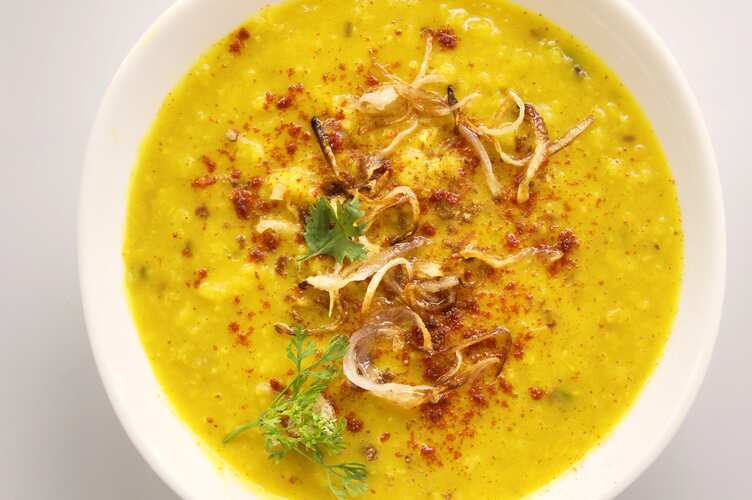
Image Credits: Wikimedia Commons
If a recipe is prepared in stages, aromatics are often added in the sequence where their flavour contributions will be most impactful. For example, a dal preparation might start off by sauteeing onions and tomatoes in the beginning before the lentils are cooked, followed by a tempering of garlic, chillies and curry leaves to boost the taste of the base elements. In most cases, aromatics are either heated gently in a fat like butter, olive oil or ghee—in a technique known as ‘sweating’, where they are softened instead of being browned—following which consecutive ingredients are added to amalgamate with them. Depending on the kind of recipe being made, the shape and size in which each aromatic is chopped also varies.
When using roasting as the technique of choice to cook potatoes or poultry, aromatics are usually placed in large chunks on the baking tray—one, to prevent them from burning quickly and two, because they might not actually end up making it to the final meal. Similarly, with stocks or sauces, some aromatics like a halved onion or whole clove of garlic are simply added to the oil or butter to impart a mellow whiff and taste instead of perfuming the dish and dominating the liquids. For curries or stews, aromatics are chopped finely since chances of them being included in the serving are highly likely as well as are required to blend in with the overall dish seamlessly. Although certain cuisines dictate following traditional ratios for cooking, the use of aromatic ingredients is ultimately a matter of personal preference.




