


 Share
Share

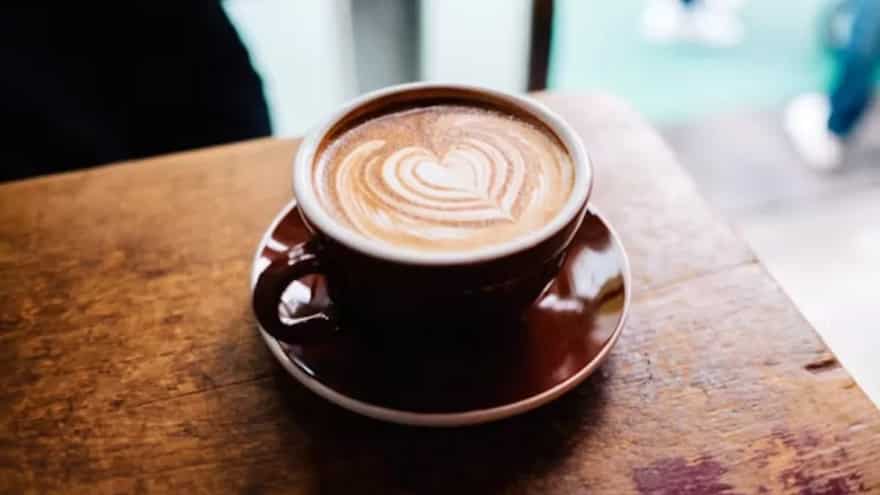
To call a spade a spade, the coffee at Indian Coffee House is not out of this world. It's fine. It's hot, milky and cheap, and on a good day, it could be something your uncle would call “strong”.
If I’m being too honest, then nobody has ever walked out of an ICH and said the pour was exceptional. And yet people have adored this place for about 90 years, in the same way you love an old house you grew up in.
In ICH, people have argued, fallen in love, planned protests and even written melodies. Also, the government once found it threatening enough to tear it down. If it's not the coffee to be blamed for this unwavering loyalty, then what is it? The answer lies in a story that most people sitting under those slow ceiling fans don't know. It's the story of who actually owns the place.
Begun As A Marketing Scheme
Source: Unsplash
The first India Coffee House opened at Churchgate in Bombay in 1936. It wasn't born out of romance. It was run by the Coffee Cess Committee, a colonial body with one job: get Indians to drink more coffee, because growers had more of it than they could sell. The Maharaja of Travancore even chipped in part of the funding.
There was a quiet politics to it as well. Many of the coffee houses in cities like Madras and Calcutta at the time were meant for Europeans. A coffee house where an Indian clerk or student could sit down and be served without being made to feel small was a new idea.
The Board picked its spots cleverly, near colleges, offices and railway stations. The chain grew to around 70 outlets by the late 1940s and early 1950s. After Partition, the branches in Pakistan's big cities carried on as coffee houses there too. Then, in the mid-1950s, the Board decided it was done.
The Waiters Who Refused To Go Home
Source: Pexels
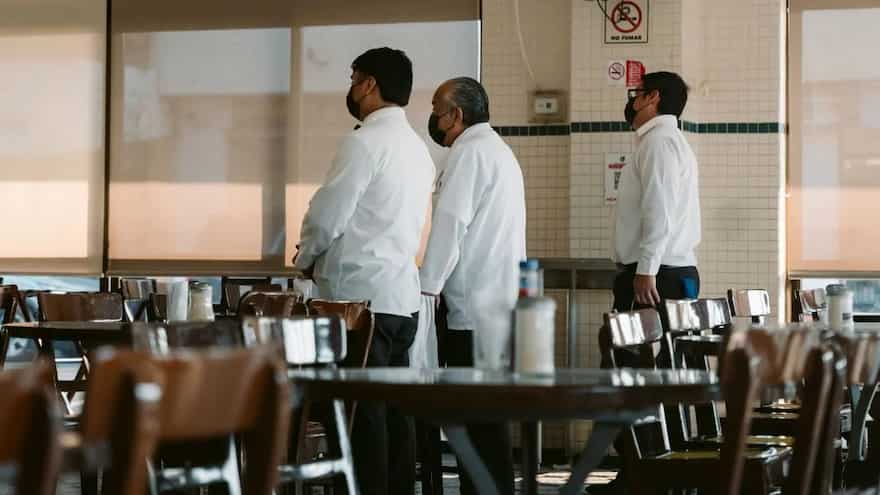
In 1955, as per reports, the Coffee Board announced it would close 43 outlets. The people affected weren't managers but brewers, waiters, pantry boys, cleaners, dishwashers and gatekeepers. Many earned ₹32 a month or less, and around 850 of them were suddenly facing unemployment.
This is where A.K. Gopalan comes in; he was a communist leader from Kerala, and his portrait still hangs in many outlets today. He backed the workers when they went on strike, but his real idea was bolder than a strike. At a meeting in Bengaluru's Cubbon Park in June 1957, he argued that the workers could simply run the coffee houses themselves. One line of his from that time sums up the whole spirit of it: "Workers are supposed to rule the world."
It might sound easy now, but it wasn't. Most of these men had little formal education, and taking over a business on their own was a huge leap. AKG and Subhadra Joshi pushed the workers to form cooperatives, Nehru supported the move, and the Board eventually handed over the outlets.
The first Indian Coffee Workers' Cooperative Society was registered in Bengaluru on 19 August 1957, and Delhi followed soon after. The money was thin. When the Thrissur branch became a cooperative, it managed to scrape together just ₹2,100 as starting capital, some of it borrowed from the Kottayam branch. The "India" Coffee House became the "Indian" Coffee House. It's a small change on paper, but you can feel what it means.
Today, there are around 400 outlets run by 13 cooperative societies, and employees elect the committees that manage them. It's usually called one of the largest worker cooperatives in the country. Frankly, that fact deserves far more attention than the cutlets get.
The Coffee House That Was Bulldozed
If you want proof that a café can matter politically, look at Delhi.
The Indian Coffee House at Connaught Place was the capital's great argument room. Socialist leader Ram Manohar Lohia was a regular. He had spent time in Germany and wanted to recreate the coffee houses he'd seen there, and a lot of young people started coming simply because he did. Students, journalists, trade unionists and writers from every political side all crowded in.
When Indira Gandhi declared the Emergency in 1975, and the press was muzzled, the coffee house became a kind of human newspaper. News that couldn't be printed was passed from table to table.
On 15 May 1976, the New Delhi Municipal Committee, reportedly at Sanjay Gandhi's urging, arrived without warning at about 10 am and told the workers to clear out. By noon, the building had been flattened. Palika Bazaar stands roughly where it used to be.
Historian Kristin Plys interviewed old regulars for her book Brewing Resistance, and they described that loss like a death. One professor, then jailed in Tihar, said the news felt as though his own home had been razed. The coffee house later reopened at Mohan Singh Place, and writers like Bhisham Sahni and Rajendra Yadav kept it going, but it never quite got its old life back.
I think this is the single most important thing to know about the ICH. The state doesn't bulldoze places that don't matter. It bulldozes the rooms where people talk.
College Street, Where The Adda Never Ended
Every city has an ICH it loves, but Kolkata's College Street coffee house is in a league of its own. It sits in Albert Hall, a building from 1876, opposite Presidency College. The Coffee Board opened a coffee joint there in 1942, and it was renamed "Coffee House" in 1947. Its regulars have included Satyajit Ray and Amartya Sen, along with generations of students nursing one cup for four hours. When closure loomed in 1958, it was professors from Presidency and Calcutta University who petitioned the government to save it.
You'll see Tagore's portrait on the walls here, and plenty of people will tell you he was a regular. He died in 1941, a year before the coffee house opened. Kolkata doesn't let facts get in the way of a good adda, and to be honest, fair enough.
Then there's the song. In 1983, Manna Dey sang "Coffee Houser Sei Addata", written by Gauriprasanna Mazumdar and composed by Suparna Kanti Ghosh. It's about seven friends who once met at the coffeehouse and have since scattered. The story behind it is almost too good. Mazumdar was already ill with throat cancer and was stuck on a stalled train at Howrah, heading out for treatment, when the final verse came to him. He wrote it on the white paper inside an empty cigarette packet. A BBC Bangla poll later ranked it among the greatest Bengali songs ever made.
Thiruvananthapuram And The Pink Dosa
In Thiruvananthapuram, near Thampanoor, the ICH is an architectural landmark. Laurie Baker designed it as a brick-red spiral tower. You eat your way up a ramp, each table sitting on its own small platform a step higher than the last. There are no windows, only Baker's trademark jaalis letting in light and air. It's one of the most interesting buildings in the state, and you can have a masala dosa inside it for less than the price of a latte elsewhere.
This brings us to the beetroot. In Kerala especially, the ICH masala dosa comes with a pink-purple filling because they add beetroot to the potato masala. The cutlets are pink inside too.
Wake Up And Smell The Coffee
Source: Magnific
This is where I'll stop being emotional, because sentiments don't pay salaries. The Indian Coffee House is in trouble in many places. In southern Kerala, the network has shrunk from 59 branches and 2,300 staff at its peak to 45 branches and about 1,450 employees. Fourteen branches have shut, nearly 500 posts are vacant, and the state hasn't approved recruitment in three years. Furthermore, losses are running at around ₹10 crore a year. In Shimla, workers at the Mall Road outlet went 10 months without pay after the COVID lockdowns.
Some of this is the market, as the coffee beans now cost more, rents have risen, and a generation raised on flat whites doesn't automatically climb those stairs. But some of it is the cooperative's own doing. The service can be slow and the food uneven. There's a stubbornness about change that isn't always charming. When College Street badly needed a renovation in 2006, it turned down offers from companies like Asian Paints because it couldn't agree to their terms.
I don't think the answer is to turn the Indian Coffee House into another polished café chain because the whole point is that it isn't one. But loving a place and keeping it alive are two different things, and too many of us only do the first.
How Is It Still Relevant
The thing that Indian Coffee House gets right and most modern cafes don't is that it never charges you for a chair. Today's café waiters subtly start looking at the clock after an hour of serving you a Rs. 350 cappuccino. However, at the ICH, one cheap cup has always bought you an afternoon, and no one hovers with the bill. This is why ideas got argued out there. And this is also why, in 1976, someone thought it was worth knocking down.
The people serving you in those fan-shaped turbans and starched uniforms aren't staff in the usual sense. In a real way, they're the owners, as their predecessors fought for that. So this International Coffee Day, skip the frappés just once. Find your nearest Indian Coffee House, order the coffee you know will be merely okay and the dosa you know will be pink, and sit there longer than you need to. Wasn't this always the point of this beloved place?




