


 Share
Share

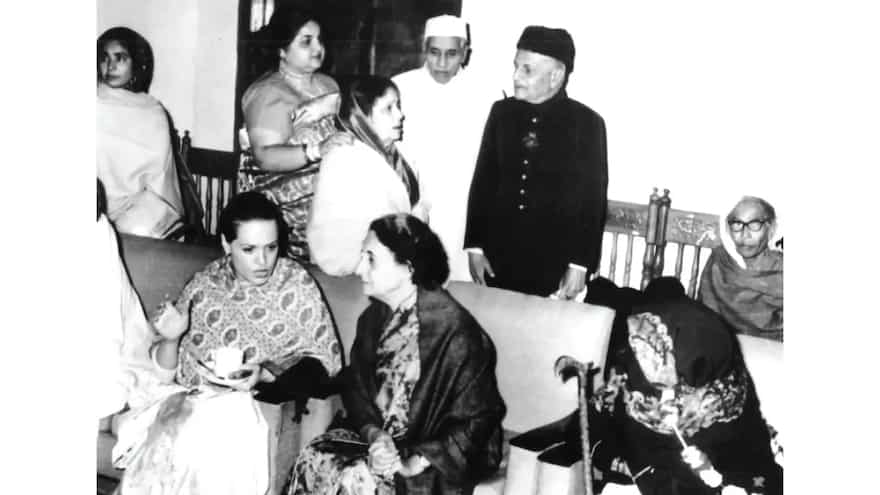
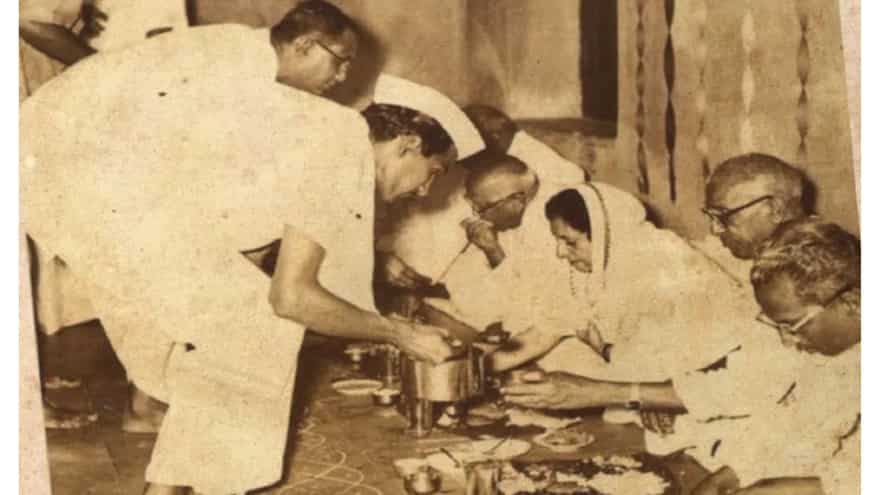
INDIRA GANDHI playing antakshari with her doctor. Manmohan Singh helping his wife with the dishes during their young days overseas. Atal Bihari Vajpayee relishing golden fried prawns at the Taj Mahal Hotel, or chaat in the bylanes of Lucknow. Narendra Modi patiently teaching a BJP worker's wife how to perfect her sabudana khichdi. These are not the images we usually associate with India's prime ministers, and that is precisely the point of The Prime Minister's Table: Delicacies and Diplomacies from the Era of Nehru to Modi, the new book by journalists Purabi Shridhar and Sanghita Singh.
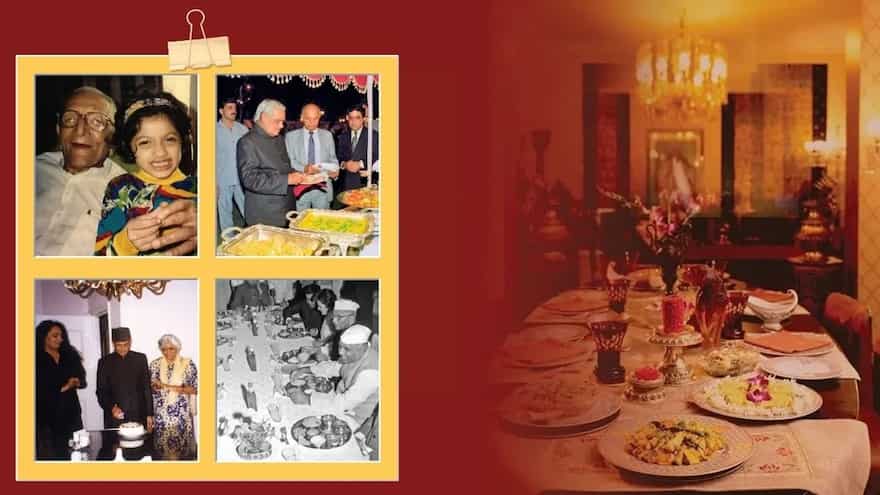
Spanning seven decades, from Jawaharlal Nehru to Narendra Modi, the book looks at India's highest office through the lens of food. What did each prime minister eat in their daily routine? How did they entertain? What was their favourite dish? The answers open a window onto their family bonds, friendships, travels and private lives, while tracing recipes that still live on in their families' kitchens. It also charts a larger shift, from the munificence of the Maharajas to the new power centres of democracy. As the authors point out, much has been written about the extravagant kitchens of royal India, but far less is known about the subtle, private and yet hard-to-ignore kitchen culture of the prime ministers' homes.
The idea took root in Purabi Shridhar's curiosity about what lies beyond a politician's public persona. The early days of Rajiv Gandhi's tenure, when he and his family captivated the country, set her wondering about the lives of the other prime ministers away from the office. Getting there was, in her words, a "l-o-n-g" process. The authors interviewed the prime ministers themselves, their families, personal cooks and chefs, visited favourite restaurants, and sought out old friends and acquaintances for untold stories. Doors were thrown open by nonagenarians and youngsters alike, and some were slammed shut, but persistence paid off. Along the way, they were also invited to taste some of the most delectable dishes in prime ministerial homes, and found that some of the best were the simplest to make.
The authors bring a deep familiarity with both journalism and food to the project. Shridhar spent nearly three decades as a journalist reporting on subjects ranging from politics and the secessionist movement to women's issues. Journalist Sanghita Singh has covered art and culture for over two decades, with a particular passion for ethnic gastronomy and for collecting recipes that are fast disappearing from modern kitchens. The two previously collaborated on The Seven Sisters: Kitchen Tales from the North-East, an extensive documentation of the food heritage of North-East India. In the conversation that follows, they talk about The Prime Minister's Table, the stories behind it and what it took to bring India's most powerful kitchens into view. Edited excerpts below:
***
You have chosen food — a deeply personal and everyday aspect of life — as your lens for examining India's Prime Ministers. At what point did you realise that the dining table could tell a more revealing story about political leaders than their official biographies?
Sanghita Singh (SS): Food is basic to existence. Whether you are a common man or the Prime Minister, you need food on your table! Food is also not just an urge to satisfy your hunger; it is also a very personal experience — it represents the culture you were brought up in, reveals the personality and preferences of your parents and siblings, and of course, dining creates everyday bonding moments. It is also a tool that provides an easy glimpse into understanding a human being and their preferences. India had never looked at its Prime Ministers from a personal lens. Our approach was simple — we were looking at their lives through dining stories which were simple, basic, sometimes celebratory and sometimes sombre. Food literally revealed who they were at their heart, far away from the public eye — here we were looking at the Prime Ministers in the comforts of their home, family and kitchens. Our endeavour was to catch them away from the trappings of officialdom in their basic and unpretentious surroundings.
Purabi Shridhar (PS): For the simple reason that official biographies mostly tend to focus on and centre around the political career and whatever is associated with the Prime Minister's political graph. But what lies beyond that political persona, sometimes tailored, is something that has not been explored. What one was looking for was not juicy personal details, scandals or controversies, manufactured or otherwise, but the basic question: What happens when the prime minister gets home to his/her family, the world that the public is not privy to. On a personal note, I believe food — what we eat, what is on our dining table, our culinary choices and preferences — is an indication of our roots, our heritage, where we come from. The ‘comfort food’ that most of us crave often is our culinary history. The dining table is where every family gathers at the end of the day, and there could not have been a better tool than what was served on the dining table to reveal the other side of the prime ministers, a side wrapped in the aroma of home and hearth.
While researching the book, did you find that the person who emerged around the dining table was sometimes markedly different from the public figure we know? Can you share an instance where food or a domestic memory fundamentally altered your perception of a Prime Minister?
SS: Whatever we had known of our prime ministers was mostly information that appeared in the public sphere. But with our interviews with friends, family and their associates, we discovered them to be like regular human beings with simple tastes. PMs like Lal Bahadur Shastri and Atal Bihari Vajpayee loved dining out yet kept their home meals very simple. The Nehru-Gandhi family, with all their global exposure, still was very "Indian" at heart. There is a story of Indira Gandhi enjoying a Kashmiri meal at her niece's wedding where she chose to sit cross-legged at the dining table and eat with her hands after the wedding guests had left.
PS: Quite a few: Pandit Nehru, for all his privileged background and elite education, preferred to eat mangoes with his hands that he would twist into two and savour it all right down to sucking the seed till juices streamed down his hands; Indira Gandhi was very fond of small desi mangoes which she sucked with relish; VP Singh disliked hot meals and would prefer to cool them in a bowl of water; Chandrashekhar disliked paneer and claimed that it did not count as food! Atal Bihari Vajpayee loved every food and unbelievably loved talking about Hindi movies more. As for perception changing, it would be Dr Manmohan Singh gentle insistence that we would not get up without trying his wife’s homemade excellent chocolate cake!
The book moves from Nehru's intimate breakfasts and Charan Singh's extraordinarily frugal meals to the elaborate food associated with official diplomacy. What does the changing nature of the Prime Ministerial table tell us about how India's political culture and ideas of power have evolved since 1947?
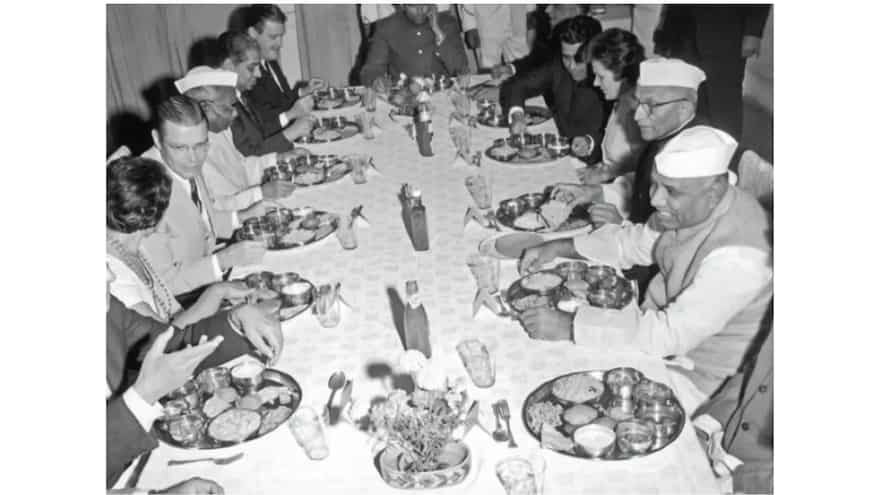
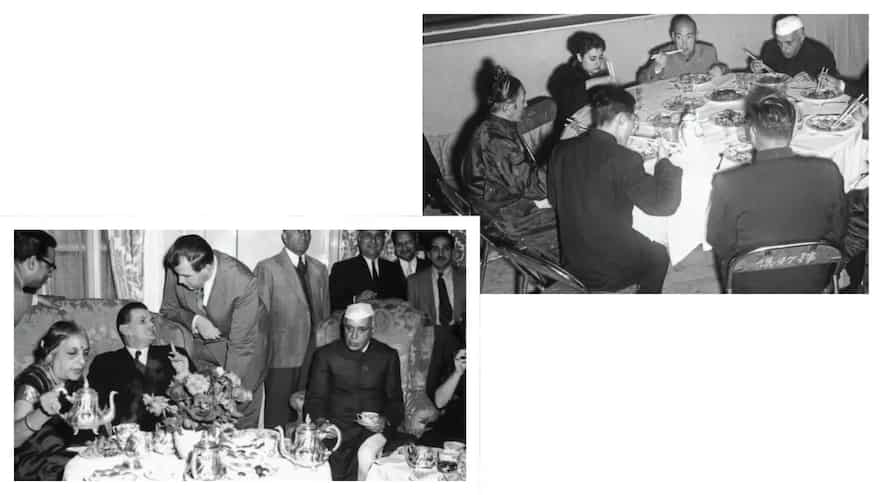
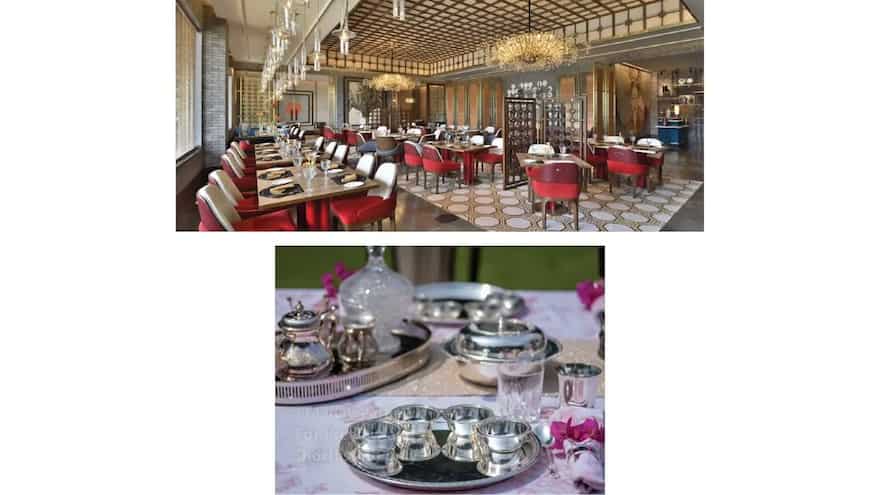
SS: The Prime Minister's Table has also celebrated India's vast cultural and regional diversity. From Kashmir to Gujarat, Punjab and the South, the kitchen culture changed as did the ethnic identities of our PMs. But unlike princely India, India's highest office represented simplicity when it came to personal dining choices, but when our PMs entertained foreign guests and dignitaries, there were lavish banquets with a lot of attention to detail — from Indira Gandhi's time, there was a lot of emphasis on the right kind of crockery and cutlery, right down to the curtains in the room! She also brought in international cuisine and introduced items like vol-au-vent, while the concept of nouvelle cuisine was introduced during Rajiv Gandhi's time. The wives of both IK Gujral and Manmohan Singh also tried to train the chefs on creating menus that were not just lavish but also healthy.
PS: For two centuries before independence, India was colonised by the British; of the two hundred years, about 90 years or so saw the independence movement and, of course, we had the royalties, both small and big, the principalities and the feudal set up. Then, finally, it was India for India, with no foreign rule, and it was inevitable that the distinct Indian culture and culinary heritage would gradually come to define diplomatic dinners/lunches. Of course, it did not happen overnight, but over the years it evolved to form its own identity, and what is commendable is the brilliant blending of Indian and international elements. In a way, each prime minister contributed to it, some in a major way and some by simply refusing to cover up roots and bringing that factor, even humble ones, to the table
Some of your most evocative stories seem to involve food as memory — particularly memories of Partition, migration and places that no longer exist in quite the same way. How often did a recipe or a dish become a doorway into a much larger historical story?
SS: Food memories often created a flood of memories for people when we interviewed them. It wasn't just the aromas arising from the kitchens but also incidents, episodes and, more importantly, people that were associated with those memories. For instance, while interviewing Ajit Singh, former minister and son of Chaudhary Charan Singh, he couldn't hold back his tears while talking about how his father left behind only 5000 rupees in the bank when he passed away. Another episode was recounted by Gursharan Kaur (Dr Manmohan Singh's wife) about their visit to Afghanistan that brought back memories of Dr Singh's father, who ran a dry fruit business and often travelled to Afghanistan for work. When PM IK Gujral travelled to India, his wife Sheila was pregnant with their first child and delivered Naresh Gujral at the railway station. The book is full of such stories.
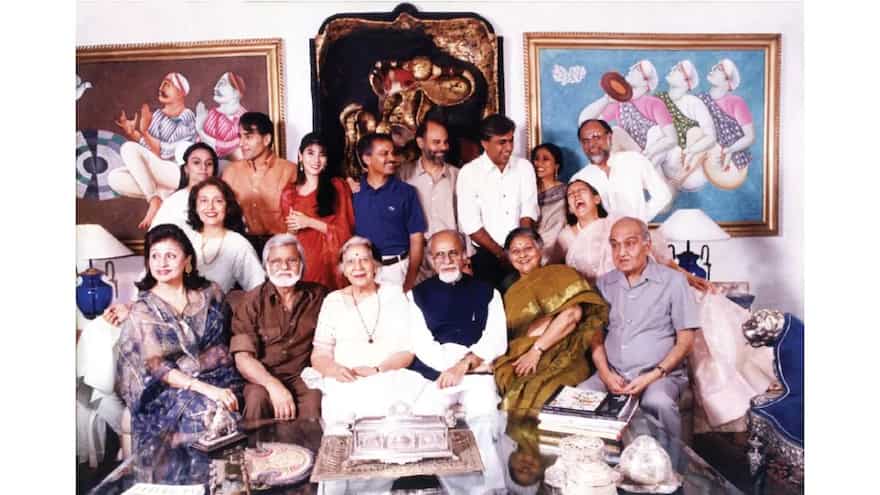
PS: Recipes/dishes are doorways to history. Food is always a memory of one’s roots, past, ancestry- and there can be no future without the past. Your past is embedded in your DNA even if you are the prime minister! Two prime ministers, I K Gujral and Dr Manmohan Singh, and, for that matter, interim prime minister Gulzarilal Nanda, were born in now-Pakistan, and it would be foolish to expect ingrained food habits to change or be abandoned overnight because a border was drawn. Shared history and recipes recognise no man-made demarcations.
Manmohan Singh's memories of food from undivided Punjab are a striking example of how taste can preserve a lost geography. Did you encounter similar instances where a particular dish carried memories of migration, childhood or cultural displacement for a Prime Minister or their family?
SS: Childhood remains in the food you've eaten in your formative years. Those memories always linger on. For PM VP Singh, for instance, who was adopted at the age of five by the Raja of Manda and then was sent back to his birth parents at age 11 (on his adoptive father's death), food and displacement were a strong motif in his own evolution as a human being. Although the Raja of Manda had a vast culinary repertoire, VP Singh was happy to just make do with dal chawal from his mother's kitchen without any fuss. The kitchen culture at both Dr Manmohan Singh and IK Gujral's homes was heavily inspired by pre-partition Punjab — tandoori roti, chole and rajma and mutton curries.
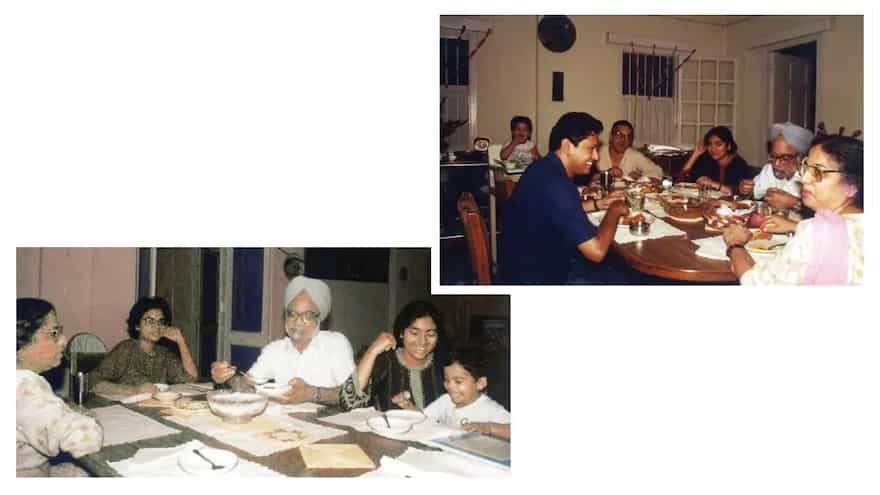
PS: At the cost of sounding repetitive, food does not recognise geographical demarcations; instead it keeps lost geography alive every time it is served at the table. It also mourns the loss of a recipe, as some of Dr Manmohan Singh’s family members in Punjab do for the masalewala chicken cooked by Dr Singh’s father and as Mrs Gursharan Kaur regrets that the recipe of her father-in-law’s ‘mutton dish relished by all’ was unfortunately not preserved for posterity. These were recipes that came from across the border. Jawaharlal Nehru might have been born in Allahabad; it might have been more than a century since the Nehru family had migrated from Kashmir, but the unbreakable link was never snapped, and the proof of the pudding literally evinced itself at the dining table
You interviewed family members, friends, cooks, chefs and former associates rather than relying only on conventional political sources. Whose memories proved most revealing — the family member remembering the person at home, or the cook who saw the leader's everyday habits up close?
SS: We wanted to give our readers a 360-degree flavour of who our Prime Ministers were and what they meant to different people in their lives. Each of the groups we interviewed served their own purpose. The family brought out unfiltered aspects, while the staff gave us a glimpse into how our PMs were around them. Most PMs, we discovered, were kind human beings. Rajiv Gandhi even remembered the names of staff at his friends' homes. Deve Gowda never got angry or pulled up his staff that have stuck with him for decades. Narasimha Rao surprised his private secretary when he showed up uninvited at his daughter's wedding! Indira Gandhi called up her personal doctor in the middle of the night when her milkman's son was down with chickenpox!
PS: The question of relying on just conventional political sources was a no-no from the outset. Equal weightage should be given to the memories of both family members, relatives and the cooks. Chadrashekhar’s cook Bachha, who still works for the Shekhar family, with his incredible memory, can give a non-stop run-down on the food habits, likes and preferences of the former prime minister.
There is an intriguing difference between what a Prime Minister might be served and what they actually choose to eat. What did you discover about the gap between the public performance of hospitality and a leader's private food preferences?
SS: Personally, most PMs like regular Indians' simple food daily. Some enjoyed their continental and Chinese fare as well from time to time. But PM AB Vajpayee beats the rest hollow -- from chaat and gol gappas procured from the streets of Lucknow or Chandi Chowk in Delhi to Golden Fried Prawns at the House of Ming at the Taj Mahal Hotel, he covered the entire gamut of gastronomical offerings! Public banquets were of course very different but primarily Indian or heavily India-inspired. Those, of course, were thoroughly well-researched menus and often more lavish.
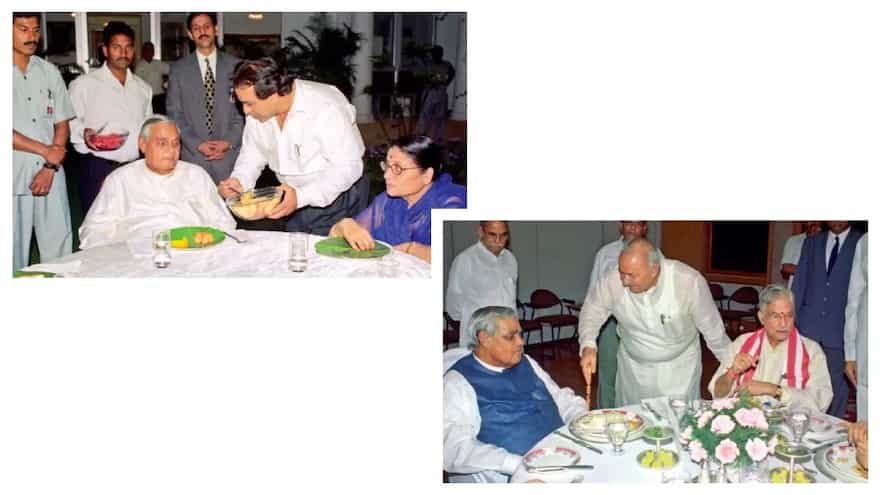
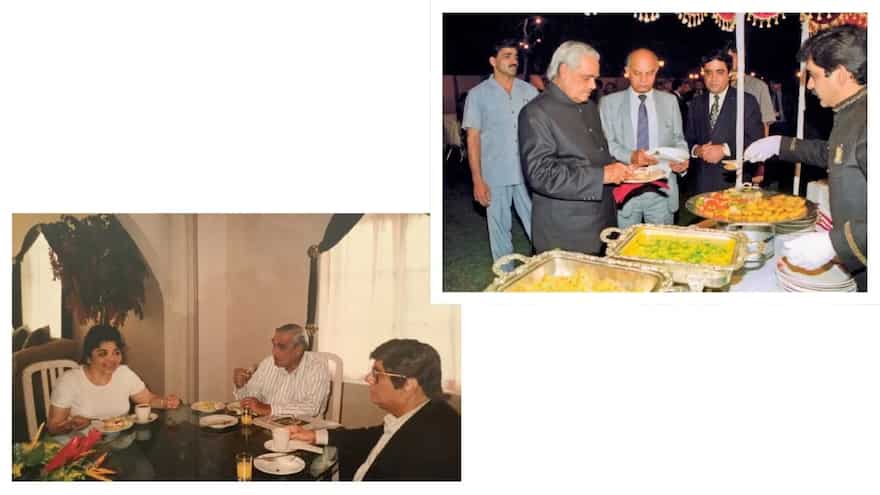
PS: Yes, there were two parts – the ‘formal hospitality’ and the private choices. The formal was naturally guided by the laid-down protocol, the nationality of the guests and the occasion. But there were instances when rules were laid aside. At a luncheon meeting with the IMF chief at the prime minister’s residence, Deve Gowda matter-of-factly chose to eat his regular chunk of ragi ball swallowed with a gulp of water.
The book preserves recipes from several Prime Ministerial kitchens. How did you decide which recipes were important enough to document, and were there any that surprised you by surviving across generations?
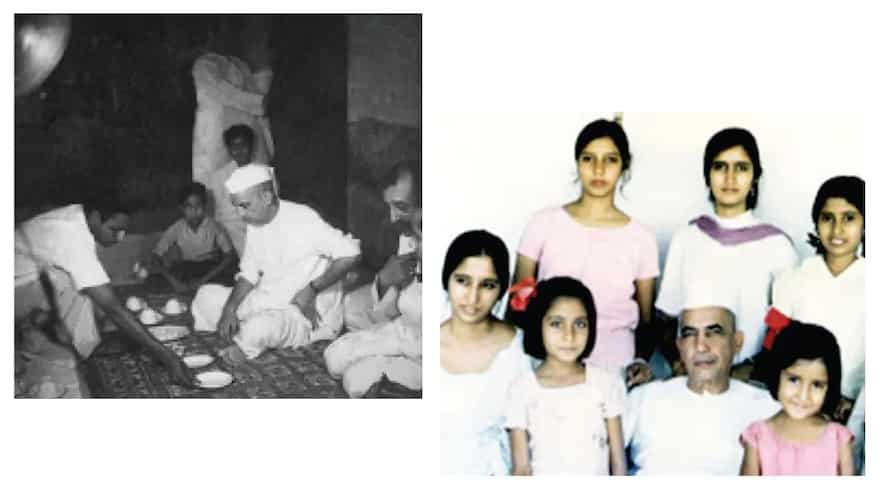
SS: We looked at the PM's favourite picks and then some family staples. Those that prominently featured on their dining tables. When it came to restaurants, we again tried to choose dishes that were most sought after. In some cases, we picked the same dishes for two to three PMs only because they conveyed an important message about their lives and times. For instance, the sabudana khichdi was introduced in Lal Bahadur Shastri's kitchen by his wife Lalita Devi when we had a shortage of wheat in the country, and the PM had called upon the nation to try and stick to one meal a day to tide over that time.
PS: We had a simple formula: Source recipes of their choice both at home and outside, and pick recipes that were regular in their kitchen. Interestingly, the recipes came from the homes of both the prime ministers and their spouses, barring Indira Gandhi and the current prime minister. It was the continuation of family culinary traditions and history, and we found that the spouses played a major role in fine-tuning and adapting the age-old recipes, which, in a beautiful way, is being continued by the younger generation of prime ministers. The truth is, recipes survive across generations because that is how it is meant to be
Indira Gandhi's relationship with food, for instance, seems to complicate the image of an austere political leader: she enjoyed regional food, hosted family gatherings and maintained strong domestic rituals despite the demands of office. Did food repeatedly challenge the public stereotypes you encountered while researching the Prime Ministers?
SS: Food brought out their human side. Mrs Gandhi could experiment with food and seemed to be a gourmet of sorts. But she was a small eater and very conscious of her weight. From goshtaba to caviar, she didn't mind having kulladh chai or traditional Indian food off a pattal while sitting on the floor!
PS: Prime Minister Indira Gandhi was a public persona, and Indira Gandhi, the daughter, wife, mother, cousin sister, niece, and friend, was a different personality, infused with warmth and empathy. And often, she displayed a wicked sense of humour, particularly at the dining table, where she didn’t hesitate to ask an overindulgent guest, in all innocent concern, if that was all the person was eating, or poker-facedly claim that the secret of the perfect tenderness of Kashmiri meatballs was that they chewed the meat for a day and a half to achieve the result. Yes, our research challenged many stereotypes when it came to food. Despite strict medical restrictions and adherence to a simple prescribed diet, someone like PV Narasimha Rao, with his stern public image, never let off an opportunity to indulge in falafel and pizza.
Did you notice a difference between the food habits of Prime Ministers who came from political or social privilege and those who came from more modest backgrounds? And did those early experiences continue to shape their relationship with food once they occupied the country's highest office?
SS: Food is what makes you who you are. It is often said that when a child grows into an adult, he/she will always gravitate towards their comfort food, which is primarily the diet one has grown up on. For instance, the Harrow- and Cambridge-educated Nehru always enjoyed his eggs, toast and porridge. Whilst our current PM enjoys a sadi Khichdi, bajre ka rotla and milk -- all Gujarati dishes he ate while growing up.
PS: The prime ministers’ office did not in any way impact their food habits; modified to some extent, certainly, but there were no drastic changes. They kept their food roots alive and, in fact, to quite an extent, simplified them barring an occasional treat or so. It goes without saying that their backgrounds defined their taste, and it continued to prevail.
You describe the research process as involving doors being opened and slammed shut. What was the most difficult story to verify, and was there any anecdote you initially doubted but eventually found convincing evidence for?
SS: We didn't go by hearsay at all. Our focus was simple -- go to real people -- immediate family and friends and people who had known the PMs or had interacted with them closely. The idea was to tell the story through them. We didn't bank on popular stories on the internet. We heard them straight from the horse's mouth!
PS: We approached those who were the most authentic source; some chose not to talk, a few went off record, and a very, very few felt that the book concept was not worth bothering about. It did take a long time and continuous effort to get them to open up, but once they did, they were more than welcoming. I don’t think that any anecdote was doubtful because the person who related it backed it with perfect facts and figures. Yes, we cross-checked some, and they turned out to be right as related.
After spending years reconstructing the private lives of India's Prime Ministers through their kitchens and dining tables, what do you think food reveals about the Indian political class that conventional political history tends to leave out?
SS: Conventionally, we were looking at our PMs in black or white, but we discovered the greys and delved into them. We knew there were mistakes some of them committed when it came to political decisions, but we chose to go beyond judgment and understood the context of where some of them may have come from. Our aim was to understand and accept the human beings that they were without pronouncing a judgment on them.
PS: India as a nation seems to be obsessed with politics from air-conditioned drawing rooms and clubs to down to the streets. For some reason, there is also a sort of unwritten rule that anything to do with the prime ministers should be about his/her office. And so conventional history leaves out the human side. Food reveals the whole personality. Food is not just about dining preferences and dislikes; it is the clearest manifestation of the strengths and flaws, the emotions, the attachments, etc. It reveals a fully fleshed-out prime minister.
***
The Prime Minister’s Table: Delicacies and Diplomacies from the Era of Nehru to Modi (ISBN: 978-93-5543-379-4 | Price: INR 1,499 | Format: Hardcover + Jacket Pages: 322) by Purabi Shridhar and Sanghita Singh is published by Amaryllis, an imprint of Manjul Publishing House.




