


 Share
Share

The Indian Jews are a disappearing community, and as per a blog on the Hadassah Brandeis Institute, the number went down from 30,000 Jews in the 1950’s and 1960’s to a mere 5000 people among the Indian community now. We take this opportunity to honour some of the dishes that this community has perfected over the years that have intermingled local Indian ingredients, condiments, and spices. But before that, a little about their community, who have woven themselves into the cultural fabric of India.
There are five main Jewish communities in India. The Bene Israelis lived in villages along India's western coast for over 2,000 years. The Bnei Menashe are a small community that claims to descent from one of the lost tribes of Israel and who live in Northeast India. The Bene Ephraim settled in Andhra Pradesh in the 16th century. The Baghdadi Jews settled throughout West Bengal and brought with them cuisine from Baghdad, including kebabs and kubbeh. The largest community is the Cochin Jews of Kerala, traders who settled there over 1,000 years ago.
It is interesting to note that most of the Indian Jews settled along the coastlines, rivers, and lakes; this gave birth to a fusion cuisine dominated by rice and fish. As for their influence on Indian cuisine, The Bene Israelis introduced bagares, rice flour dumplings. The Cochin Jews cook dishes like erachi olathu, stuffed vegetables, and uruli appam, rice flour pancakes. Their chicken ghee roast and paya stew have become popular across Kerala. While each community has its own specialties, Indian Jewish cuisine shows the delicious synthesis of local Indian ingredients with Jewish culinary traditions.
1. Chicken Chitarnee
Chicken Chitarnee is a specialty of the Bene Israel Jewish community. In this unique preparation, chicken is first marinated overnight in a blend of Indian spices, including ginger, garlic, green chillies, coriander, and cumin. The next day, pieces of chicken are layered in an earthenware pot with potatoes that have been boiled until soft.
A rich coconut milk-based gravy is poured over the ingredients. It contains ingredients like freshly grated coconut, tamarind paste, which adds a subtle tang, and spices including mustard seeds and curry leaves, which were tempered in oil. The pot is then sealed with dough and baked slowly in a low oven. The gradual cooking allows the flavours to permeate the chicken and potatoes.
When served, the tender chicken and potatoes are bathed in a creamy, aromatic gravy. Chicken Chitarnee is a delicious example of how local Maharashtrian techniques were combined with Jewish cooking methods and global flavours to create a truly hybrid cuisine.
2. Beef Ularthiyathu
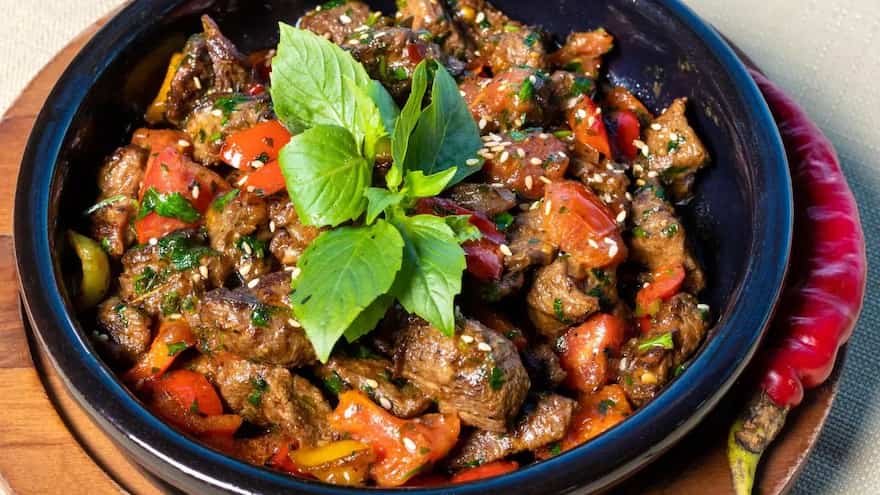
Beef Ularthiyathu is a classic dish from the Kerala region of South India. Thinly sliced beef is stir-fried with onions, curry leaves, and spices to create a flavourful and aromatic dish. The beef is first marinated in yoghurt to tenderise it. Then it is cooked down with mustard seeds, fenugreek, and chilies until the meat is soft and the onions are caramelised.
Some historians credit the Jewish community with influencing this beef recipe. Jews settled in Kerala over 2,000 years ago, introducing new ingredients and cooking techniques. They introduced more humane slaughtering techniques with the establishment of trade routes with the Middle East. Over centuries, these blended with South Indian flavours to create unique hybrid dishes. Beef Ularthiyathu is one example, combining local beef and coconut oil with seasonings Jews introduced.
Today, the dish remains a specialty of Kerala, especially among its Jewish population. It is traditionally served with rice or bread to soak up the rich gravy. A touch of Jewish influence enhances this classic South Indian beef stir-fry.
3. Hanse Mukhmura
Hanse Mukhmura is a specialty of the Indian Jews, reworked to accommodate local ingredients. The dish features duck prepared in a unique almond-based gravy. To make it, duck meat is marinated with tamarind paste, ginger, and spices, then slow-cooked until tender. Next, almonds are ground to a paste with shallots, garlic, chilli peppers, raisins softened in water, and aromatic bay leaves. This fragrant almond mixture is cooked into a rich gravy to blanket the duck.
This dish took birth once the Indian Jews became accustomed to the local spices, growing beyond their knowledge of chilli and garlic. The Jewish colony in Kerala’s quiet Mattancherry continues to prepare its age old cuisine. They introduced new ingredients and cooking techniques that blended with local Goan cuisine. Almonds and raisins, both common in Jewish cooking, feature prominently in this dish. The melding of Jewish and Goan flavours may explain how this unique duck preparation became a specialty of Goa, a blend of cultural heritages on India's western coast.
4. Cholent
Cholent is a staple of Shabbat meals for many Indian Jews. The traditional Ashkenazi cholent of meat, beans, and potatoes is given an Indian twist with the use of lentils and spices. Yellow split peas, or chana dal (split chickpeas), replace the beans, adding protein and earthy flavours. Ground cumin, coriander, ginger, garlic, and turmeric are sautéed in ghee or coconut oil and added to the pot.
This infusion of spices gives the cholent a vibrant golden hue and warm, complex notes reminiscent of Indian curries. Potatoes remain, along with beef or chicken. The meat is often marinated in a spice paste of the same flavours before simmering overnight. On Shabbat mornings, families wake to the fragrant aromas of Indian cholent wafting through their homes. This hybrid dish bridges two cuisines and cultures, satisfying the stomachs and souls of the global Jewish community.
The dishes highlighted here demonstrate how the small but influential Indian Jewish communities have left their mark on Indian cuisine over the centuries. By blending local ingredients and cooking techniques with culinary traditions from the Middle East and Europe, they developed truly hybrid dishes that have become beloved across different regions. While there are a lot more dishes they have perfected over the years, like including sambar in their diet, these dishes are truly hidden gems tucked away in the Jewish colonies in the nooks and crannies of the country.




