


 Share
Share

Due to a steep decline in the prices of vegetables and pulses, the costs of an average vegetarian and non-vegetarian thali saw a drop in prices by 17% and 12% respectively. The Roti Rice Rate (RRR) report—released by Crisil Intelligence—noted that potato prices witnessed a cost reduction by 31% as a result of a higher rabi yield while the prices of tomatoes were low by a whopping 40% due to consistent supplies from western and southern markets. Amongst this, onion prices were touted to have had the steepest reduction by 51%, since the anticipation of receiving fresh Kharif harvests coupled with subdued export demand has led to stock clearance by traders.
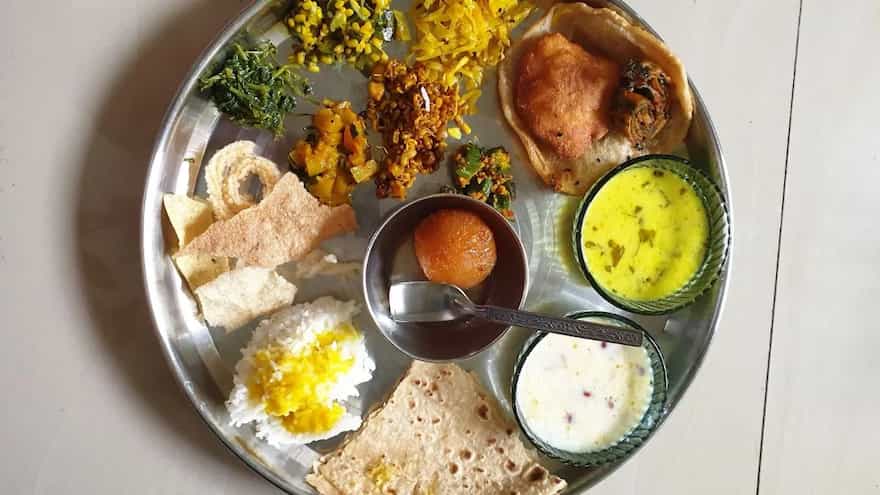
Image Credits: Wikimedia Commons
On the other hand, the price of pulses declined by 17% due to a surge in imports—Bengal gram witnessed a nine-fold increase whereas yellow peas rose by 85% and black gram by 31%. The report also stated that festive demand led to a rise in the prices of vegetable oil by 11% and LPG costs by 6%—thus limiting further decline in the costs of thali meals. Although the price of a standard non-vegetarian thali saw only a small drop in price due to the cost of broiler—which makes up for half the cost—reducing by a modest 6%, cheaper vegetables and pulses still managed to dip the price down. The RRR report, which tracks the cost of a standard home-cooked thali across regions within the country, offers practical insight into the impact of food inflation on household budgets.
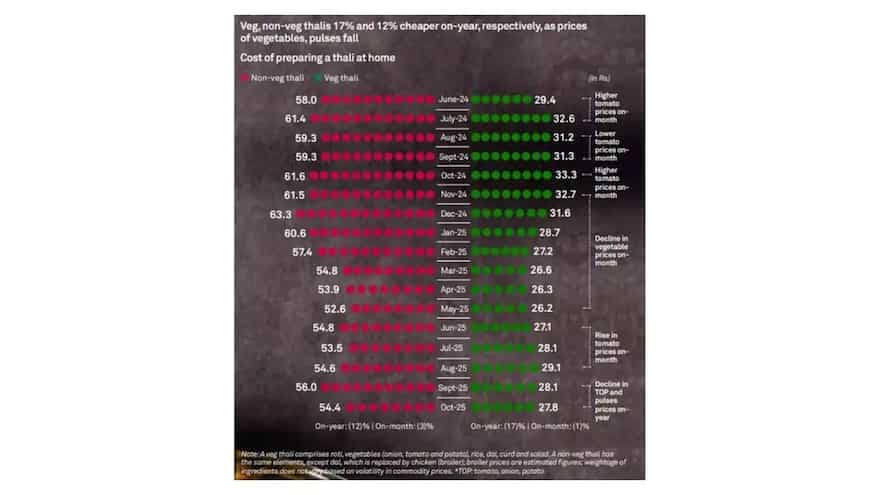
Image Credits: ANI
Also Read:
The Consumer Price Index (CPI), which measures India’s retail inflation, has continued to remain in a stable zone. When studied on a month-to-month basis, the decline in prices for vegetarian and non-vegetarian thalis have been minuscule—easing expenditures by 1% and 3% respectively. While tomato and onion prices dipped by 8% and 3%, broiler prices also declined by 4% due to an oversupply. Following the headline inflation of June 2017 being attributed to be the lowest, the report also states that the recorded rate of 1.54% of September 2025 has since replaced it. Other factors also include a reduction in the cost of oil and fats, eggs, cereal and cereal products, pulses and their by-products, fuel and light, while retail inflation data for the month of October is expected to come in this week.




