


 Share
Share

THERE WAS A TIME when gin had a rather particular following. I remember in the late 1980s the men seemed to gravitate towards their whisky and beer, while the women had their gin and tonics and Gimlets. Gin was familiar, almost sidelined into a mixer — taken with soda and lime cordial or drowned in tonic.
Some two decades later, gin became fashionable and highly sought after. Premium international brands such as Tanqueray and Bombay Sapphire helped put the category back in the spotlight, while the global revival of classic cocktails gave drinks such as the Negroni and Martini a new lease of life.
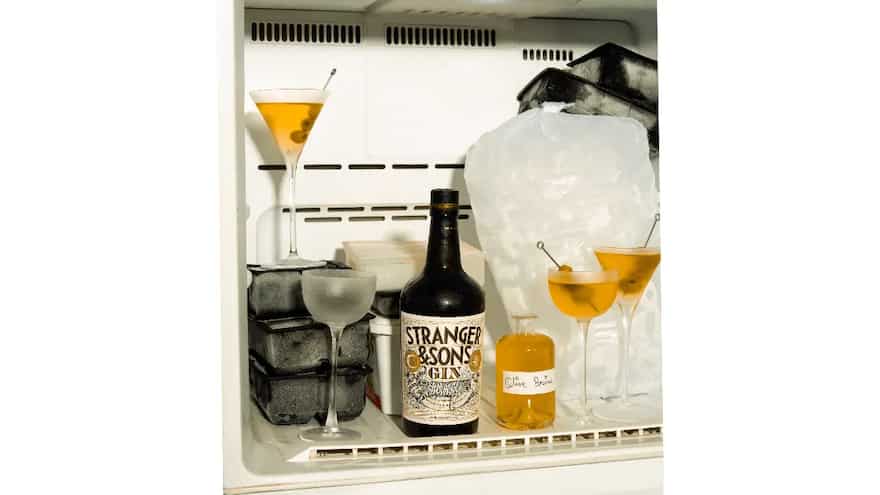
But the numbers tell a more dramatic story. When Greater Than launched in 2017, premium Indian gin was barely a category. Nao Spirits co-founder Anand Virmani estimates that the market then amounted to roughly 10,000–12,000 cases a year, largely across imported labels such as Beefeater, Bombay Sapphire and Gordon’s. By 2022, he says, the category had grown to approximately 3.2 lakh cases.
What happened in between was more than a gin boom; it was an education in what gin could be. The first wave of Indian craft gin — Greater Than, Hapusa, Stranger & Sons and others — gave drinkers something beyond the familiar G&T. Suddenly, gin could have a sense of place. It could taste of Himalayan juniper, Indian citrus, spice, tea, earth and flowers. Hapusa, for instance, built its identity around Himalayan botanicals, while a newer generation of distillers began pushing the category further into localisation and, well, flavour.
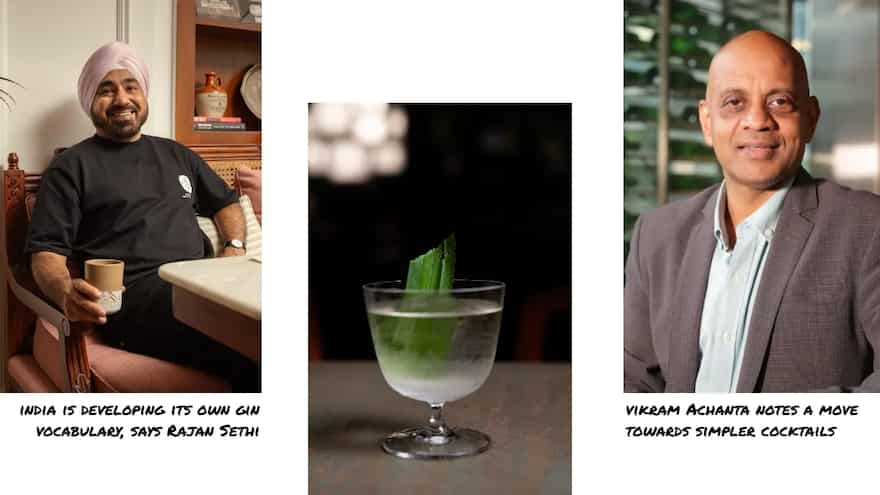
“India isn’t just producing gin anymore, it’s developing its own gin vocabulary,” says Rajan Sethi, Managing Director of Bright Hospitality, whose portfolio includes Top Banana, a neighbourhood bar in GK II. Having worked in hospitality since 2007, he has seen the industry move through several such waves.
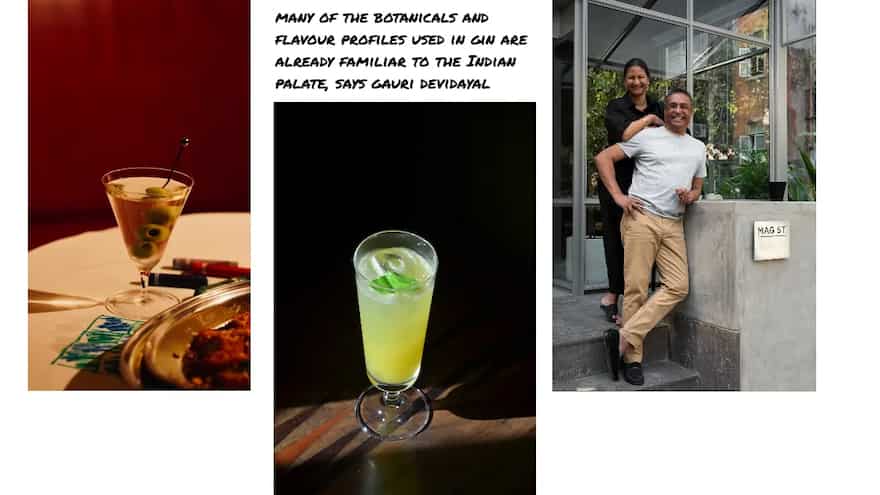
It is also a vocabulary that seems particularly suited to the Indian palate. Gauri Devidayal, co-founder of Food Matters Group, points out that many of the botanicals and flavour profiles used in gin — coriander, pepper, cardamom, citrus, tea, turmeric, raw mango and regional limes — are already familiar to the Indian palate. The bigger shift, she says, has been in the way Indians perceive homegrown spirits: what was once considered a compromise is now a source of “pride and curiosity” around Indian-made premium products.
The latest generation of Indian gin is perhaps the clearest indication of how far the category has travelled. Vaniitha Jaiin, founder of Revelry Distillery and creator of Vanaha Gin, launched Vanaha in 2025 — not at the beginning of India’s craft-gin boom, but at a point when consumers had already become considerably more discerning. Her answer was to go deeper into the idea of what an Indian gin could be. Crafted in Goa’s Sattari forests, Vanaha is built around 24 botanicals sourced from across India’s diverse landscapes and a five-step distillation process designed to preserve their delicate characteristics.
***
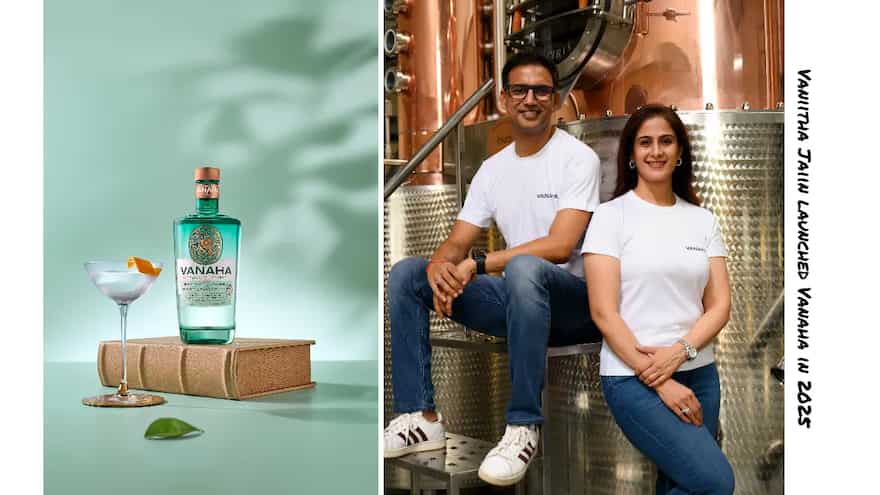
That feels significant. The new Indian gin isn’t simply trying to give the G&T a local accent; it is asking the drinker to consider gin as a spirit in its own right. Jaiin says that consumers are increasingly paying attention to botanical profiles, provenance, production and finish — essentially, to the character of the gin itself. It is a considerable evolution from the days when gin’s primary job was to provide a backbone for tonic.
THE CHANGING FACE OF COCKTAILS
For a while, the modern cocktail seemed to be engaged in an arms race of sorts: more ingredients, more technique, more theatre, more complexity in the glass. None of that has disappeared, nor should it. But there is a discernible appetite now for drinks that don’t need quite so much explanation.
Devidayal believes this is less about gin making a comeback — “it never went away” — and notes that drinkers are returning to things that are familiar to them. After years of elaborate menus and theatrical cocktails, she says, there is comfort in ordering a Martini, Negroni or Old Fashioned.
Vikram Achanta, CEO of Tulleeho, sees the same movement, but is careful not to call it a rejection of experimentation. “There’s also a move towards simpler cocktails,” he says, while pointing out that gin remains one of the categories most naturally suited to experimentation through seasonal botanicals, limited editions and unusual flavour combinations.
The difference, perhaps, is that experimentation now needs a reason. With the proliferation of gins and increasingly diverse botanical profiles, Achanta believes bartenders have had to understand the spirit more deeply. The question is no longer simply what ingredient is in a glass, but what actually works with the particular gin being used. That is where technique and balance begin to matter.
THE MARTINI COMES BACK AROUND
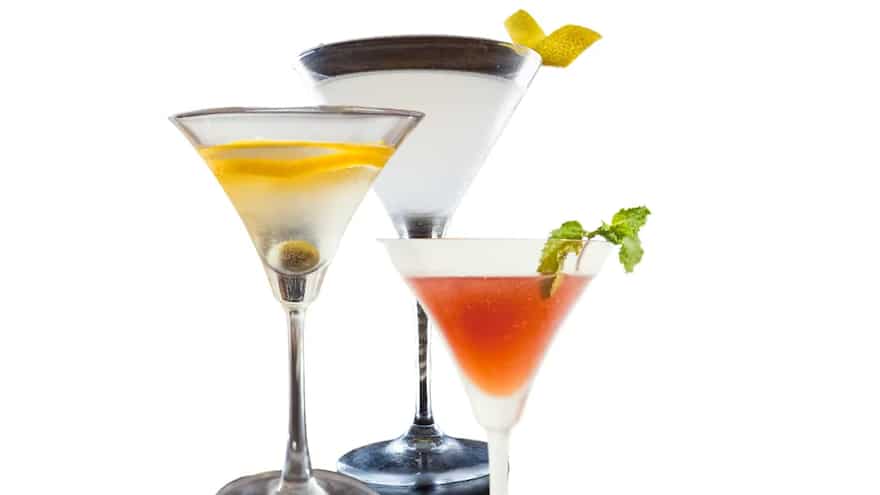
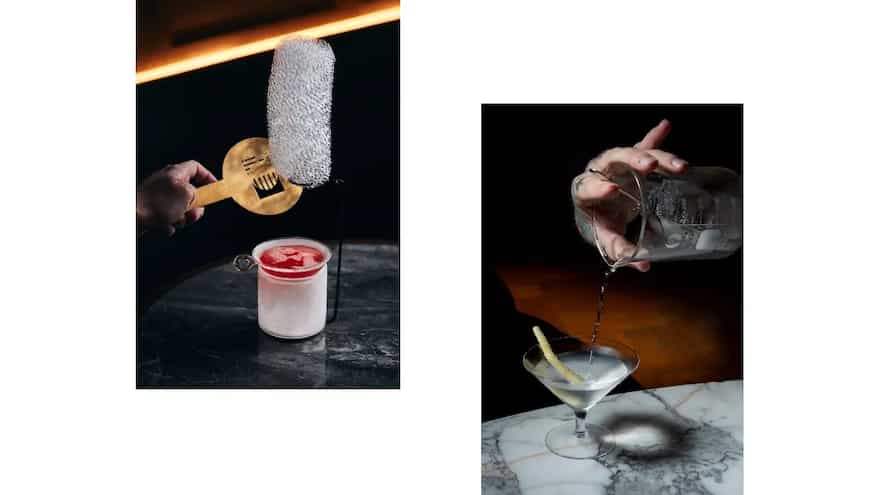
Few cocktails put the base spirit quite so squarely under the spotlight. There is nowhere to hide behind a long ingredient list, an elaborate garnish or a dramatic presentation. Gin, vermouth, dilution and temperature have to work together — and the drinker can taste the difference.
For Devidayal, the Martini is also the ultimate test. It is the first drink she orders at a bar and, she says, “how I judge a bartender”. Yet its very simplicity makes it endlessly personal: the base spirit, vermouth, optional bitters and garnish can all change the drink without taking it outside the boundaries of what makes it a Martini.
At Idoru in Mumbai, Rahul Kamath is seeing that personalisation play out in real time. Guests are increasingly comfortable specifying whether they want their Martinis dry, dirty or filthy, while the bar also sees a strong preference for vodka Martinis — suggesting that for many drinkers, the attraction remains as much about the cocktail and the experience as the gin itself.
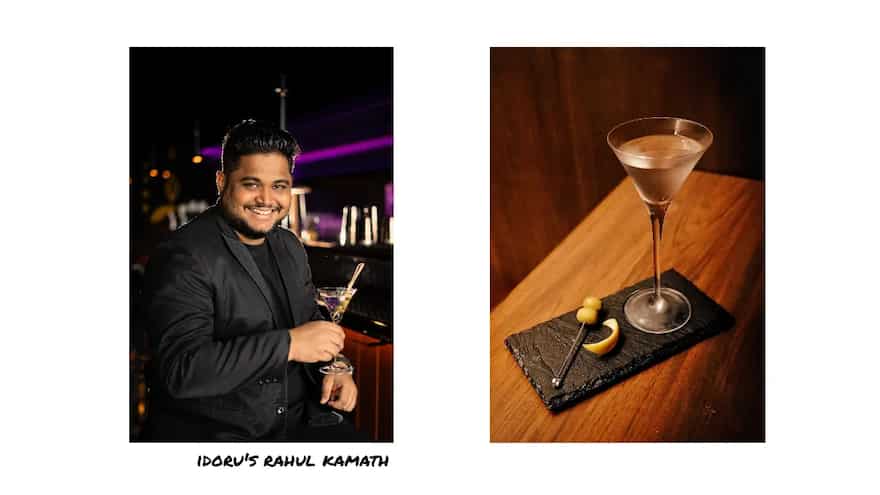
The technical obsession can be considerable. Idoru serves its Martini at -7°C, keeps the glassware frozen and batches the drink to achieve precise dilution and consistency. Its Martini uses three gins — Setouchi Lemon, Roku and Greater Than — to create a balance between Japanese citrus and botanicals and Indian gin character.
At Top Banana in Delhi, Sethi is finding that drinkers are becoming more articulate about what they want. The Martini, he says, is moving beyond being simply an image or ritual: people are beginning to understand that changing the gin or vermouth can fundamentally alter the drink.
Which is precisely why the Martini is such an interesting vehicle for this new generation of gin. A spirit designed to be appreciated for its complexity doesn’t necessarily need tonic, fruit, herbs or a long list of supporting ingredients. Vanaha now includes a Martini among its recommended serves, a neat demonstration of how the category has moved from being something to mix with to something worth drinking for what it is.
And yet, interestingly, none of this seems to mean that the Martini has to become the basis of all things gin. In Goa, MTW — Nao Spirits’ office by day and neighbourhood bar by night — approached the drink from almost the opposite direction. Its three-day Martini Theory Works residency was designed to strip away some of the intimidation surrounding the Martini, beginning with approachable variations before moving towards stronger, more spirit-forward expressions. Martinis were paired with fries, guests could make their own and there were even playful challenges involving how many olives could be stacked on a drink. The point wasn’t to teach people the “right” way to drink a Martini, but to show that it could be approached, played with and enjoyed without ceremony.
That may be the most telling part of the current Martini moment. The drink is simultaneously becoming more technical and less intimidating. Hapusa, for instance, is using the Martini to showcase rather than disguise its character. Its Himalayan juniper, raw mango, turmeric, ginger, cardamom and Gondhoraj lime give the gin a profile with enough flavour and texture to hold its own in a spirit-forward drink.
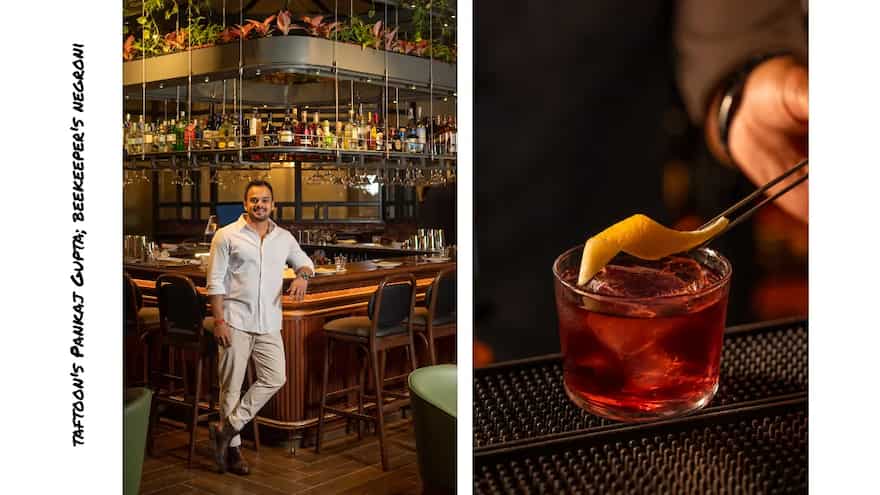
The same principle is visible in the way bartenders are approaching classics more broadly. At Taftoon in BKC, founder Pankaj Gupta has built the bar menu around classics and riffs on them. He believes drinkers are looking for “a bit of familiarity again” — something they already know, but with the possibility of seeing what a bartender can do with it. It is not nostalgia for nostalgia’s sake.
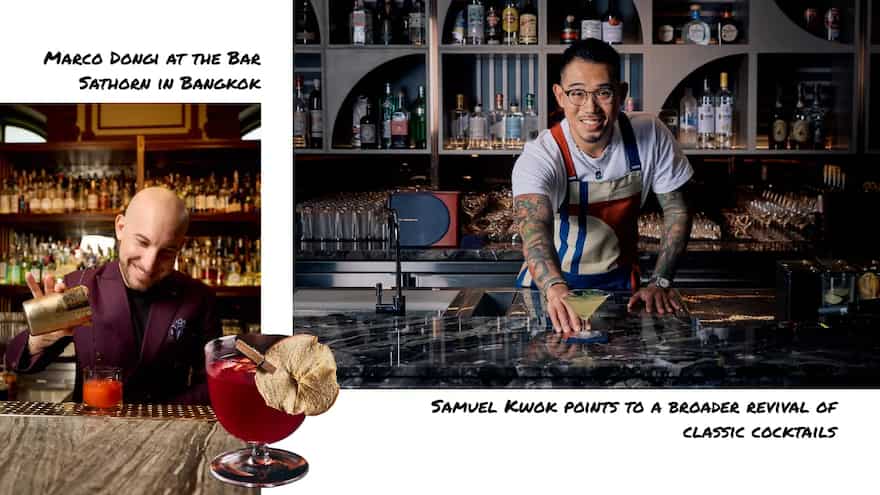
The global perspective bears this out, especially across Asia. At Bar Sathorn in Bangkok, Marco Dongi sees classics as drinks that allow the quality of the spirit and technique to speak for themselves. Samuel Kwok of The Opposites in Hong Kong describes the movement less as a gin or Martini trend than as a broader revival of classic cocktails, helped along by better technology and equipment that allow bartenders to reinvent familiar formats in increasingly sophisticated ways.
Both, however, make an important distinction: this isn’t necessarily about consumers abandoning modern cocktails. They are becoming more selective. Dongi describes a broader shift towards more conscious drinking, where fewer ingredients can put greater emphasis on the quality of the spirit, balance and technique. Kwok sees cocktail culture as a pendulum, moving from dramatic presentations towards a cleaner, more minimalist approach while keeping quality at its centre.
Perhaps this is why gin, despite facing the growing glamour of agave and the renewed interest in craft rum, still has an advantage. It is familiar, but it is rarely one-dimensional.
Devidayal puts it neatly: gin has “the advantage of familiarity and habit”, while agave currently has the advantage of discovery. And she cautions that another beautiful bottle accompanied by another botanical story is not automatically exciting anymore. The next phase for gin, she believes, is about giving consumers a fresh reason to keep choosing it.
This may not require another reinvention of the spirit. It may simply require us to look at it differently. The Martini takes a spirit that has spent years being explored through botanicals, local ingredients and increasingly elaborate serves, and strips it back to the essentials. In doing so, it makes the drinker pay attention — to the gin, to the vermouth, to the temperature, to the dilution and, ultimately, to what they actually like.
Maybe that is where the current gin renaissance is really headed. Not towards bigger, louder or more complicated drinks, but towards a drinker who knows enough to appreciate simplicity — and a bartender skilled enough to make that simplicity interesting.
WHY THIS MATTERS FOR BRANDS
- Provenance earned attention; performance will sustain it. As botanical origin stories become more common, brands must demonstrate how their liquid behaves in recognisable serves.
- Classics make effective discovery formats. A Martini, Negroni or G&T gives consumers a familiar frame through which differences in botanicals, texture and finish become easier to understand.
- The bar is a product-demonstration space. Bartender education, considered menu placement and consistency in temperature and dilution can turn an abstract brand story into a repeatable drinking experience.
- Simplicity raises the stakes. In a spirit-forward cocktail, quality has nowhere to hide. The brands equipped for gin’s next phase will be those that give consumers a reason to notice the liquid — not merely the bottle.
BY THE NUMBERS
APPROXIMATELY 27×: The estimated growth of India’s gin category—from roughly 12,000 cases in 2017 to approximately 3.2 lakh by 2022.
24 BOTANICALS: The ingredients sourced from across India for Vanaha’s forest-inspired flavour profile.
5 STEPS: Vanaha’s proprietary distillation process, combining traditional and modern techniques to preserve delicate botanical characteristics.
-7°C: The temperature at which Idoru serves its three-gin Martini, alongside frozen glassware and precisely controlled dilution.
Nikhil Merchant is a Mumbai-based F&B consultant, lifestyle and luxury writer, and the voice behind Nonchalant Gourmand, where he fuses culinary storytelling with cocktail craft. His work spans national and international publications. Through Elevenses Hospitality, he also consults on restaurant menus, beverage programmes and concept design. He can be found on Instagram @nonchalantgourmand.
***
This feature is part of TRENDS WITH BENEFITS, Slurrp's monthly read on what moved the food and beverage industry, across menus, glasses, and the numbers behind them. Write to slurrp@htmedialabs.com if you'd like to receive the newsletter, with "Trends With Benefits" in the subject line.




