


 Share
Share

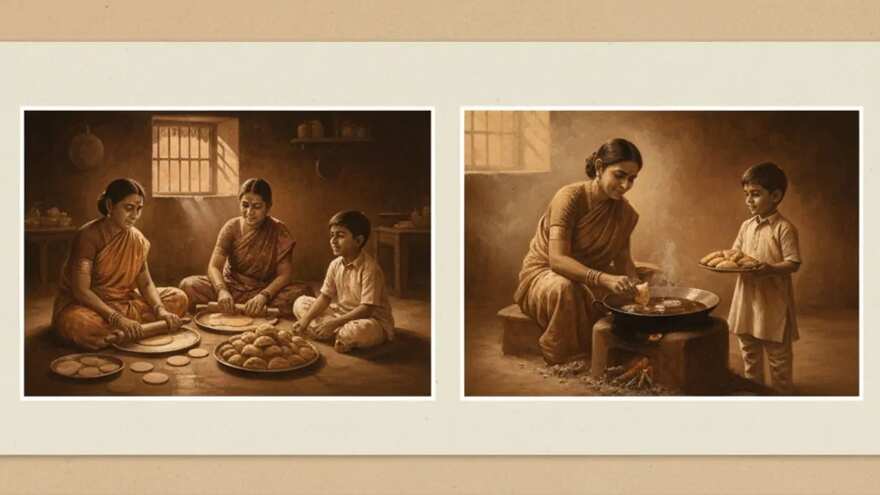
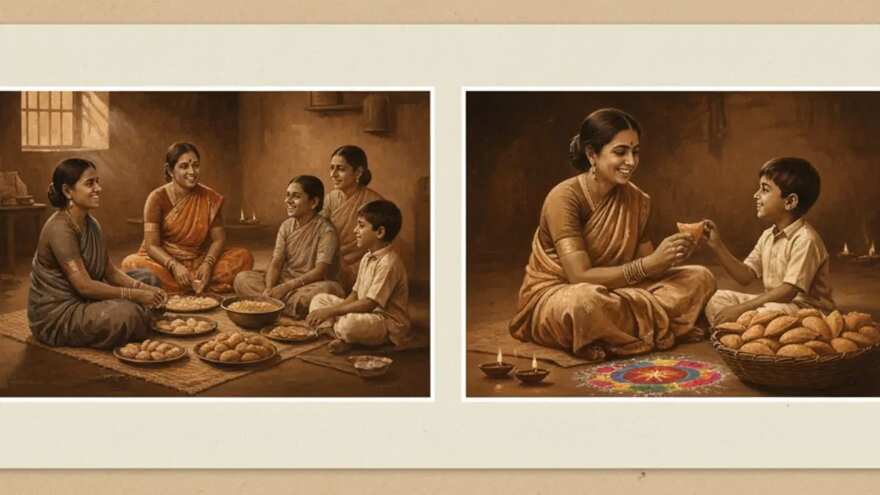
AS A CHILD, 28-year-old Delhi-based filmmaker Sunil Chandrani was a ‘gunjiya ambassador.’ The gunjiyas that the women of his family made during Diwali time each year were his favourites. He would help in the kitchen, roasting the filling and pressing the dough in the gunjiya makers. As the eldest son of the family, the eight-year-old would also go about delivering some gunjiyas to his close family members. “Around Diwali time, I would always have a few gunjiyas in my pocket. I would roam about and eat them as I went,” he recalls. He would also steal some from the kitchen, without his mother finding out, and pack them into his school lunchbox. At school, he would barter them for other exciting foods with his classmates. Today, Chandrani’s mother still makes gunjiyas during Diwali, a recipe she learnt from her mother, and kindly shared with us.
Ingredients:
Raisins 100gm
Cashews 100gm
Fox nuts 150gm
Almonds 100gm
Semolina 250gm
Condensed milk 300gm
Jaggery 400gm
Maida (refined flour) 500gm
Ghee 100gm
Method:
- Rub the flour and ghee together and make a nice dough. Then cover with a damp cloth so it doesn’t dry out, and put aside to rest.
- Now, roast the semolina on a low flame. Add roasted, crushed fox nuts, crushed almonds and cashews, and raisins to the filling. Add condensed milk to the mix and cook on low heat. Mix well.
- Add the filling to the rolled-out dough. Add water on the edges and use the gunjiya maker to press it down and seal it.
- Half fry it first, then once it’s cooled, refry. This will make it brown, crispy and ready to eat.
*
Most north Indian households across the country share this tradition of making gunjiyas during Diwali. And since it’s an activity that happens within the four walls of the kitchen, women often have far fonder memories of the process than men. It emerges not just as a festive ritual, but also as a way of bonding, of sharing love over food and of women finding agency.
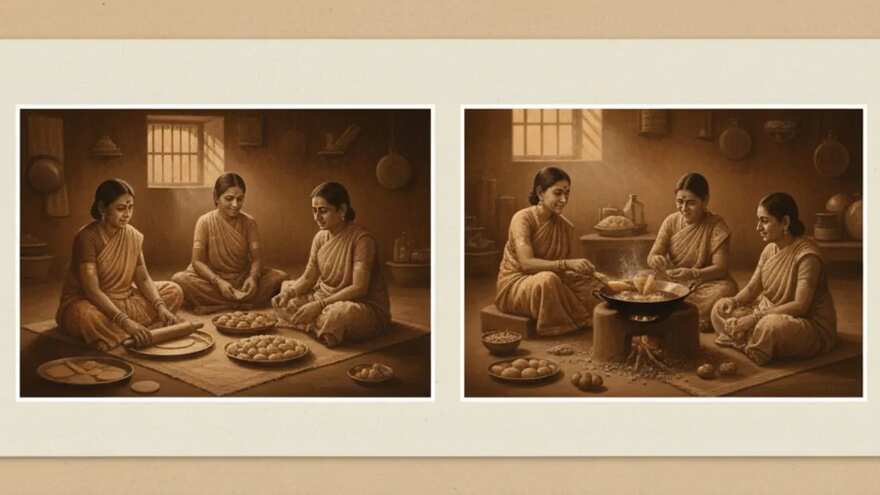
For instance, 23-year-old Aditi Gupta has fond memories of helping out in the kitchen as a young girl while the women of her family made gunjiyas. In her hometown in Jharkhand, they are called karanjis, and it was at her Nani’s house that she often enjoyed them. Once her family moved to Navi Mumbai, her mother inquired with neighbours and adapted the recipe, based on what ingredients were accessible in the region. But even as the recipe changed, the tradition of women making food during Diwali has not. “Sitting in that kitchen, I remember a lot of talk about food, and gossip about those around. It was a fun atmosphere to be in. You can feel the tangibility of something exciting coming up,” says Gupta about the festive season. She would also help out in the kitchen, and the gunjiyas she made would be kept separate from the rest, part of her special batch. While her mother made gunjiyas, other women of the family would make different dishes, and then it would all get pooled together and enjoyed during dinner. Essentially, women made this festival.
Here’s her mother’s unique recipe, a blend of north Indian roots and Maharashtrian additions:
- Take equal parts suji and mava. Lightly roast the suji and set aside. Roast the mava separately and set aside.
- Take ample dry fruits and crush them lightly for the filling.
- Add elaichi powder and mix well. Add sugar, half the amount of the suji and mava you’ve measured out. Mix everything by hand.
- Roast the maida in ghee and then add the filling and fold.
- Fry and enjoy the pedukiya (another name for gunjiyas).
*
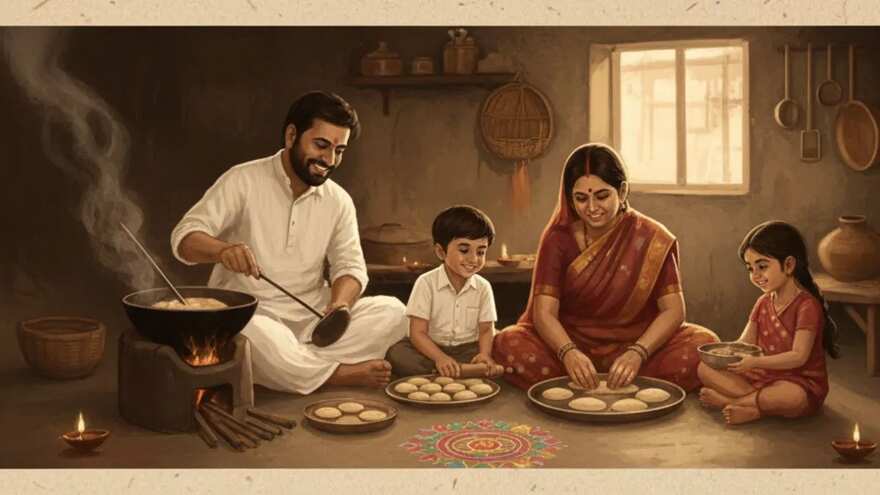
While in some households the responsibility falls on the women of the house, in others, the men help out too, the delicious gunjiyas luring them into the kitchen. Twenty-nine-year-old Khushboo Khatri recalls loving the bickering between her parents in the kitchen. Her mother would prepare the stuffing and roll out the dough, she and her brother would fold it in, and her father would do the frying. “If, while frying the gunjiya burst, my father would lament about why it happened this way. He would vow not to do it next year. But he always did,” she recalls. The four of them would butt heads over a simple recipe:
- For the stuffing, roast the mava until it dries and set aside to cool.
- Add the grated kopra (dry coconut), dry fruits and powdered sugar to the mava.
- Take refined flour and add ghee for the covering. Rub the ghee properly with the flour and make a stiff dough.
- Roll the dough and place it on the gunjiya maker. Add the stuffing, apply water on the edges, and seal it.
- Fry on low to medium heat until golden brown.
*
While Khatri lives in Ahmedabad now, her family home is in Jodhpur. And this tradition of making treats during Diwali has continued in Khatri’s house largely because everyone in her family is a foodie. “My mother would taste something outside once and then make it exactly like that at home. She’s an amazing cook,” says Khatri. Given the love for food the family shares, they end up making all types of cuisines at home, be it South Indian, Gujarati or Maharashtrian food. “Food is an integral part of gatherings and rituals. I also love cooking. It’s imbued in us. If I have to show affection and love, it’s through food. The effort and feelings that go into making something for someone are incomparable,” she says. For the Khatri family, food is a love language, one that intensifies manifold during Diwali.
*
One will find a similar passion for food in 35-year-old Akanksha Arora’s family. The Mumbai-based pet baker runs her own business, Barker’s Dozen, making treats for dogs. She’s educated in baking and has a deep love for food and cooking. And this love for food is resting on a foundation of love for food that she’s observed in her family since she was a child. “My family is quite food-oriented. We have certain traditions when it comes to food, and food is a rather significant topic for us. Everyone has an opinion,” she explains. If she’s cooked something and brought it for a family gathering, no one there is going to mince their words. Arora’s cooking will be judged not just for how it tastes, but how it looks, whether the colour of the masalas has come through, what it’s paired with and so on. “Since I was a child, I’ve taken criticism in my stride. Sometimes I fight back about how it’s supposed to be. But generally, such feedback develops the cooking, pushes me to do better next time,” she adds.
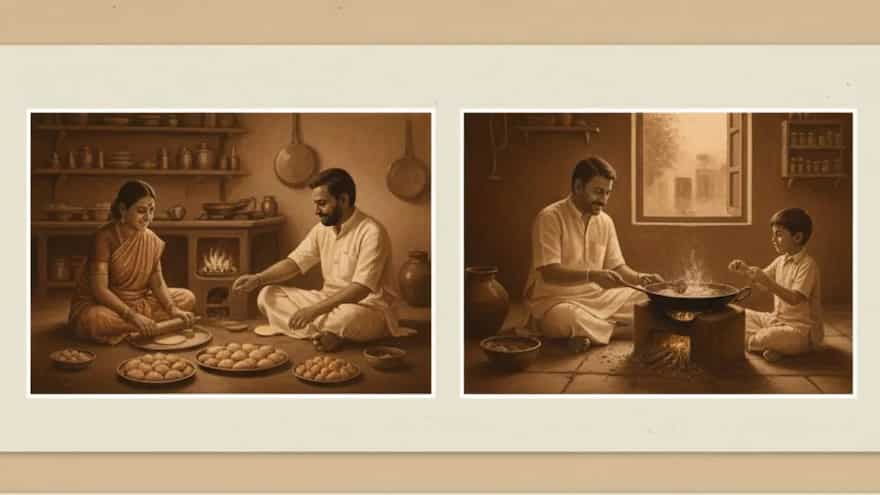
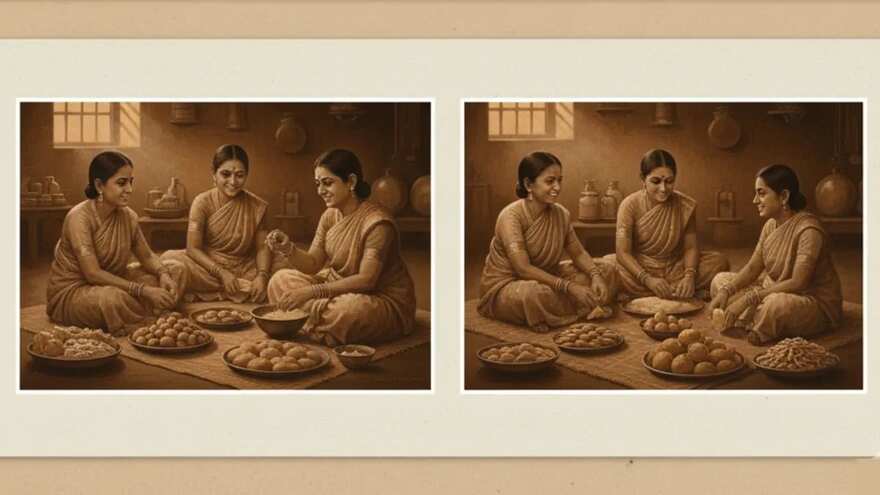
The importance that food is given in the family naturally crescendoes during Diwali. “Food is what makes Diwali for me. I keep hoping that the tradition [of making certain foods] lives on. Very few things live on, and recipes are one of them,” says Arora. In her home, the tradition of making gunjiyas during Diwali has continued for at least 60 years, since her father was a child. The family would collect in the kitchen. One person, usually her mother, made the stuffing, she did the braiding of the gunjiyas by hand, and her father did the frying, all overseen by her late grandmother, who would judge if it had reached the right colour and so on. As a young girl, Arora was given a piece of dough so she could understand its texture and elasticity. When she was about five, they started teaching her how to braid the gunjiyas all across the edges. And by the time she was seven, she was officially in charge of that role. “That was an achievement for me, because my mother and grandmother are very particular about how it should look. And I would sit and braid them all. I loved to sit with everyone and do that,” she says.
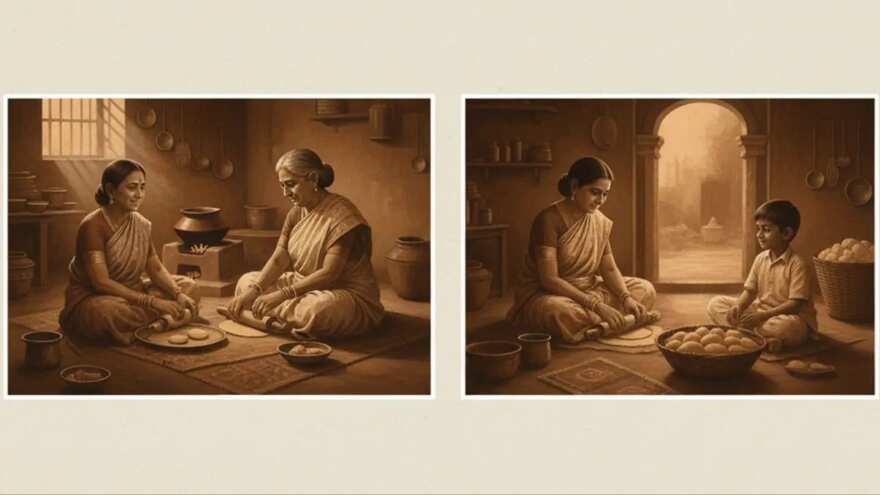
Today, it’s mostly Arora’s mother, herself and their house help who make the gunjiyas, and they are also made lesser in number. Arora is learning more parts of the process besides just braiding, and even sharing the sweets with her husband and his family. But whatever the changes, the tradition of making gunjiyas during Diwali continues, and the recipe has remained more or less unchanged for over half a century. She was happy to share it:
Ingredients:
For the dough:
Maida (refined flour) 500gm
Ghee 4 tbsp
Water, as needed to make a soft dough
For the filling:
Mawa (khoya) 200gm (lightly roasted and cooled)
Fresh grated coconut 200gm
Powdered sugar 200-250gm (adjust to taste)
Cardamom (elaichi) powder 1 tsp
Chironji 2 tbsp
Method:
- Mix maida and ghee. Gradually add water to form a soft, smooth dough. Cover with a damp cloth and let it rest for 20–30 minutes.
- Lightly roast the mawa (do not brown it) and allow it to cool completely. Add grated coconut, powdered sugar, cardamom powder, and chironji. Mix well.
- Roll out small portions of dough into circles. Place a spoonful of the filling in the centre, fold it into a semicircle, and seal the edges. You can braid or pinch the edges decoratively.
- Heat ghee or oil on medium flame. Fry the gujiyas till golden brown. Drain on paper towels and cool completely before storing them in an airtight container.
Gunjiyas, warm to the touch, crackling on the outside, and with a perfectly-sweetened, rich and indulgent stuffing inside, are a delicious treat. Biting into them yields a delectable combination of crisp and soft, all melting into one’s mouth. Diwali cooking is all about families and loved ones coming together and bonding over food, which is so integral to our existence, and such a strong way of communicating love. Food becomes the currency of love, a reason to come together and spend time together. It’s this feeling of oneness that Diwali brings with its food demands. The festival becomes more than just a prayer and a bunch of parties. It’s about family, food and love. It’s about passing love through food, one generation at a time. Diwali is about community, oneness and love.
Wishing you and yours a happy Diwali :)




