


 Share
Share

AT SOME POINT this afternoon, in an office in Gurugram, a godown in Kolhapur or a newsroom in Kolkata, somebody will push back a chair and say a single word. Nobody will ask what it means. Laptops will stay open, conversations will stall mid-sentence, and a small unwritten constitution — who fetches, who pays, who gets the cup with the chipped rim — will quietly come into force.
The word is “chai”, and the pause it summons feels as old as the country itself. It isn’t. The American scholar Philip Lutgendorf, better known for his work on the Indian epics, returned to India as a graduate student, “fell into the habit of taking chai” and “always thought that it was an inescapable and immemorial part of Indian life”, he recalled in a 2012 profile on the University of Chicago’s arts and humanities site. Then he went into the archives. Chai, he says, is “in the longue durée of Indian history, a very recent development”.
He is in good company. Reviewing Lewis Bassett’s The Full English: The Ways We Eat and Why for The Conversation, Sara Read, a senior lecturer in English at Loughborough University, homes in on the book’s most disarming idea: that what looks like an ancient expression of national identity “may actually be the product of relatively recent social and economic change”. Bassett’s proof is the full English breakfast, a plate Read describes as built from Danish bacon, factory-made white bread and Italian tinned tomatoes: ingredients that industrialisation put within reach of ordinary people. Pull on the tradition and a supply chain comes out.
The chai break has one too. In this case the supply chain left its fingerprints everywhere: in trade-body reports, in railway-platform signage, in the confident prose of the people who ran the campaign. Roughly ninety years ago, a major campaign set out to make more of India stop for tea. They had their reasons. They were not, on the whole, sentimental ones.
A crop for somebody else
Commercial tea cultivation expanded under colonial rule in the nineteenth century. Lutgendorf describes tea’s role as “a colonial cash crop” in his essay “Making Tea in India: Chai, Capitalism, Culture”. The plantation crop was grown largely for Western markets. Mohona Kanjilal’s Taste of Time: A Food History of Calcutta describes this export trade. An excerpt of the book published by ThePrint in 2021 notes that by 1888 India was already sending Britain more tea than China did: some 86 million pounds against 80 million. For most Indians, though, tea was not yet an everyday drink. As late as 1930, Kanjilal writes, less than a tenth of Indian output stayed in the country.
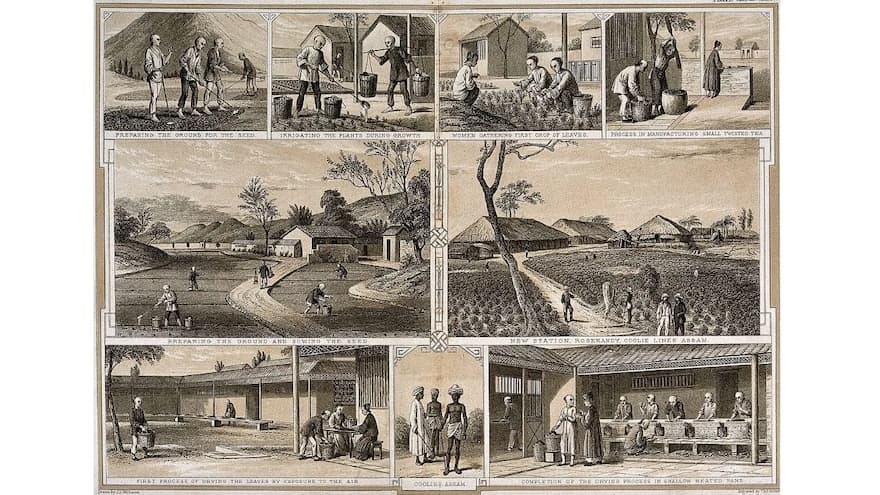
It was not for want of trying. According to the same excerpt, the viceroy, Lord Curzon, had commissioned an experiment in introducing tea to Indian drinkers in 1901; it was abandoned in 1904 after only modest success. In between, in 1903, he introduced the Tea Cess Bill: a levy on tea exports whose proceeds, the Tea Board of India’s own account of its origins explains, were to be spent on promoting Indian tea “both within and outside India”.
The committee that administered the fund quickly discovered which half of that sentence was harder. In almost every year until 1914, according to a history of the Indian tea industry that quotes its reports, the Indian Tea Cess Committee “expressed the melancholy view” that “to devise satisfactory measures for pushing the sale and increasing the consumption of tea in India is undoubtedly the most difficult branch of the work of the Cess Committee”.
Indians, in other words, were not waiting to be sold. The industry would need a stronger reason to try again. In the 1930s it got one.
The glut
Then the export market faltered. The Great Depression, the University of Chicago profile explains, brought falling British consumption and a tea surplus, sharpening the industry’s interest in a domestic market. By 1935, Kanjilal writes, planters were facing more than a hundred million pounds of unsold tea.
A product with nowhere to go needs a customer, and the nearest candidate was the one the industry had long struggled to cultivate. To a man with a surplus, the numbers looked like opportunity. P. J. Griffiths, chairman of the Indian Tea Market Expansion Board, set them out in the jubilee number of the Calcutta journal Capital, in an article digitised in a Sri Lankan digital library: India was consuming less than a quarter of a pound of tea per head a year, against nearly eleven in the United Kingdom. This was not a failed market, in his telling, but an undeveloped one — a vast potential customer, if only the habit could be cultivated.
The old Cess Committee was reorganised into that board in the middle of the decade, with a bigger budget and a blunter mission. The campaign that followed, which the University of Chicago profile dates to 1936, was designed “to get ordinary Indians hooked on the drink”. The word “hooked” is the profile’s, not the board’s. The industry’s own word for the effort was propaganda, and the people it sent into the field were tea propagandists.
The free cup
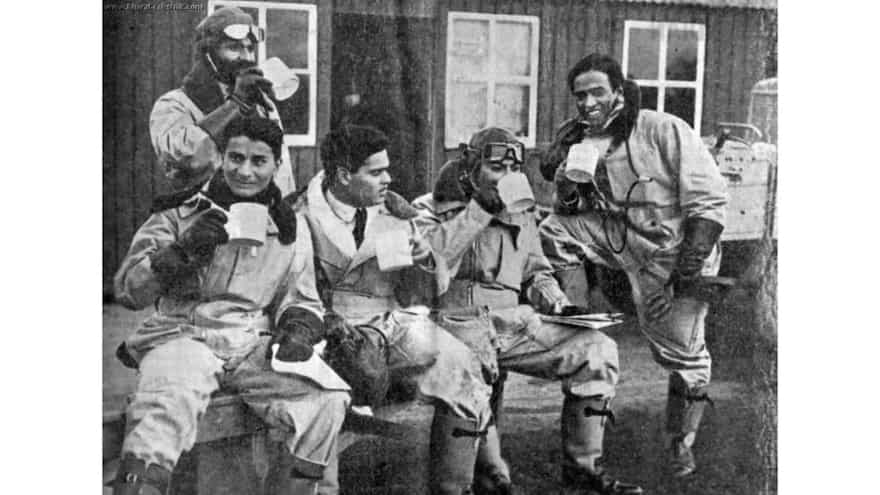
The campaign built on earlier experiments in places where Indians already gathered. At Howrah station in Calcutta, Kanjilal writes, free cups of tea were handed out, paper packets were sold for a pice and stalls demonstrated the English method of brewing. As the effort grew, Lutgendorf records in his essay (quoted in the same ThePrint excerpt), “tea propagandists” were “now dispatched in the hundreds, sometimes in motorized ‘tea vans’, equipped to dispense millions of cups of free tea and comparable numbers of ‘pice packets’, and to display colourful, vernacular-language signage produced by leading commercial artists”. Enamel placards at railway stations, markets and festivals sang tea’s claimed health benefits and explained the “correct” way to brew it; in the 1930s and ’40s, vehicles decorated with large kettles toured the towns of Bengal.
What the posters did not show was how hard a free cup was to give away. Griffiths, in his Capital article on tea consumption in India, is disarmingly candid about it. Villagers were often suspicious, he wrote, “based apparently on the principle that tea cannot be a good thing, otherwise people would not want to give it away”. Others feared that, by drinking an unknown beverage, they might be “unconsciously violating some rule of caste”. The remedy was tact, and a little demographic matching: it helped, Griffiths noted, if “the demonstrator himself belongs to the same caste or community as those amongst whom he is working”.
Even the recipe had to be negotiated. Before a campaign opened in a district, Griffiths explained, the board needed to “discover exactly how much milk and sugar will make tea palatable” to local tastes. The sweetness of the cup was something the campaign measured, region by region, rather than assumed. Households, meanwhile, were sold small packets “sufficient to make five cups of good tea” to take home, so that the experiment could continue after the demonstrator had packed up his table.
The break
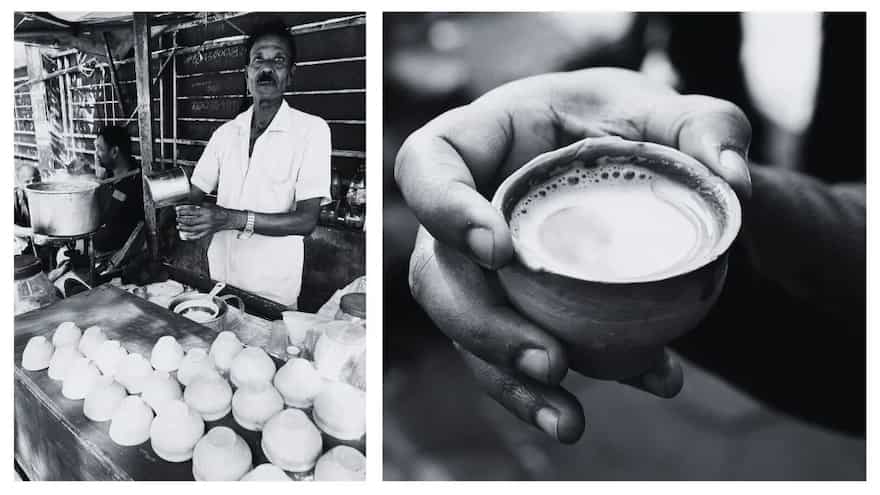
The free cup got Indians to taste tea. Another pitch, aimed at a different audience, encouraged a pause in the working day. The Expansion Board, Kanjilal notes, urged factory owners and office managers to give their staff an afternoon tea break, on the promise of “a more alert and productive workforce”. In effect, the employer was the customer for the idea. A poster catalogued in Lafayette College’s online exhibition under the title “Indian Tea Fights Fatigue, 1948” suggests the pitch was still running more than a decade later.
The rhetoric, when Lutgendorf went through the surviving material, was not subtle. He found promotional materials that, in the words of the University of Chicago profile, “assume the triumphalist tone of Christian missionary tracts, suggesting that the quintessentially English beverage will rescue its Indian consumers from ‘lassitude’ and vice, and will inculcate in them such desirable traits as punctuality, decorum, and good sanitation”.
Read that again with the afternoon break in mind. In this workplace pitch, tea was being sold as discipline: a way to make the Indian worker punctual, alert and clean. The pause was part of the product.
Other audiences were courted separately. Women, Kanjilal writes, were told that tea was “a medium for women’s awakening” and the drink of the modern homemaker who understood nutrition and hygiene. Private firms piled in alongside the board: Brooke Bond and Lipton adopted free sampling and cheap single-use packs, and Brooke Bond carts gave away tea around Calcutta.
The leaf and the pot
Marketing could create a taste. Making the everyday cup cheaper took longer. Sir William McKercher developed CTC machinery at Amgoorie in Assam in the early 1930s, but it did not become commercially established until the 1950s.
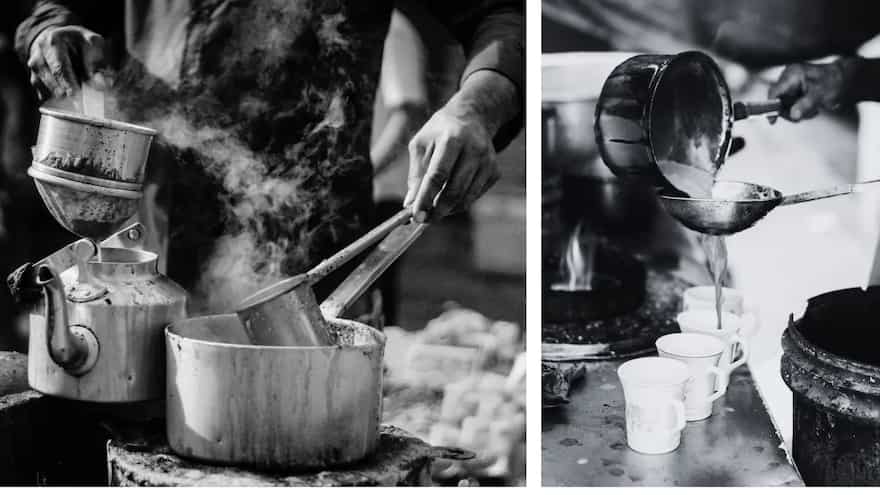
CTC stands for crush, tear, curl, and the name is a fair description: the leaf comes out as small granules. Lutgendorf’s account links cheaper CTC processing by the late 1950s to quick-brewing teas with the colour and strength to take generous quantities of milk. The tea could hold its own when boiled or simmered with milk, sugar and spices.
Put those pieces together and the mechanics of the chai break come into focus. A leaf that gives up its colour quickly and cheaply, boiled hard in a pan, could be sold by the cup to anyone with a few minutes to spare. The 1930s campaign had helped build demand; cheaper CTC processing from the late 1950s helped meet it.
The milk-and-spice method, meanwhile, is harder to pin down. Kanjilal notes that its origins are difficult to trace. Whatever the exact route, the cup that emerged was no longer the English one the posters had taught. It was boiled, sweetened and often spiced, an Indian recipe built from colonial raw material.
Not everyone was sold
The campaign was never uncontested. It ran for about two decades, the University of Chicago profile notes, with limited success, partly because of political opposition: Gandhi and other nationalists condemned tea as a foreign, imperialist product. In the chapter on tea, coffee and cocoa in Key to Health, Gandhi’s objections are medical rather than political, but they read like a rebuttal of the Expansion Board’s pitch. The leaves, he wrote, contain “tannin which is harmful to the body”. And then, in a line that might have been written about the four o’clock pause itself: “Habitual tea drinkers begin to feel restless if they do not get their cup at the usual time.” Having given up tea, coffee and cocoa, he reported, “I have lost nothing, and have benefited a good deal.”
The habit took anyway, and then something happened that the planters had not planned: Indians took it over. After 1947, the Chicago profile says, tea estates and wholesaling companies slowly passed from British to Indian hands, and the leading Indian-owned firms began promoting tea as swadeshi, “conducive to both individual and national health and civility”. Indian businesses had also promoted tea on nationalist terms; Kanjilal’s excerpt records A. Tosh & Sons, founded in 1897, marketing its leaf under the slogan “Be Indian, Buy Indian!”, and notes that tea was being championed as a national drink that could bridge religious, linguistic and caste divides. Lutgendorf’s abstract is careful to say that the transformation “involved aggressive and innovative marketing by both British and Indian commercial interests”.
By the mid-1950s, the cess that paid for the free cups had an institutional heir. The Tea Board of India’s own history traces its genesis to the 1903 cess, and the present Tea Board, constituted on 1 April 1954, still has a directorate responsible for the “Marketing and Promotion of tea in India and abroad”.
The four o’clock call
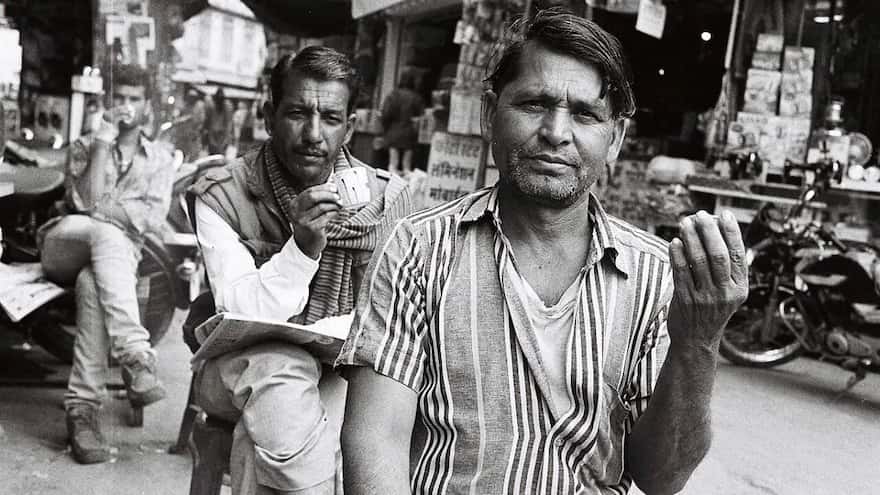
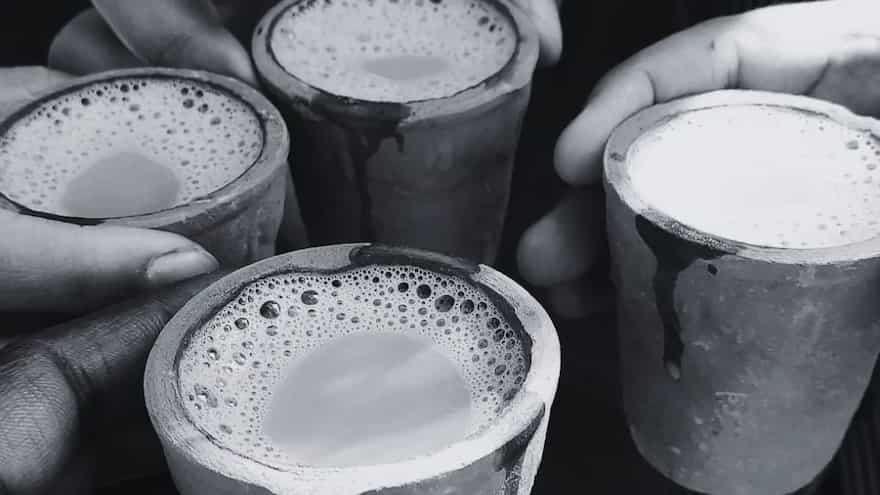
None of this makes the cup in your hand less real. A tradition, after all, is what a habit is called once nobody remembers who started it, and this one has been thoroughly renovated since the 1930s. The spices, the arguments about sugar, the stall that knows your order without being told: no pamphlet prescribed those.
Lutgendorf, who treats his research on chai as a “tea break” from his scholarship on the Indian epics, found that what he had taken for an immemorial custom was “a very recent development”. So when somebody pushes back a chair this afternoon and says the word, you are answering a call heavily promoted roughly ninety years ago, by an industry with a surplus to shift. The planters wanted a market. Encouraging employers to make time for tea was one way to build it.
The idea for this piece comes from Sara Read’s review of Lewis Bassett’s The Full English: The Ways We Eat and Why, published in The Conversation. The history of the tea campaign draws on the research of Philip Lutgendorf, as reported by the University of Chicago and quoted in Mohona Kanjilal’s Taste of Time: A Food History of Calcutta, and on a contemporary account by P. J. Griffiths, chairman of the Indian Tea Market Expansion Board.




