


 Share
Share

WHEN A TUNA MELT MEANS MORE THAN SEX
In Heated Rivalry, the turning point isn’t a fight. It isn’t a kiss. It isn’t even a confession.
It’s a tuna melt.
For most of their relationship, Shane Hollander and Ilya Rozanov operate at high heat. Their intimacy is sharp-edged, competitive, urgent. It thrives on proximity and secrecy. It is physical, explosive, often wordless.
Then one day, Ilya makes him a sandwich.
And Shane notices something is different.
Ilya isn’t swaggering. He isn’t teasing. He isn’t performing. He’s focused — deliberate in the way he butters the bread, careful about the melt, attentive in a way that feels uncharacteristic. There’s no sexual charge in the air, no posturing. Just warmth.
Shane feels it before he names it: this isn’t about hooking up.
Until that moment, their connection had been primarily physical — magnetic, undeniable, but contained within the boundaries of rivalry and secrecy. The tuna melt shifts the temperature. It introduces care.
And care is far more destabilising than lust.
Because cooking for someone suggests repetition. It implies a shared morning. It gestures toward domestic rhythm. A sandwich is not foreplay; it is infrastructure.
That is why it lands.
And that is why food has long functioned as the quiet emotional grammar of queer romance.

APPETITE AS SUBTEXT
Queer storytelling has historically relied on metaphor. When desire couldn’t be spoken openly, it was displaced into texture, taste, ritual.
Take Call Me by Your Name. Before the peach became cultural shorthand, it was simply fruit — soft, ripened, split open in summer light. The film lingers obsessively on food: apricots, eggs, pasta, wine. Desire seeps into ripeness and sweetness. Hunger becomes both literal and erotic.

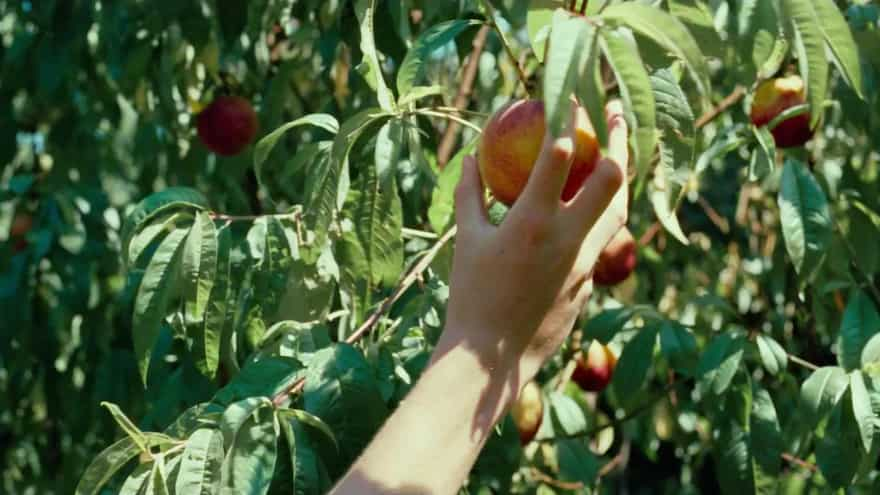

Food carries what language hesitates to.
Or consider Moonlight. When adult Chiron reunites with Kevin in a quiet diner, it’s Kevin cooking for him — making a meal the way Chiron once liked it — that cracks through years of guarded silence. The scrape of the grill, the careful plating, the remembered preference: that is intimacy.
To remember how someone takes their food is to remember their body.

In queer cinema, appetite often parallels longing. Heat in a pan becomes heat in a glance. Simmering replaces declaration. Nourishment replaces spectacle.
THE KITCHEN AS RADICAL SPACE
Kitchens recur in queer narratives because they are unheroic spaces. Private. Unwatched.
In God’s Own Country, the emotional thaw between Johnny and Gheorghe arrives through food. Gheorghe cooks; Johnny, previously subsisting on microwave dinners and alcohol, encounters care made tangible. The shift from isolation to partnership happens not in a grand gesture but in a shared meal.

In Portrait of a Lady on Fire, communal bread and soup unfold in a kitchen free of male oversight. Domestic labour becomes intimacy. Art, desire and sustenance braid together.
The kitchen, in queer romance, is often more revolutionary than the bedroom.
Because historically, queer couples were denied public ritual. They could not always marry. They could not always freely display affection. But they could cook. They could share breakfast. They could imagine routine.


Routine is radical when it has been forbidden.
THE POLITICS OF FEEDING SOMEONE
There is something inherently vulnerable about feeding another person.
It means:
- I see your hunger.
- I am attentive to your body.
- I am willing to nurture.
In male queer romances, especially, this act can subvert traditional scripts of masculinity. Strength becomes gentleness. Dominance becomes attentiveness.
The tuna melt in Heated Rivalry is not glamorous food. It is pantry pragmatism — canned tuna, mayonnaise, bread, cheese, and heat. It requires balance. Too much heat burns the bread. Too little leaves the cheese unmelted. It demands patience.
It mirrors the relationship itself: intense but controlled, fiery but folded neatly into something domestic.
For Shane, the shift is unmistakable. He senses that what once existed purely as physical magnetism has deepened into something steadier. Something riskier.

Sex can be compartmentalised. Care cannot.
COMFORT FOOD AS COMMITMENT
Notice how often queer romance turns to comfort food rather than extravagance. Not oysters and champagne, but toast. Eggs. Soup. Sandwiches.
Comfort food suggests staying.
It is not about seduction; it is about sustenance.
A tuna melt implies:
- A kitchen stocked with basics
- A willingness to cook
- Time spent together without urgency
It imagines continuity.
And continuity — in queer love stories shaped by secrecy, stigma or rivalry — is revolutionary.
ROUTINE AS REBELLION
In queer storytelling, food is rarely a decorative garnish. It is a narrative structure.
A dish can signal emotional evolution, mark the shift from lust to love, stand in for secrecy or sanctuary, or even reimagine domesticity as liberation.
The tuna melt is not iconic because it is gourmet. It lingers because it is ordinary.
And in queer romance, the ordinary has always carried the heaviest weight.
Sex can be hidden. Spectacle can be staged. But routine — the act of cooking, eating, returning — suggests something far more radical: staying.
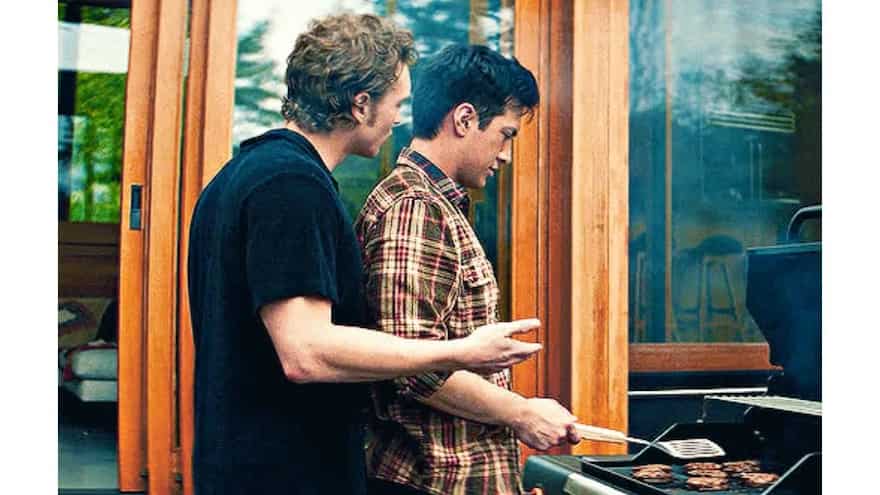
Sometimes love is not declared in speeches or sealed in spectacle.
Sometimes it is assembled quietly, pressed in a pan, and served warm — with the unspoken promise that this could happen again tomorrow.




