


 Share
Share

India grows more mangoes than anywhere else on earth, and it does so with a generosity that borders on excess. The Alphonso from Ratnagiri is buttery, saffron-hued, and priced like jewellery. The Dasheri from Lucknow, long and pale and impossibly fragrant, the Langra from Banaras, stubbornly green even when ripe, tart and complex in a way that rewards patience. And then there's Himsagar, a mango grown in West Bengal and Bangladesh, which deserves its own debate. Pale yellow, smooth to the touch, with a pure sweetness and no fibre, eating one seems less like fruit and more like proof that nature occasionally gets things absolutely right.
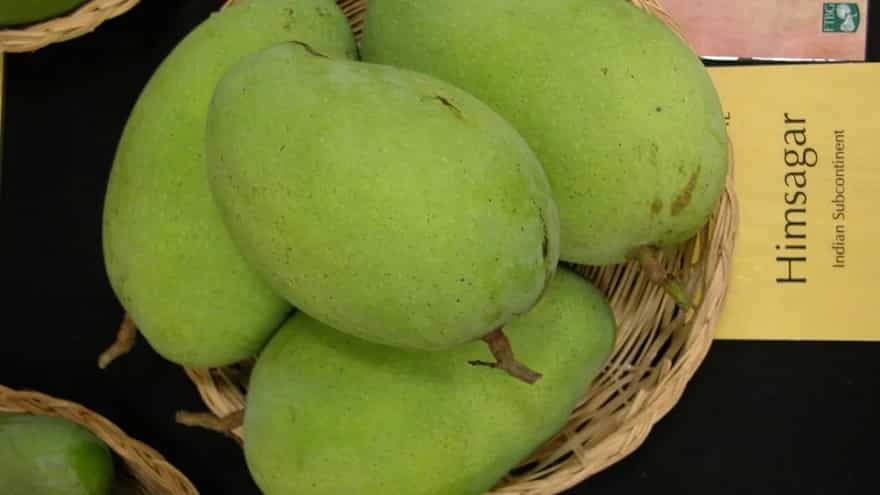
Image Credit: Wikimedia Commons
Himsagar or Khirsapati mango is a popular variety of mango that is widely used in desserts across South Asia. The sweet and luscious pulp of this mango variety is known for its distinctive aroma and rich taste, making it a prized ingredient for many traditional and contemporary desserts. Due to their popularity and unique flavour profile, said to surpass that of Alphonso, Langra, and so on, Himsagar mangoes are just as sweet and aromatic as Bengal’s mishtis. If you ever consume a Himsagar mango, even after cleaning your hands with soap, the aroma sticks to your palm, and it lingers until your next mango feast!
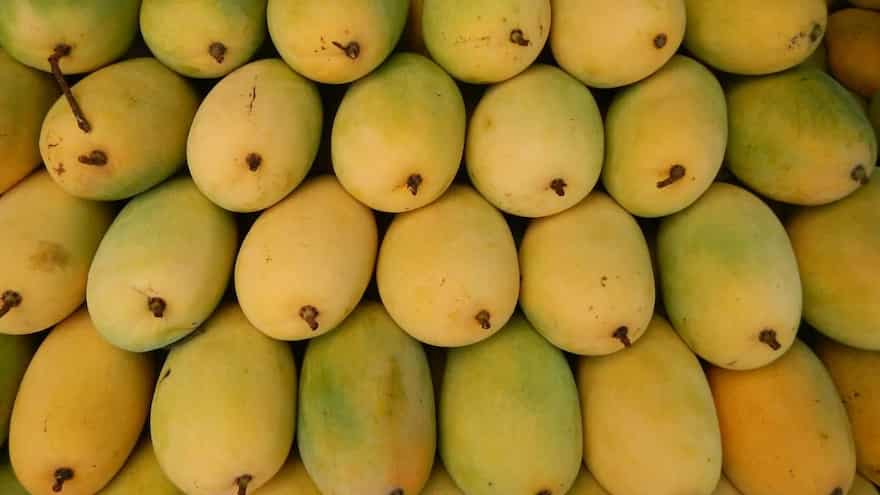
Image Credit: Wikimdia Mangoes
History Of Himsagar Mangoes In Malda, West Bengal
Malda, known for its expansive mango groves, rich agricultural tradition, and world-renowned mango varietals, is a key contributor to India's mango production and commerce. Every summer, the region transforms into a thriving centre of mango farming and business, attracting traders and fruit enthusiasts from all over the country. Some are cultivated in West Midnapore, too. In fact, turning the pages of history, when Nawab Murshid Quli Jafar Khan shifted his kingdom from Dhaka to a district in Bengal, now known as Murshidabad, after his name, he facilitated the plantation of mango orchards around 1704.
Another intriguing bit of information is that the Battle of Plassey took place in a mango orchard. As a result, the fruit now has historical, social, and artistic significance in Bengali culture, in addition to being a gastronomic pleasure. The district boasts thousands of hectares of mango plantations, producing lakhs of tonnes of mangoes each year. The region's lush alluvial soil, pleasant temperatures, and proximity to rivers such as the Ganga and Mahananda provide ideal conditions for mango production. The area is well known for producing high-quality mango varieties, which are distributed throughout India and exported to international markets.
Himsagar mangoes and other mango varieties, growing in Malda, stretch back centuries and flourished under the Mughal period. According to historical accounts, monarchs and landlords in Bengal favoured orchard cultivation due to the region's fertile terrain and tropical climate. Because of their sweetness, perfume, and distinctive texture, Malda mangoes gradually gained popularity among royal families and traders.
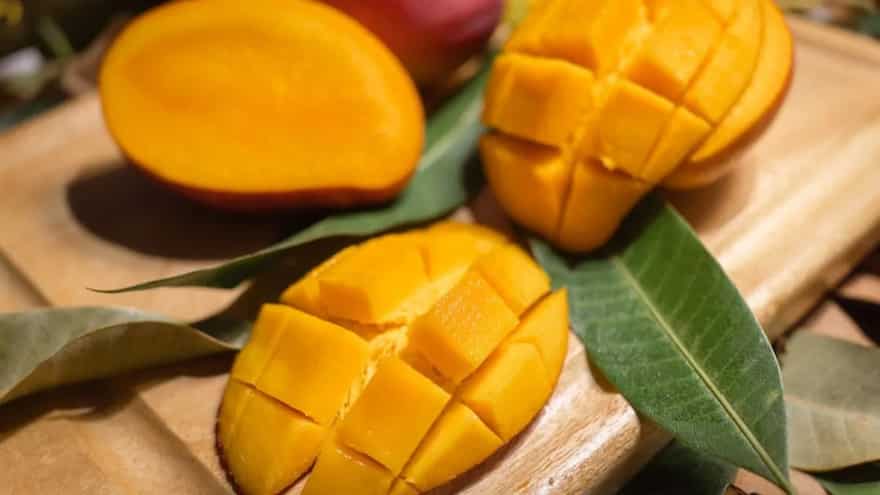
Image Credit: Pexels
What Makes Himsagar Mango Of Bengal So Special?
Himsagar mangoes are a popular variety of mangoes that are prized for their unique flavour and aroma. They are oval-shaped with bright yellow skin that often has a red blush on the shoulders. The colour of the flesh varies from bright yellow to orange, and the fruit is relatively small compared to other mango varieties, typically weighing between 250 and 350 grams.
The flesh of the Himsagar mango is incredibly juicy, tender, and fiberless, making it a perfect ingredient for desserts. Here, the term ‘fibreless’ means that when you bite into most mangoes, you feel those thin, stubborn threads that catch between your teeth and cling to the seed, making every mouthful a minor negotiation, but Himsagar has almost none of that. Its flesh is smooth, almost silken, dissolving cleanly with every bite rather than pulling apart in strands.
Himsagar mangoes are typically harvested from May to June, and they are primarily grown in the Indian states of West Bengal, Bihar, and Odisha, as well as in Bangladesh. Due to their popularity and limited availability, Himsagar mangoes are considered a premium variety and are often sold at a higher price than other mangoes.
There are two primary forms of Himsagar grown here, one is black Himsagar, which tastes sweeter, and white Himsagar, which is more cosmetically pleasing. Himsagar is one of the most popular mango types during the summer season. They are sought after for their premium flavour, scent, and texture, and are frequently regarded as the standard for how a mango should seem, smell, and taste. Himsagar is widely accessible in local markets and frequently sells out quickly, which has earned it the GI Tag.
A GI-Tagged Mango Legacy Across Bengal
Khirsapat mango from Chapainawabganj in Bangladesh, also known as Himsagar, received the Geographical Indication (GI) tag from the local intellectual property rights department in 2019, January, which is intended to assist producers in achieving higher pricing and benefit customers. At the same time, Malda’s Himsagar mango received the GI tag in September 2023, which indicates the origin and the rich heritage it's a part of. The mango received notoriety for its attributes at a time when an increasing quantity of land is being used for mango agriculture, both in West Bengal and Bangladesh. Farmers have shown an interest in commercially cultivating the fruit to fulfil rising local demand and international market demands as well.
Culinary Uses Of Himasagar Mangoes Across West Bengal & Bangladesh
The sweet, juicy, and fiberless pulp of this mango variety makes it an excellent ingredient for ice creams, sorbets, mithais, smoothies, and milkshakes. The pulp is also used in making fruit-based desserts like custards, puddings, and mousses, adding a rich and tropical flavour to these dishes. The Himsagar mango pulp can also be used as a topping for cakes, cheesecakes, and other baked goods, providing a fresh and fruity twist to these classic desserts.
In Indian cuisine, Himsagar mangoes are especially popular in the eastern state of West Bengal, where they are used in a variety of traditional desserts. One of the most famous desserts made with Himsagar mangoes is aam doi, a creamy and tangy yoghurt-based dessert that is flavoured with the pulp of the mango. The dessert is typically served chilled and garnished with chopped pistachios and almonds, making it a refreshing and satisfying summer treat.
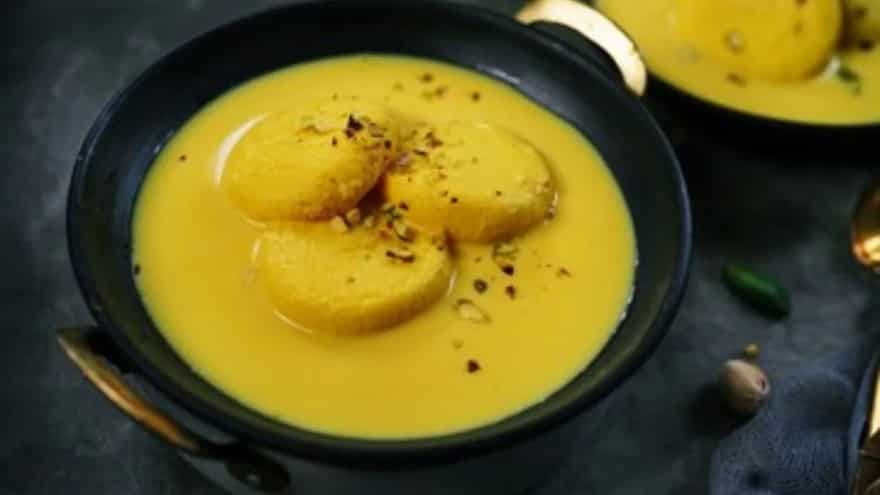
Image Credit: Adobe Stock
Another popular Bengali dessert made with Himsagar mangoes is rasmalai, a soft, spongy cheese dessert that is soaked in a creamy milk syrup flavoured with mango pulp. The dessert is typically served chilled and garnished with saffron and pistachios, making it a decadent and luxurious dessert that is perfect for special occasions. In addition to desserts, Himsagar mangoes are also used in savoury dishes like chutneys, pickles, and sauces.




