


 Share
Share

AT 3.29 million square kilometres, India is geographically the seventh-largest country in the world. According to the World Bank, as of 2023, only 51.8% of this land is arable. However, India’s population is steadily growing, and as of 2023, it became the world’s most populous country. With these figures, a simple and urgent question arises: How to feed more mouths a healthy and nutritious diet with limited resources and land? Further, how can we make sure our food systems are climate-resilient and work in tandem with the environment? These are big questions that can’t have simple answers, but deep and deliberate discussion is often a fruitful exercise when trying to find answers.
In February, Mumbai’s National Gallery of Modern Art hosted one such panel discussion, titled “Edible Futures: Tasting Tomorrow in a Warming World”. The discussion was organised by Avid Learning, in collaboration with the Tata Institute of Fundamental Research, Project Mumbai, Maharashtra’s Department of Environment and Climate Change, and the Brihanmumbai Municipal Corporation. The panel was moderated by Good Food Institute India’s Managing Director Sneha Singh, who guided a conversation between Vrindavan Farm proprietor Gaytri Bhatia, Maharashtra’s Agriculture and Marketing’s former Additional Chief Secretary Dr Sudhir Kumar Goel, and Goya Media’s founder and director Anisha Rachel Oommen.
What emerged was a lively discussion about India’s food systems, which is the entire ecosystem of people, policies, resources and activities involved in the growing and consuming of food. Think farming, production, processing, distribution, consumption, and waste management. The term also accounts for the environmental, social and economic impact of the food, and tries to stay mindful about issues like food security, nutrition and sustainability. The solution, as we’re all well aware, lies at the intersection of cooperation between farmers and making them less vulnerable, consumers and making them more conscious and less selfish, and policy that runs in parallel — equally supporting farmers and the environment. But to understand what solutions can look like, it’s important to first reflect on the problems we’re facing as a country.
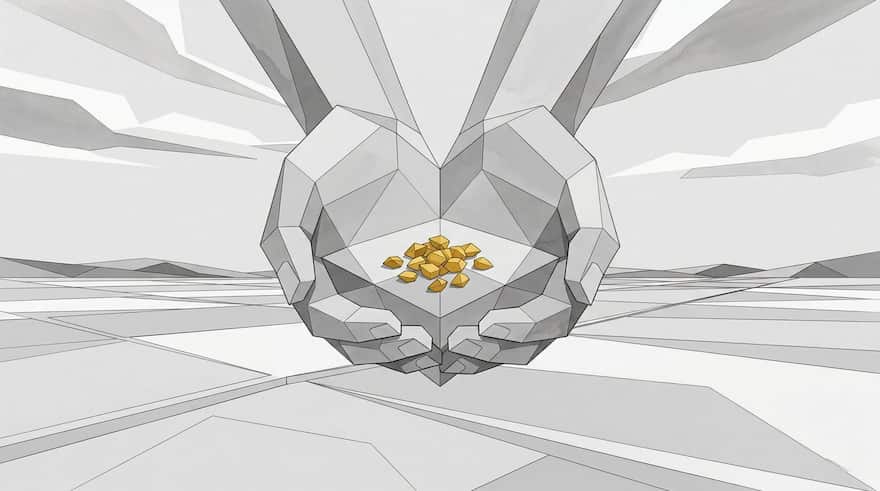
And the challenges start from the very first step. Attempting to find a solution to India’s emerging food systems means empathising with the farmers, who form a majority of our population, and understanding the issues they face. Bhatia, who spent almost a decade working with the US Environmental Protection Agency, and then returned to India and has been living as a farmer for the past two decades, paints a little picture. On the farm, she sees an elderly tribal lady sitting under a mahua tree, staring at her buffalo grazing on the wild grass. Everyone’s been waiting for the monsoon. Bhatia asks her what she thinks about the rain. ‘It used to come from there,’ the woman said, pointing southwest. ‘Now, it comes from behind, or it just shows up with a bang.’ With agriculture, sowing seeds happens in the transition period between seasons. Miss the window of those few days, and you’re waiting 365 days to sow. So when seasons show up with a bang, it freezes the soil, and that opportunity is lost. And climate unpredictability is just one of the issues farmers face. “Small farmers still form the backbone of food production, but they face overlapping crises: irregular climate, shrinking water availability, market volatility, seed dependency, soil degradation, and the steady encroachment of industry onto farmland,” says Bhatia, in an interview with Slurrp. These threaten not just farmers’ livelihoods, but also have an impact on issues like public health and nutrition, and cause an imbalance or disjointedness between urban and rural lifestyles and cultures.
In an interconnected system, if one side is benefiting, the other is often losing out. Right now, it’s the farmer who’s bearing the brunt. If this is to change, resources must be redistributed. “A farmer earns INR 1-2 lakh per hectare in Punjab. Now, you’re asking them to grow millets, which will fetch them only INR 40,000,” explains Goel. “When we talk about climate resilience, going from the present to a desired system, there are certain players who are going to lose, and others who are going to gain. So far, nowhere on the globe is there a climate-resilient system where everyone gains,” he adds.
While the government tries to find solutions to our unique food system position, on the other end of the spectrum are consumers, living fast-paced and hectic urban lives. People who often don’t even have the time to cook their own meals. One might talk about making organic choices without knowing anything about farming or where their food is coming from. One may look for protein and other superfoods while ignoring the oral culture and knowledge of tribals who have known about the merits of these foods for centuries. One may hanker after a farm-to-fork format and dream of leaving behind their corporate life and becoming a farmer, often without recognising the struggles farmers face. Consumers today are looking for healthier choices and cleaner food, but in these discussions, the farmers growing our food and the tribals living in the forests are still largely neglected. Many simply don’t have the time to investigate that deeply. But this is also, in part, because of the limited exposure we have to alternate ideas in modern culture today. “The media tends to cover people who have access to education and wealth, who can speak and write well,” says Oommen. “So the communities covered are normally wealthier, upper-caste ones. But what we’re finding with our work is that it’s the voices from the margins that still practice and remember many of the traditions and culinary knowledge that we don’t see in more powerful communities.”
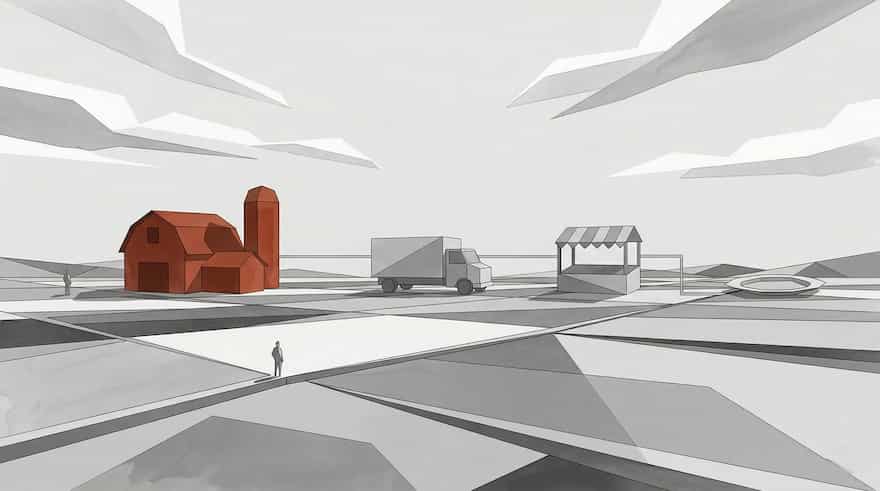
With challenges from every side, sustainability starts to mean adapting practices that are durable and long-term. A farmer, by growing food, isn’t just sustaining our diet. The farmer is also sustaining our ecosystem by looking after soil health, forests and water, encouraging biodiversity and keeping our interconnected natural ecosystem thriving. “Resilience will not come from more technology, but from restoring what has always sustained life: forests, native seed, indigenous knowledge, and deeply interconnected relations,” says Bhatia. For doing this, they must be recognised and compensated. Farmers must be held up as heroes, and basic farming should be taught in schools so a new generation can grow up more connected to the rural country and the natural world.
And consumers must slow down and consume less, taking only as much as they need. “There are 45,000 local farmer producer organisations (FPOs) in the country,” says Goel. “Whether a housing society in Mumbai will decide that a FPO in Nashik will supply everything that I eat, that’s a decision the housing society has to take,” he adds. We, as consumers, must choose to consume locally and to build a relationship with the people growing our food.
As we as a country try to switch from our current, gap-riddled food system to one that’s climate resilient, every party involved must be engaged in the discussion, each must adapt to changes, and there must be a mutual coming together of diverse voices. Essentially, the future of India’s food system is everyone’s collective responsibility.




