


 Share
Share

The vegetarian cuisine of West Bengal is influenced by the natural resources of the region. The food may be as celebratory and flavourful as it is light and cosy. Think of the everyday comfort of dal-bhaat and alu bhaja, finished with a squeeze of the fragrant Gondhoraj lemon, a staple in most Bengali homes. But when it’s time to celebrate, Bengalis turn to indulgent favourites like basanti pulao, potol er dolma, and shukto. And of course, Bengal’s sweets, roshogolla and sandesh, enjoy a fanbase of their own. The culinary history of West Bengal may be roughly categorised into four periods. As early as the eleventh century, boiling rice, khoi, and muri were daily staples in Bengali cuisine, according to ancient literature. For more than 5,000 years, paddy farming flourished due to the region's lush terrain and river systems, and even Bengali Brahmins' diets were influenced by the abundance of freshwater fish.
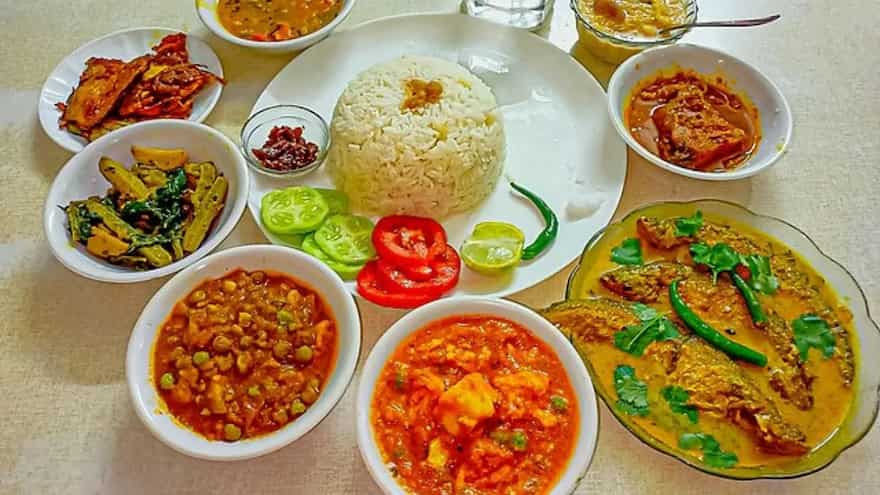
Image Credit: Wikimedia Commons
It is therefore not surprising that the celebration of the autumnal waning moons includes fourteen shaaks. Fish and rice, of course, became central to Bengali cuisine. Through Vaishnav customs, dal made its way into Bengali cuisine by the fifteenth century, providing a vegetarian protein substitute for fish. Turkish influences brought foods like biryani, pulao, and kalia between the 12th and 18th centuries. It is also thought that at this time, spices like saffron, cardamom, rose water, and ghee were introduced.
Bengal's bakery culture was introduced during British control in the 19th century, particularly in Kolkata. This led to the rise of breads, biscuits, and confectionery, while potato cultivation grew rapidly—an ingredient introduced earlier by the Portuguese.Much of this cultural blend can still be seen in Kolkata’s old restaurants and bakeries. Nizam’s, known for inventing the Kathi Roll, and iconic bakeries like Flury’s and Nahoum & Sons served gourmet meals to British residents and continue to carry that legacy today. All of these influences together have shaped the diverse vegetarian flavours of Bengal.
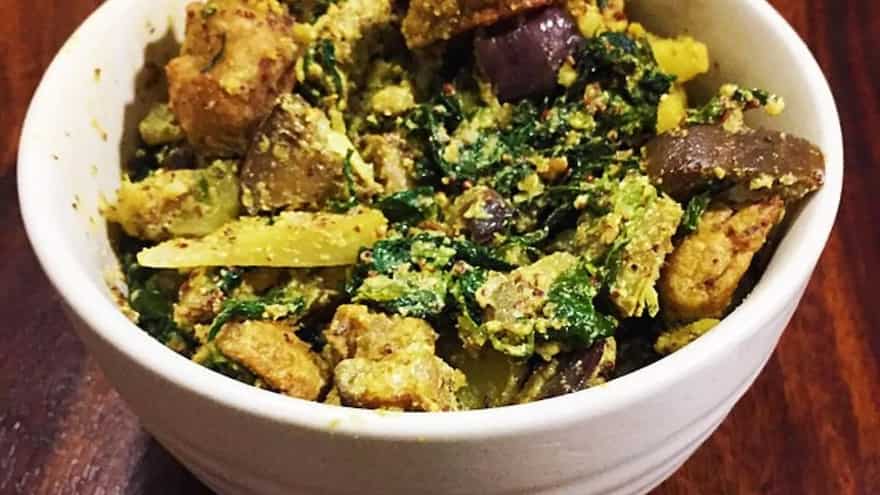
Image Credit: Wikimedia Commons
The Bengali cuisine has always been a meeting point of many communities—British, Portuguese, Armenians, Chinese, and Parsis—each adding something to the city’s food culture. After the Partition, refugees from present-day Bangladesh brought in their rich culinary heritage, making Bengal’s foodscape even more layered. Rural Bengal also plays a big role in preserving local ingredients. One example is the water lily seed (shapla), which is cooked like posto or even popped like khoi. With global trends entering the food scene, Bengali cooking has adapted too. Traditional dishes remain unchanged, but street food has taken a modern turn. Traditional Bengali cuisine offers a wide range of vegetarian and naturally vegan dishes, perfect for anyone who prefers plant-based eating.
“Bengal’s connection with plant-based eating goes back centuries, long before veganism became a global movement. What we call ‘vegan’ today was once simply everyday food for Bengalis, shaped by the region’s fertile land, Buddhist and Vaishnav influences, and an agrarian lifestyle that valued seasonal produce over meat,” shares Chef Vikram Jaiswal, Executive Chef, Novotel Kolkata Hotel & Residences. He also goes on to explain how across both West and East Bengal, dishes built around rice, lentils, and vegetables formed the heart of daily meals. In many ways, he says, “Bengal isn’t adopting veganism; it’s rediscovering it. Today’s conscious embrace of veganism is less a trend and more a return to our roots, driven by health, sustainability, and a renewed pride in our culinary heritage.”
However, that isn't today's primary focus. It's widely acknowledged that Bengalis will staunchly oppose the term "vegan." However, a lot of traditional Bengali foods, such as chorchori, kochu shaak, aloo posto, and shukto, are nutritional and vegan by nature. Bengalis didn't have to make many changes when veganism gained popularity because their cuisine was always vegan. You might be surprised to learn that they now proudly embrace those vegan roots.
To this, Chef Vidisha Bathwal, Owner, Paprika Gourmet, adds, “This plant-forward eating existed simply because it was the way of life, not an ideology. So today’s growing embrace of veganism in Bengal is less about following a trend and more about rediscovering that old, mindful way of eating clean, seasonal and rooted in nature.” The everyday habit of cooking was always more about leafy vegetables, green fruits and alternative local greens rather than going for wheat. What people now call “modern” combinations, like a watermelon and feta salad, actually reflects something Bengal has always done. We naturally mix fruits with vegetables, and balance sweet with salty, because it brings out the true flavour of food.

Image Credit: Wikimedia Commons
The daily diet includes a lot of vegan foods. These are recipes that don't even call for ghee. The labras and chochchoris are a couple that spring to mind. Many of you prepare a version of your mother's or grandmother’s bottle gourd seed mash in the kitchen, using a touch of mustard and poppy seed. Actually, the posto, or poppy seed, is also a popular vegan meal in and of itself. You just add a little mustard oil and a green chilli and serve it with hot rice. Very reassuring, very vegan.




