


 Share
Share

In the highlands of Bageshwar, September arrives with a sense of unease. The weather of Shama-Dana, a little village in Uttarakhand's Kapkot region with about 25–30 residents, is erratic, alternating between unexpected showers and unsettling silence. Already, a large portion of the harvest has suffered. Crops have been devastated by unseasonal rain, and wild boars, birds, and monkeys are waiting for even the slightest distraction. It feels like a test to get to Dana. The ground abruptly drops after Shama, where the main road ends. For half a kilometre, a small, winding route descends, interspersed with uneven stone stairs that were long ago chiselled into the mountainside. The difficult ascent back up serves as a reminder to guests that nothing in this place is simple.
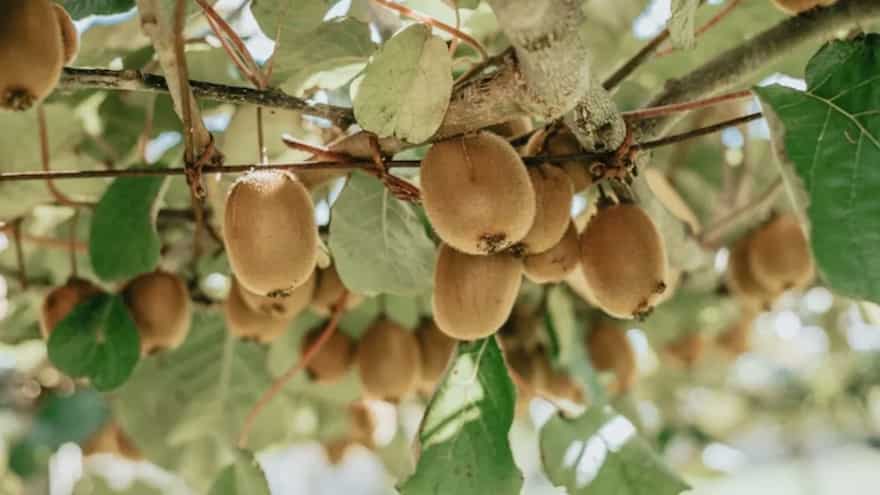
Image Credit: Pexels
A tiny polyhouse stands silently beyond the terraces. Kiwi plants nearby sag under the weight of fruit that will not be harvested for another month. The female farmers only become visible after that. They move quickly, effectively, and almost instinctively as they bend over a stretch of land to harvest madua. Time is not on their side. Before the clouds return, whatever is left in the fields needs to be collected.
A Village On The Hill & A New Crop Idea
The tone lightens as soon as the topic of Kiwi comes up in conversation. They claim that the fruit has altered their daily pattern. Watering, pollination, and planting are labour-intensive and require patience. However, they concur that the benefits outweigh the effort. One of the women says she started growing kiwis five years ago, and over the past three seasons, her 100 plants have generated around ₹60,000 annually.

Image Credit: Wikimedia Commons
Another, who is well into her seventies, agrees with a nod. For more than five years, she has meticulously cared for more than 100 kiwi plants, the majority of which are female, and they have brought in more money than any local crop she can recall. She claims that although growing them is time-consuming, the plants are generally protected from wild boars and monkeys. She casually gives a large cucumber from her field as she talks, then brings up a well-known complaint: the village's inadequate infrastructure. She smiles wryly and says, "At least this crop has delivered something dependable."
Over the past 20 years, 8 villages in the Kapkot block, which are situated at an elevation of around 2,100 meters above sea level, have subtly changed their farming practices. Fields that were formerly dominated by millets, rajma, bhatt, and seasonal vegetables like bitter and bottle gourds, cucumber, and capsicum now tell a different tale. The terraces have gradually been overtaken by kiwi vines.
An Experiment, Not Gone Wrong?
What started out as a careful experiment has developed into a distinct indicator of economic transformation that nearby communities in Bageshwar, Pithoragarh, and Nainital are eager to emulate. Kiwi came to Shama practically by accident. Farmers from Shama-Dana, Liti, and Badi Paniyaali came to Himachal Pradesh in 2004 to learn about horticultural practices as part of the central government's Integrated Development of Horticulture project. Few people could have predicted at the time how this exposure would subtly alter farming life in these hills.

Image Credit: Pexels
Kiwi began to stand out in fields that had long grown millets, pulses, and seasonal vegetables because of its fuzzy skin and strange flavour. It entered the area in a very informal manner. Uncertain of what to anticipate, a few farmers brought saplings back after a horticultural visit. They planted them next to common crops, watched the vines clumsily climb over improvised supports, and bided their time. Curiosity gave way to enthusiasm when the trees eventually produced fruit a few years later, and word spread quickly. The process, however, was far from smooth. Farmers learned through mistakes about the need for male and female plants, proper spacing, pruning, and sturdy trellis systems. Some vines thrived without fruit, others bore heavily for a season and then failed the next. Advice came in fragments, often late, and experimentation became the only teacher.
How Kiwi Cultivation Brought Food Back On The Table
The fruit restored a means of subsistence to fields that had been gradually abandoned. Kiwi made it feasible to continue investing in farming by offering higher profits per plant and lower losses to monkeys and wild boars. Families that had previously grown just to survive might now consider numbers and seasons, including the amount of plants, output, and potential market value.
Image Credit: Unsplash
Although the crop did not completely remove risk, it did sufficiently lower uncertainty to rebuild trust. Kiwi eventually produced labour outside of orchards. Pruning, pollination, harvesting, grading, and selling were among the tasks that kept workers busy all year long. Subsequent small-scale processing initiatives transformed inferior fruit into valuable items. This steady stream of revenue allowed many households to pay for daily expenses, healthcare, and school fees without having to rely solely on migration.
Kiwi brought a unique sense of stability to an area where farming frequently felt like a risk. It provided farmers with predictability in addition to money, which they could base their lives on. By doing this, it subtly changed the possibility of living in these villages that were both grounded in the soil and open to the future.




