


 Share
Share

A plate of French fries, two cups of coffee, some biscuits, a can of Coca-Cola…they write stories long before you begin to build it with your best friend. When you spend time with your best friend as you grow up, you learn so many things, especially what she likes to drink, cook or eat. And if you’re planning anything, you’re always making it a point to include all that and vice versa. So when it’s gone, you either find ways to cope with the art of cooking and trying to gobble down the food she loves so much or just stop eating at all. Because you are torn, you're scared of what memory of her it will pull from your head.
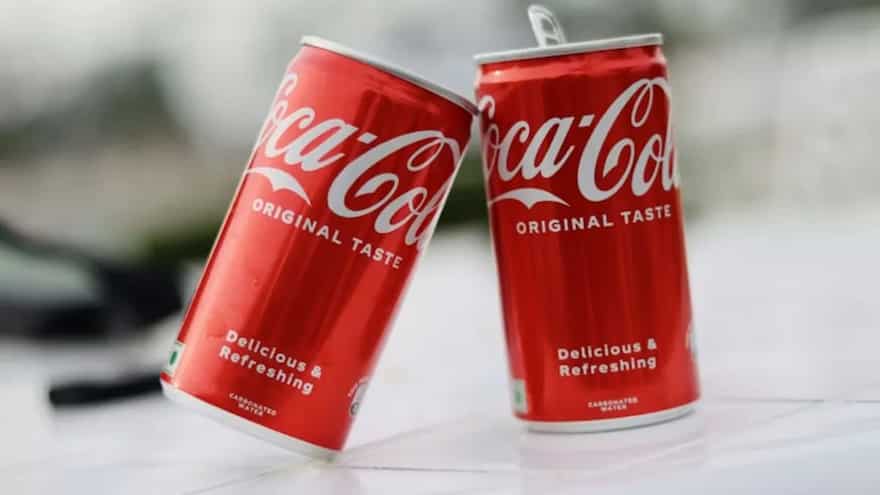
Image Credit: Unsplash
“The body remembers what language cannot organise and taste is one of the most intimate bodily memories we carry,” states Dr Shachi Patel, Clinical Psychologist, The Mind Clinic. It’s almost like looking through the ‘Mirror of Erised’ for me and as I sit down to write this, I have opened up a can of Coca-Cola, cold, red and crisp. Because I truly desire for her to be here with me at the dinner table, at every cafe, at every tea stall, grocery store, cold drink shopping, even. And this bottle of Coca-Cola is a beverage that holds so much importance to me that every time I take a sip, my brain conjures the image of my best friend and me, cheering that we found something to drink on a very hot summer day when we were in school. It’s fascinating to let you know that when we bought the INR 20 bottles of Coca-Cola, we barely knew each other, but after the first sip, our smiles mirrored each other. And while Coca-Cola was our shared baptism, it was the plastic bottles that became our obsession; those thick bottles with the bold red label that peeled off so cleanly if you soaked it just long enough under tap water. I did not drink Coca-Cola for a long time after she was gone, could not. The taste had become too loud, too full of her.
Dr Patel adds to this by letting me know, “Neurologically, taste and smell are deeply connected to the limbic system, especially areas linked with emotion and autobiographical memory like the amygdala and hippocampus. Unlike language, which requires structure and conscious narration, sensory memory arrives instantly and involuntarily.” She notes that is why grief is often triggered not by “thinking” about someone, but by tasting something they once cooked, shared, or loved. Food was her love language before anyone started calling it that. There is a particular cruelty in feeding a hunger after losing someone so dear to you. My body keeps asking me for food and drinks, and many little things that my heart has stopped believing in.
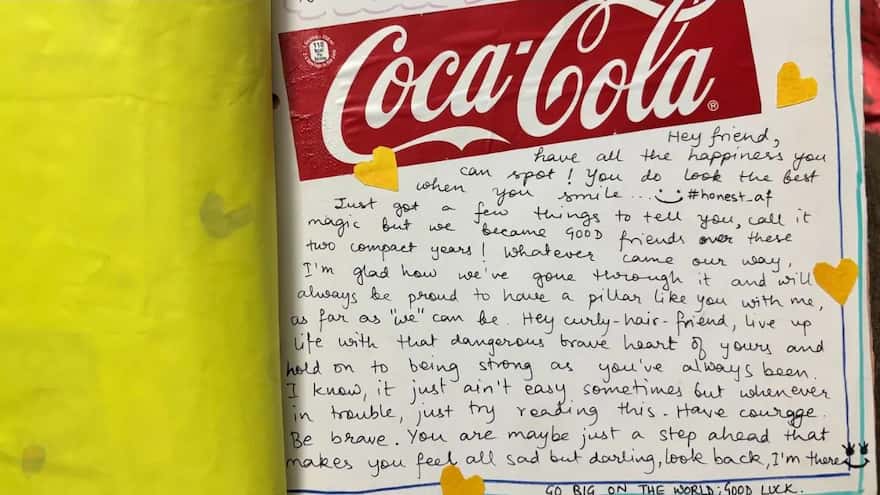
Image Credit: Rajlakshmi Dastidar
Memories I Still Drink From
The first time I opened a can after she was gone, I sat with it in my hand for a long time before I drank it. I remember the cold seeping into my palm, and thinking that this small sensation, this ordinary chill, was something she had felt thousands of times. That her hands had held this same coldness. That, for a moment, we were touching the same thing across whatever distance death makes. When I finally took a sip, I did not taste cola; I tasted that summer. The way we laughed at nothing because we were young, and the cold drink was sweet and being alive on a hot afternoon felt like more than enough.
If Coca-Cola was our beginning, the kitchen was where our friendship grew its real texture, messy, burnt at the edges sometimes, occasionally a complete disaster, but always, always worth it. She was the one who suggested the hibiscus tea since she had read about it somewhere, or seen it in a film, or invented the memory of having seen it. With her, you could never be entirely sure. We bought dried hibiscus flowers from a shop that seemed slightly confused by the request, came home full of ambition, and proceeded to produce something that looked like a crime scene and tasted like regret steeped in hot water. We stared at our cups.
She took a second sip, out of sheer stubbornness, and made a face that I will carry with me until I die. We poured it out, laughing so hard that her mother came to check whether someone was hurt. In a sense, our taste buds were. The French fries, however, those we had mastered, and there was a particular science to them that we had developed over several weekends and countless batches, a proper curriculum of trial and error.
My Coffee Still Remembers Better Than I Do Sometimes
The oil had to be exactly right, the potatoes cut not too thin, not too thick, salt immediately after, while they were still hissing from the pan, and we ate them standing in the kitchen before they could even reach a plate, burning our fingers and not caring, because patience was never something either of us had in great supply when hot food was involved.
They were, without exaggeration, the best French fries either of us ever ate. I have tried to recreate them many times since. I have never quite managed it, and I think now that the missing ingredient was simply her, standing next to me, stealing the best ones before I could. When I asked Dr Patel about the way hunger gnaws at me, cruel, haunted and devastated everytime I look or touch food that she would have enjoyed, she explains to me, “Certain flavours feel haunting after a loss because they are no longer experienced as “just taste.” They become relational. The person gets psychologically embedded into the sensory experience itself. When we love someone, the brain does not store them only as facts or images. It stores them through repeated embodied moments.” So far, what Dr Patel has told me makes me nod my head along to it. Making coffee for her, eating with her, talking about recipes, cafes, and restaurants that we ritualistically visit is a part of a routine which was an embodied experience.
And then there was the coffee, which was my domain and she knew it. I made coffee the way some people play music — unhurried, intuitive with a quiet confidence that did not need to announce itself. The right amount of everything, measured not in spoons but in instinct. I would hand her a cup without asking how she liked it because I already knew, and it was always exactly right.
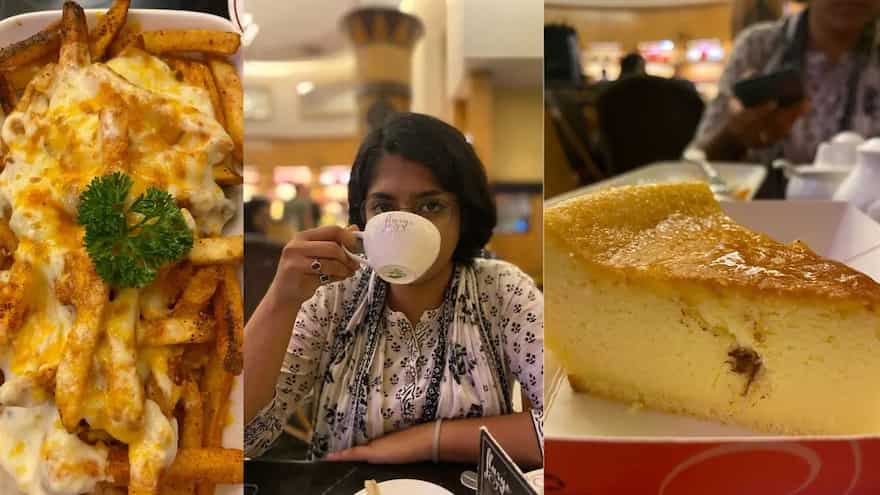
Image Credit: Rajlakshmi Dastidar
I do not know how to explain this except to say that my coffee for her tasted like being understood. I still make coffee the way she’d love to drink it, measuring in instinct rather than spoons; it is never quite right, but it is close enough that sometimes, for a moment, she is back in the kitchen with me, stealing the best fries, ruining the hibiscus tea, completely, perfectly alive.
“In therapy, people often describe this as both comforting and painful. The haunting quality comes from the contradiction itself: the person is absent, yet emotionally momentary present in the sensory experience. It reminds us that grief is not only cognitive. It lives in the body, in habits, in rituals, and sometimes, quietly, on the tongue,” Dr Patel divulges. The food I eat alone tastes like something, yes. A meal, maybe, a guilty pleasure to feel her by my side? It sure tastes like the world still dared to continue cooking food and not make it flavourless because she’s not here anymore.
Grief Is Watching Her Favourite Food Go Cold In Front Of Me
Food is the thing nobody warns you about when you lose someone, and nobody sits you down and tells you that grief lives in menus, that it hides in restaurant smells that hit you before you've even opened the door, that a particular dish can pull the floor out from under you on an otherwise manageable Tuesday. They talk about photographs and birthdays and anniversaries, yet nobody mentions the French fries.
She had specific tastes, which is to say she had opinions, strong ones, delivered without apology. She knew exactly what she wanted from every place we ever went, and she ordered with the kind of certainty that I always quietly envied. No scanning the menu for too long, no second-guessing; just that one, “please”, and make it quick, “I'm hungry”.
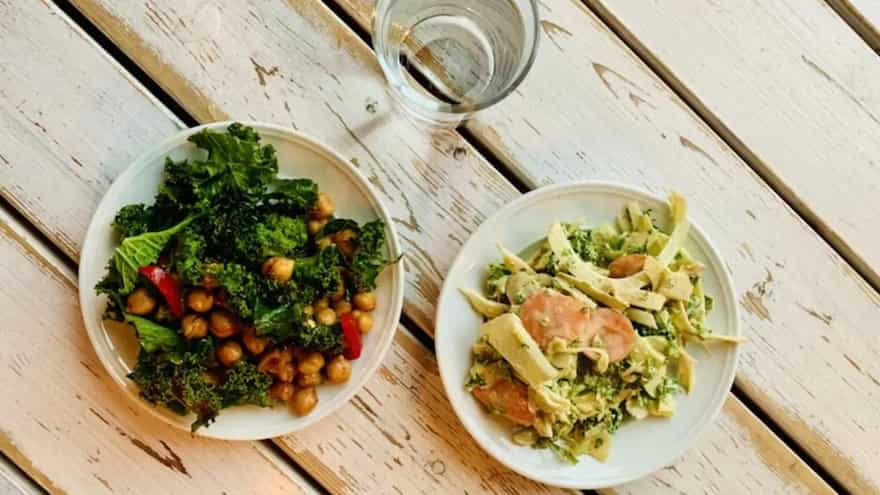
There was something joyful about the way she ate, something completely unselfconscious. Food was not complicated for her, it was just one of life's more reliable pleasures, and she treated it accordingly. So now I order for her.
I do not know when this started, only that at some point it became impossible not to. I sit down, and I read the menu twice, once for myself, once for her, thinking what she would have wanted here, what would have made her eyes do that thing they did when something sounded exactly right.
And then I order both; her plate arrives alongside mine, and I set it across from me, and for a moment everything is, geometrically at least, correct. The table makes sense again. What I do with her plate depends entirely on something I cannot predict or prepare for. Some days, eating her food feels like the most natural thing in the world, like an act of care, like I am finishing something she started, like the meal is a conversation we are still having.
I eat slowly and deliberately, moving between the two plates without any particular order, the way we used to eat together, sharing without asking, reaching across without ceremony. On those days, the food tastes the way it used to taste when she was sitting there, better than it should, better than the ingredients alone can explain.
Other days, I cannot bring myself to touch it, her plate just sits there, cooling slowly, and I watch it the way you watch something you cannot have and cannot put away. I eat my own food mechanically, tasting very little, and I keep her plate exactly as it was placed, untouched, perfect as if she has simply stepped away for a moment and will be back before it gets cold, but she never comes back before it gets cold.
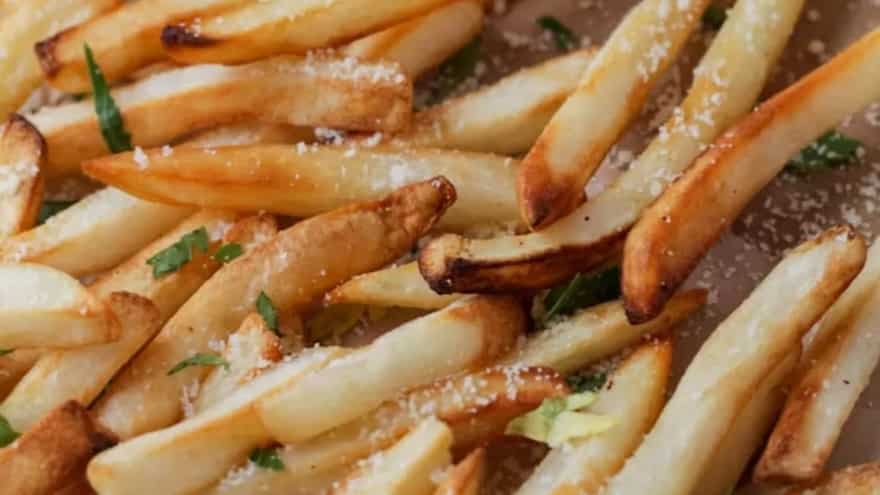
Image Credit: Unsplash
Food I loved, now belongs entirely to her, and I have no business eating alone because we discovered them together and eating them without her feels like reading someone's diary. Her particular way of ordering a certain dish, an extra of this, none of that, I sometimes recite to the server word for word, like a prayer I learned phonetically, understanding the sounds before I understood the meaning.
I eat in the places we used to go because not going felt like a larger surrender than going. The first time I walked back into our café, I stood at the door for a full minute, not moving, the smell of the place wrapping around me like something with hands. I have learned that I am not eating for two in any sentimental, poetic sense; it is not a metaphor. I am simply refusing to let her place at the table be empty, because an empty place setting is a declaration I am not ready to make. The second plate is not symbolic; it is stubborn, and it is me saying loudly, with cutlery, that she has not been fully excused from this meal, from this table, from this life we built around shared food and wobbly café tables and the smell of oil in a kitchen that always felt too small for how much was happening inside it.




