Share
Share

Govardhan Puja, celebrated a day after the Diwali festival, honours the divine act of Lord Krishna lifting the Govardhan Parvat to protect villagers from the pouring rains. The festival is deeply connected to gratitude for nature’s bounty and agricultural surplus. This year it will be celebrated on 22, 2025. Households across India come alive with the fragrance of freshly cooked dishes, all prepared in devotion to offer to Lord Krishna and later shared with loved ones as prasad. Every dish, be it savoury, sweet, or spicy, represents devotion, nutrition, and appreciation.
From khichdi, which represents simplicity, to the moong dal halwa that represents wealth, the Govardhan Puja symbolises harmony between simplicity and luxury. Regional variations have their own charm, with vegetables, grains, and ghee-based sweets stealing the show. This sacred meal is not just food, but an offering of devotion and love that completes the Diwali celebration with warmth and affection.
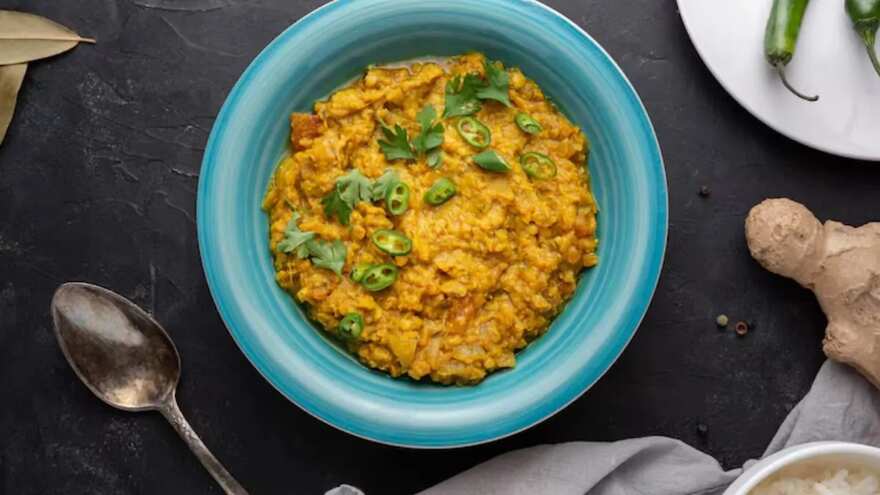
Khichdi
Khichdi is a quintessential offering of Govardhan Puja. A bit soft, mildly seasoned, and cooked in ghee, khichdi symbolises simplicity as well as devotion. Prepared with a hint of cumin, hing and turmeric, it is both wholesome as well as aromatic. Traditionally, this khichdi is offered as bhog to Lord Krishna as a symbol of gratitude for food and abundance, celebrating the lifting of Govardhan Parvat. Its warm, porridge-like texture makes it easy to serve during the festivities, and its subtle flavours are also loved by devotees.
Ladoo
Ladoos, whether prepared from besan or coconut, are an important part of Govardhan Puja. Their rich, melt-in-mouth consistency and golden colour represent wealth and devotion. Prepared with some ghee and jaggery or sugar, these ladoos are offered to Lord Krishna. These ladoos are often distributed as prasad to loved ones, distributing sweetness and blessings. Every bite balances has a perfect balance of nuttiness and some sweetness, making it festive, while its shape symbolises wholeness and harmony.
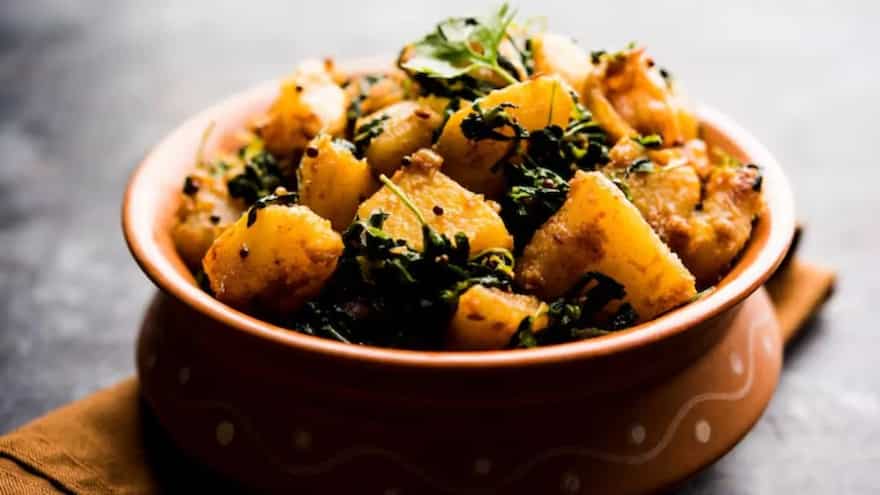
Aloo Sabzi
Simple but flavourful, aloo sabzi is often paired with khichdi during the Govardhan Puja. Lightly seasoned with turmeric, cumin, and mustard seeds, it is comforting, slightly tangy, and has a burst of flavours. The soft, well-cooked potatoes soak up the aromatic herbs, which go well with poori and khichdi nicely. Offered as a part of the festive thali, aloo sabzi perfectly balances the flavour and textures, which make the offering symbolic of plenty and wealth.
Mixed Vegetable Curry
It is a wholesome curry that is prepared by blending the seasonal vegetables, cooked in a blend of aromatic spices and a touch of ghee. This dish adds colour as well as nutrition to the Govardhan Puja feast. It has a crunchy consistency, and the natural sweetness of the vegetables perfectly balances the khichdi and spicy aloo ki sabzi. It offers a variety of vegetables representing gratitude for nature’s yield. This colourful and vibrant dish not only pleases the palate but also symbolises peace, harmony, and the joy of seasonal yields.
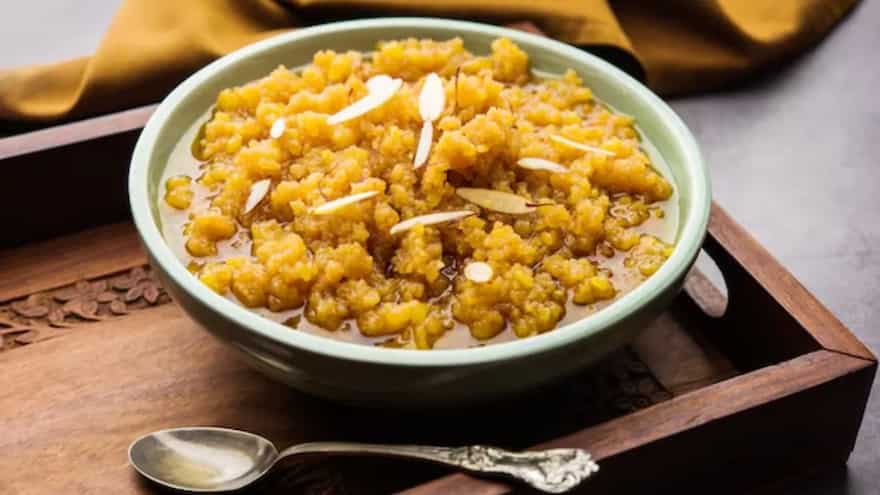
Moong Dal Halwa
It is a rich, aromatic dessert prepared by roasting moong daal in ghee, then cooking it with sugar and some cardamom. It's smooth with a bit of grainy texture and sweet smell, making it a celebratory joy to enjoy. Prepared during Govardhan Puja, it is offered to Lord Krishna as a mark of devotion and gratitude. The halwa has a golden shade representing fortune and joy, and its contrast with the simple dishes on the thali makes it a complete festival meal.