


 Share
Share

The arrival of Ganesh Chaturthi fills homes with the sweet fragrance of ghee, jaggery, and freshly grated coconut. At the heart of these festivities is the ukadiche modak, a steamed rice flour dumpling that stands as the ultimate offering to Lord Ganesha. Making these delicate parcels from scratch is an act of devotion that demands complete attention to detail, particularly when managing water temperatures to cook the rice dough without lumps. Using a reliable Usha cooktop gives you the precise thermal control needed to boil water evenly, simmer sticky jaggery fillings, and steam the dumplings to soft perfection without splitting the delicate outer shells.
Perfecting The Scalded Rice Flour Dough
The true test of a great modak lies in the softness of its outer covering, which must melt in your mouth while holding its pleated shape. You begin by bringing water, a pinch of salt, and a small spoonful of ghee to a rolling boil in a heavy pan. Stirring in fine rice flour off the heat and covering it tightly allows the steam to cook the starch properly. Once the mixture cools down just enough to handle, you must knead it vigorously with wet hands until it turns into a smooth, pliable dough. This initial stage requires steady heat management to ensure the flour absorbs the boiling water evenly without forming dry patches.
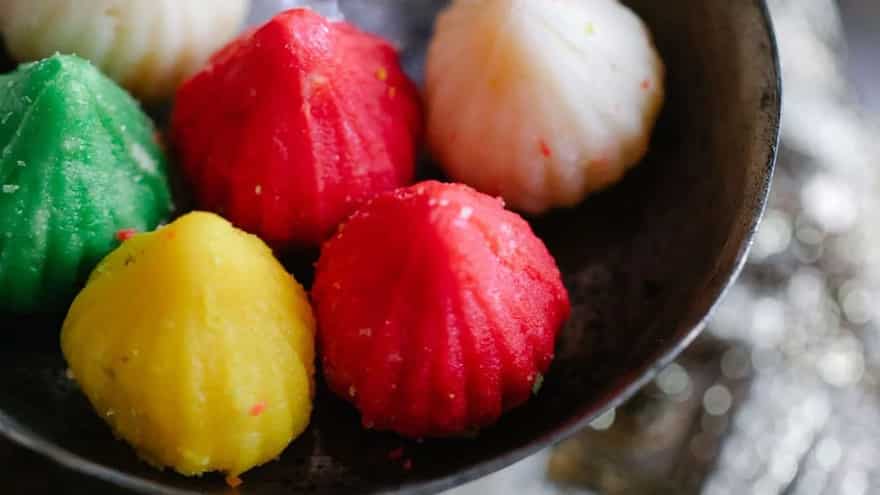
Image credit: Pexels
Your Kitchen Needs Usha’s Cooktop, Shop Now 
Crafting The Coconut And Jaggery Core
While the dough rests under a damp cloth, you prepare the sweet core using freshly grated coconut and soft dark jaggery. Toss the coconut and jaggery into a wide pan over a moderate flame, stirring continuously as the jaggery melts into a glossy syrup. As the mixture cooks down, the coconut absorbs the sweet caramel while releasing its own natural oils. You must stir constantly to prevent the sugar from burning at the bottom of the pan. Once the moisture evaporates and the filling thickens into a rich, aromatic mass, stir in powdered green cardamom and a pinch of nutmeg before letting it cool.

Image credit: Adobe Stock
Refining Textures For The Sweet Stuffing
Traditional fillings rely on hand-grated coconut and crushed nuts, but modern home cooks sometimes prefer a more uniform texture that distributes the flavours evenly. To achieve this without losing the rustic charm of the sweet core, you can process a portion of your dry ingredients before cooking. Toss your toasted cashew pieces, dry coconut flakes, and a few whole cardamom pods into an Usha mixer grinder for a couple of quick pulses. This breaks the nuts down into a fine, fragrant dust that blends seamlessly into the wet jaggery and coconut mixture, creating a rich and sophisticated mouthfeel inside every soft dumpling.
Your Kitchen Needs Usha’s Mixer Grinder, Shop Now 
Mastering The Pleating And Shaping Technique
Shaping a traditional modak requires patience, nimble fingers, and a gentle touch. Take a small lemon-sized ball of your warm rice dough and press your thumb into the centre, rotating it outward to form a thin, even cup with delicate edges. Gently pinch the rim of the cup at equal intervals to create five to seven vertical pleats. Once the pleated crown is ready, place a small spoonful of the cooled coconut filling into the hollow centre. Bring all the pleated edges together slowly at the top and pinch them firmly to seal the dumpling completely into a neat, teardrop shape.
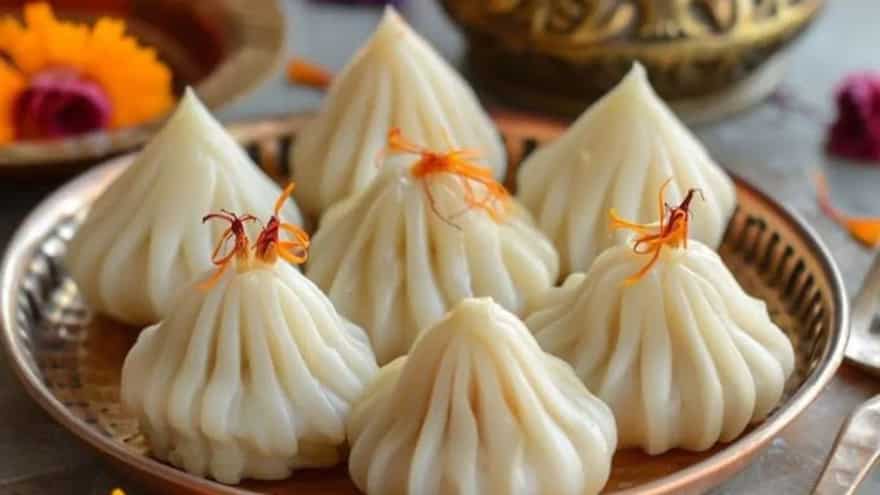
Image credit: Adobe Stock
Gentle Steaming For A Melt-In-The-Mouth Finish
The final step transforms your shaped dumplings from raw dough into a sacred, translucent offering. Line a traditional steamer or perforated metal plate with clean, damp banana leaves to prevent the delicate rice flour from sticking. Arrange your shaped modaks with enough space between them to allow the steam to circulate freely. Place the steamer over boiling water on your stovetop and let them cook on a medium-high flame for about ten to twelve minutes. Once you lift the lid, the modaks should look glossy and tender, ready to be drizzled with warm, pure ghee before being offered to Lord Ganesha.




